Every year when the first major winter cold front hits North America, portable power station forums flood with identical troubleshooting posts:
“My solar generator worked perfectly all summer, but on a crisp 15°F sunny morning, the solar input died with an Over-Voltage Error (Code E04)!”
In worse cases, a faint burning smell comes from the back of the unit. The internal MPPT controller’s input capacitor or switching MOSFET has permanently failed.
The homeowner didn’t change their solar panel wiring. What happened is an immutable law of semiconductor physics: cold temperatures cause solar panel Open-Circuit Voltage () to surge upward.
Below, we explain the math behind voltage temperature coefficients, walk through the NEC 690.7 correction formula in plain English, and show you how to safely configure your solar panels for winter survival.
Solar panel factory ratings are measured at 77°F (25°C). Because silicon photovoltaic cells have a negative temperature coefficient (typically -0.28% to -0.35% per °C), Open-Circuit Voltage () increases as temperatures drop. In 0°F (-18°C) winter conditions, panel voltage can surge 15% to 20% above the label rating. If this elevated voltage exceeds your power station’s maximum MPPT voltage limit by even 1 Volt, the input circuitry can be destroyed instantly.
1. Why Silicon Voltage Rises in Freezing Temperatures
It seems counterintuitive to most people: why would cold weather make an electrical generator produce more voltage?
In photovoltaic silicon, incoming sunlight knocks electrons free from silicon atoms, creating electron-hole pairs that flow as electrical current:
- In Hot Summer Temperatures (110°F / 45°C): Heat causes the silicon atoms to vibrate vigorously. This thermal agitation increases internal atomic resistance and lowers the semiconductor material’s bandgap energy, reducing output voltage.
- In Freezing Winter Temperatures (0°F / -18°C): Thermal vibration settles down. The semiconductor bandgap widens, allowing electrons to be ejected at higher potential energy. Voltage spikes significantly.
While winter days provide fewer total sun-hours, the instantaneous voltage spikes to its absolute yearly maximum on cold, clear winter mornings.
2. The NEC 690.7 Temperature Correction Formula
To size a solar panel array safely without frying an expensive charge controller, you must calculate the Maximum Cold-Weather Open-Circuit Voltage () using the National Electrical Code (NEC Article 690.7) standard formula:
The Variables Explained:
- : The Open-Circuit Voltage printed on the solar panel’s rear specification sticker.
- (Beta): The panel’s Temperature Coefficient of (typically between and , expressed as a decimal like ).
- : The lowest expected record ambient temperature at your location in Celsius ().
- : Standard Test Condition (STC) baseline ().
3. Real-World Math Example: Why “Safe” Arrays Blow Up
Imagine you have a solar generator with an integrated MPPT controller rated for a maximum of 60V DC input (a common limit on 1,000Wh–2,000Wh units).
You connect two 200W solar panels in series (positive to negative):
- Panel 1 at STC:
- Panel 2 at STC:
- Total Series at 77°F:
On a 77°F summer afternoon, 49V is well below the 60V maximum limit. You have an 11V safety buffer, so everything seems completely safe.
Now Comes a 0°F (-18°C) Winter Morning:
- Temperature Delta:
- Temperature Coefficient ():
- Voltage Multiplier:
If the temperature drops further to during a severe polar vortex:
Now consider if you had chosen two residential 400W panels with a nominal of ( total in series). Connecting that array to a 60V MPPT port will instantly destroy the controller’s input stage on day one.
To understand why controllers process high voltage so efficiently, read our guide on MPPT vs PWM solar charge controllers.
Verify Your Winter Voc Safety
Input your panel count, STC Voc, and coldest winter temperature to ensure you never exceed your MPPT limit.
Open Voc Safety Calculator →
4. Winter Safety Rules for Solar Generators
To protect your equipment from permanent over-voltage destruction, follow these three design rules:
- Maintain a 15%–20% Voltage Headroom Buffer: Never design an array where nominal STC reaches within 10% of the MPPT limit. If your power station maxes out at 60V, your summer STC should never exceed 48V to 50V.
- Switch from Series to Parallel in Cold Climates: If adding another panel in series risks crossing the maximum voltage limit, wire panels in parallel instead using Y-branch splitters. Wiring in parallel doubles current () while keeping voltage identical, completely eliminating the cold-weather over-voltage risk.
- Remember: Over-Voltage Destroys, Over-Current Simply Clips:
- Over-Amperage is Safe: If your panels can produce 25A and your solar generator is rated for 15A max, the MPPT controller will simply draw 15A and leave the rest on the panels (known as solar clipping).
- Over-Voltage is Fatal: If your panels produce 62V and your controller limit is 60V, the excess voltage forces its way through the circuit, frying silicon transistors.
For heavy home backup units equipped with dual 60V–150V high-voltage MPPT ports, check out our Anker Solix F3800 hardware audit or read our Anker F3800 vs. EcoFlow Delta Pro Ultra comparison.
5. Frequently Asked Questions
Does the temperature coefficient affect panel wattage or just voltage?
Both. While cold weather increases voltage, it slightly decreases current ( temperature coefficient is slightly positive, typically ). However, because the voltage boost is 7x stronger than the current drop, net panel wattage increases in cold weather.
Will the warranty cover my solar generator if I blow the MPPT with high voltage?
Almost never. Every manufacturer includes an absolute Maximum DC Input Voltage limit in their user manual. Over-voltage damage leaves telltale burned MOSFET tracks on the internal motherboard that repair technicians easily identify as user error caused by improper string sizing.
Can I leave my solar panels plugged into my generator when it’s below freezing?
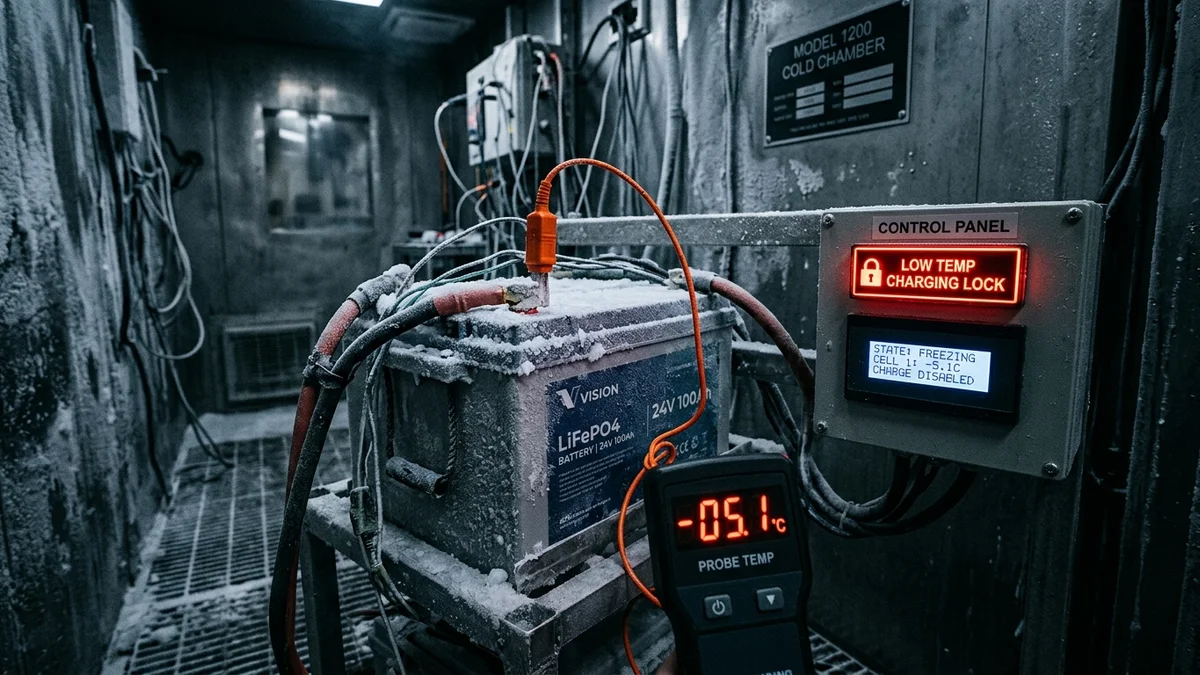
Yes, but verify that your power station has an integrated low-temperature charge disconnect or self-heating pads. While high is an electrical hazard for the MPPT, forcing charge current into freezing lithium cells is a chemical hazard for the battery. Read our guide on cold weather lithium charging below 32°F for full details.