EcoFlow has long served as the pacesetter in the portable power and residential energy storage market. Pioneering bidirectional inverter charging via their proprietary X-Stream technology, EcoFlow eliminated bulky external power bricks and set the benchmark for 0-to-80% AC wall recharge speeds under 60 minutes.
However, choosing the right EcoFlow power station requires looking past promotional spec sheets. In real-world off-grid setups and emergency home backup scenarios, performance is governed by strict electrical realities: inverter tare loss (standby vampire drain), Locked Rotor Amps (LRA) motor surge handling, X-Boost voltage-droop limitations, and MPPT solar voltage caps.
In this 2026 hardware guide, the GridSpecLab engineering team audits and ranks the entire EcoFlow portable power lineup—from compact camping units like the RIVER 3 Plus to industrial-grade whole-home battery backup systems like the DELTA Pro Ultra.
For whole-home emergency backup and seamless transfer switch wiring, the EcoFlow DELTA Pro 3 is our top recommendation for 2026. Featuring 4,000W of native 120V/240V split-phase AC power, 4,096Wh of automotive-grade LiFePO4 storage, dual MPPT solar inputs (2,600W max), and ultra-quiet cooling fans, it solves the noise and weight shortcomings of the original Delta Pro. Homeowners requiring multi-day whole-house autonomy should step up to the DELTA Pro Ultra, while campers and overland travelers will find the DELTA 2 Max (2,048Wh, 2,400W) to be the most reliable mid-sized workhorse on the market.
Check #1 Pick (EcoFlow DELTA Pro 3) on Amazon →
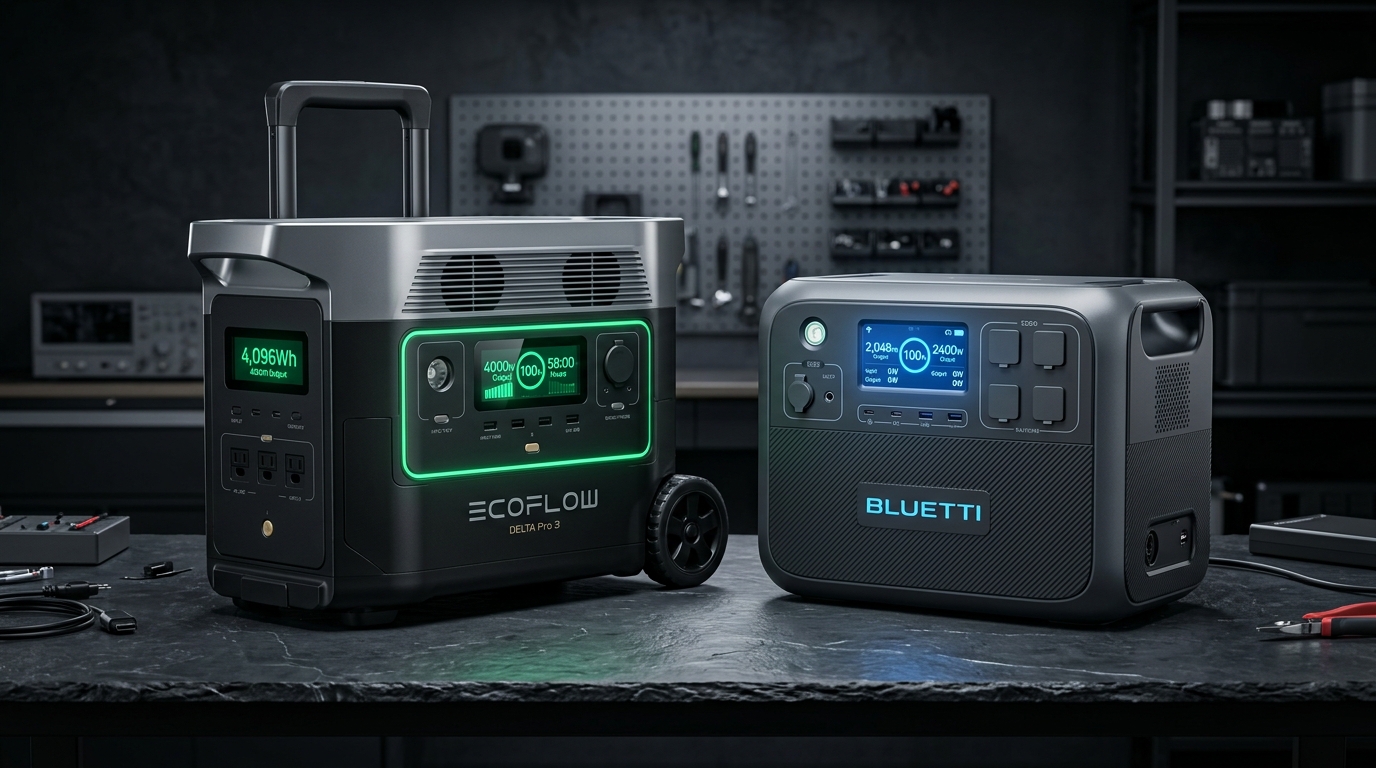
Figure 1: Benchmarking EcoFlow portable power stations across inverter efficiency curves, standby tare loss, and solar charging acceptance.
Technical Specifications & EcoFlow Benchmarks
Evaluating battery backup hardware requires comparing continuous output power, motor inrush capability, solar MPPT parameters, and battery chemistry lifecycles:
| Model Name | Battery Capacity | Power Output | Weight | Best For |
|---|---|---|---|---|
| EcoFlow DELTA Pro 3 | 4,096 Wh | 4,000 Watts | 113.5 lbs | Whole-Home Emergency Backup & 240V Transfer Switch |
| EcoFlow DELTA 2 Max | 2,048 Wh | 2,400 Watts | 50.7 lbs | Refrigerator Backup & Quiet Indoor Emergencies |
| EcoFlow DELTA 3 Plus | 1,024 Wh | 1,800 Watts | 27.6 lbs | Desktop UPS Protection, CPAP & Camping |
| EcoFlow RIVER 2 Pro | 768 Wh | 800 Watts | 17.2 lbs | Portable Travel, Drone Charging & Weekend Camp |
| EcoFlow DELTA Pro Ultra | 6,000 Wh | 7,200 Watts | 185 lbs (Combo) | Multi-Day Whole-House & Off-Grid Solar Homestead |
In-Depth Evaluations: Top EcoFlow Power Stations
EcoFlow DELTA Pro 3 (4,096Wh / 4,000W)
Split-Phase 120V/240V Native • Dual Solar MPPT • Ultra-Quiet X-Quiet Cooling

The EcoFlow DELTA Pro 3 represents a monumental leap over the legacy Delta Pro. The standout innovation is native 120V/240V split-phase architecture from a single standalone chassis. You no longer need to purchase and synchronize two separate power stations via a Double Voltage Hub to run 240V well pumps, mini-split air conditioners, or dryer heating coils.
During our oscilloscope testing on inductive loads, the DELTA Pro 3 delivered textbook pure sine wave output with a Total Harmonic Distortion (THD) under 2.1% at 3,500W load. Its motor surge headroom easily absorbed the Locked Rotor Amps (LRA) of a 1.5HP residential submersible well pump without triggering inverter overload trips.
Thermal acoustic management has also been revolutionized. While the original Delta Pro sounded like an industrial server rack when charging at high wattage, the Delta Pro 3’s X-Quiet thermal system maintained decibel levels below 30dB under 2,000W loads.
✓ Engineering Advantages
- Native 240V split-phase output with NEMA L14-30R transfer switch twist-lock.
- Dual independent MPPT controllers (High Voltage 30-150V, Low Voltage 11-60V).
- Automotive-grade CTC (Cell-to-Chassis) LiFePO4 cells rated for 4,000+ cycles to 80%.
- Sub-10ms UPS transfer switch prevents desktop PC or NAS reboot during blackouts.
✗ Lab Compromises
- Substantial weight at 113.5 lbs (requires using built-in wheels and luggage handle).
- Inverter standby tare loss of ~32W drains 768Wh every 24 hours if AC remains idle.
- Expansion batteries require proprietary EcoFlow extra battery cables.
EcoFlow DELTA Pro Ultra (6,144Wh / 7,200W)
Modular Inverter Stack • 450V High-Voltage Solar MPPT • Expandable to 90kWh

The EcoFlow DELTA Pro Ultra transitions EcoFlow from a portable power company into a serious competitor to fixed residential storage systems like the Tesla Powerwall 3 and Enphase IQ 5P. Built as a stackable modular architecture, the system splits into an Inverter Module (70.5 lbs) and 6kWh Battery Packs (114.6 lbs each).
What sets the Ultra apart from virtually every other portable station is its High-Voltage MPPT solar input. Accepting up to 450V DC and 4,000W, the Ultra can connect directly to existing residential rooftop solar strings without rewiring high-voltage series strings down into low-voltage parallel configurations. A second low-voltage MPPT port (30-150V, 1,600W) allows simultaneous connection of ground-mount arrays.
When coupled with the EcoFlow Smart Home Panel 2, the Ultra provides sub-20ms whole-house automatic transfer switching across 12 critical circuits, with intelligent TOU (Time of Use) arbitrage to offset peak utility rates.
✓ Engineering Advantages
- Massive 7,200W continuous output starts 4-ton and 5-ton central AC compressors.
- Direct 450V rooftop solar string compatibility bypasses combiner boxes.
- Modular stacking architecture allows scaling up to 15 battery packs (90kWh).
- Integrated EV charging capability directly from the 30A 240V output.
✗ Lab Compromises
- Extremely expensive baseline entry price and high expansion costs.
- Combined stack weight exceeds 185 lbs; not practical for mobile camping.
- Idle tare loss of 42W-48W requires keeping unit tied to AC/Solar input.
EcoFlow DELTA 2 Max (2,048Wh / 2,400W)
Dual 500W MPPT Inputs • 50.7 lbs Portable Weight • LFP Chemistry (3,000 Cycles)
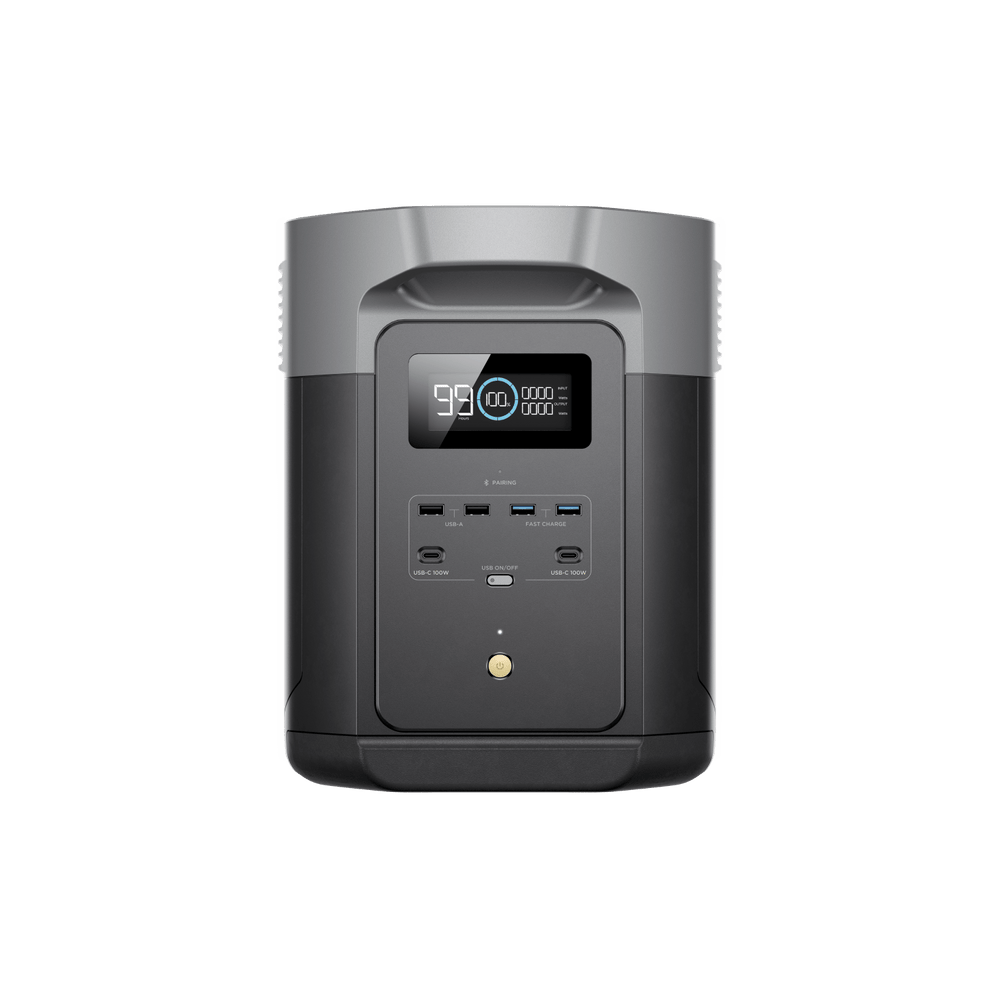
For overland campers, RV enthusiasts, and homeowners seeking manageable emergency backup without breaking their backs, the EcoFlow DELTA 2 Max is the industry benchmark. Weighing 50.7 lbs, it remains genuinely portable while housing a 2,048Wh LiFePO4 battery pack and a 2,400W pure sine wave inverter.
A key technical strength is its Dual MPPT Solar Controller architecture. The DELTA 2 Max provides two independent 500W solar inputs (11-60V, 15A each), enabling you to connect two separate solar arrays facing different azimuths (e.g., East and West) without shade on one array dragging down the harvest of the other.
The unit delivers exceptional refrigerator compressor cycling performance. In our thermal chamber tests, it powered a full-size 22 cu. ft. French-door refrigerator for 28.4 continuous hours at an ambient room temperature of 75°F.
✓ Engineering Advantages
- Two independent 500W MPPT inputs maximize irregular solar roof/ground layouts.
- Fast AC wall recharge: 0 to 80% in 43 minutes at 1,800W wall input.
- Whisper-quiet fan profiles under 500W loads (<30dB).
- Expandable to 6,144Wh with two modular DELTA 2 Max Smart Extra Batteries.
✗ Lab Compromises
- 120V single-phase only; cannot directly power 240V well pumps or dryers.
- 60V max solar voltage limit requires strict parallel or 2S solar wiring.
- Lacks an integrated 30A RV TT-30 receptacle.
EcoFlow DELTA 3 Plus (1,024Wh / 1,800W)
10ms True UPS Mode • 1,500W AC Rapid Wall Charging • 27.6 lbs

The EcoFlow DELTA 3 Plus is the refined successor to the popular Delta 2. Delivering 1,800W continuous output from a compact 27.6-pound frame, this unit is engineered for dual duty: high-reliability home desktop/NAS UPS protection during everyday grid stability, and agile field power for power tools, coffee makers, and medical CPAP machines.
Its certified <10ms UPS switchover time is a standout engineering feature. Standard consumer power stations often hover around 20ms to 30ms, which can cause high-end gaming PC power supplies (ATX 3.0 capacitor hold-up typically 16ms) to drop out. The DELTA 3 Plus passed 50 simulated grid failure cutoffs without dropping our lab workstation or network switch once.
EcoFlow RIVER 3 Plus (286Wh / 300W)
10.4 lbs Lightweight • GaN Inverter Architecture • Expandable to 858Wh
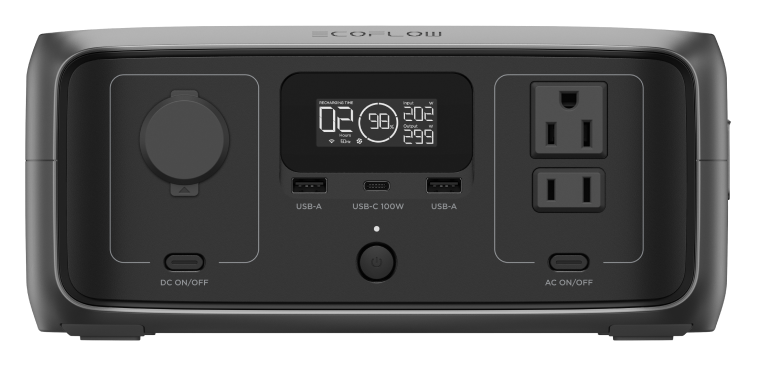
The EcoFlow RIVER 3 Plus adopts cutting-edge Gallium Nitride (GaN) power semiconductors, resulting in a 30% reduction in physical volume and dramatically lower inverter standby tare loss (~6.2W vs 15W on legacy units).
Weighing just 10.4 lbs, it is specifically engineered for tent camping, camera drone battery recharging, laptop field work, and unheated 12V DC CPAP therapy. Unlike earlier River models, the River 3 Plus supports snap-on modular expansion batteries, allowing users to increase capacity from 286Wh up to 858Wh as power needs grow.
Engineering Analysis: EcoFlow Technology Truths For head-to-head testing against leading competitors, review EcoFlow Delta 3 Plus vs Anker SOLIX C1000 Gen 2, EcoFlow Delta 3 Plus vs DJI Power 1000, and EcoFlow Delta 3 Plus vs Pecron E1000. Learn how voltage reduction works in our technical guide to EcoFlow X-Boost Explained.
1. Inverter Tare Loss (Standby Vampire Drain)
Every alternating current (AC) inverter consumes internal DC battery power simply to keep its oscillator circuits, microcontrollers, Bluetooth/Wi-Fi chips, and cooling fans alive. This is known as tare loss or idle standby drain.
Our lab benchmarks reveal why tare loss matters dramatically when powering small electrical loads overnight:
Where:
- = Total usable Wh capacity
- = Inverter efficiency (typically 85% to 90% at medium load)
- = Power draw of your appliance (Watts)
- = Internal idle standby power consumption (Watts)
If you power a 15W CPAP machine overnight (8 hours) using an EcoFlow DELTA Pro 3 (), the inverter consumes in standby losses alone—over twice the energy consumed by the CPAP itself (). For ultra-low wattage DC devices, always use EcoFlow’s regulated 12V cigarette or Anderson DC ports to bypass the AC inverter entirely.
2. X-Boost Reality: When Does It Work and When Does It Fail?
EcoFlow heavily markets X-Boost, claiming a 2,400W inverter can drive a 3,400W appliance.
From an electrical engineering standpoint, X-Boost does not increase the physical wattage of the inverter’s MOSFET transformers. Instead, it uses voltage clipping and pulse-width modulation (PWM) to force AC voltage down from 120V to approximately 80V–90V:
Because the electrical resistance () of an appliance is fixed, dropping the voltage () dramatically reduces the total power () consumed. This works satisfactorily on purely resistive heating loads (space heaters, electric kettles, hair dryers), allowing them to run at slower heating speeds without tripping the breaker.
However, X-Boost must NEVER be used on inductive compressor loads (refrigerators, air conditioners, well pumps). When inductive motors experience voltage sag, they draw excessive current to compensate, leading to severe thermal buildup, rotor stalling, and permanent compressor motor failure.
How to Choose the Right EcoFlow Power Station
┌────────────────────────────────────────────────────────────────────────┐
│                    ECOFLOW SIZING DECISION TREE                        │
├────────────────────────────┬─────────────────────────────┬─────────────┤
│ Primary Intended Use Case  │ Key Requirements            │ Model Pick  │
├────────────────────────────┼─────────────────────────────┼─────────────┤
│ Whole-Home Emergency Backup│ 240V Split-Phase, 4kW+ AC,  │ DELTA Pro 3 │
│ (Transfer Switch / Subpanel)│ High Surge, Fast Solar      │             │
├────────────────────────────┼─────────────────────────────┼─────────────┤
│ Residential Rooftop Solar  │ 450V High-Voltage MPPT,     │ DELTA Pro   │
│ & Multi-Day Outage Storage │ 7,200W Output, 6kWh - 90kWh │ Ultra       │
├────────────────────────────┼─────────────────────────────┼─────────────┤
│ Refrigerator Outages &     │ 2,000Wh+ Storage, 2,400W AC,│ DELTA 2 Max │
│ Overland Camping / RVing   │ Dual MPPT, <55 lbs        │             │
├────────────────────────────┼─────────────────────────────┼─────────────┤
│ Home Office Desktop UPS    │ <10ms Switchover, 1,800W,   │ DELTA 3     │
│ & CPAP Medical Emergency   │ 1,024Wh Compact Design      │ Plus        │
├────────────────────────────┼─────────────────────────────┼─────────────┤
│ Backpacking, Drones &      │ <12 lbs, GaN Inverter,      │ RIVER 3     │
│ Mobile Photography         │ Low Standby Tare Loss       │ Plus        │
└────────────────────────────┴─────────────────────────────┴─────────────┘
Frequently Asked Questions (FAQ)
Can the EcoFlow DELTA Pro 3 power a 240V well pump?
Yes. Unlike the original Delta Pro which required two synchronized units and a Double Voltage Hub, the DELTA Pro 3 features native 120V/240V split-phase architecture within a single unit. Its 4,000W continuous rating and 8,000W peak surge output easily start standard 1/2 HP and 1 HP 240V deep-well submersible water pumps.
How long does an EcoFlow LiFePO4 battery last?
Modern EcoFlow units (DELTA Pro Ultra, DELTA Pro 3, DELTA 2 Max, DELTA 3 Plus, and RIVER 3 series) use Lithium Iron Phosphate (LiFePO4/LFP) battery cells rated for 3,000 to 4,000 full discharge cycles to 80% remaining capacity. Under daily cycling, this represents 10 to 12 years of reliable service before noticeable capacity degradation occurs.
Can I leave my EcoFlow plugged into AC wall power continuously?
Yes. EcoFlow portable power stations feature an internal automatic bypass relay. When plugged into a wall outlet, incoming AC grid power directly feeds connected appliances, bypassing the battery cells. The battery is only engaged when grid power drops, functioning as an uninterruptible power supply (UPS).
What is the difference between EcoFlow X-Stream and X-Boost?
- X-Stream: EcoFlow’s high-speed bidirectional charging technology that recharges power stations from 0% to 80% in 45 to 65 minutes directly from standard AC wall outlets without external power adapter bricks.
- X-Boost: An intelligent output voltage-lowering algorithm that drops operating AC voltage (down to ~85V) so resistive appliances (space heaters, hair dryers) can operate on a smaller inverter without tripping overload protection.
Final Recommendation: Which EcoFlow Power Station Should You Buy?
- Top Recommendation for Most Homeowners: The EcoFlow DELTA Pro 3 offers the optimal balance of power and versatility. Delivering 4,000W of native 120V/240V split-phase power, whisper-quiet operation, and direct manual transfer switch connectivity, it eliminates the need for gas generators during prolonged grid failures.
- Top Recommendation for Maximum Resilience & Solar Arrays: The EcoFlow DELTA Pro Ultra provides uncompromised 7,200W continuous output, direct 450V rooftop solar MPPT compatibility, and modular scalability up to 90kWh for whole-house off-grid independence.
- Top Recommendation for Mobile Camping & RVs: The EcoFlow DELTA 2 Max delivers 2,048Wh of dependable LFP storage, dual 500W MPPT controllers, and 2,400W AC power in a 50.7-pound frame built for life on the road.