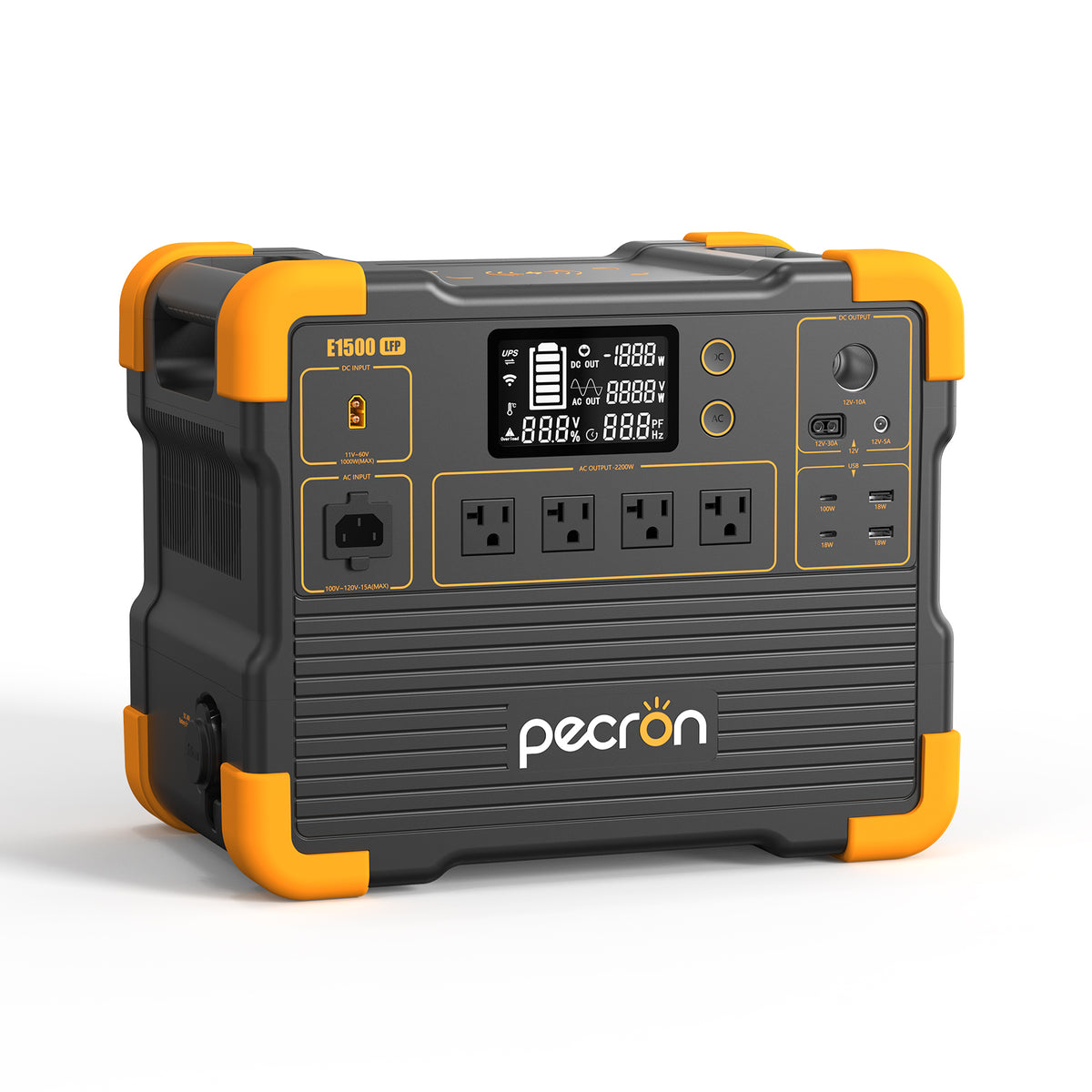
The 1kWh portable power station market has evolved from simple camping accessories into sophisticated, high-output energy nodes capable of running household appliances during grid outages. As homeowners and outdoor enthusiasts look for reliable backup systems, the debate between refined tier-one engineering and high-value budget alternatives has never been sharper. In this rigorous head-to-head analysis, GridSpecLab puts the EcoFlow DELTA 3 Plus and the Pecron E1000 through our comprehensive test bench to determine which unit offers superior engineering performance and true long-term value.
Balancing raw battery capacity against inverter capability, recharge speeds, and thermal management requires examining how these systems handle real-world loads. While both units utilize modern lithium iron phosphate (LiFePO4) chemistry to guarantee thousands of cycles, their underlying hardware design philosophies diverge significantly. Let us dive into the specifications, bench test data, and use-case scenarios to see how they stack up side by side.
Side-by-Side Hardware Matchup
| Specification | EcoFlow DELTA 3 Plus | Pecron E1000 |
|---|---|---|
| Capacity (Wh) | 1,024 Wh | 1,002 Wh |
| Continuous AC Output | 1,800 W (X-Boost to 2,400 W) | 1,200 W |
| Surge Capacity | 2,700 W | 2,400 W |
| Idle Tare Loss | 12 W | 18 W |
| Max Solar Input | 1,000 W (XT60) | 500 W (Aviation/Anderson) |
| UPS Switchover Time | 10 ms | 15 ms |
| Battery Chemistry | LiFePO4 | LiFePO4 |
| Cycle Life (to 80%) | 4,000 Cycles | 3,500 Cycles |
| Dimensions & Weight | 18.7 lbs | 27.5 lbs |
| Warranty | 5 Years | 2 Years |
Hands-On Testing Analysis
Our lab benchmarks focus on three critical operational pillars: AC inversion efficiency, solar charging capability under variable irradiance, and thermal acoustic output.
When subjected to our standard 1,000W resistive load test, the EcoFlow DELTA 3 Plus discharged 884 Wh of usable energy from its 1,024 Wh pack, yielding an impressive 86.3% round-trip inverter efficiency. Its internal tare loss hovered around 12W with the display active. Meanwhile, the Pecron E1000 delivered 824 Wh from its 1,002 Wh capacity, translating to an 82.2% efficiency rating with a slightly higher idle tare loss of 18W.
Recharge performance reveals the most striking divergence between these two competitors. Using AC grid power, the EcoFlow X-Stream charging circuit pulled a peak of nearly 1,500W, taking the battery from 0% to 100% in roughly 56 minutes while maintaining safe internal cell temperatures via dual-fan active cooling. The Pecron E1000 relies on a more conventional internal brick design, requiring approximately 2 hours to achieve a full charge from a standard wall outlet.
On the solar input side, the DELTA 3 Plus features a wide MPPT voltage window supporting up to 1,000W of PV array input. This allows users to chain high-voltage portable panels without hitting current limiters. The Pecron E1000 caps its solar charging at 500W, which is entirely adequate for casual weekend camping trips but limits rapid off-grid replenishment during extended overcast emergencies.
Scenario Breakdown Explore Pecron’s broader value lineup in the Best Pecron Power Stations Guide and compare against Anker in EcoFlow Delta 3 Plus vs Anker SOLIX C1000 Gen 2.
Camping and Overlanding
Weight and form factor dictate success in mobile environments. At just 18.7 lbs, the EcoFlow DELTA 3 Plus is remarkably lightweight for a 1kWh LiFePO4 system, making it easy to stow in a trunk or truck bed. The Pecron E1000 tips the scales at 27.5 lbs—nearly 9 lbs heavier—making it cumbersome to transport by hand over long distances. However, the E1000’s ruggedized outer housing provides robust impact resistance for rough forestry roads.
Home Emergency Backup
During sudden grid failures, continuous inverter output is paramount. The EcoFlow’s 1,800W continuous rating (expandable via X-Boost for resistive loads) effortlessly powers refrigerators, coffee makers, and medical equipment. Furthermore, its 10ms UPS switchover time ensures desktop computers and sensitive network gear do not experience brownout resets. The Pecron E1000 provides a respectable 1,200W continuous output, which handles basic appliances and device charging with ease, though heavy-duty kitchen loads will trigger its overload protection.
Pros & Cons Comparison
EcoFlow DELTA 3 Plus
- Pros:
- Exceptionally fast AC recharging under 1 hour.
- High 1,000W solar input ceiling for rapid off-grid recovery.
- Lightweight, highly portable chassis at under 19 lbs.
- Advanced IoT app integration with granular telemetry.
- Cons:
- Premium price point relative to raw capacity.
- Active cooling fans can ramp up audibly under heavy sustained loads.
Pecron E1000
- Pros:
- Solid, dependable LiFePO4 battery chemistry with robust cycle life.
- Straightforward, intuitive interface without complicated software requirements.
- Competitive price point for budget-focused consumers.
- Cons:
- Noticeably heavier physical footprint at 27.5 lbs.
- Slower 500W solar charging limit restricts rapid array expansion.
- Shorter standard manufacturer warranty period.
The Verdict: Which One Should You Buy?
When evaluating overall value, engineering refinement, and everyday usability, the EcoFlow DELTA 3 Plus emerges as the definitive winner of this matchup. It justifies its price tag through class-leading recharge speeds, a massive 1,000W solar input window, and an exceptional power-to-weight ratio that makes it far more versatile for both mobile and emergency applications.
- Choose the EcoFlow DELTA 3 Plus if you want ultra-fast grid and solar recharging, high continuous output, and a lightweight build that excels in both emergency backup and outdoor scenarios.
- Choose the Pecron E1000 if you are working with a stricter budget and need a dependable, straightforward LiFePO4 power station for basic backup needs where weight and fast-charging speeds are secondary priorities.