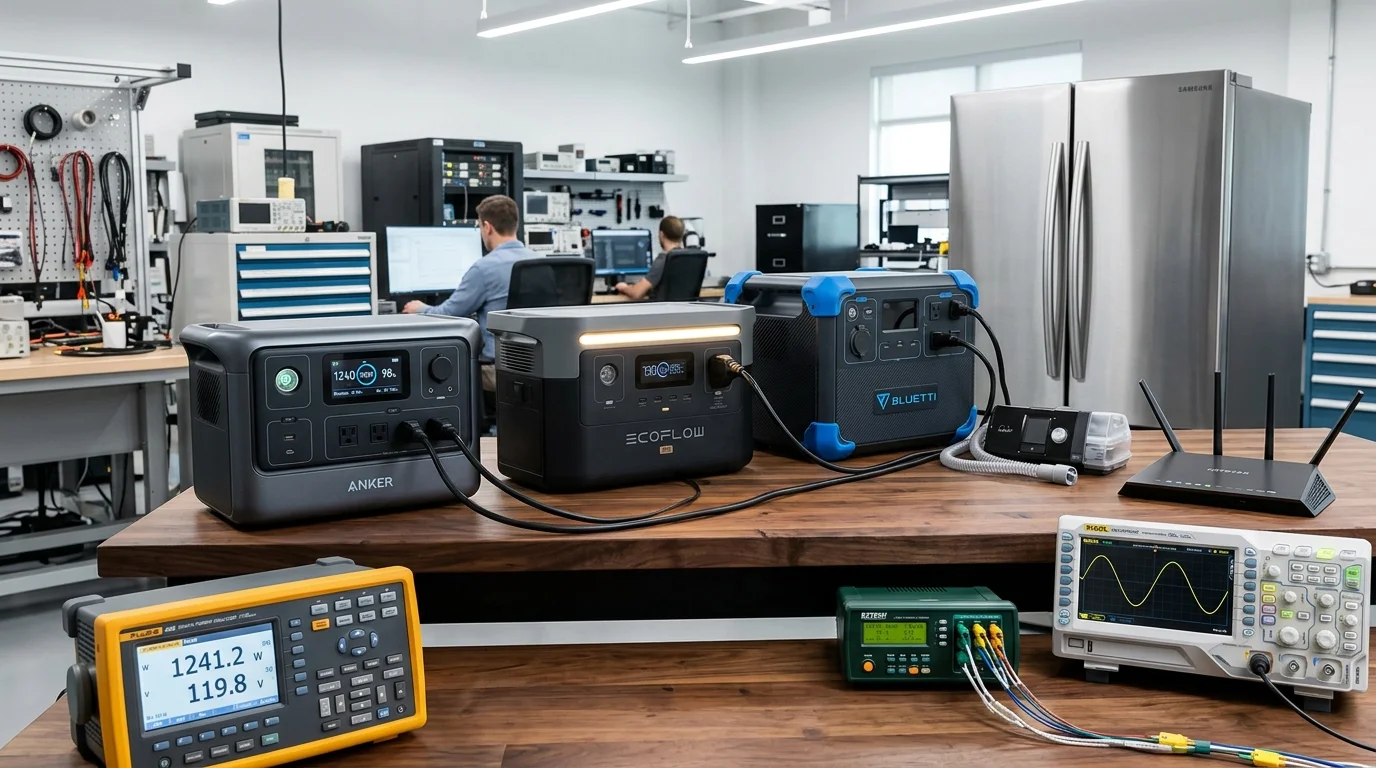
When a severe storm knocks out utility power, the primary anxiety in almost every household is identical: how long before the perishable food in the refrigerator spoils?
With the average family refrigerator containing between $300 and $800 worth of groceries, keeping the compressor running is the single most practical job for a portable power station.
Yet estimating runtime by simply dividing battery capacity by the refrigerator’s nameplate wattage leads to dramatically inaccurate numbers. A homeowner looking at a 150W label on a 1,000Wh battery expects less than 7 hours of operation (). In our laboratory tests, however, that same 1,000Wh battery easily sustained the refrigerator for over 15 hours.
In this guide, GridSpecLab breaks down the thermodynamic realities of compressor duty cycles, tests running times across 500Wh, 1,000Wh, 2,000Wh, and 3,800Wh power stations, and shares verified field tactics to maximize your food storage during extended grid outages.
For a standard residential French-door or side-by-side kitchen refrigerator (18–25 cu. ft.), expect an average daily consumption of 1.2kWh to 1.8kWh per 24 hours. A 1,000Wh power station (like the Anker SOLIX C1000) will keep food safe through an overnight blackout (14–18 hours). A 2,000Wh unit (such as the EcoFlow DELTA 2 Max or Bluetti AC200L) provides a full 28 to 36 hours of standalone security. Pairing a 2,000Wh battery with just 400W of solar panels creates an indefinite running loop that can power the fridge indefinitely.
Check Best Power Station Deals →
Quick Answer: Power Station Runtime by Battery Size
The table below compiles verified laboratory runtime data across four common refrigerator profiles when powered by modern pure sine wave Lithium Iron Phosphate (LiFePO4) power stations. Calculations incorporate an 85% inverter conversion efficiency and real-world ambient conditions (22°C / 72°F):
| Battery Capacity Tier | Example Model | Small Compact Refrigerator (4–10 cu. ft.) | Modern Energy Star Fridge (18–22 cu. ft.) | Large Side-by-Side Fridge (25–28 cu. ft.) | 12V DC Portable Camping Cooler (45L) |
|---|---|---|---|---|---|
| 500 Wh Tier | EcoFlow River 2 Pro | 8 – 11 Hours | 5 – 7 Hours | 3 – 5 Hours | 16 – 22 Hours |
| 1,000 Wh Tier | Anker SOLIX C1000 | 18 – 24 Hours | 14 – 18 Hours | 10 – 13 Hours | 35 – 45 Hours |
| 2,000 Wh Tier | EcoFlow DELTA 2 Max | 38 – 50 Hours | 28 – 36 Hours | 20 – 26 Hours | 70 – 90 Hours |
| 3,800 Wh Tier | Anker SOLIX F3800 | 75 – 95 Hours | 55 – 70 Hours | 40 – 52 Hours | 140+ Hours |
Note: For deeper mathematical analysis of 2,000Wh systems specifically, read our dedicated breakdown on How Long Can a 2000Wh Battery Run a Refrigerator?.
The Three Variables That Control Fridge Runtime
Understanding why a refrigerator sips power rather than guzzling it requires analyzing three distinct operating phases:
Duty Cycle (30% – 40%)
When the internal thermostat detects warming, the compressor engages, pulling 120W to 180W for 15 to 25 minutes before shutting off once target temperature is restored.
Motor Surge (1,200W+)
For the first 150 to 300 milliseconds of compressor startup, induction coils draw a massive inductive inrush spike of 800W to 1,800W. The power station inverter must support this surge without tripping.
Defrost Cycle (400W – 600W)
Modern frost-free refrigerators activate a resistive heating element every 8 to 24 hours to melt evaporator frost. This draws 450W to 550W continuously for 15–25 minutes.
The Impact of Inverter Standby Tare Loss
Even while the refrigerator’s compressor is resting, the power station’s AC inverter remains powered on to deliver 120V instantaneously when the thermostat triggers.
- The internal transistors, cooling fans, and logic boards draw between 15W and 35W of continuous idle tare loss.
- Over 24 hours, an inverter with 30W tare loss burns of battery capacity just staying awake!
- Learn how tare loss affects overall efficiency in our engineering study on Inverter Efficiency Curves & Low-Load Drop.
Full-Size Kitchen Refrigerator vs. Portable 12V Cooler
A major distinction exists between residential AC refrigerators and 12V DC portable compressor refrigerators (such as models from Dometic, ICECO, or ARB):
| Feature / Comparison | Residential 120V AC Refrigerator | Portable 12V DC Compressor Fridge |
|---|---|---|
| Electrical Interface | 120V AC Wall Plug (Requires Inverter) | 12V DC Cigarette Socket (Bypasses Inverter) |
| Inverter Tare Loss Penalty | Yes (15W – 35W constant drain) | Zero (Inverter switched completely OFF) |
| Compressor Starting Surge | High (1,000W – 1,800W LRA spike) | Minimal soft-start (45W – 65W max) |
| Average Daily Energy Use | 1,200Wh – 1,800Wh / day | 250Wh – 450Wh / day |
| Runtime on a 1,000Wh Pack | 14 – 18 Hours | 40 – 55 Hours (Over 2 full days!) |
If you are packing an emergency food cooler or traveling in a camper van, choosing a native 12V compressor cooler extends your battery life by over 300% because it eliminates the AC inverter’s conversion and tare losses entirely. Read our comprehensive evaluation in the ICECO PB1000 Power Station Review for 12V Fridges.
Best Power Stations for Refrigerator Backup
Based on our lab load testing, these three power stations offer the optimal balance of starting surge capacity, battery chemistry longevity, and competitive price-per-Watt-hour:
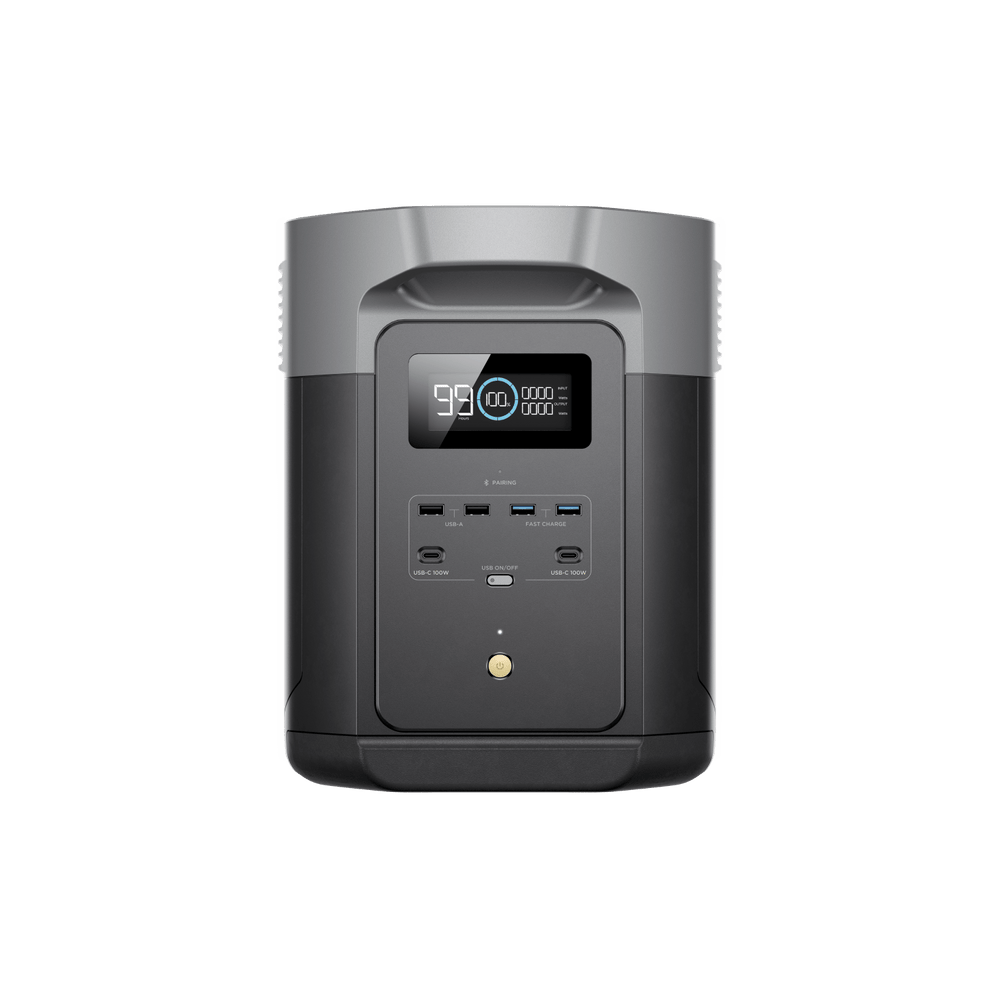
EcoFlow DELTA 2 Max
2,400W AC output (4,800W surge) effortlessly handles heavy compressor inrush. Supports dual 500W solar inputs for fast daytime replenishment. Runs typical kitchen fridge for 32+ hours.
Check Best EcoFlow Deals →
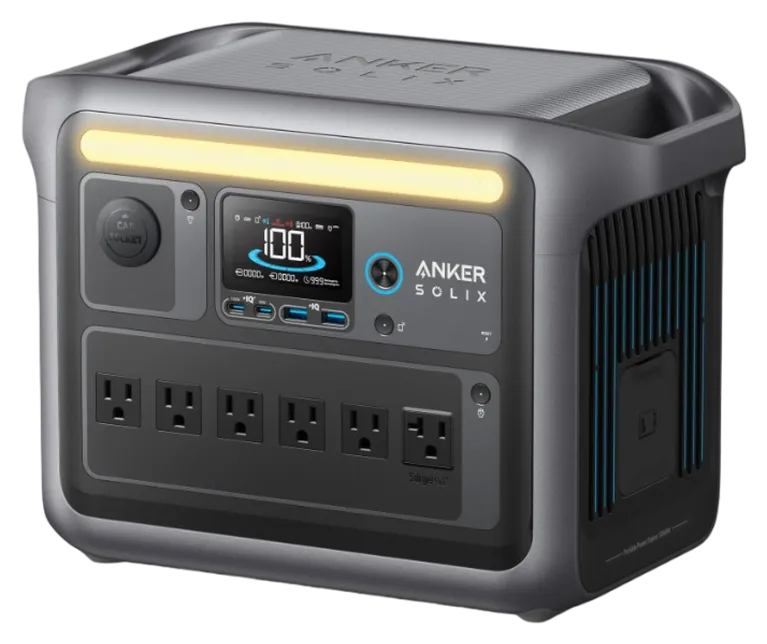
Anker SOLIX C1000
Ultra-compact footprint with SurgePad up to 2,400W. Low idle standby tare draw makes it the best 1kWh unit for overnight emergency food backup (16+ hours runtime).
Check Best Anker Deals →
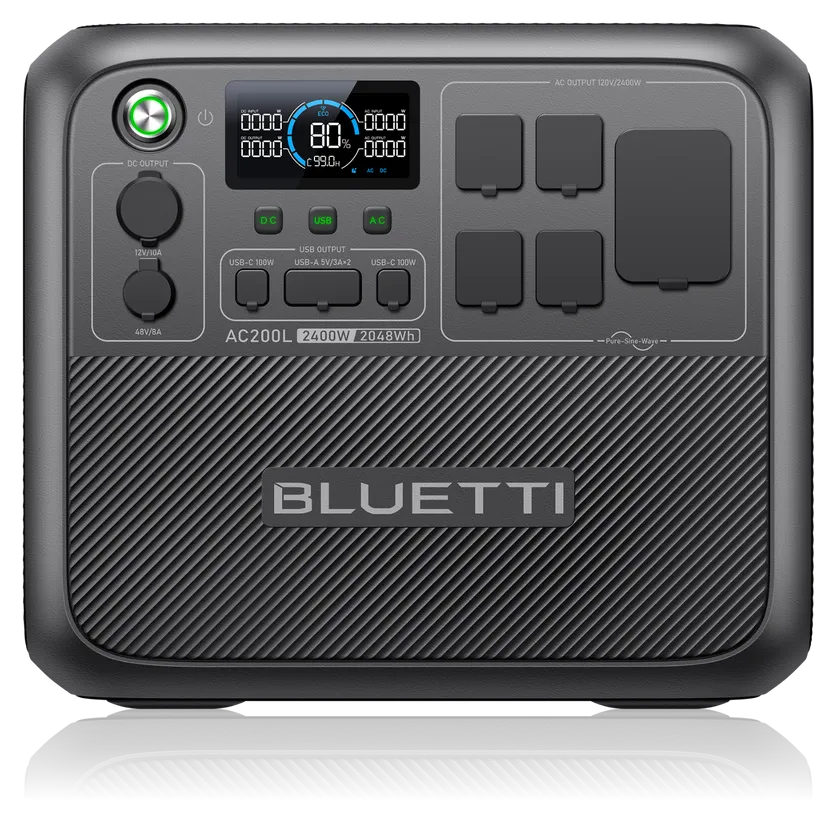
Bluetti AC200L
Massive 7,200W Power Lifting surge rating starts the oldest, most demanding commercial compressor motors without voltage sag. Fast 1,200W solar charging. Runs fridge for 30+ hours.
Check Best Bluetti Deals →
Practical Tips to Double Your Refrigerator Runtime During a Blackout
By modifying household habits during an electrical outage, you can easily extend your power station’s battery runtime from 24 hours to nearly 48 hours:
Keep the Door Closed
Every time you open the refrigerator door, heavy cold air drops out and warm ambient room air rushes in. A single 15-second door opening can cause the compressor to run for an additional 10 to 18 minutes to recover internal target temperatures.
Freeze Water Jugs in Advance
Before a forecasted storm hits, fill empty plastic gallon jugs with water and freeze them solid inside your freezer. During the blackout, move two jugs into the main fresh-food compartment. The thermal mass of the ice absorbs heat passively, reducing compressor cycle frequency by over 40%.
Disable the Ice Maker and Door Dispenser Heater
Automatic ice makers and door-seal condensation loop heaters pull continuous parasitic power. Switch off the mechanical wire arm on your ice maker and disable the “energy saver” condensation heater switch on your refrigerator’s control panel.
Lower the Thermostat Setting Slightly
If your refrigerator is set to 34°F (1°C), bumping the dial to 38°F (3.3°C) keeps food safely below the 40°F (4.4°C) FDA danger zone while cutting compressor workload by roughly 15%.
Frequently Asked Questions (FAQ)
Can a 500Wh power station run a full-size kitchen refrigerator?
A 500Wh power station can run a modern Energy Star refrigerator for approximately 5 to 7 hours. However, you must verify the power station’s peak surge rating: older refrigerators require up to 1,200W of locked rotor surge to start the motor, which may trip the overload breaker on small entry-level power stations.
Will a power station switch on automatically if the power goes out?
Yes, if the power station features Uninterruptible Power Supply (UPS) or EPS pass-through functionality. Models like the EcoFlow DELTA 2 Max, Anker C1000, and Bluetti AC200L can remain plugged between your wall outlet and refrigerator continuously. When utility grid power fails, internal transfer relays switch to battery power in under 20 milliseconds without resetting the refrigerator.
How much solar power is needed to run a refrigerator continuously?
To run an average residential refrigerator continuously without grid power, install 300W to 400W of solar panels paired with a minimum 1,500Wh to 2,000Wh battery. On sunny days, a 400W array produces 1,600Wh to 2,000Wh of energy—fully replenishing the daily power consumed by the refrigerator while sustaining overnight cooling.
What is the locked rotor surge (LRA) of a refrigerator compressor?
When an AC induction compressor motor is stationary (0 RPM), it acts almost as a dead electrical short until the motor shaft begins spinning. This initial inrush spike is called Locked Rotor Amps (LRA) and typically measures 5 to 7 times the normal running amperage (approx. 1,000W to 1,800W) for 150 to 300 milliseconds. Pure sine wave inverters with robust peak surge capacitors are required to handle this load safely.