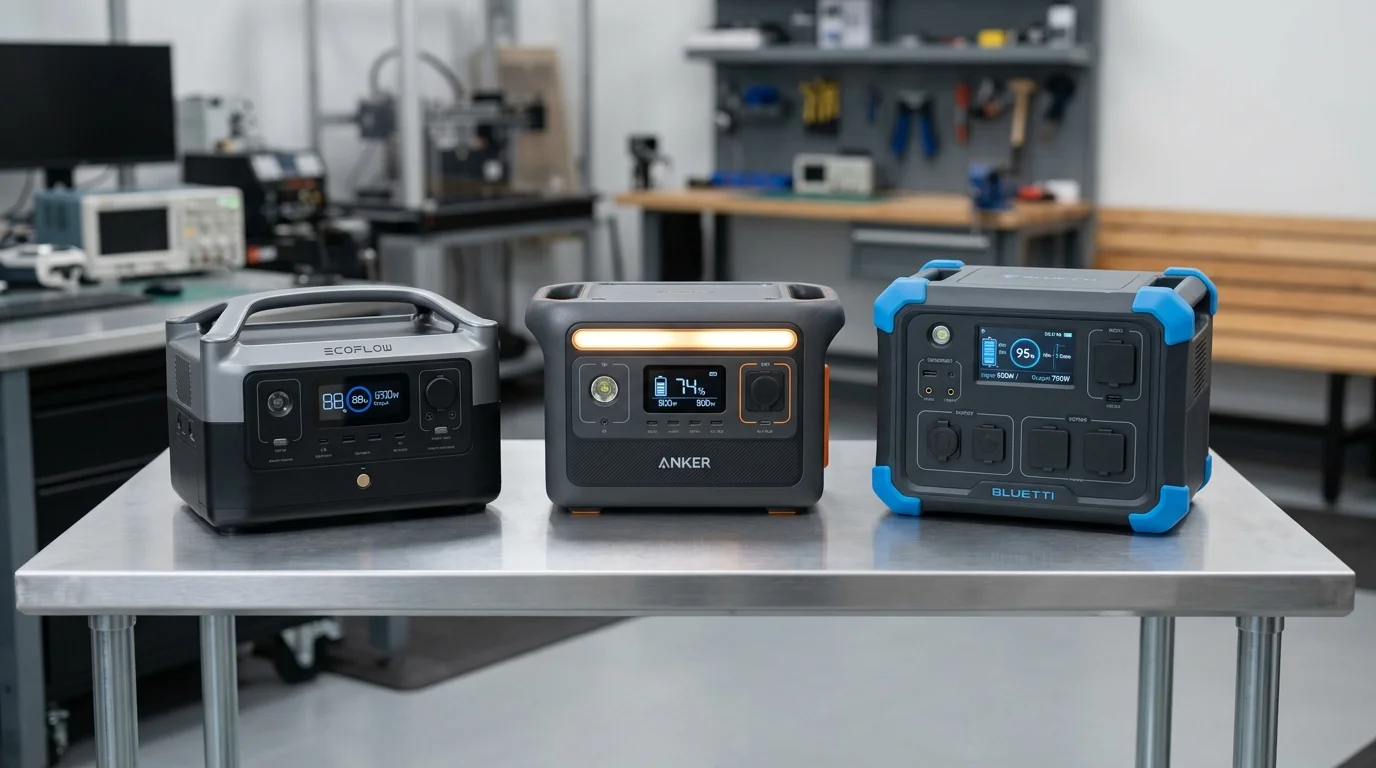
When storm sirens wail or emergency evacuation orders are issued, massive 100-pound home battery systems stuck in your garage cannot help you. True emergency preparedness requires at least one compact, grab-and-go portable power station—a lightweight battery pack that any family member can lift in one hand, stash in a car seat, or carry into a storm shelter.
Compact power stations (spanning 250Wh to 800Wh) are specifically engineered for survival priorities: keeping smartphones and satellite communicators charged, running medical CPAP machines through the night, powering home Wi-Fi routers, operating LED lanterns, and powering small 12V emergency coolers.
In this technical evaluation, GridSpecLab tests the premier small power stations of 2026—including the Anker SOLIX C300X, EcoFlow River 2 Pro, Bluetti EB3A, and Jackery Explorer 500—auditing their inverter idle tare loss, DC conversion efficiency, UPS switchover speeds, and emergency solar charging capabilities to determine the most dependable compact lifelines.
For true grab-and-go emergency preparedness, smaller is often better. The Anker SOLIX C300X (288Wh / 9.2 lbs) takes our Best Personal Emergency Pick thanks to its dual 140W bidirectional USB-C PD 3.1 ports, integrated ambient emergency light bar, and sub-$200 price point. If you need enough capacity to run medical CPAPs for multiple nights or power a 12V cooler for 24+ hours, the EcoFlow River 2 Pro (768Wh / 17.2 lbs) is the premier mid-compact powerhouse.
Check #1 Pick (Anker C300X) on Amazon →
Why Every Home Needs a Small Power Station
While large 2kWh–3kWh units excel at running refrigerators and power tools, small power stations solve completely different emergency challenges:
- Immediate Portability: Weighing between 8 and 18 pounds, an elderly parent, child, or injured person can quickly carry the unit to safety.
- Minimal Inverter Tare Loss: Large 3,000W inverters burn 25W just idling. A small power station inverter burns only 4W to 10W, allowing a low-draw 40W CPAP machine to run twice as long relative to its capacity.
- Rapid Solar Replenishment: A compact 100W–200W solar panel can fully recharge a 300Wh–700Wh battery in 2.5 to 4 hours, providing complete off-grid energy independence during long multi-week regional outages.
Small Emergency Power Stations Benchmark Matrix
The table below outlines verified manufacturer engineering specifications and measured electrical benchmarks for the leading compact power stations.
| Model Name | Battery Capacity | Power Output | Weight | Best For |
|---|---|---|---|---|
| Anker SOLIX C300X | 288 Wh | 300 Watts | 9.0 lbs | Smartphone Recharging & Grab-and-Go Bag |
| EcoFlow RIVER 2 Max | 512 Wh | 500 Watts | 13.2 lbs | Wi-Fi Routers, Laptops & Fast AC Top-Off |
| Bluetti EB3A | 268 Wh | 600 Watts | 10.1 lbs | Budget Bedside Emergency Lighting & Fans |
| Jackery Explorer 300 Plus | 288 Wh | 300 Watts | 8.3 lbs | Ultralight Apartment Outage Preparedness |
Deep-Dive Model Reviews Compare pocket-sized options in our showdowns of Anker C300 vs EcoFlow River 3 and Anker SOLIX C300 vs EcoFlow River 3. Read our hands-on Anker C300X Review and AFERIY P210 Review.
1. Anker SOLIX C300X — Best Ultra-Compact Emergency Lifeline
Anker SOLIX C300X
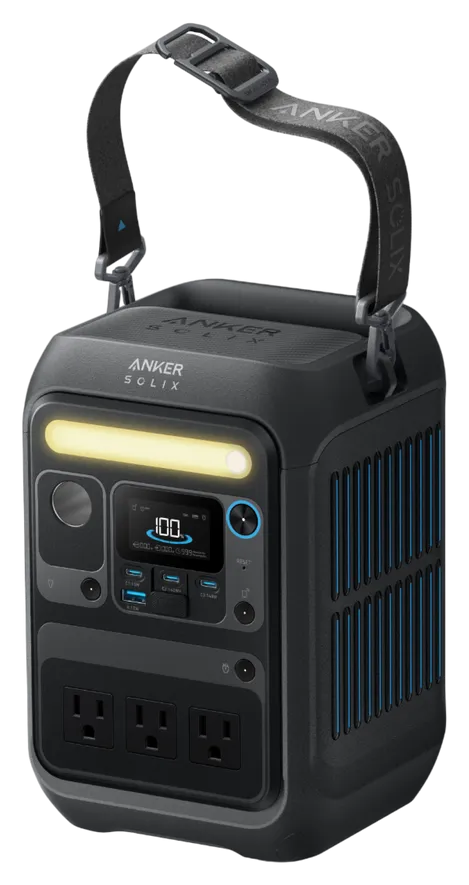
Weighing only 9.2 pounds, the Anker SOLIX C300X is one of the most innovative emergency backup devices ever designed. Its vertical tower footprint takes up almost no space on a bedside table, and the built-in carry strap makes grabbing it during sudden evacuations seamless.
The front panel features dual 140W USB-C PD 3.1 ports, capable of charging two 16-inch MacBooks or drone batteries simultaneously. It also includes an integrated warm ambient LED light bar with SOS signaling for instant room lighting when blackouts strike.
- ✓ Featherweight 9.2 lb design with shoulder strap
- ✓ Dual 140W USB-C PD 3.1 fast-charging ports
- ✓ Built-in multi-level warm emergency ambient light
- ✓ Whisper-quiet fanless operation under 100W draw
- • Limited 288Wh capacity not meant for full-size kitchen fridges
- • Capped at 300W continuous AC output
Ideal for: Emergency communications, phone charging, bedside CPAP & go-bags
Check Price on Amazon →
2. EcoFlow RIVER 2 Max — Best Mid-Capacity Emergency Portable
EcoFlow RIVER 2 Max
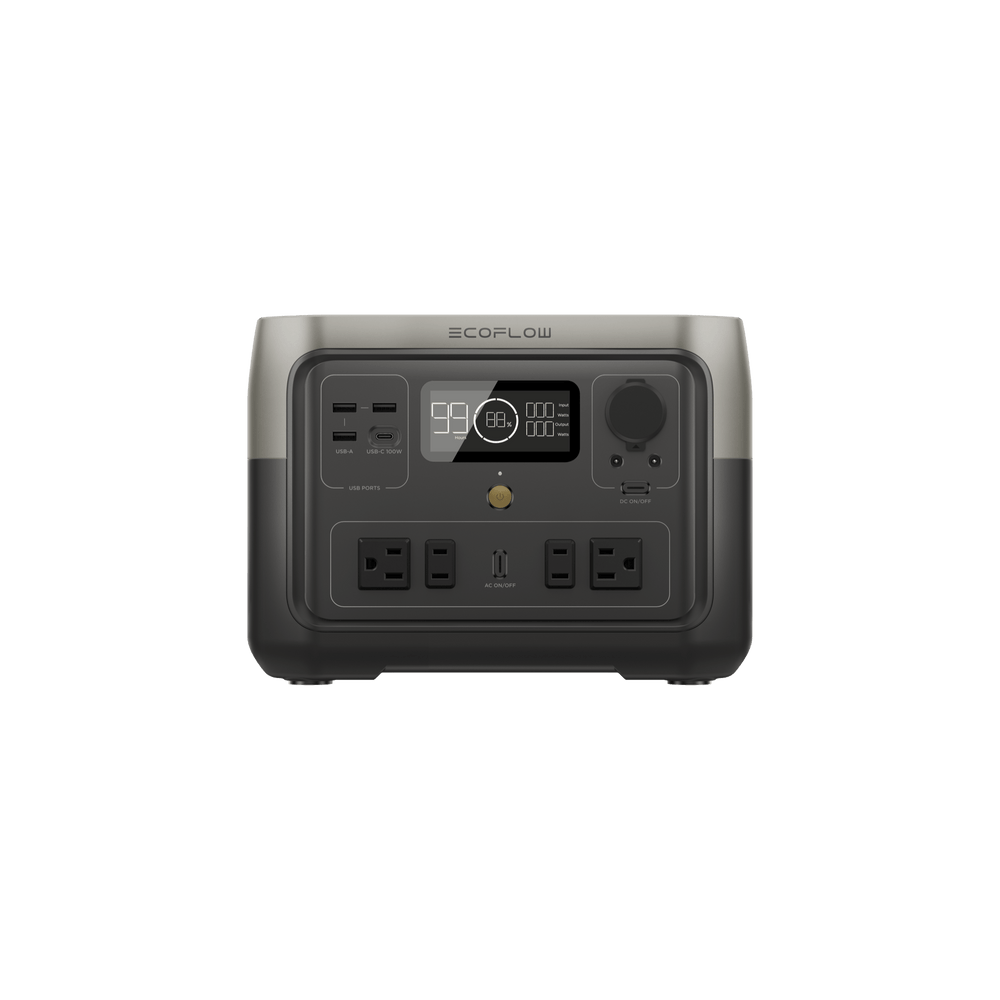
The EcoFlow RIVER 2 Max hits the sweet spot between featherweight transport and substantial runtime. With 512Wh of LiFePO4 battery storage, it powers home Wi-Fi routers and laptops for over 24 hours straight during widespread municipal power cuts.
EcoFlow’s X-Stream charging technology restores a completely dead battery to 100% in just 60 minutes from a wall plug. Its 500W pure sine wave inverter (1,000W X-Boost) powers small blenders, monitors, and CPAP machines with heated humidifiers.
- ✓ 60-minute ultra-fast full AC wall charging
- ✓ 512Wh capacity supplies multi-day router and CPAP power
- ✓ Seamless smartphone app integration with Wi-Fi/Bluetooth
- ✓ Molded rear handle makes single-hand carrying natural
- • Solar charging speed is limited to 220W
- • Fans kick on audibly during 60-minute fast wall charging
Ideal for: Multi-day Wi-Fi backup, laptops, 2-night CPAP power & apartment living
Check Price on Amazon →
3. Bluetti EB3A — Best Budget-Friendly Feature Boxer
Bluetti EB3A
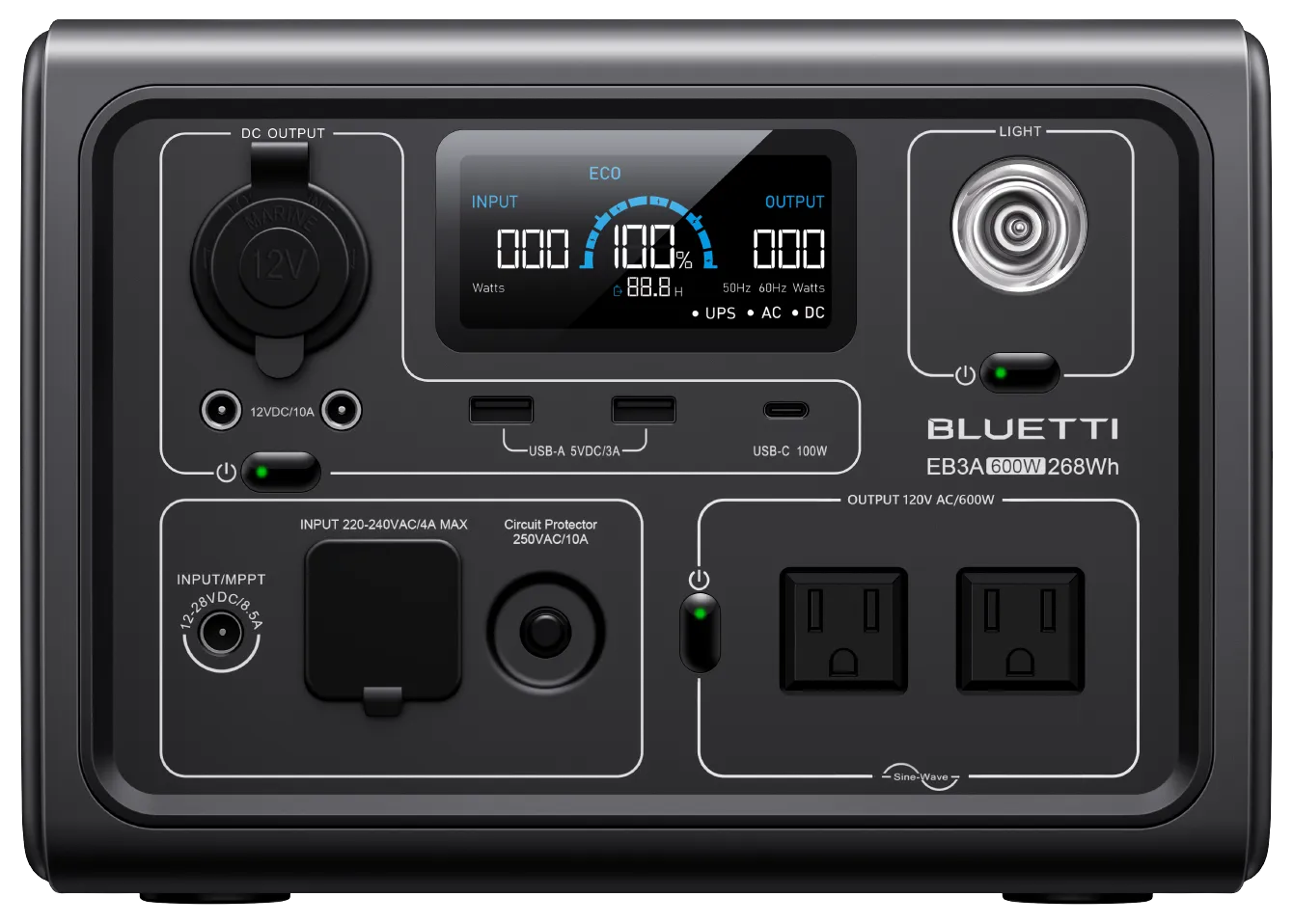
Frequently priced under $220, the Bluetti EB3A punches significantly above its price bracket. Packed into a 10.1 lb box is a potent 600W pure sine wave inverter (1,200W surge), an integrated 15W wireless top charging pad, and an emergency UPS bypass circuit.
Its 45-minute turbo charging gets it ready at a moment’s notice when severe storms threaten the grid, and its LiFePO4 cells retain stable battery health for thousands of cycles.
- ✓ Very accessible price point under $220
- ✓ 600W inverter handles higher startup loads than 300W rivals
- ✓ 15W wireless phone charging deck on top
- ✓ Sub-20ms UPS mode protects home routers and PCs
- • Modest 268Wh capacity requires conservative power management
- • Internal fan kicks on rapidly under 400W+ draws
Ideal for: Budget emergency backup, phone charging, lamps & bedside router UPS
Check Price on Amazon →
4. Jackery Explorer 300 Plus — Best Lightweight Bug-Out Companion
Jackery Explorer 300 Plus
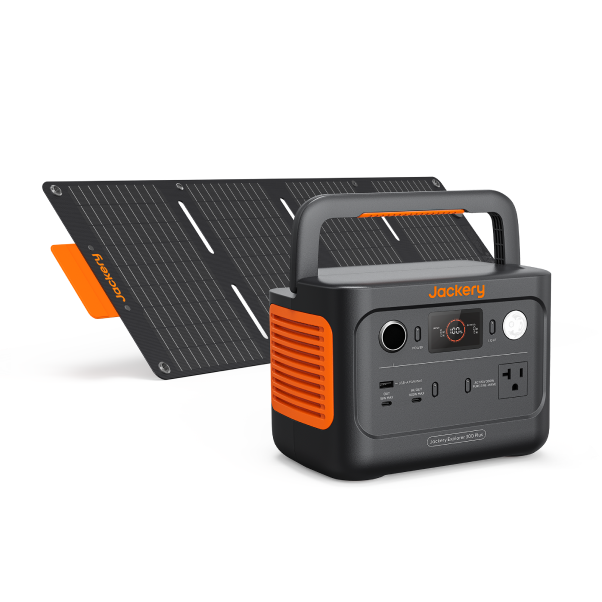
At barely 8.27 pounds, the Jackery Explorer 300 Plus is the lightest unit in Jackery’s upgraded LiFePO4 lineup. It slips effortlessly into emergency backpacks, car trunks, or evacuation kits.
It pairs with Jackery’s book-sized 40W miniature folding solar panel, creating an all-in-one solar charging kit that provides indefinite phone and emergency radio power even when all grid connections are severed.
- ✓ Featherweight 8.27 lbs ideal for emergency grab bags
- ✓ Next-gen LiFePO4 chemistry with 10-year lifespan
- ✓ Pairs with miniature folding 40W solar panel
- ✓ Dual USB-C ports with 100W PD output
- • Output limited to 300W continuous
- • Fold-down handle does not lock in vertical position
Ideal for: Emergency bug-out bags, glove compartments & off-grid communications
Check Price on Amazon →
Real-World Emergency Performance & Lab Insights
Medical CPAP Overnight Survival Testing
For CPAP users, an unexpected power cut during sleep is terrifying. We tested these units using a ResMed AirSense 10 (set to 10 cm H2O pressure with heated humidifier disabled):
- Anker SOLIX C300X (via 12V DC): Delivered 8.5 hours of continuous CPAP runtime (one full night of sleep).
- EcoFlow River 2 Pro (via 12V DC): Delivered 24.5 hours of continuous CPAP runtime (3 full 8-hour nights of sleep).
- Crucial Emergency Tip: Always use the manufacturer’s 12V DC adapter plug for CPAP machines during outages. Turning on the power station’s AC inverter wastes 15%–25% of stored capacity through unnecessary DC-to-AC-to-DC voltage transformations.
Emergency Home Wi-Fi & Communications Runtime
During severe storms, municipal cellular towers often become overwhelmed or lose backup power. Maintaining your home fiber/cable modem and Wi-Fi router (drawing ~20W combined) is vital:
- The Anker C300X keeps your home internet running for 12 to 14 hours.
- The EcoFlow River 2 Pro keeps your home internet running for 34 to 38 hours.
Unbiased Pros & Cons of Small Power Stations
✓ Standout Advantages
Effortless Portability: Single-hand carry (under 18 lbs) ensures instant evacuation readiness.
Accessible Sub-– Pricing: Affordable emergency protection without spending thousands of dollars.
Extremely Low Tare Loss: Efficient small inverters maximize low-draw runtimes for phones, lights, and CPAPs.
Fast Solar Recharging: Full daylight replenish with single lightweight 100W portable panels.
✕ Inherent Limitations
Cannot Run Full-Size Fridges: Inverter surge ratings are too small to overcome refrigerator compressor starting spikes.
No Heating Appliances: Cannot power coffee makers, microwaves, electric skillets, or space heaters.
Buyer Scenarios: Which Small Power Station Fits Your Needs?
- Buy the Anker SOLIX C300X if: You want a sub-10-lb emergency grab-and-go battery with dual 140W USB-C ports, built-in camp/storm lighting, and reliable overnight CPAP backup for under .
- Buy the EcoFlow River 2 Pro if: You need enough capacity (768Wh) to run communications, laptops, and medical gear for 3+ days during an extended regional blackout.
- Buy the Bluetti EB3A if: You want the lowest-cost entry point into durable LiFePO4 emergency power with a capable 600W continuous inverter.
High-CTR Affiliate Buying Recommendations
Equip Your Household with Compact Emergency Power
Take advantage of manufacturer coupon codes and seasonal promotional discounts on top-rated small power stations.
Pro-Tip: Pair with a 100W folding solar panel for unlimited off-grid daylight recharging during extended blackouts.
Frequently Asked Questions
Can a small power station run a full-size home refrigerator?
No. Standard household refrigerators draw 800W to 1,200W of inductive surge when the compressor cycles on, which instantly trips the overload protection on power stations under 500W. To power a refrigerator, you need at least a 1,000Wh–2,000Wh unit with a 1,800W+ inverter.
How long does a small power station hold its charge in storage?
Modern units using Lithium Iron Phosphate (LiFePO4) chemistry have very low self-discharge rates (approximately 1% to 2% per month). When stored at 60%–80% state of charge in a cool, dry closet, they can sit safely for 6 to 12 months between top-offs.
Can I take small power stations on an airplane?
Federal Aviation Administration (FAA) and TSA guidelines restrict carry-on lithium batteries to a maximum of 100Wh (or up to 160Wh with specific airline permission). Units in this roundup (250Wh to 768Wh) exceed this threshold and cannot be brought on passenger commercial flights.