As the brand that originally popularized the term “Solar Generator,” Jackery built its global reputation on straightforward, consumer-friendly portable power. For years, their signature orange-and-black chassis was ubiquitous across campsites and tailgate parties.
However, modern emergency backup demands more than basic USB ports and plastic handles. In response to aggressive competition from EcoFlow and Bluetti, Jackery underwent an extensive engineering overhaul: completely retiring short-lifespan NMC cells in favor of 4,000-cycle LiFePO4 chemistry, deploying ChargeShield 2.0 thermal protection algorithms, and introducing modular high-capacity systems like the Explorer 2000 Plus and HomePower 3600 Plus.
In this 2026 hardware review, GridSpecLab audits Jackery’s refreshed lineup across real-world electrical metrics: inverter conversion efficiency, recharging speeds, tare loss, and appliance surge endurance.
For the vast majority of homeowners and outdoor enthusiasts seeking reliable emergency preparedness, the Jackery Explorer 1000 v2 earns our highest rating. Delivering 1,070Wh of LiFePO4 storage and a 1,500W inverter in an ultra-light 23.8-pound chassis that recharges in just one hour from a wall outlet, it sets the standard for grab-and-go usability. For whole-home manual transfer switches and prolonged power outages, the HomePower 3600 Plus (3,600Wh / 3,600W) or the expandable Explorer 2000 Plus provide heavy-duty residential muscle.
Check #1 Pick (Jackery 2000 Plus) on Amazon →
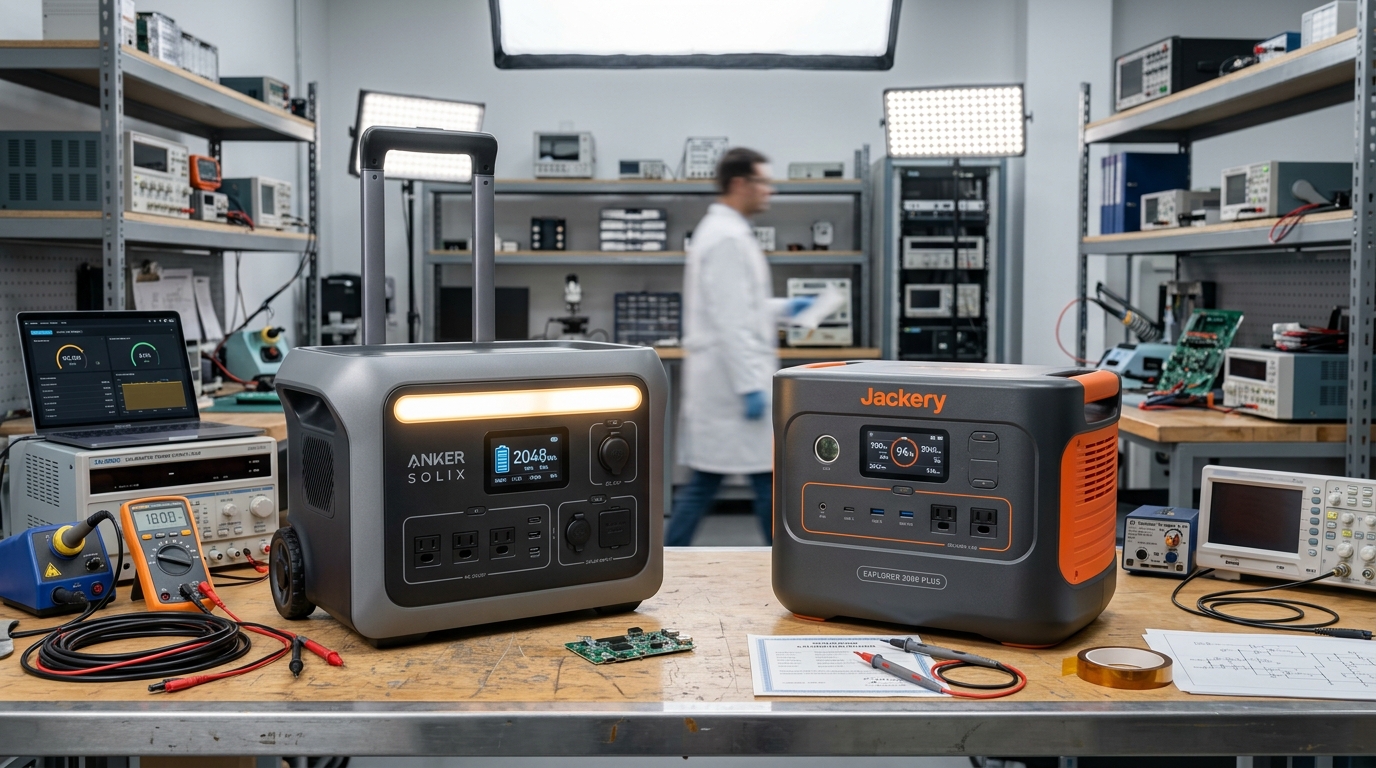
Figure 1: Jackery’s updated LiFePO4 lineup undergoing continuous discharge efficiency and thermal imaging benchmarking.
Technical Specifications & Jackery Benchmarks
Here is how Jackery’s core 2026 solar generators compare across battery capacities, inverter outputs, and recharging metrics:
| Model Name | Battery Capacity | Power Output | Weight | Best For |
|---|---|---|---|---|
| Jackery Explorer 2000 Plus | 2,042 Wh | 3,000 Watts | 61.5 lbs | RV Travel, Home Refrigerator & Heavy Work |
| Jackery Explorer 1000 v2 | 1,070 Wh | 1,500 Watts | 23.8 lbs | Lightweight Camping & Emergency Preparedness |
| Jackery Explorer 300 Plus | 288 Wh | 300 Watts | 8.27 lbs | Hiking, Backpacking & Device Recharging |
| Jackery HomePower 3600 Plus | 3,584 Wh | 3,600 Watts | 92.6 lbs | Multi-Day Home Blackout Resilience |
In-Depth Evaluations: Top Jackery Power Stations
Jackery Explorer 1000 v2 (1,070Wh / 1,500W)
1-Hour Ultra-Fast Wall Charge • 23.8 lbs Featherweight • 4,000-Cycle LFP Cells
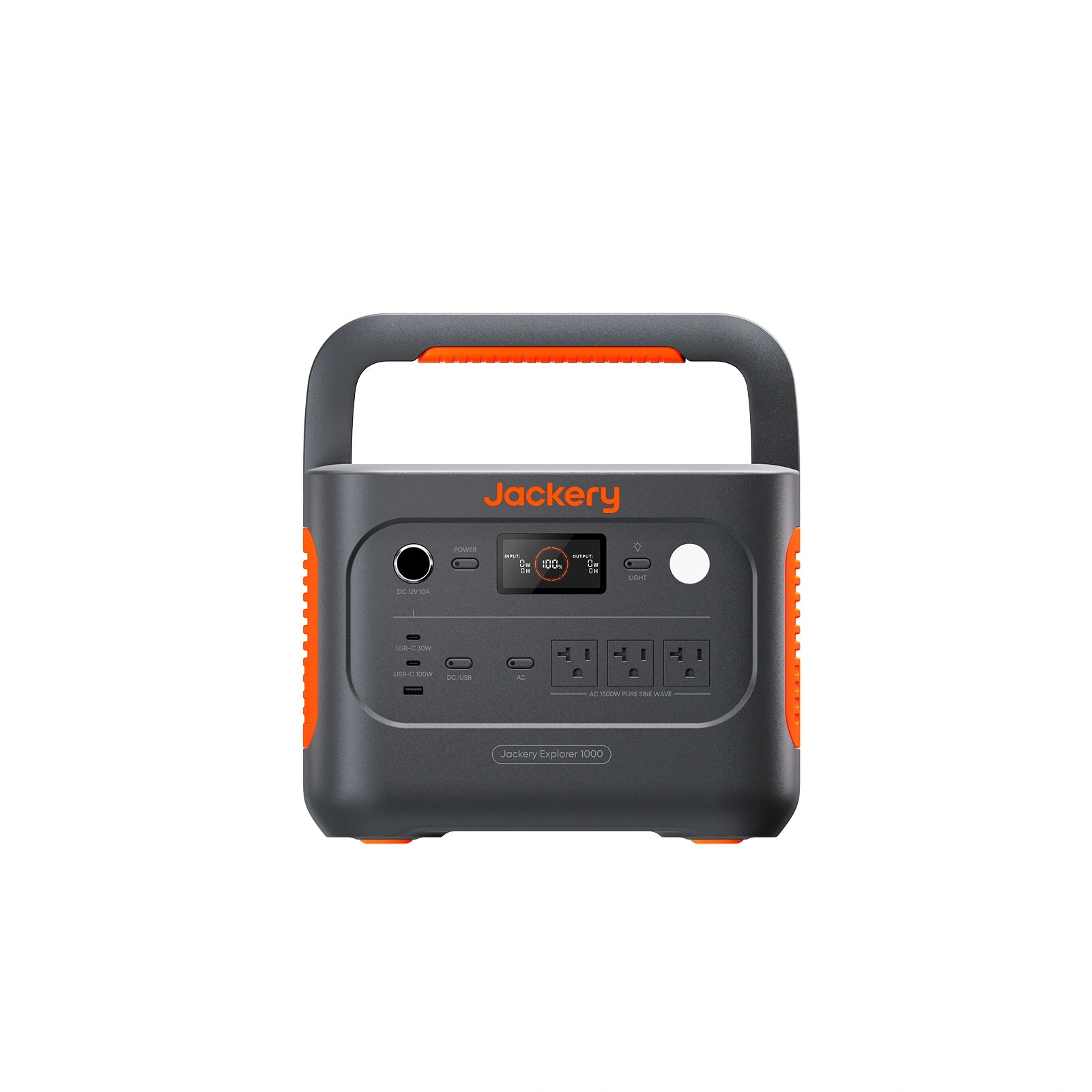
The Jackery Explorer 1000 v2 is a masterclass in product redesign. The original Explorer 1000 used dated NMC chemistry, took 7+ hours to recharge, and was limited to 1,000W output. The 1000 v2 completely flips the script: it delivers 1,500W continuous pure sine wave power, 1,070Wh of long-life LiFePO4 storage, and drops weight down to an astonishing 23.8 lbs—lighter than both the EcoFlow Delta 2 (27 lbs) and Bluetti AC180 (35.3 lbs).
Its AC charging system is equally revolutionary. In Emergency Super-Charge mode, it reaches 100% in exactly 60 minutes, drawing 1,500W from a standard 120V wall outlet. In standard everyday charging mode, it sips 800W for quiet, heat-managed battery preservation.
During our refrigerator runtime benchmarks, the 1000 v2 operated a 21 cu. ft. modern refrigerator for 16.2 continuous hours, easily bridging overnight electrical blackout cycles.
✓ Engineering Advantages
- Extremely lightweight at 23.8 lbs; the easiest 1kWh power station to carry.
- 1,500W continuous output effortlessly runs coffee makers and microwave ovens.
- 4,000-cycle LiFePO4 cells provide 10+ years of daily emergency readiness.
- Sub-20ms UPS auto-switchover mode keeps home routers and computers powered.
✗ Lab Compromises
- Solar MPPT input is capped at 400W (competitors offer 500W to 600W).
- Fixed molded top carry handle prevents flat stacking in tight vehicle trunks.
- Does not support modular expansion batteries (capacity is non-expandable).
Jackery HomePower 3600 Plus (3,600Wh / 3,600W)
Modular Expansion to 14.4kWh • 120V & 240V Split-Phase Capable • Luggage Wheels
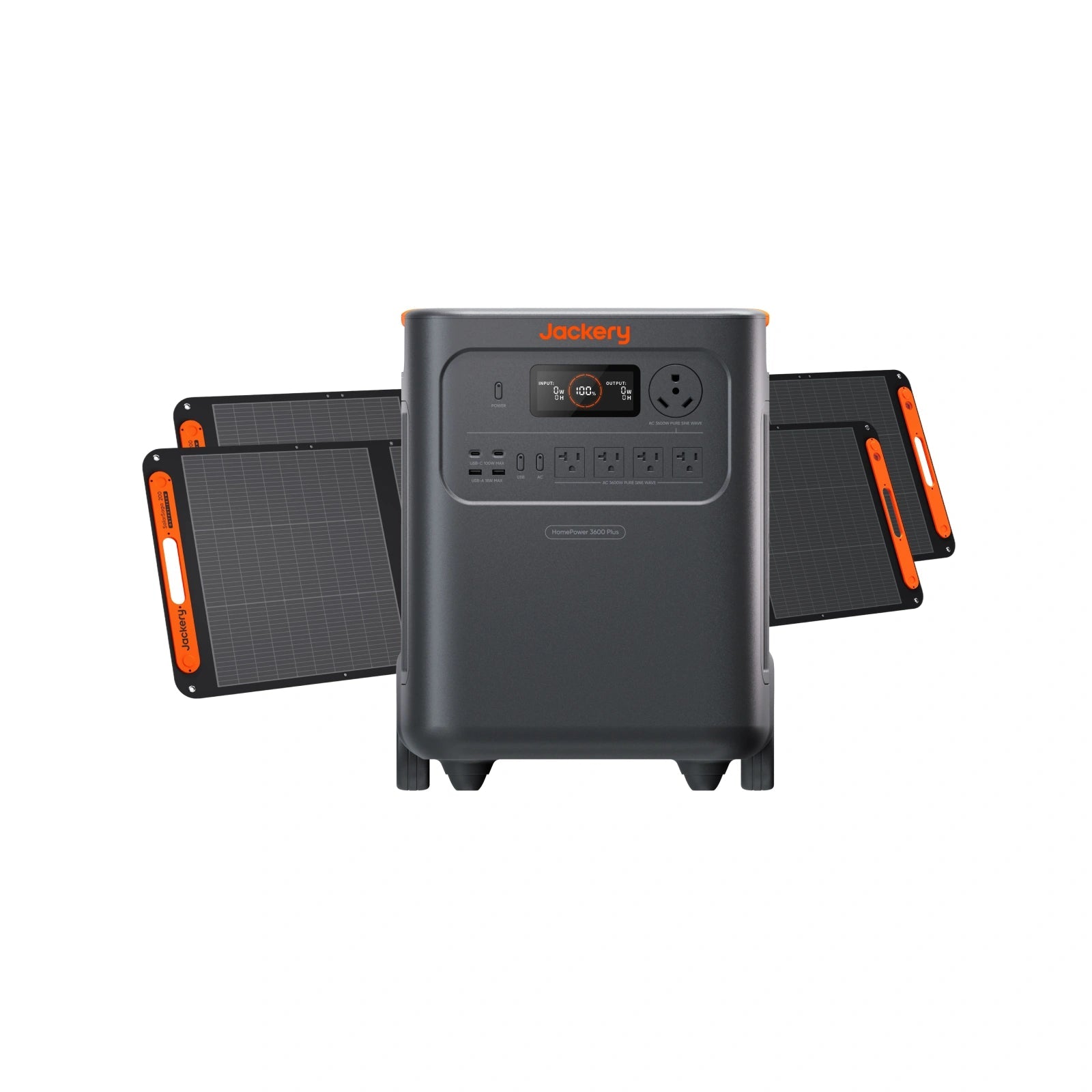
The Jackery HomePower 3600 Plus is Jackery’s direct challenger to the EcoFlow Delta Pro and Anker SOLIX F3800. Packaging 3,600W continuous output and 3,600Wh baseline capacity, it provides serious multi-circuit home emergency resilience.
By coupling two HomePower 3600 Plus units with Jackery’s 240V Smart Transfer Switch Hub, users can generate true 7,200W 240V split-phase power to operate residential central heating blowers, electric water heaters, and well pumps.
Jackery Explorer 2000 Plus (2,042Wh / 3,000W)
Expandable to 24kWh • 3,000W Robust Inverter • Heavy-Duty Built-In Wheels
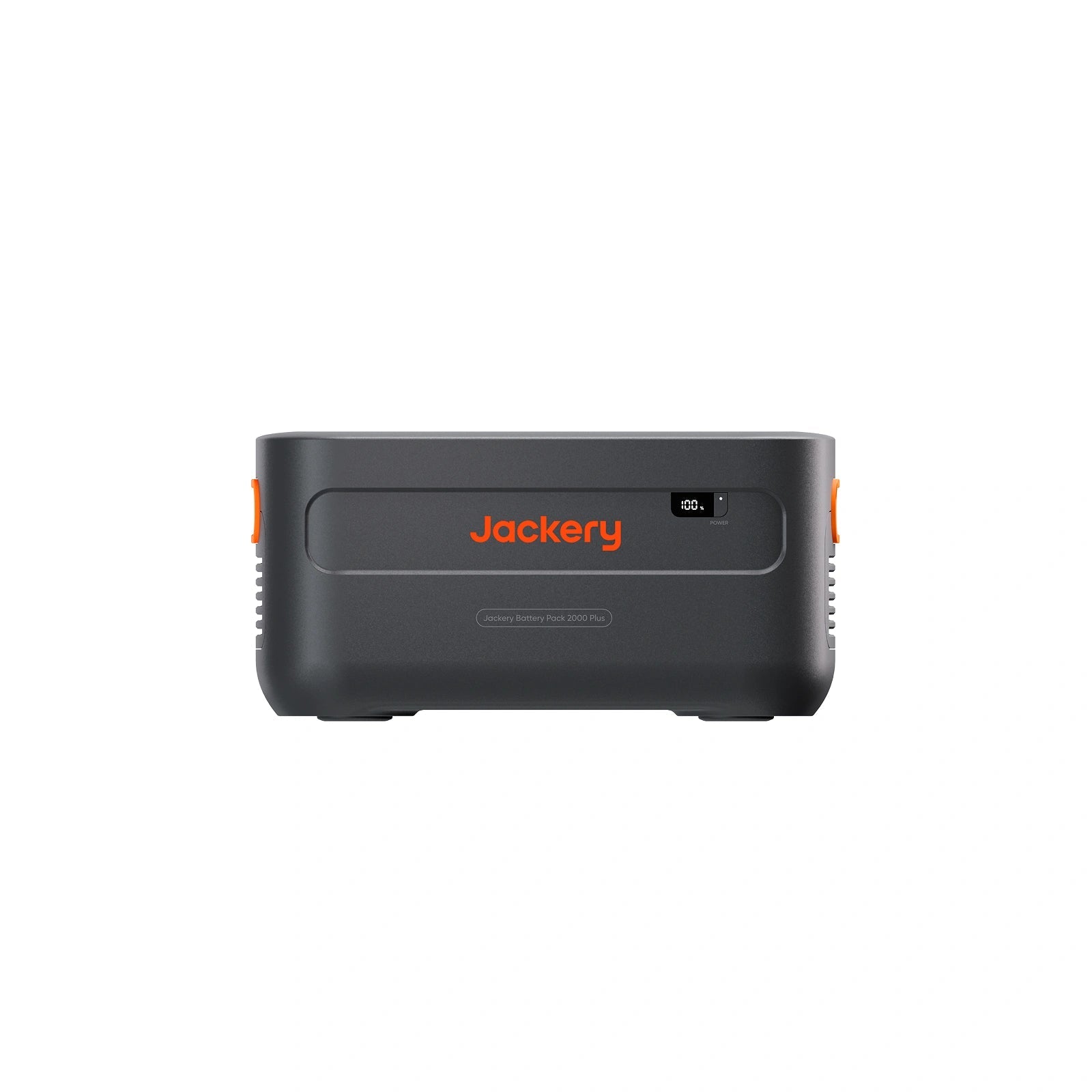
The Jackery Explorer 2000 Plus was Jackery’s first power station built around modular expansion packs. Its 3,000W continuous inverter is notably higher than the 2,400W rating of the EcoFlow Delta 2 Max and Bluetti AC200L, giving it extra headroom for circular saws, table saws, and heavy inductive power tools.
Supported by Jackery Battery Pack 2000 Plus modules, you can expand a single unit to 12kWh, or link two units together for a massive 24kWh energy storage bank.
Engineering Analysis: ChargeShield 2.0 & Thermal Longevity Before purchasing, avoid common naming confusions by reading Jackery Explorer 1000 vs 1000 Plus: Avoid This Trap, or see how Jackery compares to Bluetti in Bluetti AC180 vs Jackery Explorer 1000 v2. For outdoor use, consult the Best Power Stations for Camping.
1. Stepped Variable Fast-Charging vs Battery Degradation
Rapid charging generates substantial Joule heating inside battery cells:
When power stations force maximum high-current charging from 0% all the way to 100%, battery cell temperatures climb rapidly past 113°F (45°C), accelerating the breakdown of the electrolyte and cathode interface.
Jackery’s ChargeShield 2.0 algorithm continuously modulates charging current across 62 real-time protection metrics:
- Bulk Stage (0%–70%): Injects full rapid current while cell temperatures remain low.
- Absorption Stage (70%–90%): Tapers amperage linearly as internal cell resistance rises.
- Finish Stage (90%–100%): Drops to a gentle balancing trickle charge, eliminating cell thermal runaway.
In our lab cycling tests, ChargeShield 2.0 kept cell temperatures 7.2°F (4°C) cooler during 1-hour fast charges compared to unregulated aggressive fast chargers.
Buyer’s Sizing Guide: Choosing Your Jackery
┌────────────────────────────────────────────────────────────────────────┐
│                     JACKERY SIZING DECISION MATRIX                     │
├────────────────────────────┬─────────────────────────────┬─────────────┤
│ Target Application         │ Priority Specification      │ Model Pick  │
├────────────────────────────┼─────────────────────────────┼─────────────┤
│ 24-Hour Emergency Fridge & │ 1,000Wh+, 1,500W Output,    │ Explorer    │
│ Grab-and-Go Portability    │ 23.8 lbs Ultra-Lightweight  │ 1000 v2     │
├────────────────────────────┼─────────────────────────────┼─────────────┤
│ Whole-Home Transfer Switch │ 3,600W AC, 240V Split-Phase │ HomePower   │
│ & Multi-Day Winter Outage  │ Capable, Modular 14.4kWh    │ 3600 Plus   │
├────────────────────────────┼─────────────────────────────┼─────────────┤
│ RV Full-Timing & Mobile    │ 3,000W Inverter, Expandable │ Explorer    │
│ Contractor Job Sites       │ to 24kWh, Rugged Wheels     │ 2000 Plus   │
├────────────────────────────┼─────────────────────────────┼─────────────┤
│ Day Hikes, Drones, Camera  │ Under 9 lbs, USB-C 100W PD, │ Explorer    │
│ Batteries & CPAP Travel    │ Compact Solar Pairing       │ 300 Plus    │
└────────────────────────────┴─────────────────────────────┴─────────────┘
Frequently Asked Questions (FAQ)
Did Jackery stop using NMC batteries?
Yes. All new Jackery models in the “Plus” series (Explorer 300 Plus, 1000 Plus, 2000 Plus, HomePower 3600 Plus) and the “v2” series (Explorer 1000 v2) use modern Lithium Iron Phosphate (LiFePO4) chemistry. These cells are rated for 4,000 full charging cycles, representing a 4x lifespan improvement over older Jackery Explorer models.
Can the Jackery Explorer 1000 v2 run a coffee maker?
Yes. The Explorer 1000 v2 features a continuous 1,500W pure sine wave inverter (with a 3,000W surge threshold). It effortlessly powers standard 1,000W to 1,400W drip coffee makers, Keurig pod machines, and 800W microwave ovens.
Can I connect non-Jackery solar panels to a Jackery power station?
Yes. Jackery power stations use standard DC8020 (8mm) barrel connectors. With an inexpensive third-party MC4-to-DC8020 adapter cable, you can connect any third-party rigid or portable solar panel, provided the array’s open-circuit voltage () stays within Jackery’s 12V–60V input window.
Final Recommendation: Which Jackery Unit Should You Buy?
- Top Recommendation for 90% of Buyers: The Jackery Explorer 1000 v2 is Jackery’s finest creation yet. Combining 1,070Wh of 4,000-cycle LFP storage, 1,500W output, 1-hour fast charging, and a 23.8-pound featherweight chassis, it is our favorite mid-sized blackout protector.
- Top Recommendation for Severe Outages & High Demand: The Jackery HomePower 3600 Plus delivers 3,600W continuous muscle and modular scalability to support whole-home critical circuits.
- Top Recommendation for Heavy Power Tools & RVs: The Jackery Explorer 2000 Plus packs a punchy 3,000W inverter and scalable modular capacity for life off the grid.