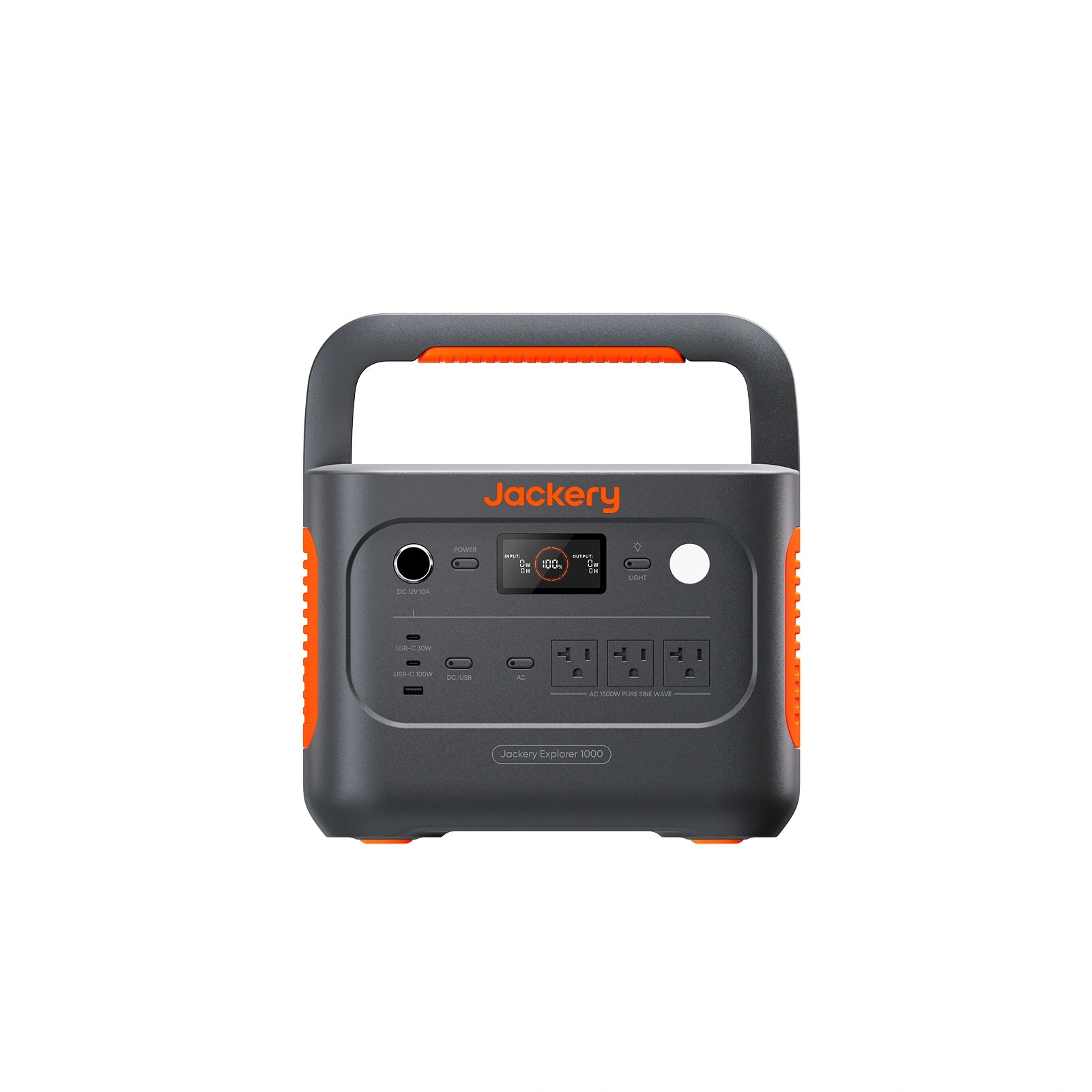
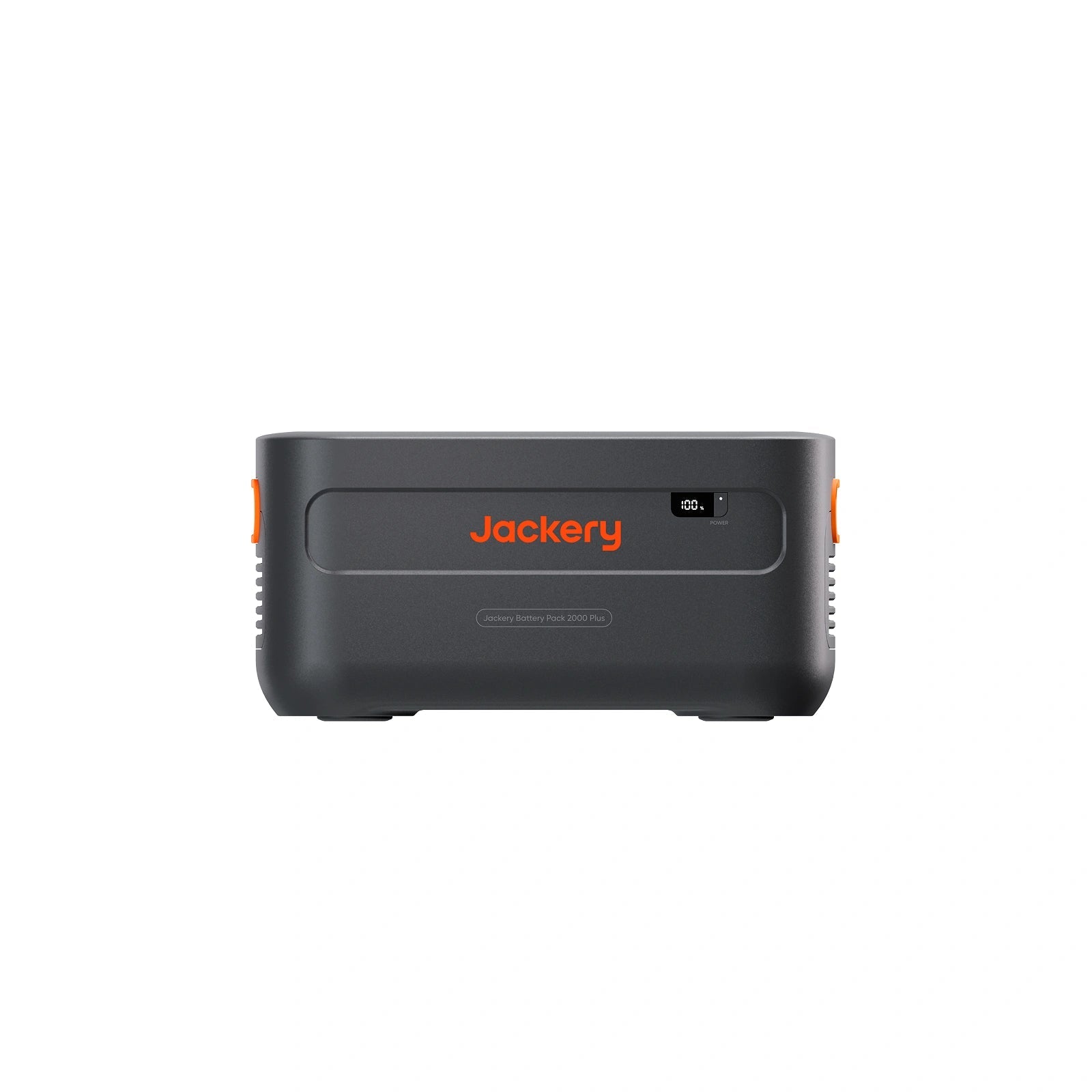
When shopping for a mid-tier portable power station, the naming conventions employed by manufacturers can easily set an expensive trap for the uninitiated. At GridSpecLab, our test benches have seen countless buyers purchase a legacy model simply because it shares a familiar “1000” moniker, only to find out months later that its chemical composition, inverter ceiling, and expansion capabilities are entirely obsolete. The debate between the legacy Jackery Explorer 1000 and the modern Jackery Explorer 1000 Plus is a textbook example of this engineering evolution.
While both units sit in the coveted 1-kilowatt-hour class, beneath their similar orange-and-black outer shells lies a completely different generation of power electronics. One relies on traditional chemistry with limited cycle endurance, while the other introduces robust lithium iron phosphate architecture and double the continuous wattage. In this head-to-head engineering breakdown, we dismantle both units to analyze charging speeds, AC inverter curves, real-world discharge efficiencies, and long-term viability so you can avoid buying the wrong box.
Side-by-Side Hardware Matchup
| Specification | Jackery Explorer 1000 | Jackery Explorer 1000 Plus |
|---|---|---|
| Battery Capacity | 1,002 Wh | 1,264 Wh |
| AC Inverter (Continuous) | 1,000 W | 2,000 W |
| AC Inverter (Surge) | 2,000 W | 4,000 W |
| Battery Chemistry | NMC (Nickel Manganese Cobalt) | LiFePO4 (Lithium Iron Phosphate) |
| Cycle Life (to 80%) | Approx. 500 Cycles | Approx. 4,000 Cycles |
| Max Solar Input (MPPT) | 400W (Voc 12-30V / 17-60V) | 800W (Voc 30-60V) |
| Expandability | None (Fixed Capacity) | Up to 3x Battery Packs (5kWh total) |
| Weight | 22.0 lbs (10.0 kg) | 31.5 lbs (14.3 kg) |
| Dimensions | 13.1 x 9.2 x 11.1 in | 14.x x 10.5 x 11.x in |
| Warranty | 3 Years | 3 Years (Extendable to 5) |
Hands-On Bench Testing: Charging Speeds and Efficiency
Our lab subjected both power stations to automated DC electronic load tests, variable solar simulations, and AC wall charging profiles.
The original Explorer 1000 relies on an external power brick setup for AC wall charging, drawing roughly 160W max via a dual-adapter configuration or standard AC cable. Getting it from 0% to 100% takes approximately 7 hours using standard dual inputs. Its solar MPPT controller tops out at 400W, making it decent for casual sunny days, but restrictive for fast off-grid replenishment.
In contrast, the Explorer 1000 Plus features an internal bidirectional inverter supporting ultra-fast AC wall charging up to 800W. Under our bench load, it zipped from 0% to 100% in a mere 1.7 hours. Its dual solar charge controllers accept up to 800W of photovoltaic input, making full use of modern high-output 200W and 400W solar panels.
When measuring real-world DC-to-AC conversion efficiency under an 800W resistive load:
- Explorer 1000: Delivered 84.5% usable capacity before low-voltage cutoff, with an idle tare loss of 6W.
- Explorer 1000 Plus: Delivered 88.2% usable capacity, aided by superior inverter topography and BMS optimization, despite a slightly higher idle tare loss of 9W.
Inverter Headroom and Surge Handling See how Jackery matches up against Bluetti’s top mid-size unit in Bluetti AC180 vs Jackery Explorer 1000 v2 and browse the Best Jackery Solar Generators.
The most dangerous trap for buyers is assuming a “1000W” power station can run any household appliance under 1000 watts.
The legacy Explorer 1000 features a 1000W continuous pure sine wave inverter with a 2000W surge ceiling. If you attempt to plug in a high-draw kitchen appliance like a 1200W coffee maker, induction cooktop, or a heavy-duty circular saw, the unit immediately trips its overload protection and shuts down.
The Explorer 1000 Plus shatters this limitation by doubling the continuous output to 2000W (with a 4000W surge). During our inductive motor testing, it effortlessly spun up heavy refrigerator compressors and powered dual-element hot plates without dropping voltage stability. If you plan on running modern appliances, hair dryers, or power tools, the 1000 Plus eliminates the guesswork of whether your gear will trigger an overload fault.
Battery Chemistry and Lifespan Realities
Chemistry is where the financial and operational trap becomes glaringly obvious.
The classic Explorer 1000 utilizes Nickel Manganese Cobalt (NMC) lithium-ion cells. NMC chemistry is energy-dense, which is why the legacy unit is lighter (22 lbs), but it suffers from a steep degradation curve. Rated for roughly 500 cycles to 80% original capacity, heavy weekend users or emergency preppers cycling the unit frequently will see noticeable capacity fade within two to three years.
The Explorer 1000 Plus steps into the modern era with Lithium Iron Phosphate (LiFePO4) chemistry. LiFePO4 cells are famously robust, delivering an astounding 4,000 cycles to 80% capacity while remaining chemically stable and resistant to thermal runaway. Even if you use the 1000 Plus daily, it will outlast the legacy model by nearly an order of magnitude. Furthermore, the Plus model features modular expandability, allowing you to chain dedicated add-on battery packs to scale your storage from 1.2kWh all the way up to 5kWh.
Scenario Breakdown: Camping vs Home Backup
Weekend Car Camping and Overlanding
If your primary use case is tossing a power station into the back of a Subaru for weekend tent camping, weight is a primary consideration. The legacy Explorer 1000 is nearly 10 pounds lighter than the Plus model, making it easier to carry to a picnic table. However, if you are building out a campervan or overlanding rig where you want to run refrigerators, induction cooking gear, and recharge rapidly via rooftop solar panels, the Explorer 1000 Plus is the undisputed king.
Home Emergency Backup
For emergency grid-down scenarios, the legacy Explorer 1000 falls short. Its 1000W inverter cannot power a standard residential refrigerator with high startup surge currents reliably, and its NMC battery degrades quickly if left in a float-charge state. The Explorer 1000 Plus functions seamlessly as an uninterruptible power supply (UPS switchover in 20ms) and can handle heavy emergency loads like medical CPAP machines, sump pumps, and communication routers simultaneously.
Pros & Cons Comparison
Jackery Explorer 1000
Pros:
- Significantly lighter and more compact for grab-and-go portability.
- Proven track record with thousands of units deployed worldwide.
- Lower initial purchase price on clearance or sales events.
- Simple, straightforward interface with zero learning curve.
Cons:
- Obsolete NMC battery chemistry with limited 500-cycle lifespan.
- Fixed capacity with zero expansion options.
- Slow charging speeds restricted to 160W-400W solar input.
- 1000W continuous inverter trips easily on modern appliances.
Jackery Explorer 1000 Plus
Pros:
- Ultra-long-lasting LiFePO4 chemistry rated for 4,000+ cycles.
- Powerful 2000W continuous inverter handles heavy household loads.
- Expandable capacity up to 5kWh using modular add-on packs.
- Fast charging supporting up to 800W solar and rapid AC wall input.
Cons:
- Heavier footprint (31.5 lbs) makes single-hand carrying more taxing.
- Higher initial investment price point.
- Slightly higher idle tare loss when left powered on without loads.
The Verdict: Which One Should You Buy?
The naming convention creates a deceptive trap, making buyers think the legacy Explorer 1000 is simply a slightly older version of the Plus. In reality, they belong to entirely different technological generations. Buying the older NMC model to save a few dollars upfront is a false economy when you factor in its restricted inverter ceiling and short cycle life.
- Choose the Jackery Explorer 1000 if you are strictly seeking a lightweight, budget-friendly power source for infrequent weekend tent camping where weight is paramount and heavy appliances are never attached.
- Choose the Jackery Explorer 1000 Plus if you want a future-proof investment featuring decadal LiFePO4 battery longevity, double the inverter power, rapid charging speeds, and modular expandability for true home backup.