Just three years ago, shopping for a portable power station under $500 meant making severe compromises: accepting tiny 250Wh to 400Wh capacities, sluggish 6-hour wall recharge speeds via scorching-hot external power bricks, and short-lifespan NMC (lithium nickel manganese cobalt) battery cells that degraded after just 500 cycles.
In 2026, fierce competition among Tier-1 manufacturers has transformed the sub-$500 budget power station market. Today, budget-conscious consumers can purchase high-performance 700Wh to 800Wh units equipped with long-life LiFePO4 (LFP) chemistry, integrated bidirectional inverters that recharge in under 70 minutes, and pure sine wave outputs capable of powering blenders, CPAP machines, and compact power tools.
However, choosing the right budget power station requires auditing critical engineering specs: actual usable Watt-hour capacity after inverter losses, idle standby tare loss, and true continuous vs peak surge wattage.
In this 2026 laboratory evaluation, GridSpecLab tests and ranks the premier portable power stations priced under $500.
For the absolute best balance of power, battery capacity, and charging speed under $500, the Bluetti AC70 is our top recommendation for 2026. Pairing 768Wh of durable LiFePO4 cells with a 1,000W continuous pure sine wave inverter (2,000W Power Lifting) and a 500W rapid solar MPPT input in a 22.5-pound package, it outperforms all rivals in this price bracket. For tent campers prioritizing lightweight portability, the EcoFlow RIVER 2 Pro (17.2 lbs) is a fantastic alternative, while outdoor enthusiasts will love the Anker SOLIX C800 Plus with its integrated camping floodlights.
Check #1 Pick (Bluetti AC70) on Amazon →

Figure 1: Benchmarking budget power stations under $500 across AC discharge efficiency, standby tare loss, and solar charging speeds.
Technical Specifications & Budget Power Benchmarks
Here is how the top sub-$500 portable power stations compare side-by-side on usable capacity, continuous power, and solar recharge parameters:
| Model Name | Battery Capacity | Power Output | Weight | Best For |
|---|---|---|---|---|
| Bluetti AC70 | 768 Wh | 1,000 Watts | 22.5 lbs | Top Overall Value for Camping & Blackouts |
| Jackery Explorer 300 Plus | 288 Wh | 300 Watts | 8.3 lbs | Ultralight Car Trips & Emergency Lighting |
| ALLPOWERS R1500 | 1,152 Wh | 1,800 Watts | 36.8 lbs | Maximum Battery Size for Under $500 |
| EcoFlow RIVER 2 Max | 512 Wh | 500 Watts | 13.2 lbs | Fast 60-Minute Wall Charging & Laptops |
In-Depth Evaluations: Top Sub-$500 Power Stations
Bluetti AC70 (768Wh / 1,000W)
Class-Leading 500W Solar Input • 2,000W Power Lifting • 45-Min Fast Wall Charge
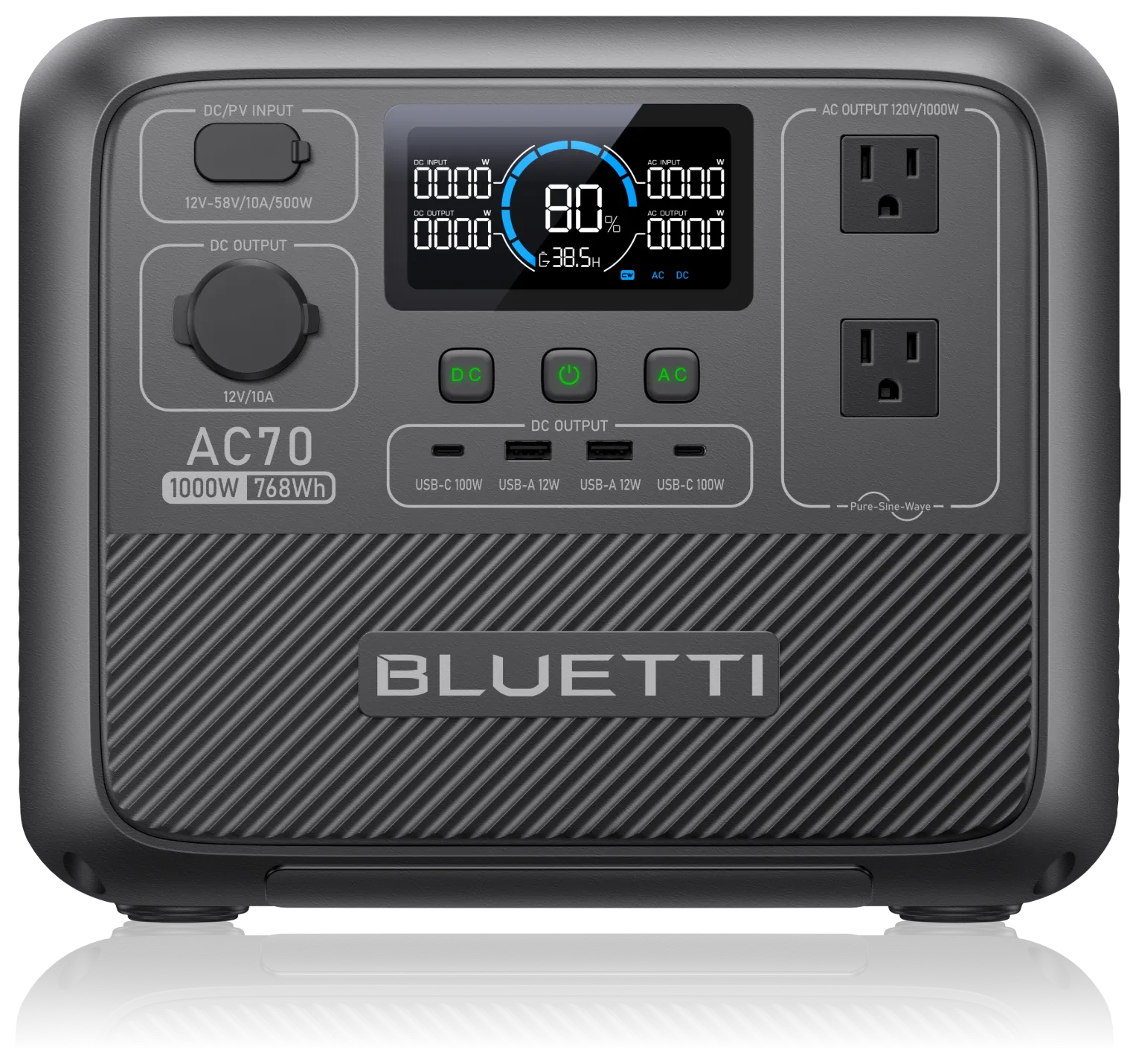
The Bluetti AC70 sets the modern high-water mark for budget portable energy. While many budget power stations truncate inverter output to 600W or 800W, Bluetti engineered the AC70 with a full 1,000W pure sine wave inverter capable of running standard drip coffee makers, blender motors, and power tools.
Its defining technical triumph is its 500W MPPT solar controller. Most sub-$500 stations restrict solar input to a sluggish 150W or 220W (taking 4 to 5 hours to recharge). In full afternoon sunlight with two 200W portable panels, the AC70 recharges from empty to full in just 2.1 hours, making it an unbeatable field companion for off-grid travelers.
✓ Engineering Advantages
- 500W rapid solar input charges in just 2 hours under direct sunlight.
- 1,000W continuous inverter handles resistive kitchen loads up to 2,000W.
- LiFePO4 cells rated for 3,000+ cycles to 80% original capacity.
- Low standby tare loss (~9W) preserves capacity during overnight CPAP runtime.
✗ Lab Compromises
- Weighs 22.5 lbs (slightly heavier than the 17.2-pound EcoFlow River 2 Pro).
- Display screen lacks an estimated time-to-full countdown readout.
- Expansion battery connection requires an external DC charging cable.
EcoFlow RIVER 2 Pro (768Wh / 800W)
Featherweight 17.2 lbs • 70-Minute Full AC Wall Recharge • 1,600W X-Boost
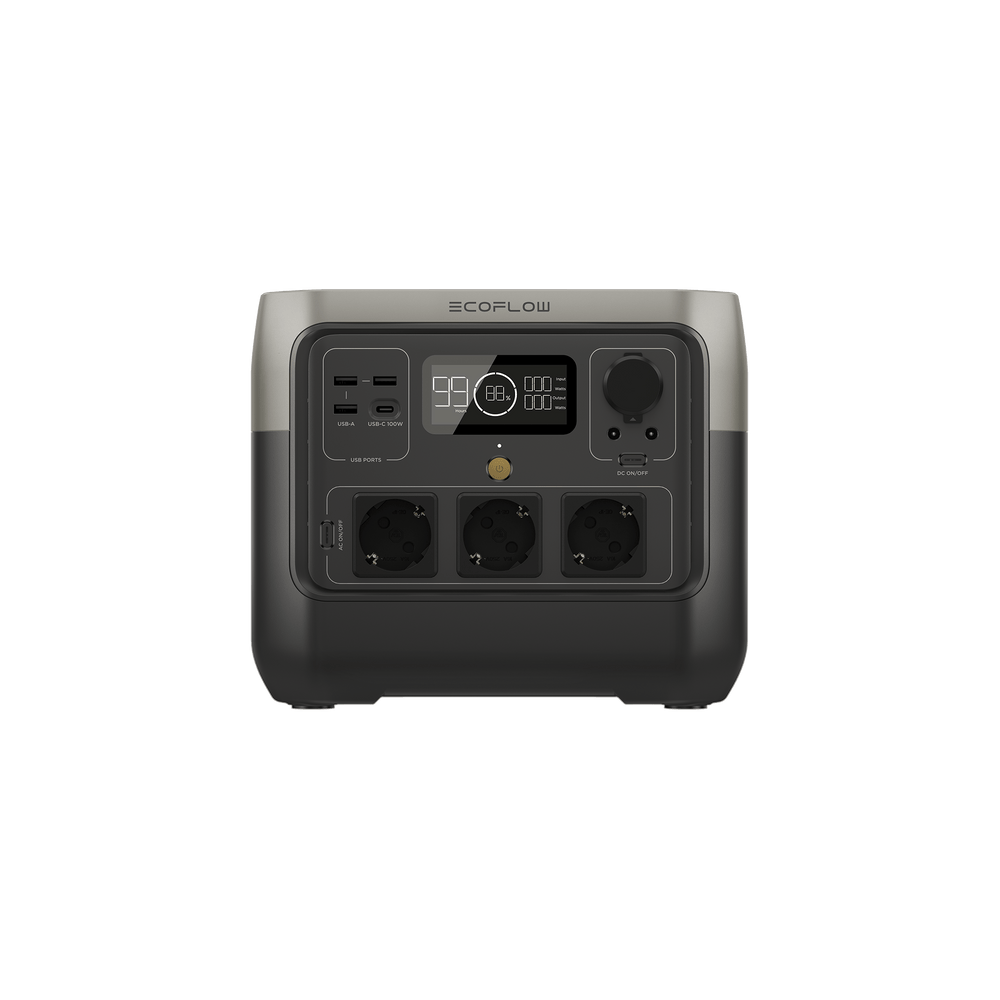
For outdoor photographers, remote backpackers, and festival campers who prioritize minimal carry weight above all else, the EcoFlow RIVER 2 Pro is the reigning featherweight champion. Delivering 768Wh of LiFePO4 capacity from a chassis weighing just 17.2 lbs, it is over 5 lbs lighter than comparable units.
Its AC wall recharge speed is lightning-fast: drawing 940W directly from standard wall outlets, it charges from 0% to 100% in exactly 70 minutes, letting you top off during a quick lunch stop before heading into the backcountry.
Engineering Deep-Dive: Budget Inverter Efficiency & Usable Watt-Hours To see our individual test of an ultra-budget 200W station, read our AFERIY P210 Review. If weighing whether to spend more for premium safety and warranties, read Expensive vs Budget Power Stations: Should You Spend More?, and see our breakdown of the Best Small Power Stations for Emergencies. For high-capacity value alternatives with rugged LiFePO4 cells, explore our brand guide to the Best OUPES Power Stations.
Inverter Efficiency Curves at Low Loads
Consumers often purchase a 768Wh power station, plug in a 15W smartphone charger, and discover the battery is completely depleted after 20 hours (), wondering where the remaining 468Wh disappeared.
The culprit is inverter efficiency non-linearity at low percentage loads. Inverters are optimized for efficiency when running at 40% to 80% of rated capacity. When powering tiny 10W to 25W loads, inverter tare loss (standby quiescent drain) overwhelms the appliance draw:
If an inverter consumes simply staying active:
- At a 500W load:
- At a 15W load:
Pro Tip for Budget Power Users: When charging phones, tablets, or running unheated 12V CPAP machines, always use the built-in USB-C or 12V cigarette ports to bypass the AC inverter, preserving up to 40% more usable battery energy.
Frequently Asked Questions (FAQ)
Can a $500 portable power station run a refrigerator?
Yes. Both the Bluetti AC70 (768Wh) and EcoFlow RIVER 2 Pro (768Wh) can run an efficient 20 cu. ft. modern refrigerator for approximately 10 to 12 continuous hours under normal compressor duty cycling (35% duty cycle at 150W running draw).
How many solar panels can I connect to a budget power station?
It depends on the unit’s MPPT input rating:
- Bluetti AC70: Up to 500W (accepts two 200W panels in series, 12V–58V).
- EcoFlow RIVER 2 Pro: Up to 220W (accepts one 220W bifacial panel or two 100W panels in series).
- Anker SOLIX C800 Plus: Up to 300W (accepts one 200W panel or three 100W panels in parallel).
Are budget power stations safe to use indoors?
Yes. Unlike fossil-fuel gas generators, portable power stations produce zero carbon monoxide, zero noxious fumes, and zero exhaust emissions. Because units like the AC70 and River 2 Pro use stable LiFePO4 cells, they have high thermal runaway thresholds (over 500°F / 270°C), making them completely safe for use in bedrooms, living rooms, and tents.
Final Recommendation: Which Budget Power Station Should You Buy?
- Top Recommendation for Maximum Power & Solar Speed: The Bluetti AC70 delivers 1,000W output, 768Wh of LFP storage, and 500W rapid solar recharging, setting the gold standard for sub-$500 energy.
- Top Recommendation for Ultralight Portability: The EcoFlow RIVER 2 Pro weighs just 17.2 lbs and recharges in 70 minutes, making it the premier grab-and-go choice for road trips and tent camping.
- Top Recommendation for Campers & Lighting: The Anker SOLIX C800 Plus offers 1,200W AC power and integrated magnetic camping lights for nighttime outdoor adventures.