Prolonged power outages from severe storms, hurricane seasons, and aging electrical utility grids have transformed home emergency readiness. Where noisy, fume-spewing gas generators once stood as the only viable emergency power source, large-capacity whole-home battery power stations have emerged as the premier clean energy alternative.
Unlike compact camping power banks built solely for laptops and mini-fridges, a “Big Power Station” is a serious residential energy storage asset. These heavyweight units feature capacities starting at 3,500Wh to 6,000Wh and scale past 20,000Wh (20kWh) through modular expansion batteries. More importantly, they deliver native 120V/240V split-phase alternating current, allowing direct connection to your home’s manual transfer switch or smart electrical subpanel.
However, choosing a whole-home battery system requires careful electrical auditing. You must balance inverter surge ratings (Locked Rotor Amps), solar MPPT voltage thresholds, idle standby power drain (tare loss), and subpanel wiring compatibility.
In this comprehensive 2026 technical guide, GridSpecLab evaluates and ranks the premier big power stations on the market to help you safeguard your family with uninterrupted, clean emergency electricity.
For the vast majority of homeowners seeking a clean, dependable home emergency power solution, the Anker SOLIX F3800 earns our top overall recommendation. Delivering 6,000W of native 120V/240V split-phase power, 3.84kWh baseline capacity (expandable to 26.9kWh), an integrated NEMA 14-50 EV charging port, and effortless manual transfer switch connectivity, it sets the standard for user-friendly home resilience. If your property demands maximum industrial-grade capacity, multi-kilowatt roof solar input (up to 450V), and high continuous power for geothermal or large central AC compressors, the EcoFlow DELTA Pro Ultra is the undisputed heavy-duty powerhouse.
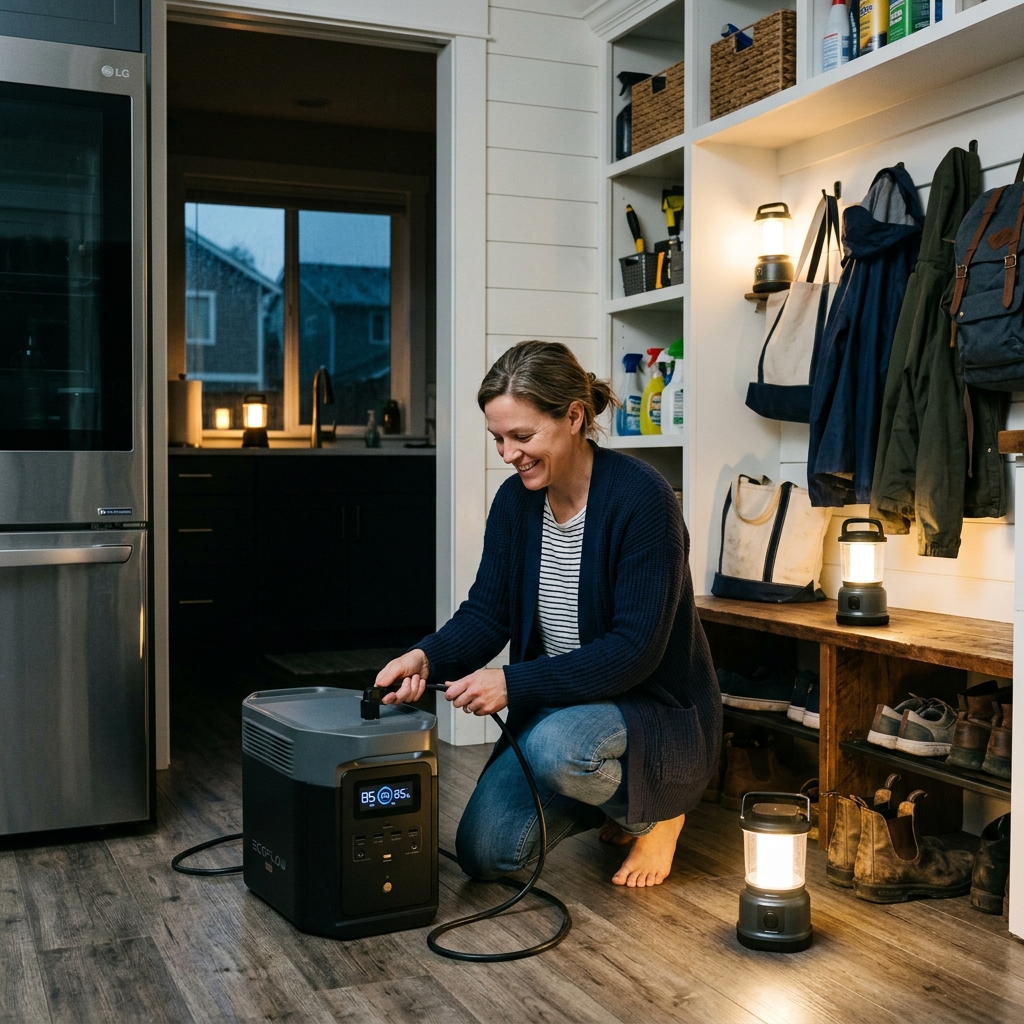
Figure 1: High-capacity power stations deliver seamless whole-house backup power via manual transfer switches or smart electrical subpanels.
Technical Specifications & Inverter Benchmarks
Powering an entire home requires analyzing continuous inverter output, surge overhead, chemistry lifecycles, and maximum solar acceptance. Here is how the top high-capacity home backup systems compare side-by-side:
| Model Name | Battery Capacity | Power Output | Weight | Best For |
|---|---|---|---|---|
| Anker SOLIX F3800 | 3,840 Wh | 6,000W (120V/240V) | 132.3 lbs | Whole-Home Subpanels & EV Emergency Charging |
| EcoFlow DELTA Pro 3 | 4,096 Wh | 4,000W (120V/240V) | 113.5 lbs | Central AC Backup & Quiet Indoor Outages |
| Bluetti AC500 + B300S | 3,072 Wh | 5,000W (120V/240V) | 136 lbs (Combo) | Modular High-Surge Off-Grid Power Systems |
| Jackery HomePower 3600 Plus | 3,584 Wh | 3,600W (120V) | 92.6 lbs | Roll-Around Emergency Backup with Zero Setup |
In-Depth Evaluations: Top Large Home Backup Power Stations
Anker SOLIX F3800

The Anker SOLIX F3800 sets the new gold standard for residential emergency power. Built specifically for clean home integration, it eliminates the cumbersome external transformer boxes and dual-cable bridge links that plagued previous generations of home batteries.
At the core of the F3800 is an immense 6,000W pure sine wave inverter delivering native 120V and 240V split-phase alternating current simultaneously. Connecting straight into an outdoor generator inlet or manual transfer switch via a standard NEMA 14-50 or L14-30 power cord, it powers both 120V essentials (refrigerators, internet, lighting) and high-draw 240V appliances (well pumps, water heaters, central AC compressors).
Furthermore, Anker integrated a dedicated NEMA 14-50 EV charging port right into the front panel, providing Level 2 emergency charging directly to electric vehicles. Its rugged telescoping luggage handle and flat-free industrial wheels make moving its 132 lb chassis surprisingly manageable.
- ✓ Native 120V/240V split-phase output with zero external bridging hardware
- ✓ Integrated NEMA 14-50 EV port delivers Level 2 EV charging
- ✓ Industrial telescoping luggage handle and durable flat-free wheels
- ✓ EV-grade LFP battery cells rated for 3,000+ cycles to 80% capacity
- • Solar input voltage is capped at 60V per port (demands parallel panel wiring)
- • Weighs 132.3 lbs (requires two people for lifting or stairs)
Ideal for: Whole-home transfer switch backup, 240V well pumps & emergency EV charging
Check Price on Amazon →
EcoFlow DELTA Pro Ultra

If your backup requirements include running high-tonnage central air conditioning, multi-stage heat pumps, and heavy workshop equipment, the EcoFlow DELTA Pro Ultra is an industrial-tier powerhouse.
Departing from bulky monolithic enclosures, the DELTA Pro Ultra separates into an independent Inverter Head Unit (70 lbs) and stackable 6,144Wh LiFePO4 battery modules (115 lbs each). A single inverter outputs a commanding 7,200W continuous pure sine wave power (120V/240V split-phase) with an instantaneous 10,800W surge threshold. Up to three inverters and 15 battery packs can be coupled via EcoFlow’s Smart Home Panel 2 to provide 21.6kW continuous output and an unprecedented 90kWh of emergency storage.
Equally impressive is the solar charging capability: with both low-voltage (30V–150V) and high-voltage (80V–450V, 4,000W) MPPT controllers built in, you can connect residential rooftop solar panel strings directly without rewiring existing junction boxes.
- ✓ 7,200W continuous / 10,800W surge from a single stack handles heavy HVAC
- ✓ 450V high-voltage MPPT accepts direct strings from rooftop solar panels
- ✓ Modular stackable design scales seamlessly from 6kWh up to 90kWh
- ✓ True 0ms UPS switchover ensures computers and servers never reboot
- • Premium price tier compared to entry-level power stations
- • Full stacked setup demands dedicated footprint and permanent indoor/garage space
Ideal for: Central air conditioning, multi-day blackout resilience & high-voltage rooftop solar
Check Price on Amazon →
Bluetti AC500 + B300S
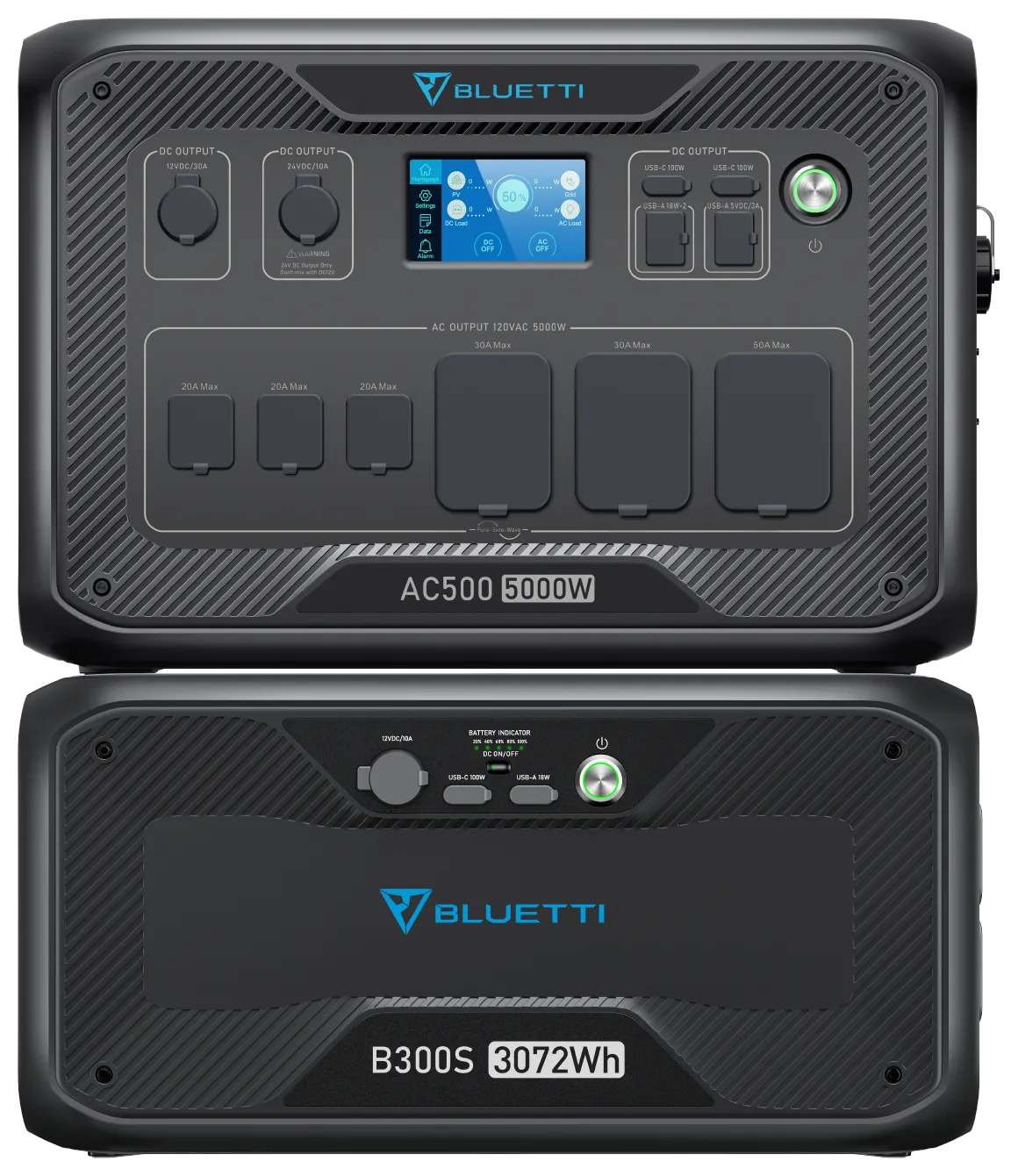
The Bluetti AC500 is an established favorite among homeowners seeking complete modularity. Operating as a pure inverter console without internal batteries, the AC500 pairs with Bluetti’s B300S (3,072Wh) LiFePO4 packs, scaling up to six units for 18,432Wh of storage.
Supplying 5,000W of continuous pure sine wave power and a massive 10,000W surge threshold, it powers heavy kitchen circuits, sump pumps, and medical hardware with ease. When dual AC500 units are combined via Bluetti’s Fusion Box, the setup generates 240V split-phase power at 10,000W continuous.
The standout feature of the B300S battery packs is their internal self-heating technology. When ambient garage temperatures drop below freezing down to -20°C (-4°F), the battery automatically activates its heating elements to safely condition the cells prior to charging, eliminating cold-weather lithium lockout.
- ✓ 5,000W continuous inverter handles multiple high-load kitchen appliances
- ✓ Intelligent internal self-heating batteries perform in sub-zero winter garages
- ✓ Dual MPPT solar charge controllers support up to 3,000W input
- ✓ Pure modular design: inverter and batteries can be moved independently
- • Requires dual AC500 units and a Fusion Box for 240V split-phase appliances
- • Heavy external connecting cables required between batteries and inverter
Ideal for: Freezing northern garages, modular capacity scaling & high-power 120V circuits
Check Price on Amazon →
Pecron E3600LFP
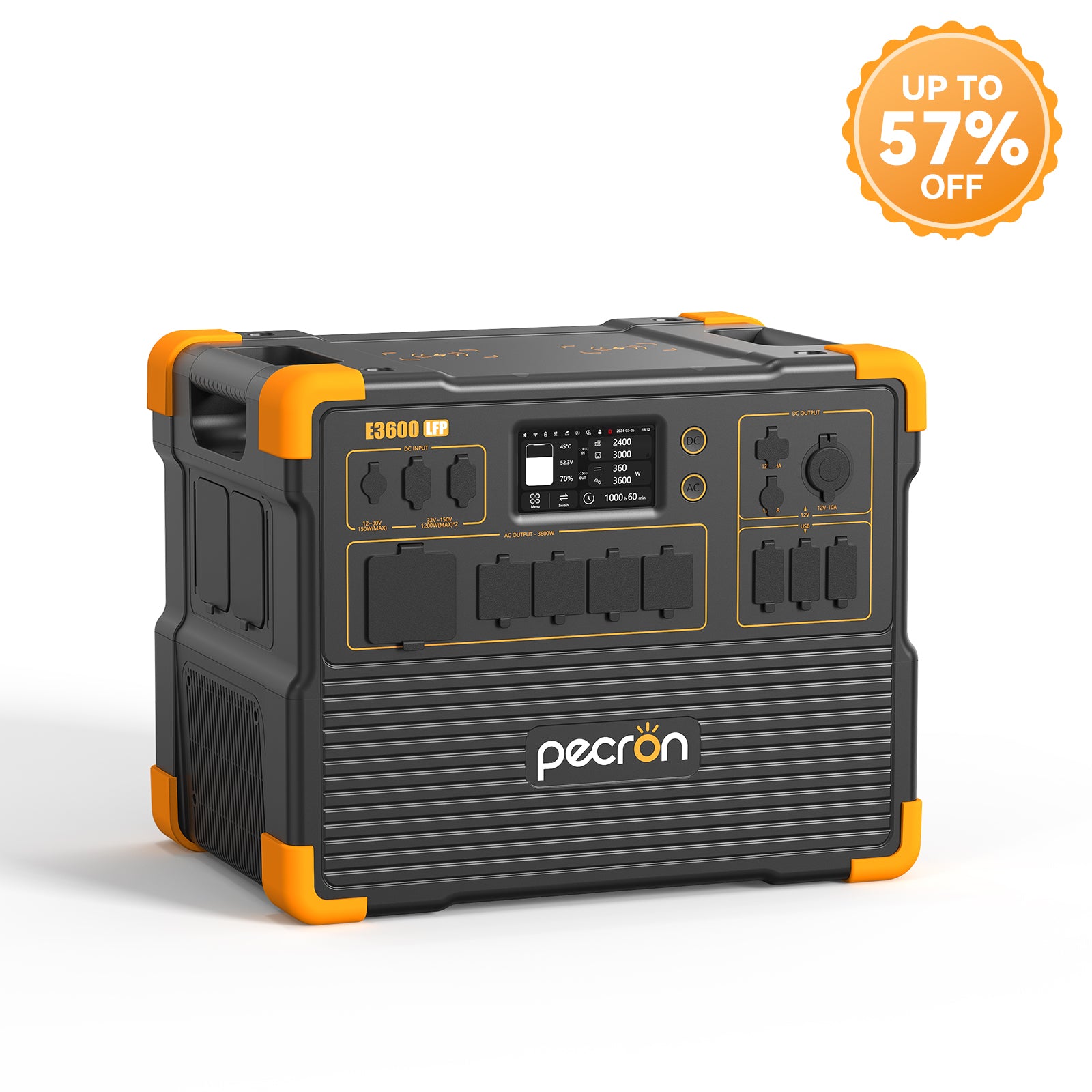
For budget-conscious homeowners who need serious multi-kilowatt-hour capacity without paying Tier-1 flagship premiums, the Pecron E3600LFP delivers tremendous value.
Built around a robust 3,072Wh LiFePO4 battery core and a 3,600W pure sine wave inverter, it scales up to 15.3kWh with Pecron’s EP3000-48V expansion batteries. Pairing two E3600LFP units via Pecron’s split-phase fusion cable creates a 7,200W 240V split-phase power station capable of running high-draw 240V well pumps.
With dual independent solar charge controllers accommodating up to 150V DC and 2,000W of total solar input, the E3600LFP can be recharged swiftly using standard residential solar panels wired in series.
- ✓ Substantial cost savings: industry-leading dollar-per-watt-hour value
- ✓ 150V high-voltage MPPT accepts standard series-wired solar panel strings
- ✓ True 240V split-phase capable when coupled with a second unit
- ✓ Rugged LiFePO4 chemistry with 3,500+ lifecycle durability
- • Native chassis outputs 120V only (240V requires second unit and fusion cable)
- • Mobile app functionality is more utilitarian than EcoFlow or Anker
Ideal for: Cost-conscious homeowners, high-capacity solar setups & well pump backup
Check Price on Amazon →
Critical Engineering Realities: What You Must Know Before Buying Compare the two leading split-phase flagships in our EcoFlow Delta Pro Ultra vs Anker F3800 Plus Showdown, or review the modular Jackery 5000 Plus vs Anker F3800 Plus. For budget setups, see our OSCAL PowerMax 3600 Review and caution notes in our Mango Power E Review.
1. Inrush Current & Motor Surge (Locked Rotor Amps)
Electric motors found inside central air conditioning compressors, well pumps, and sump pumps require 3 to 6 times their operating wattage for 100 to 200 milliseconds during initial startup.
For instance, a 3.5-ton central AC unit running at 3,200 watts may draw an instantaneous surge of 16,000W to 18,000W (LRA). If your power station cannot supply this instantaneous current, its internal protection circuit will trip on overcurrent. To run whole-house HVAC reliably on battery power stations, we strongly recommend installing an aftermarket Micro-Air EasyStart or Hyper Engineering Soft Starter on your compressor, reducing starting inrush current by 65% to 70%.
2. Standby Power Consumption (Tare Loss)
Big power stations house massive 5,000W to 7,200W high-frequency inverters. When the AC inverter switch is left turned on—even with zero appliances drawing electricity—the inverter circuits, cooling fans, and DC-DC step-up transformers consume approximately 35W to 65W continuously. Over a 24-hour period, this “tare loss” burns roughly 800Wh to 1,500Wh of stored energy simply staying energized. During an extended outage, turn off the AC output overnight if no critical continuous loads are running.
Transfer Switch vs. Interlock Kit Integration
Never attempt to backfeed your home through a regular wall outlet with a “suicide cord.” This dangerous practice can electrocute utility linemen working to restore neighborhood lines.
Instead, connect your big power station via one of two code-compliant methods:
- Manual Transfer Switch (6 to 10 Circuits): Dedicate critical circuits (refrigerator, well pump, furnace blower, lighting, router) to the transfer switch. When the grid fails, flip the toggles to battery power.
- Generator Interlock Kit on Main Breaker: A mechanical metal slider plate that physically prevents your main grid breaker and your generator inlet breaker from ever being switched on simultaneously, energizing your entire panel safely.
Buyer Scenarios: Which Big Power Station Fits Your Home?
Scenario A: The Suburban Homeowner Seeking Plug-and-Play 240V Backup
Recommendation: Anker SOLIX F3800. Delivering native 240V split-phase directly from its single chassis without extra bridge boxes, it connects straight into your generator inlet to run your well pump and refrigerator while simultaneously offering Level 2 EV charging.
Scenario B: Full Off-Grid Living & High-Capacity Central AC Operations
Recommendation: EcoFlow DELTA Pro Ultra. With 7,200W continuous output, direct 450V rooftop solar MPPT acceptance, and expandable storage up to 90kWh, this system handles whole-house central air conditioning and heavy shop tools with absolute ease.
Scenario C: Sub-Freezing Northern Garage Storage
Recommendation: Bluetti AC500 + B300S. The integrated internal battery heating pads automatically warm the cells before accepting a charge, preventing lithium plating damage during bitter winter power outages.
Frequently Asked Questions (FAQ)
Can a big portable power station run my central air conditioning?
Yes, provided the power station supports 240V split-phase output (such as the Anker SOLIX F3800 or EcoFlow DELTA Pro Ultra) and either has sufficient peak surge wattage or your air conditioner is equipped with a soft starter. A soft starter drops starting compressor surge amps by roughly 70%, allowing 6,000W to 7,200W battery inverters to start central AC compressors smoothly.
How long will a 3.8kWh to 6kWh power station keep my home running?
During an outage, runtime depends entirely on connected loads. Under a conservative emergency scenario powering a standard refrigerator (150W cycling), LED lighting (50W), Wi-Fi router (20W), and CPAP machine (40W), average power draw is around 250W. A 3.84kWh power station will supply approximately 12 to 14 hours of continuous runtime, while a 6kWh unit will last 20 to 24 hours without any solar recharging.
Can I recharge these big power stations from a gas generator?
Yes. Both the Anker SOLIX F3800 and EcoFlow DELTA Pro Ultra accept high-wattage AC charging (up to 1,800W–3,000W from standard inverter generators). This allows you to run a fuel-efficient compact gas generator for just 2 hours during the day to fully top off your battery bank, maintaining complete silence and zero fumes throughout the night.
What is the lifespan of modern LiFePO4 home backup batteries?
Modern Lithium Iron Phosphate (LiFePO4) battery cells are rated for 3,000 to 5,000 complete charge/discharge cycles before declining to 80% of original capacity. For emergency backup usage (10 to 30 outage cycles per year), these batteries will easily deliver 15 to 20+ years of dependable operational life.
Secure Whole-House Emergency Power Before the Next Storm
Check live inventory, seasonal bundle discounts, and available coupon codes for leading high-capacity home backup stations.