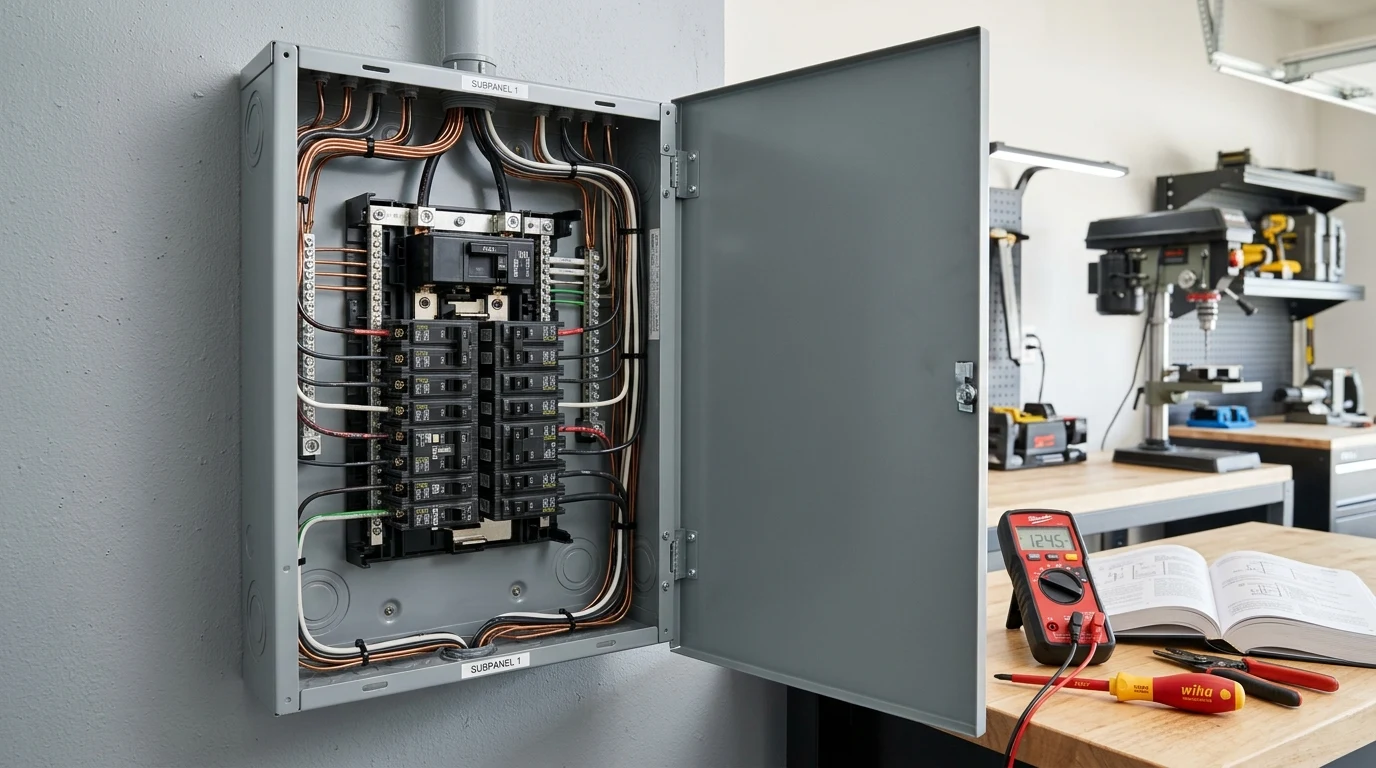
Connecting a high-capacity portable power station or home battery system to your house’s electrical panel brings you to a major infrastructure crossroads: Should you install a traditional manual transfer switch, or upgrade to a modern smart electrical subpanel?
For decades, the manual transfer switch stood as the standard solution for gas generator backup. You walked into the dark garage with a flashlight, plugged in a heavy cord, flipped six to ten mechanical metal toggle switches, and manually powered your refrigerator and furnace blower.
However, modern lithium battery storage systems operate under entirely different constraints than unlimited-fuel gas generators. Stored kilowatt-hours are finite.
If someone accidentally runs an electric clothes dryer or toaster oven while your home is running on battery backup, an unmanaged system will drain your entire 10kWh battery bank in less than two hours!
Enter the Smart Transfer Switch / Smart Electrical Subpanel.
Below, we audit the architectural differences, switching speeds, load shedding capabilities, and total installed costs between manual and smart transfer switches.
If your budget is tight and you simply want code-compliant backup for 6 to 10 fixed essential circuits during occasional storms, a Manual Transfer Switch (900 all-in) is reliable and practically indestructible. If you are investing in a multi-kilowatt-hour home battery system (such as the EcoFlow DELTA Pro Ultra or Anker SOLIX F3800) and need hands-free automated switching, dynamic circuit scheduling, and remote smartphone control, a Smart Subpanel is worth every penny of its investment.
Technical Comparison: Manual vs. Smart Transfer Switches
| Feature / Metric | Traditional Manual Switch | Smart Electrical Subpanel |
|---|---|---|
| Switching Mechanism | Mechanical double-throw toggles | Solid-state relays & motorized contactors |
| Blackout Transition Speed | Manual (Minutes to hours) | <20ms Automatic UPS Transfer |
| Load Shedding Capability | None (Fixed hardwired circuits) | Dynamic & automated via app |
| Remote Monitoring | None (Analog needle watt meters) | Real-time per-circuit app metrics |
| Voltage Support | 120V or 120V/240V split-phase | Native 120V/240V split-phase |
| Hardware & Install Cost | 900 total | 4,500 total |
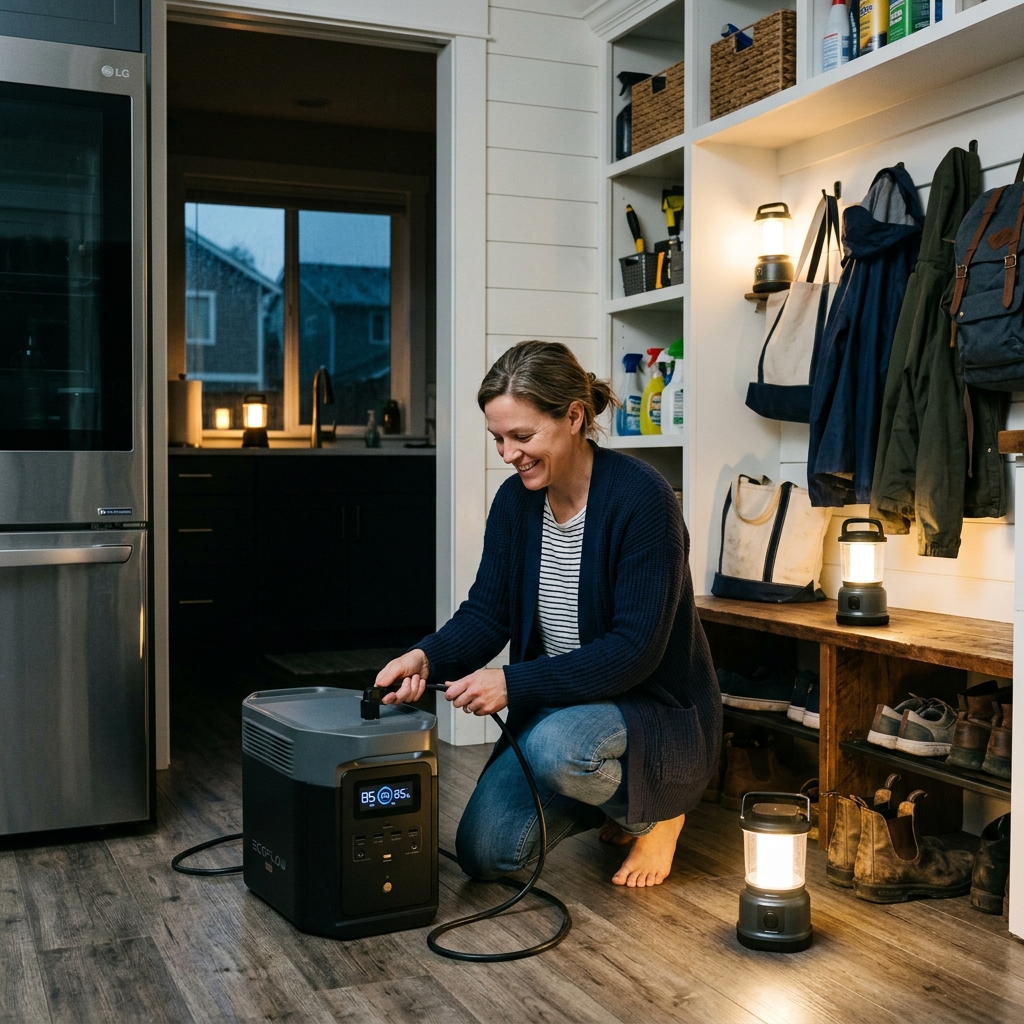
Figure 1: High-capacity battery power stations integrate with smart transfer panels to provide automated whole-house backup without manual cord juggling.
How Traditional Manual Transfer Switches Function
A manual transfer switch (such as a Reliance Controls Pro/Tran 2) is a specialized electrical subpanel installed immediately adjacent to your main breaker box.
The Hardwired Circuit Constraint
During installation, a licensed electrician physically splices 6 to 10 designated branch circuits out of your main panel and re-routes them into the transfer switch box.
- The Problem of Permanence: Once installed, those 6 to 10 circuits are permanently fixed. If you wired your refrigerator, furnace blower, internet, and kitchen lights into the switch, you cannot decide during an outage to power a bedroom AC unit instead—unless you drag an extension cord through your house.
- The Manual Burden: When the grid goes out at 2:00 AM, nothing happens automatically. You must wake up, locate a flashlight, venture out to the panel, plug in your generator cord, and manually toggle each circuit from “LINE” to “GEN”.
To compare manual switches with mechanical main breaker slider plates, review our guide on Transfer Switch vs Interlock Kit for Home Backup.
The Power of Smart Panels: Dynamic Load Shedding To explore hardware options across the EcoFlow ecosystem, see our complete Delta Pro vs Ultra vs Pro 3 Comparison.
A Smart Transfer Switch / Smart Panel (such as the EcoFlow Smart Home Panel 2 or Anker Smart Meter) replaces mechanical toggles with high-speed digital relays and computerized micro-controllers.
The transformative superpower of a smart subpanel is Automated Dynamic Load Shedding:
[ Battery State of Charge (SOC): 100% - 60% ]
   ---> ALL Circuits Active: HVAC, Water Heater, Lights, Fridge, Internet

[ Battery State of Charge (SOC): 59% - 30% ]
   ---> LEVEL 1 SHEDDING: Water Heater & Heavy Appliances Cut Off Automatically

[ Battery State of Charge (SOC): < 29% ]
   ---> CRITICAL SURVIVAL MODE: Only Refrigerator, Medical Equipment & Wi-Fi Stay On
By intelligently shedding heavy heating and motor loads as your battery depletes, a smart panel extends your emergency battery runtime by 40% to 65% compared to a manual switch where an unmonitored appliance could accidentally drain the pack overnight!
To learn how to size whole-home systems that leverage smart panels, see our evaluated picks in Best Big Power Stations for Home Backup.
Sub-20 Millisecond UPS Switching Speed
A major advantage of modern smart panels over manual switches is uninterrupted power continuity.
When municipal utility power fails, an integrated smart panel detects the grid voltage drop and islands the house in under 20 milliseconds:
- Desktop computers and network servers do not shut down or reboot.
- Wi-Fi routers, smart security hubs, and NAS drives experience zero interruption.
- Digital clocks on microwaves and ovens do not reset to 12:00.
For households with medical CPAP equipment or remote home-office professionals, this seamless transition eliminates outage disruptions entirely. To see how switchover speeds impact computer power supplies, review our lab benchmarks on UPS Switchover Speed & Hold-Up Time.
Cost-to-Benefit Analysis: Which Should You Install?
- • You want the lowest installation cost (500 hardware + $400 electrician labor).
- • You primarily use a gas or dual-fuel generator where fuel can be replenished easily.
- • You only need to power 6 to 10 basic 120V household essentials.
- • You prefer simple mechanical hardware with zero reliance on smartphone apps or Wi-Fi.
- • You are pairing with a high-capacity home battery bank (6kWh to 30kWh+).
- • You travel frequently and need your home to back up automatically when you are away.
- • You want whole-house coverage with smartphone control to toggle circuits from anywhere.
- • You want to shave peak Time-of-Use utility rates by scheduling battery discharge daily.
Frequently Asked Questions (FAQ)
Can a smart transfer switch operate if the home Wi-Fi network is down?
Yes. Quality smart panels communicate with their companion power stations via local Bluetooth and direct RS-485/CAN bus wiring in addition to Wi-Fi. If your home internet goes down during a severe storm, the automated load shedding schedules and 20ms UPS transfer triggers continue functioning locally without cloud connectivity.
Does installing a transfer switch require a permit?
Yes. Installing any transfer switch or electrical subpanel requires modifying your home’s branch circuits and main service panel. Building codes in virtually all jurisdictions require an electrical permit and subsequent inspection by a municipal building official to ensure NEC compliance and lineman anti-islanding safety.
Can a manual transfer switch support 240V appliances like well pumps?
Yes, provided you purchase a transfer switch equipped with double-pole circuit breakers tied with a handle tie. Sizing for 240V well pumps requires verifying both continuous wattage and motor starting inrush current. Learn more in our guide on 120V vs 240V Split-Phase Home Backup.