Batteries represent the single most expensive component in any solar generator, camper van electrical system, or residential energy storage bank. Whether you invested $800 in a portable power station or $8,000 in a whole-home 48V server rack system, you expect those cells to deliver reliable power for years.
Manufacturers routinely advertise impressive lifespan numbers: “3,000 to 5,000 cycles to 80% original capacity” for Lithium Iron Phosphate (LiFePO4) and “800 to 1,000 cycles” for Nickel Manganese Cobalt (NMC). In laboratory conditions with precise 0.2C discharge rates, 77°F (25°C) ambient control, and narrow voltage cutoffs, those numbers are accurate.
In the real world, however, we routinely inspect customer systems where battery banks lost 30% to 50% of their usable capacity in under three years.
Why does this happen? In 95% of cases, the cells were not defective—they were unknowingly degraded by four or five common operating habits.
In this comprehensive engineering guide, we break down the electrochemistry of cell degradation, explain how to eliminate common failure points, and outline the exact settings that will keep your batteries performing like new for 15+ years.
No Cold Charging
Never charge below 32°F (0°C). Stops permanent lithium plating.
The 80% SoC Window
Cycle between 20% and 80% SoC for non-emergency daily duty.
Tame High Voltage
Absorb LiFePO4 at 3.45V–3.50V/cell instead of 3.65V peak saturation.
Limit C-Rate Heat
Charge at ≤0.5C. Extreme 1-hour fast charging builds destructive cell heat.
50% Storage Rule
Store off-season at 50% SoC with master breaker isolated.
Understanding Battery Degradation: The Science of Cell Aging
To stop killing your batteries, you must understand what happens inside a cell during charging and discharging.
In any rechargeable lithium cell (whether LiFePO4 or NMC), lithium ions shuttle back and forth between a positive cathode (lithium iron phosphate or lithium nickel manganese cobalt) and a negative anode (intercalated graphite sheets) through a liquid electrolyte solution:
Discharge: Lithium Ions travel from Graphite Anode ──► Liquid Electrolyte ──► Porous Cathode (+ Electrons to Load)
Charge:    Lithium Ions forced from Porous Cathode ──► Liquid Electrolyte ──► Graphite Anode (+ Energy from Solar)
Degradation occurs because this chemical exchange is not 100% reversible over thousands of cycles. Three primary degradation mechanisms dictate cell health:
- Solid Electrolyte Interphase (SEI) Layer Growth: Every time a battery is charged, a microscopic passivation film forms between the graphite anode and the liquid electrolyte. A stable SEI layer protects the anode, but elevated temperatures and high continuous cell voltages cause the SEI layer to thicken uncontrollably, permanently trapping lithium ions and increasing internal cell resistance ().
- Mechanical Micro-Cracking: When lithium ions intercalate (insert themselves) into the electrode material, the physical crystal structure expands by 5% to 10% in volume. During discharge, the material contracts. Cycling deeply between 100% and 0% causes repetitive mechanical stress, leading to microscopic fracture of active material and disconnection from the copper and aluminum current collector foils.
- Electrolyte Oxidation & Decomposition: Holding a cell at maximum voltage limits (above 3.65V for LiFePO4 or 4.20V for NMC) places extreme oxidative stress on the organic solvent in the electrolyte, releasing gases and accelerating capacity fade.
Cold-Weather Charging: The Sub-Zero Lithium Plating Trap
Of all the ways users destroy lithium batteries, charging in freezing temperatures is the most catastrophic.
Discharging a lithium battery in sub-zero temperatures (down to -4°F / -20°C) is completely safe, although internal resistance temporarily increases and voltage sags.
However, charging below 32°F (0°C) can destroy a $1,000 battery pack in a single afternoon.
Lithium ions diffuse smoothly across the electrolyte and intercalate between carbon lattice layers in the graphite anode with zero resistance build-up.
Electrochemical diffusion rates plummet. Lithium ions cannot enter graphite fast enough, accumulating on the surface as solid metallic lithium dendrites that pierce separators and short cells.
Why Lithium Plating Occurs
As temperatures drop toward 0°C (32°F), the viscosity of the liquid electrolyte rises and ion mobility slows dramatically. When a solar charge controller pushes high charging current into the cell, the lithium ions arrive at the anode faster than they can physically diffuse into the carbon pores.
Because they cannot intercalate, the ions accept electrons on the surface of the anode, electroplating into solid metallic lithium needles (dendrites):
- This metallic lithium is chemically dead and can never be converted back into active capacity, permanently reducing your battery’s Amp-hour rating.
- More dangerously, sharp metallic dendrites can grow across the microscopic plastic separator membrane over successive charge cycles, causing an internal cell short circuit and thermal runaway.
[!WARNING] Always verify that your battery or portable power station features hardware low-temperature charge protection. Never buy budget lithium batteries that lack low-temp cutoff sensors on the internal Battery Management System (BMS). If you camp or live in cold climates, choose units with integrated heating elements (like the Bluetti AC200L or heated WattCycle LiFePO4 packs).
The 100% Saturation & High-Voltage Float Trap
Most consumer electronics and all-in-one solar inverters are calibrated to charge lithium batteries to 100% capacity and hold them there continuously. While this maximizes initial runtime specs on day one, it places immense electrochemical stress on the cells.
The LiFePO4 Voltage Knee Curve
A 12V LiFePO4 battery is constructed from four 3.2V prismatic cells in series (). The standard manufacturer maximum cutoff is 3.65V per cell, or 14.6V for the 12V pack (58.4V for a 48V pack).
However, examination of the open-circuit voltage curve reveals that LiFePO4 has an extremely flat voltage plateau:
- At 3.40V per cell (13.6V total), the battery is at approximately 90% State of Charge.
- At 3.45V per cell (13.8V total), the battery is at 98% State of Charge.
- Pushing the cell all the way from 3.45V to 3.65V squeezes out only 1.5% to 2% additional capacity, but increases electrolyte oxidation stress and anode-cathode interfacial impedance by more than 400%!
| Absorption Voltage / Cell | 12V Pack / 48V Pack | Effective Usable Capacity | Projected Cycle Lifespan | Electrolyte Stress Level |
|---|---|---|---|---|
| 3.65V (Factory Limit) | 14.6V / 58.4V | 100.0% | 2,500 – 3,500 Cycles | Severe Oxidation & Cell Gassing |
| 3.55V (Aggressive Daily) | 14.2V / 56.8V | 99.2% | 4,000 – 5,000 Cycles | Moderate Stress |
| 3.45V – 3.50V (Lab Sweet Spot) | 13.8V–14.0V / 55.2V–56.0V | 97.5% – 98.5% | 7,000 – 9,000+ Cycles | Near-Zero Parasitic SEI Wear |
| 3.40V (Ultra-Conservative) | 13.6V / 54.4V | 90.0% – 92.0% | 10,000+ Cycles | Negligible Wear |
The Calibration Fix
If you own an off-grid solar charge controller (such as a Victron SmartSolar or an EG4 6000XP Inverter), modify your absorption charge voltage:
- Lower absorption from 14.6V to 14.0V (or 56.0V on 48V systems).
- Set your absorption timer to 30 minutes (lithium cells absorb energy rapidly and do not require 2-hour absorption holds like lead-acid).
- Set float voltage to 13.4V (53.6V for 48V), which rests the cells at their natural equilibrium resting voltage without forcing micro-currents through the SEI layer.
Deep Discharge Degradation: The 80% Depth-of-Discharge Rule
Running a battery completely flat to 0% State of Charge (where the inverter shuts off on low-voltage disconnect) creates severe structural stress inside the electrode matrix.
Why 100% DoD Accelerates Wear
As lithium leaves the graphite anode during deep discharge, the graphite layers contract. When pushed below 15% SoC, the voltage drops rapidly off the lower knee curve (below 2.8V per cell for LiFePO4).
At extreme depths of discharge:
- The copper anode current collector foils begin to dissolve slightly into the electrolyte solution if cell voltage drops below 2.0V. When recharged, this dissolved copper precipitates as microscopic metallic whiskers, creating internal micro-shorts.
- In legacy lead-acid batteries, discharging past 50% causes large, hard lead-sulfate crystals () to form on the lead plates that can never be dissolved back into solution during recharge.
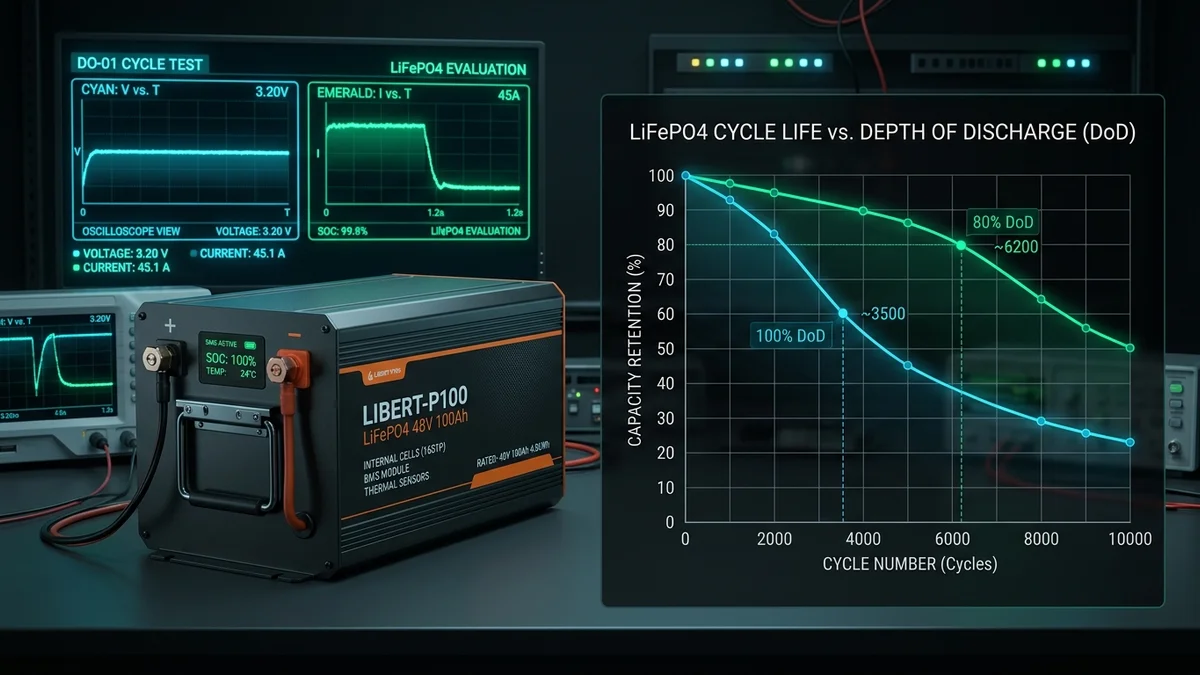
A LiFePO4 battery cycled from 100% to 0% (100% DoD) typically lasts approximately 3,500 cycles. If you instead discharge the battery to 20% remaining capacity (80% DoD), usable cycle lifespan jumps to over 6,000 cycles. You surrender 20% of nominal single-run runtime, but you harvest nearly 50% more cumulative lifetime kilowatt-hours from the asset!
Thermal Stress & C-Rate: Why Ultra-Fast Charging Accelerates Wear
Modern portable power stations boast rapid charging features: “0 to 80% in 45 minutes from AC wall power!” While convenient during an emergency, daily reliance on ultra-fast charging kills cells prematurely through combined thermal stress and high C-Rate.
What is C-Rate?
The C-rate measures the speed of charge or discharge relative to the battery’s total capacity:
- 1.0C Rate: Charging a 1,000Wh battery at 1,000 Watts (full charge in 1 hour).
- 0.5C Rate: Charging a 1,000Wh battery at 500 Watts (full charge in 2 hours).
- 0.2C Rate: Charging a 1,000Wh battery at 200 Watts (full charge in 5 hours).
The Heat Equation ()
According to Joule’s First Law, electrical energy lost as waste heat inside the battery is proportional to the square of the current:
When you double your charging speed from 0.5C to 1.0C, internal heat generation does not simply double—it quadruples!
Operating batteries consistently above 104°F (40°C) doubles the chemical reaction rate of electrolyte breakdown (the Arrhenius equation). Over consecutive months of daily fast charging, internal resistance spikes and cell swelling occurs.
[!TIP] If you have grid power available and aren’t in a rush, open your power station’s companion mobile app (such as the EcoFlow or Anker app) and reduce the AC charging speed from 1,800W down to 400W–600W (0.2C–0.3C rate). The cooling fans will remain quiet, cell temperatures will stay below 85°F (30°C), and your battery’s cycle life will effectively double.
Chemistry Lifespan Matrix: LiFePO4 vs NMC vs AGM
Different battery chemistries have vastly different tolerance thresholds for operating temperatures, depth of discharge, and voltage saturation:
| Chemistry | Cycle Life (80% DoD) | Calendar Life | Primary Degradation Vulnerability | Best Practice Strategy |
|---|---|---|---|---|
| LiFePO4 (Lithium Iron Phosphate) | 4,000 – 6,000+ | 12 – 18 Years | Cold-temp charging (below 32°F) and 3.65V over-saturation float. | Lower absorption to 3.45V/cell; verify low-temp cutoff BMS. |
| NMC / Ternary Lithium (Jackery v1, DJI) | 800 – 1,200 | 4 – 7 Years | High ambient heat (above 95°F) and resting at 100% full capacity. | Never store at 100% SoC; keep charged to 70%–80% maximum. |
| AGM / Sealed Lead-Acid | 300 – 500 | 3 – 5 Years | Plate sulfation from deep discharge (over 50%) and partial-state storage. | Recharge immediately to 100% after every use; never drain past 50%. |
Recommended Battery Systems with Intelligent Cell Preservation
If you are looking to invest in battery storage or replace an aged system, choose hardware that provides active thermal management, programmable voltage limits, and certified LiFePO4 cells:
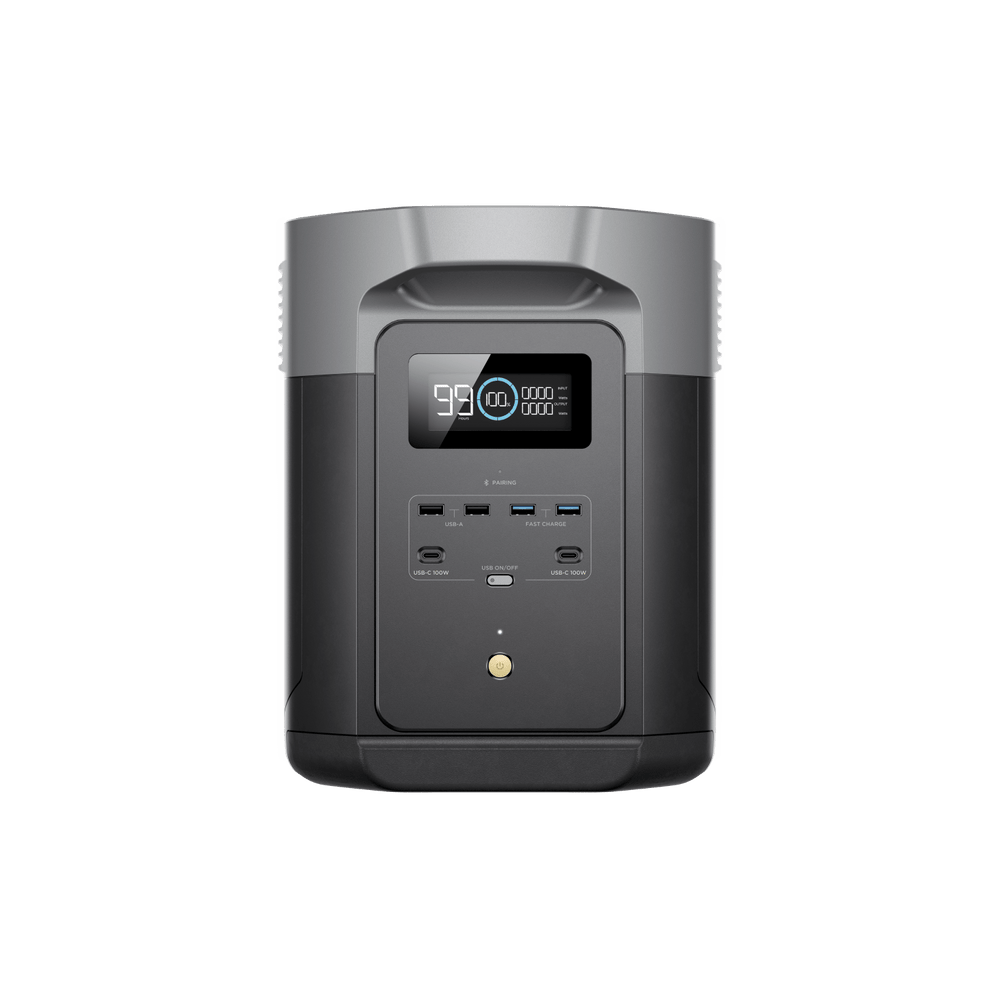
EcoFlow DELTA 2 Max
2,048Wh LiFePO4 • 2,400W AC • App Charge Limits
- App allows setting custom 50%–90% upper charge limits
- Adjustable AC recharge speed (200W to 1,800W)
- 3,000+ cycles to 80% original capacity
Check Best Price on Amazon →
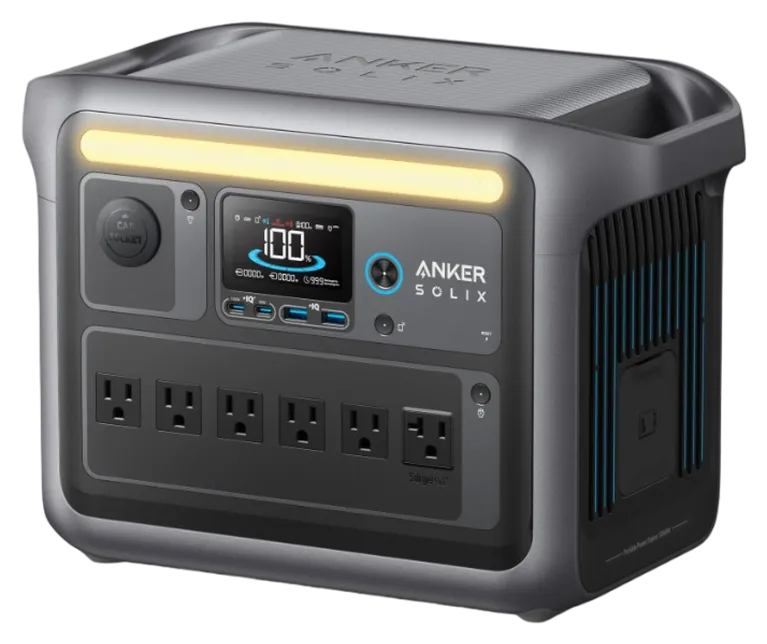
Anker SOLIX C1000 Gen 2
1,024Wh InfiniPower • 2,000W AC • 10-Year Lifespan
- InfiniPower industrial-grade electronic components
- Advanced thermal monitoring sensors (100x/sec)
- 3,000+ cycles to 80% with 5-year full warranty
Check Best Price on Amazon →
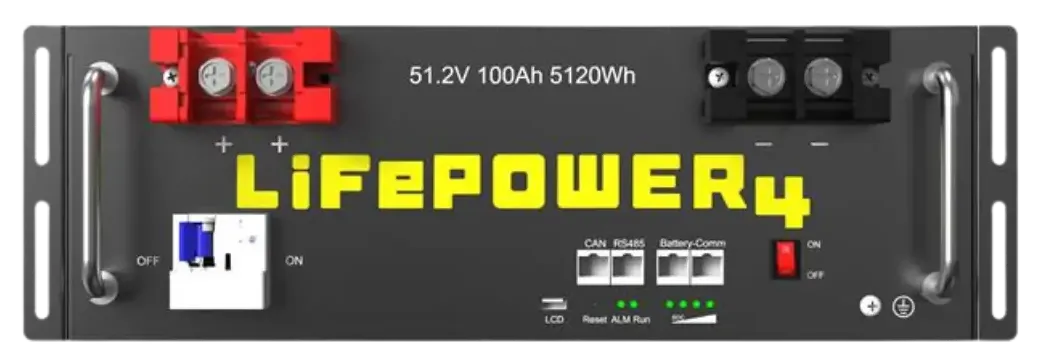
EG4 LifePower4 V2 48V
5,120Wh LiFePO4 • 100A BMS • Heavy-Duty Metal Rack
- Built-in digital LCD screen with cell voltage audit
- Hardware low-temp charge lockout & dual thermal probes
- 7,000+ cycle tier-1 automotive-grade prismatic cells
Read EG4 Storage Review →
1. EcoFlow DELTA 2 Max (Best Configurable Upper/Lower Charge Limits)
For consumers looking for an all-in-one power station that actively prevents battery death, the EcoFlow DELTA 2 Max stands out because of its software configuration flexibility. Through the EcoFlow mobile app, you can manually set your Discharge Limit to 20% and your Charge Limit to 80%. This eliminates cell degradation during day-to-day use, while allowing you to unlock 100% capacity with a single toggle before a major storm or camping trip.
2. Anker SOLIX C1000 Gen 2 (Best Extreme Durability & Thermal Management)
Anker built the SOLIX C1000 Gen 2 around its proprietary InfiniPower architecture. It combines Tier-1 automotive EV-grade LiFePO4 cells with industrial-grade electronic MOSFETs rated for 50,000 operating hours. Its temperature monitoring algorithms measure cell temperatures up to 100 times per second, actively throttling solar or AC charging current before thermal buildup degrades the internal SEI barrier.
3. EG4 LifePower4 V2 48V Server Rack Battery (Best Stationary Off-Grid Storage)
If you are building an off-grid cabin or home backup system with an inverter like the EG4 6000XP or 18kPV, the EG4 LifePower4 V2 provides total transparency. Its front-panel digital screen displays the exact millivolt reading for all 16 internal cells, and its integrated 100A smart BMS features dual internal thermistors that mechanically disconnect charge inputs if temperatures drop below 32°F (0°C).
Proper Off-Season Storage Protocols to Prevent Cell Death
The second most common cause of premature battery failure is improper winter or off-season storage.
Homeowners frequently charge their power station to 100%, slide it into a hot attic or unheated garage for six months, and return to find a completely unresponsive “bricked” battery.
The Four-Step Storage Protocol
- Discharge or Charge to 50%–60% State of Charge: Never store a lithium battery at 100% full or 0% empty. At 100% SoC, high internal cell potential accelerates calendar aging and electrolyte decomposition. At 0% SoC, natural self-discharge will push the cell voltage into deep bricking territory.
- Physically Disconnect or Turn Off Master Breakers: Even when the main power switch is turned off, modern power stations and server rack batteries have internal BMS boards, Bluetooth chips, and Wi-Fi antennas that continuously draw 2W to 15W of parasitic vampire load. Over 3 to 4 months, this parasitic drain will pull the battery completely down to 0V. For server racks, flip the DC breaker on the battery faceplate. For power stations, verify the unit enters deep sleep mode.
- Store in a Temperature-Controlled Environment (50°F to 75°F / 10°C to 24°C): Avoid uninsulated sheds, garages, or vehicle trunks. High heat accelerates calendar aging; sub-zero freezes prevent you from immediately recharging the unit upon waking it up.
- Perform a 6-Month Top-Up Check: Every six months, power on the battery, check the State of Charge, and if it has fallen below 40%, bring it back up to 60% before returning it to storage.
Frequently Asked Questions (FAQ)
Can I leave my power station plugged into the wall 24/7 as an emergency UPS?
Yes, but only if the unit features a dedicated EPS / UPS hardware bypass circuit and allows setting a maximum charge limit. Units like the EcoFlow DELTA 2 Max or DJI Power 1000 route grid power directly to your appliances through a mechanical relay without cycling the battery. For maximum lifespan, set the app charge limit to 80% so the battery does not rest at high-voltage saturation for months.
How do I know if my battery is experiencing lithium plating?
Lithium plating cannot be seen from the outside of a sealed battery. The primary symptoms include a sudden, unexplainable drop in total Amp-hour capacity (often 20% to 30% lost within weeks), elevated internal resistance causing severe voltage sag under load, and rapid cell heating during moderate discharge.
Does discharging a LiFePO4 battery below 20% void my warranty?
No. High-quality LiFePO4 batteries feature an internal BMS that automatically disconnects before cell voltage drops to destructive levels (typically cutting off around 2.5V per cell / 10.0V for a 12V battery). However, frequently running the battery down until the BMS forcefully trips will accelerate capacity degradation compared to stopping at 20% remaining charge.
Should I occasionally cycle my battery to 100% to calibrate the SOC meter?
Yes. Because LiFePO4 has an extremely flat voltage curve between 20% and 90%, Coulomb-counting battery monitors can drift out of calibration over weeks of partial-state cycling. Charging the battery to 100% until the BMS balances the individual cells (roughly once every 30 to 60 days) resets the State of Charge gauge to 100% accuracy.