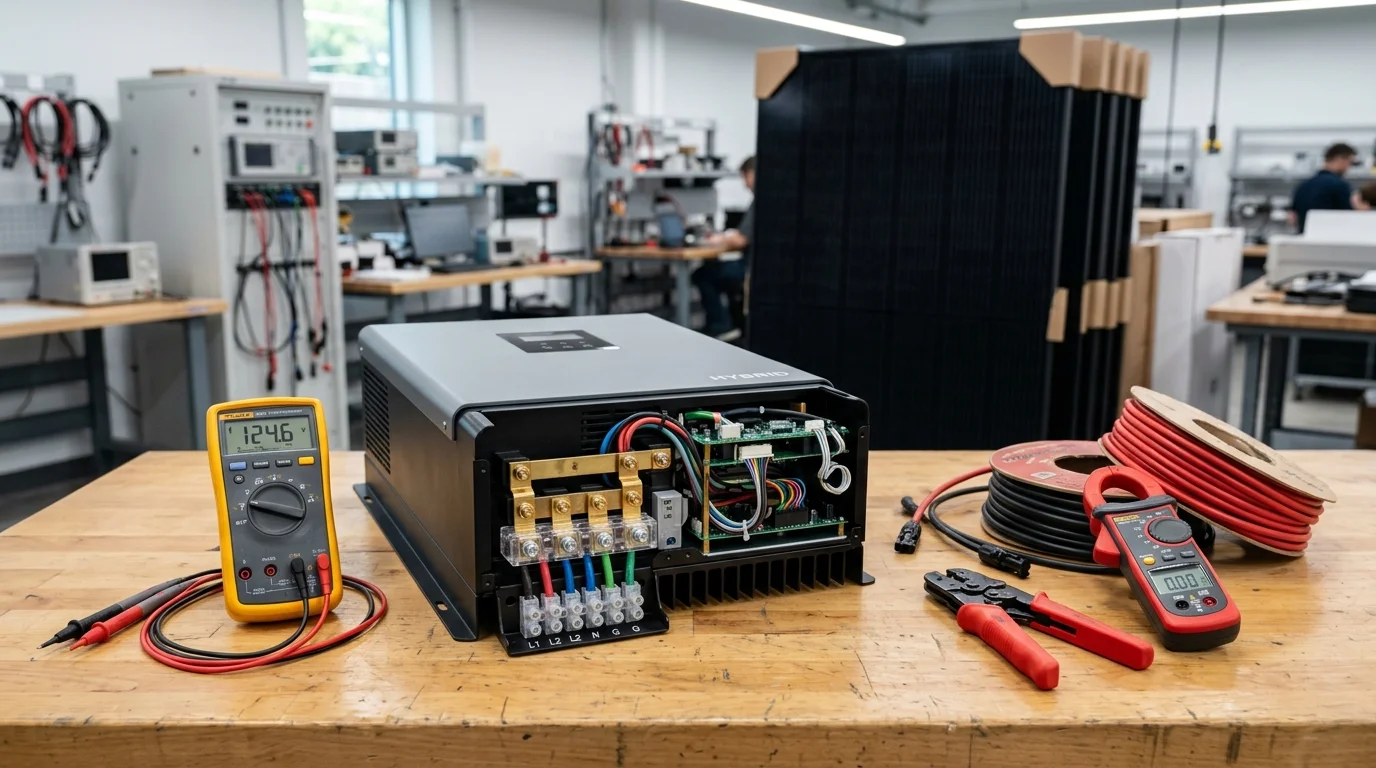
When homeowners think of solar power, they usually picture full-roof contractor installations: 25 glass panels, complex utility net-metering contracts, scaffolding, and a price tag ranging between $20,000 and $40,000.
For millions of renters, apartment residents, people living under strict HOA guidelines, or homeowners with shaded roofs, full-scale rooftop solar is simply out of reach.
However, there is an alternative approach that delivers immediate financial returns without contractor markups or municipal permitting: Targeted Micro-Off-Grid Solar.
By pairing a compact 400W to 1,200W solar array with a portable LiFePO4 power station, you can permanently isolate and power specific continuous household appliances—shaving $30 to $120 off your monthly electric bill while gaining emergency blackout protection.
A small solar setup consisting of 600W of solar PV paired with a 2,048Wh LiFePO4 power station ($1,100 to $1,400 total hardware cost) generates roughly 2.2 to 2.8 kWh of clean electricity daily. By dedicating this power to your kitchen refrigerator and home office workstation, you displace 65 to 85 kWh of expensive grid electricity every month. In high-tariff states like California, Massachusetts, or New York ($0.32 to $0.45/kWh), this produces $250 to $450 in annual utility bill savings, paying for itself in under 3.5 years.
Launch Appliance Runtime Calculator →
The Targeted Load Shedding Strategy: Small Solar Philosophy
The fundamental flaw in trying to “dabble” in solar is attempting to connect a small solar array directly into a home’s main electrical panel without enough capacity. When a central air conditioner kicks on, a small 500W solar setup is overwhelmed within seconds.
Instead, the Targeted Load Shedding (Micro-Off-Grid) philosophy works by taking specific, high-runtime circuits completely off the utility meter:
Isolate Constant Baseline Loads
Identify household devices that run 8 to 24 hours every day with steady, predictable power draws: refrigerators, internet routers, desktop PCs, and battery chargers.
Deploy Ground or Balcony PV
Mount two to four rigid 200W or 400W glass panels on a patio ground rack, shed roof, or balcony railing. No roof penetrations or utility interconnection permits needed.
Buffer Through LiFePO4 Storage
Feed solar DC power into a 1,000Wh–2,048Wh power station. Plug targeted appliances directly into its AC inverter outlets, eliminating grid electricity demand permanently.
Identifying High-Value Target Loads for Maximum Savings
To achieve the fastest return on investment, you must target appliances with high daily energy consumption (Watt-hours) rather than high peak instantaneous wattage:
| Target Appliance | Running Power | Daily Runtime | Daily Wh Consumed | Monthly Bill Offset (at $0.32/kWh) |
|---|---|---|---|---|
| Full-Size Kitchen Inverter Refrigerator | 60W – 120W | 8 hours compressor duty | 960Wh / day | $9.22 / month |
| Home Office (Dual Monitors + Laptop + Router) | 140W | 10 hours working day | 1,400Wh / day | $13.44 / month |
| 24/7 Home Networking (Wi-Fi 6E + Fiber ONT + NAS) | 45W continuous | 24 hours non-stop | 1,080Wh / day | $10.37 / month |
| Garage Deep Chest Freezer | 75W | 7 hours compressor duty | 525Wh / day | $5.04 / month |
| Dual E-Bike Daily Commuter Recharging | 250W charging | 4 hours charging | 1,000Wh / day | $9.60 / month |
| Combined Micro-Off-Grid Portfolio | — | — | 4,965Wh / day | $47.67 / month ($572/year) |
Notice the cumulative impact: offsetting just a refrigerator, a work-from-home desk, and 24/7 internet gear eliminates nearly 150 kWh per month, putting over $570 per year back in your pocket in moderate-to-high utility rate regions.
Small Solar System Architecture: Sizing Panels & Battery
To build a reliable small solar setup that runs day and night without manual intervention, follow this sizing formula:
Panel Sizing with the 75% Derating Rule
Never size your panels assuming 100% of nameplate wattage. Because of solar thermal derating, reflection losses, and atmospheric diffusion:
If you live in an area with 4.0 Peak Sun Hours (PSH):
- A 400W solar array generates: (1.2 kWh).
- An 800W solar array generates: (2.4 kWh).
Battery Storage Sizing: The 1.35x Multiplier
To power loads overnight and survive cloudy days, your battery capacity must account for inverter conversion efficiency (85%) and inverter tare loss (15W–30W idle draw):
If your refrigerator consumes 1,000Wh per day, you need at least a 1,350Wh to 2,048Wh LiFePO4 battery to guarantee uninterrupted 24-hour operation during overcast weather.
The Financial Math: Realistic Monthly Bill Reductions
Here is a side-by-side financial breakdown of two realistic small solar investment packages:
400W Solar + 1,056Wh LiFePO4 Battery
Powers Wi-Fi router, fiber modem, laptop, dual monitors, and desk lighting. Completely off-grid during daytime working hours and evening browsing.
*Estimated at national average utility rate ($0.18 to $0.28/kWh).
800W Solar + 2,048Wh LiFePO4 Battery
Runs a 25 cu ft refrigerator 24/7, plus evening TV entertainment, smartphone charging, and LED living room floor lamps.
*Estimated in moderate-to-high utility rate regions ($0.28 to $0.42/kWh).
Top Small Solar & Battery Systems for Maximum Savings
These four field-tested units offer the best combination of MPPT tracking efficiency, low inverter tare loss, durable LiFePO4 cells, and pass-through UPS capability:
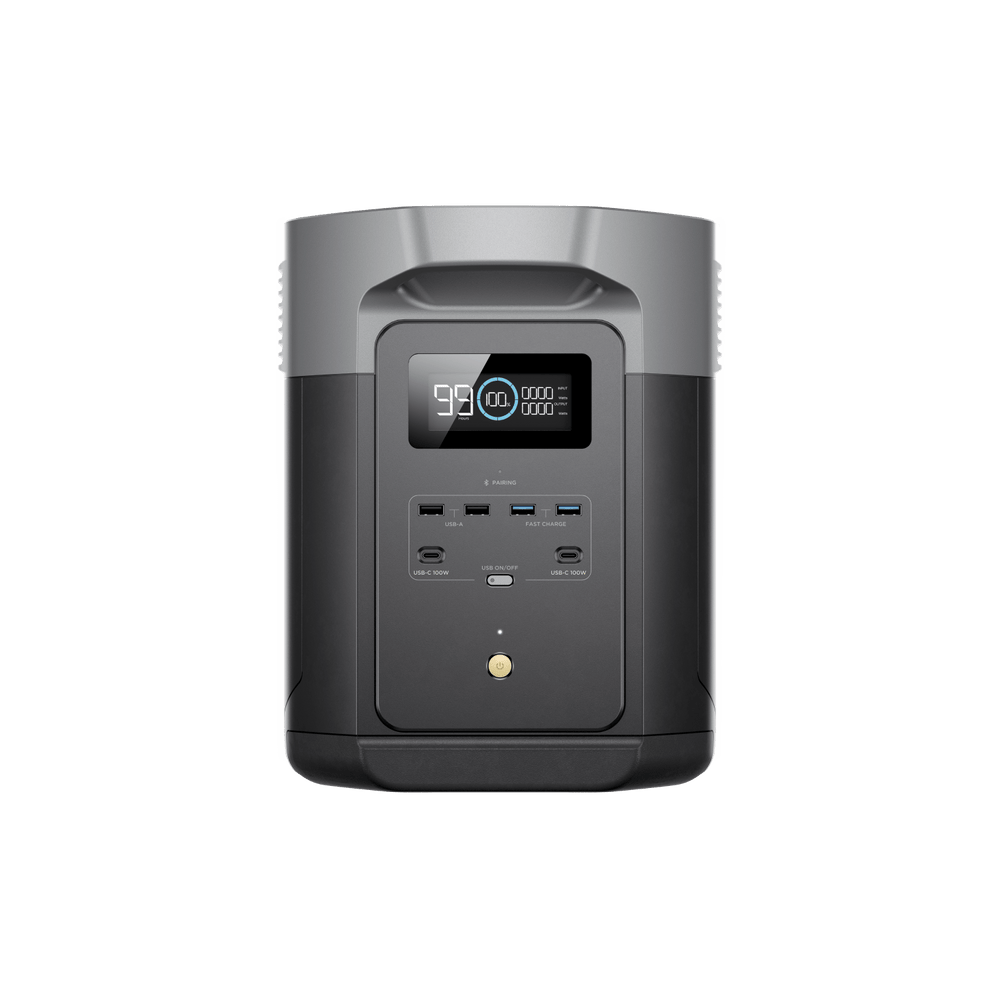
1. EcoFlow DELTA 2 Max
The gold standard for small solar bill reduction. Its dual independent 500W MPPT inputs let you connect two separate solar arrays (e.g. 400W on a shed roof + 400W on a ground mount). Equipped with 2,048Wh of long-life LiFePO4 cells and ultra-fast bypass circuitry, it runs a full-size household refrigerator 24/7 with zero grid electricity.
Check Current Deals →
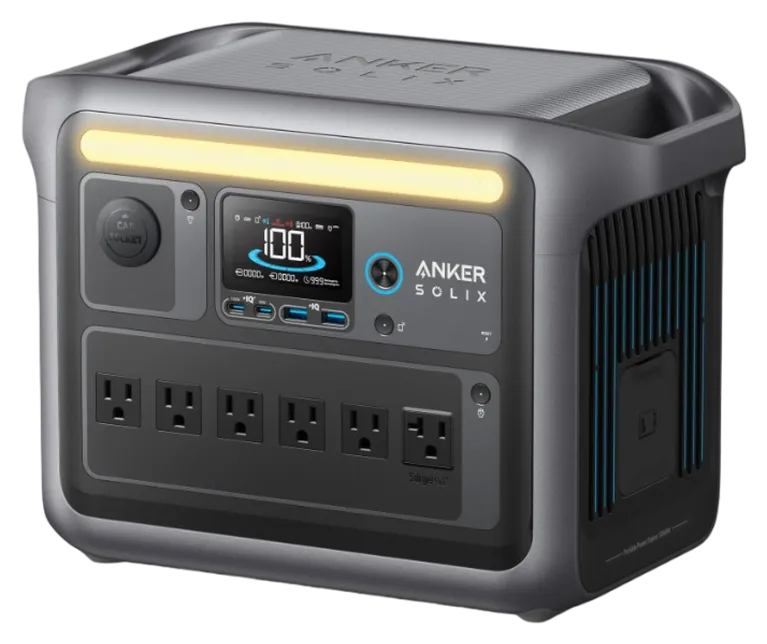
2. Anker SOLIX C1000 Gen 2
The fastest financial payback in the 1kWh category. Pairs 1,056Wh of LiFePO4 storage with 600W solar charging in a 28-lb chassis. Features sub-20ms UPS switchover, allowing you to use it as an uninterrupted power buffer for desktop computers, gaming rigs, and network servers while cycling free solar power daily.
Check Current Deals →
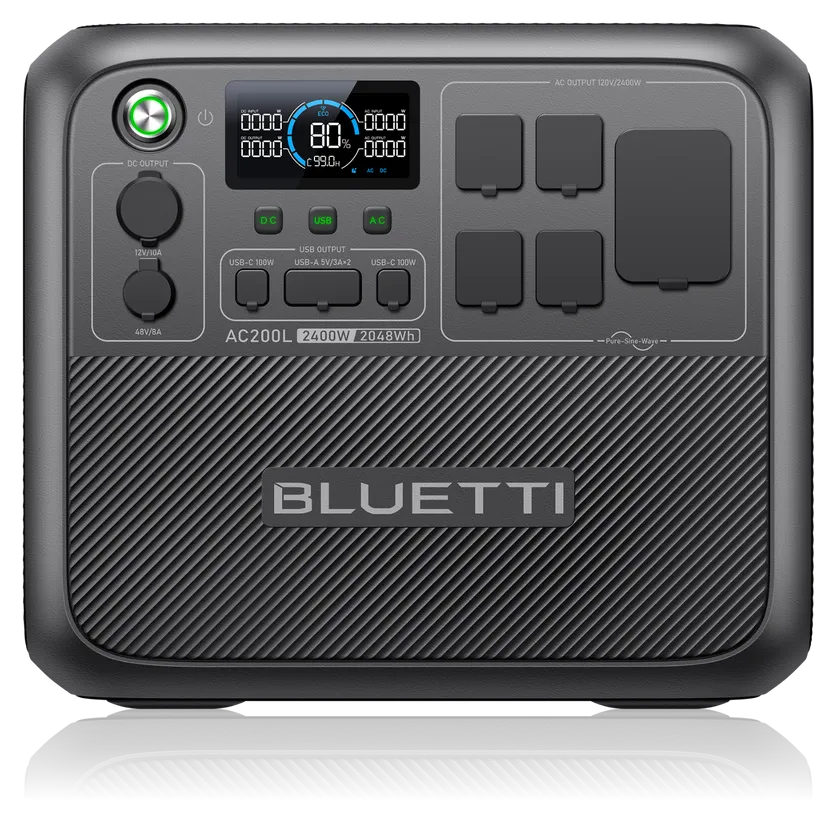
3. Bluetti AC200L
If you want to use cheap, rigid residential rooftop solar panels (350W–450W each), the AC200L’s 145V / 1,200W MPPT charge controller makes it effortless. Connect three residential panels in series for blisteringly fast charging that tops off the 2,048Wh battery in under 1.8 hours of noon sun.
Check Current Deals →
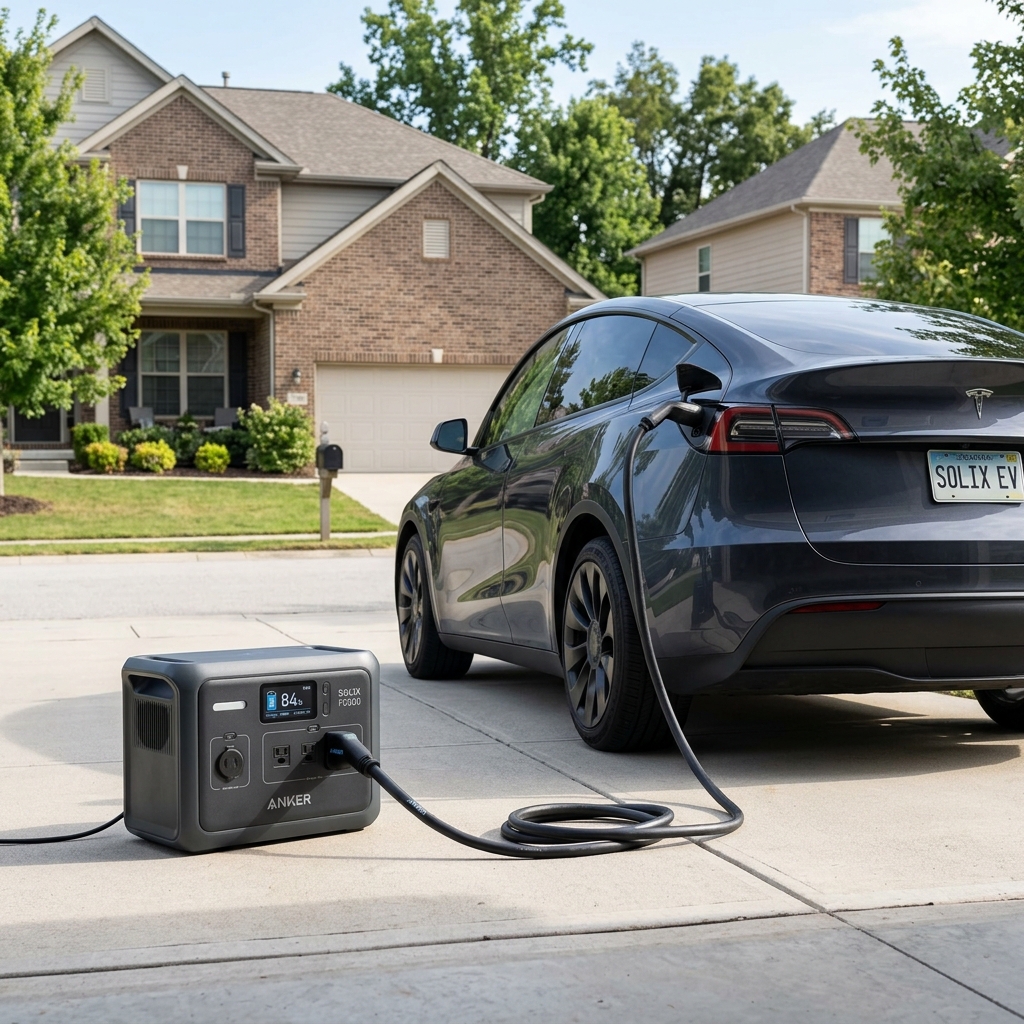
4. Anker SOLIX F3800 Home Backup System
If you want to step up from individual appliance cords to powering 6 to 10 subpanel circuits (gas furnace blower, multiple refrigerators, well pump), the F3800 outputs native 120V/240V split-phase power. At 3.84 kWh, it qualifies for the 30% federal clean energy tax credit on its own, dropping your net acquisition cost significantly.
Check Current Deals →
Costly Small-Solar Mistakes to Avoid
To ensure your small solar investment actually saves money, avoid these common traps:
Mistake: Ignoring Inverter Tare Loss on Tiny Loads
An active 2,000W inverter consumes 20W to 35W just idling. If you connect a 10W Wi-Fi router to an AC wall outlet on your power station, the inverter will draw 35W to power a 10W load! That burns 840Wh of battery power daily in tare loss. Whenever powering low-wattage devices (routers, LED lights, phones), plug directly into the station’s 12V DC car port or USB-C PD ports, which operate at 95%+ efficiency with zero inverter tare loss.
Mistake: Buying Cheap PWM Charge Controllers Instead of MPPT
Pulse Width Modulation (PWM) controllers simply clamp solar panel voltage down to battery voltage, wasting up to 35% of your panels’ potential energy. Always ensure your power station or standalone controller features Maximum Power Point Tracking (MPPT), which converts excess voltage into extra charging amperage.
Mistake: Using Thin Wire Gauges on Long DC Solar Runs
Running 50 feet of thin 16 AWG wire from outdoor solar panels to an indoor power station creates substantial electrical resistance. At 10 Amps, a thin cable can lose 8% to 12% of your solar wattage as heat. Always use heavy 10 AWG or 12 AWG UV-rated PV wire for cable runs exceeding 20 feet.
Mistake: Attempting to Power Resistive Heating Appliances
Small solar setups are designed for efficient motor and electronic loads. Plugging a 1,500W space heater, hair dryer, or electric kettle into a 1,000Wh battery will drain it to zero in under 35 minutes. Never target thermal heating appliances with small solar systems; use natural gas, propane, or heat pumps instead.
Frequently Asked Questions (FAQ)
Can I legally plug a small solar generator into my home wall outlet to feed the house?
NO. Never plug the AC output of a power station into a household wall outlet using a male-to-male “suicide cord.” This violates National Electrical Code (NEC Article 702), creates severe fire and electrocution hazards, and sends dangerous voltage onto utility lines during grid outages. To power house circuits, use a code-compliant manual transfer switch or plug appliances directly into the power station.
Do small solar setups require permission from an HOA or landlord?
No, as long as panels are not permanently bolted to communal exterior building walls or common roof areas. Ground-mounted portable panels set up on a private patio, balcony railing, or backyard do not constitute permanent structural modifications and are fully legal under federal and state solar access laws (such as California Civil Code Section 714).
How long does a LiFePO4 battery last when cycled daily?
Modern LiFePO4 (Lithium Iron Phosphate) batteries are rated for 3,000 to 4,000 full discharge cycles before capacity degrades to 80%. When discharged and recharged daily to offset home appliances, a LiFePO4 power station will deliver 8 to 10+ years of dependable daily service.
What happens on rainy or heavily overcast days?
Photovoltaic cells still harvest ambient diffuse sunlight on overcast days, but output drops to 10% to 25% of rated capacity. Having a 2,000Wh battery bank provides a 24-to-36-hour energy reserve, keeping critical appliances running through cloudy weather until direct sun returns.