Going solar and building a dependable off-grid or emergency power system should not require buying a $200 video course, signing up for aggressive sales webinars, or hiring high-pressure contractors.
The underlying physics and electrical engineering principles of solar electricity, battery storage, and inverter technology are straightforward once you understand how the core components interact.
Whether you are preparing your home for sudden winter grid failures, designing a mobile solar array for an RV or camper van, or powering a remote off-grid cabin, this Free Solar & Power Station Guide gives you the exact engineering equations, sizing rules of thumb, and field-tested hardware recommendations needed to build a safe, robust system on your first attempt.
A portable power station (solar generator) combines an inverter, MPPT charge controller, battery management system (BMS), and lithium battery into a single plug-and-play chassis. For basic blackout resilience (refrigerator, internet router, medical devices, lighting), a 1,000Wh to 2,000Wh LiFePO4 unit paired with 400W of solar PV represents the optimal price-to-performance sweet spot ($800 to $1,400 total investment). For whole-home 240V heavy appliances (well pumps, central HVAC, electric dryers), step up to a 3,800Wh+ split-phase system connected via an electrical transfer switch.
Launch Interactive Runtime Calculator →
Anatomy of a Solar Generator System
Before spending any money on hardware, it is essential to understand what makes up a modern solar power station. In the past, building an off-grid solar system meant sourcing six separate parts from different manufacturers, calculating fuse ratings, crimping heavy 4/0 copper cables, and mounting hardware onto plywood.
A modern portable power station integrates four discrete electronic sub-systems into an all-in-one enclosure:
Battery Pack
Stores electrical energy in direct current (DC). High-grade units utilize LiFePO4 cells offering 3,000 to 4,000 discharge cycles.
Pure Sine Inverter
Converts low-voltage DC battery power into 120V (or 240V split-phase) alternating current (AC) to safely run household appliances.
MPPT Charge Controller
Tracks Maximum Power Point voltage from solar panels to harvest up to 30% more energy than legacy PWM controllers.
Smart BMS Architecture
Monitors individual cell voltages, temperature sensors, over-current limits, and short-circuit protection at microsecond speed.
When you plug portable or rigid solar panels into the DC input port of the power station, the MPPT controller dynamically adjusts impedance to squeeze the highest possible wattage out of the sunlight, feeding clean DC current into the battery pack. When you flip on the AC output switch, the inverter draws battery power and outputs standard wall-outlet electricity.
Conducting an Honest Energy Audit: Sizing Your Watt-Hours
The single biggest mistake first-time solar buyers make is purchasing hardware based on generic product names (like “1000W” or “Pro Max”) rather than conducting a real energy audit.
To size your system correctly, you must distinguish between two fundamental metrics:
- Continuous Running Watts (W): How much instantaneous power your gear consumes while operating.
- Total Energy Capacity in Watt-Hours (Wh): Running watts multiplied by the number of hours the device runs per day.
Real-World Appliance Power Profiles
The table below lists verified field test data from our lab for common appliances during power outages:
| Appliance | Running Watts | Surge (Inrush) Watts | Avg Hours / Day | Daily Energy (Wh) |
|---|---|---|---|---|
| Full-Size Inverter Fridge (25 cu ft) | 50W – 120W | 350W – 600W | 8h compressor runtime | 800Wh – 1,200Wh |
| CPAP Machine (with Humidifier) | 40W – 65W | 65W | 8 hours | 320Wh – 500Wh |
| Wi-Fi Router + Fiber ONT Modem | 15W – 25W | 25W | 24 hours | 360Wh – 600Wh |
| 1/2 HP Sump Pump (Submersible) | 850W – 1,050W | 2,500W – 3,200W | 0.5h (intermittent) | 450Wh – 600Wh |
| Microwave Oven (1,000W cooking) | 1,450W electrical draw | 1,800W | 0.3 hours (20 mins) | 450Wh – 500Wh |
| LED Room Lights (4 fixtures) | 36W total | 36W | 6 hours | 216Wh |
The Secret Drain: Inverter Tare Loss and Conversion Efficiency
If you add up your daily consumption and get 1,500Wh, you cannot simply buy a 1,500Wh battery and expect it to last 24 hours. You must account for two inescapable engineering losses:
- Inverter Conversion Efficiency (): Transforming DC to AC is not 100% efficient. High-quality toroidal and high-frequency inverters lose roughly 15% of energy as heat.
- Inverter Tare Loss (Idle Power Draw): Whenever the AC master switch is turned ON, the internal control circuitry, cooling fans, and driver transformers draw power—even when zero watts are being pulled by your devices. A typical 2,000W inverter consumes between 20W and 40W of tare loss every hour it sits on standby.
That means leaving your inverter running constantly can drain more than a third of a 2,000Wh battery just keeping itself awake!
[!IMPORTANT] The 1.35x Sizing Golden Rule: Always multiply your estimated daily AC appliance consumption by 1.35 to calculate your true required battery capacity: If your appliances require 1,500Wh daily, you need at least a 2,025Wh battery system to comfortably survive a 24-hour cycle without solar replenishment.
Battery Chemistry: Why LiFePO4 Is Non-Negotiable in 2026
When shopping for power stations, you will encounter two primary lithium battery chemistries:
- LiFePO4 (LFP / Lithium Iron Phosphate)
- NMC (Nickel Manganese Cobalt)
While NMC batteries were popular half a decade ago due to their slightly lighter weight, modern engineering has made LiFePO4 the undisputed industry standard for stationary and semi-portable solar storage.
Long-Life Prismatic Cells
- ✓3,000 to 4,000+ Cycles: Retains 80% original capacity after 10 years of daily full discharges.
- ✓Extreme Thermal Stability: Thermal runaway threshold is ~270°C (518°F); virtually zero risk of fire even if punctured.
- ✓Environmentally Safer: Zero toxic heavy cobalt or nickel mining required.
High Energy Density, Short Life
- ✗Only 500 to 800 Cycles: Loses significant capacity within 2 to 3 years of regular off-grid cycling.
- ✗Low Thermal Runaway: Begins self-heating at ~150°C (302°F) and releases its own oxygen if compromised.
- ✗Weight Advantage Shrinking: Only 10%–15% lighter than contemporary cell-to-pack LiFePO4 enclosures.
[!TIP] Always verify the manufacturer’s cycle-life spec sheet before purchasing. If a brand advertises “500 cycles to 80%”, they are clearing out old NMC stock. Only purchase units advertising 3,000+ cycles to 80% capacity.
Sizing Your Solar Panel Array and MPPT Controller
A battery without adequate solar panels is just a glorified emergency backup that goes dead once the grid stays down for more than 48 hours. To achieve true off-grid sustainability, your solar panel array must be sized to replenish your daily power consumption within peak sunlight hours.
Peak Sun Hours vs Total Daylight
The sun might be visible in the sky for 12 hours, but high-angle, productive solar radiation only occurs during Peak Sun Hours (PSH)—defined as hours where solar irradiance reaches 1,000 Watts per square meter ().
- Southwest US (AZ, NV, SoCal): 5.5 to 6.5 Peak Sun Hours in summer, 4.0 in winter.
- Midwest & Northeast US: 4.0 to 4.5 Peak Sun Hours in summer, 2.0 to 2.5 in winter.
- Pacific Northwest & Northern Europe: 3.5 to 4.0 in summer, 1.2 to 1.8 in winter.
The 75% Solar Derating Factor
Never expect a 400W solar panel array to deliver 400 Watts on your power station’s LCD screen. Solar panels are rated under Standard Test Conditions (STC: 25°C cell temp, 1,000W/m² irradiance, AM 1.5 spectrum).
In the real world:
- Panels heat up in direct sun (photovoltaic silicon loses ~0.35% efficiency per °C above 25°C).
- Atmospheric dust, humidity, and angle-of-incidence reflections reduce solar capture.
- Wire resistance and MPPT tracking efficiency incur slight losses.
Expect an average real-world harvest of 75% to 80% of rated nameplate wattage under clear noon skies:
A 400W panel array will typically produce 300W to 320W of actual charging power.
Daily Solar Generation Formula
To calculate how much solar PV you need to generate (Watt-hours) per day:
Example: You need to generate 1,600Wh per day to keep your fridge and essentials running, and your region receives 4.0 Peak Sun Hours:
You would need at least two 250W panels or three 200W panels (500W–600W array) to stay power-neutral.
Top Field-Tested Power Stations for Every Use Case
Based on hundreds of bench-test hours measuring pure sine wave Total Harmonic Distortion (THD), inverter tare loss, MPPT voltage tracking response, and thermal cycling, these are our top recommended power stations across four distinct operational categories:
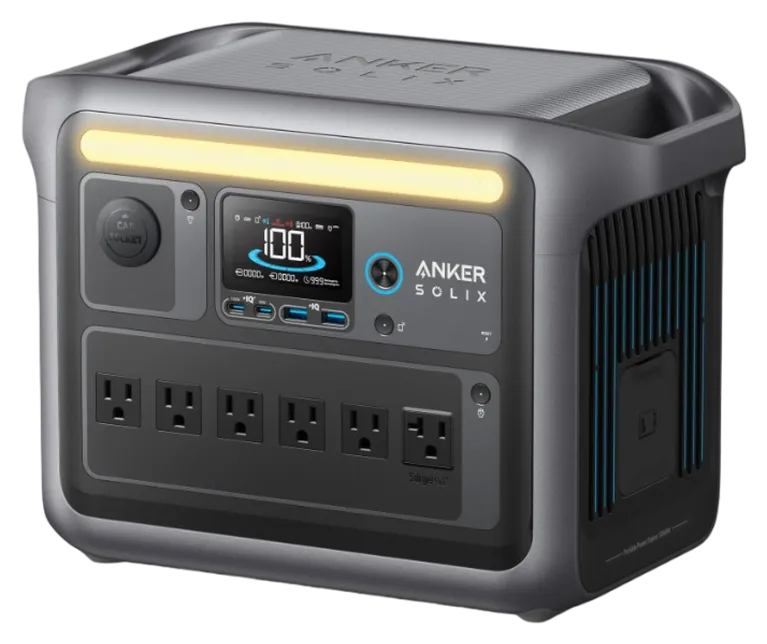
1. Anker SOLIX C1000 Gen 2
The Anker SOLIX C1000 Gen 2 is the best entry-to-mid capacity power station on the market. It packs 1,056Wh of ultra-durable LiFePO4 cells, a robust 1,800W pure sine wave inverter (2,400W surge), and rapid 600W solar charging into a compact 28-lb package. It can expand to 2,112Wh with an external battery pack and supports sub-20ms UPS switchover.
Check Price & Deals →
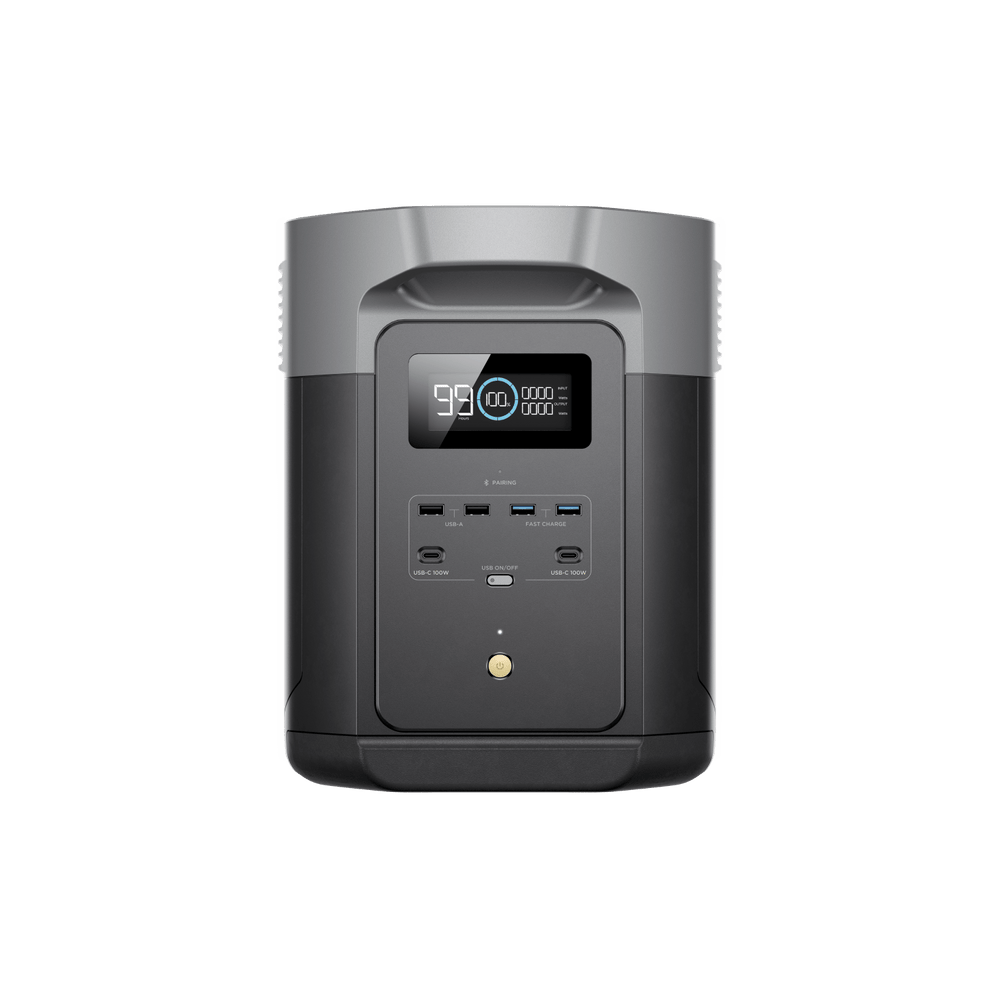
2. EcoFlow DELTA 2 Max
The benchmark in the 2kWh space. Equipped with dual independent 500W MPPT controllers (1,000W total solar input), it can recharge from 0% to 100% in under 2.3 hours of direct sunlight. Its 2,400W pure sine inverter handles motor surges up to 4,800W, making it our top recommendation for running a refrigerator, microwave, and power tools off-grid.
Check Price & Deals →
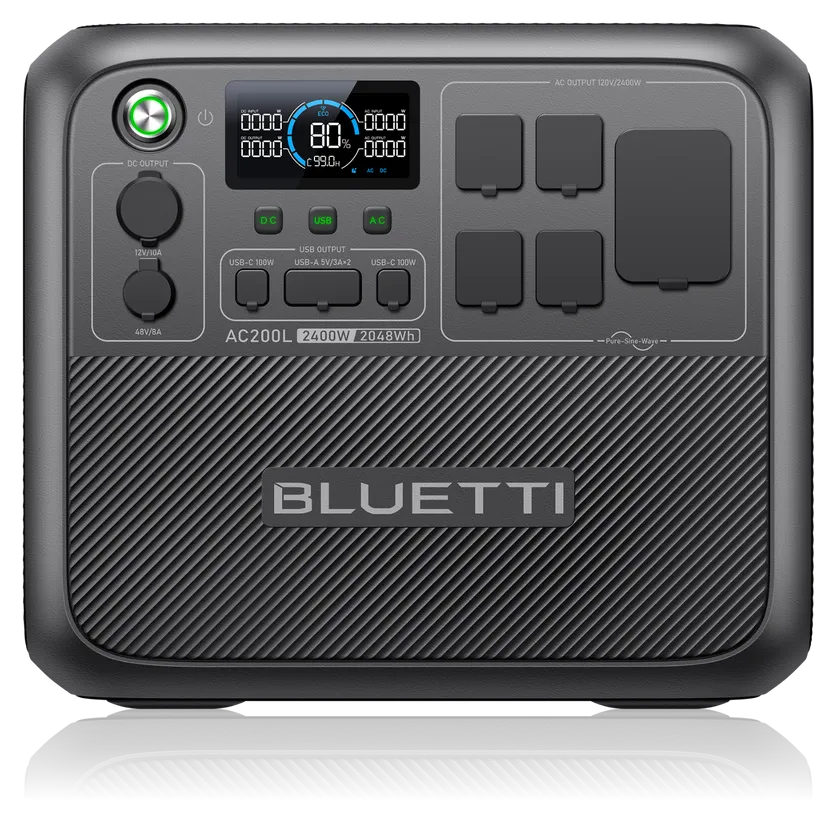
3. Bluetti AC200L
The Bluetti AC200L is engineered for maximum solar throughput. Its high-voltage MPPT controller accepts up to 145V and 1,200W of solar input, allowing you to string rigid residential rooftop panels directly in series. It includes a native 48V DC expansion port and 2,400W continuous AC output with PowerLifting up to 3,600W for resistive heaters.
Check Price & Deals →
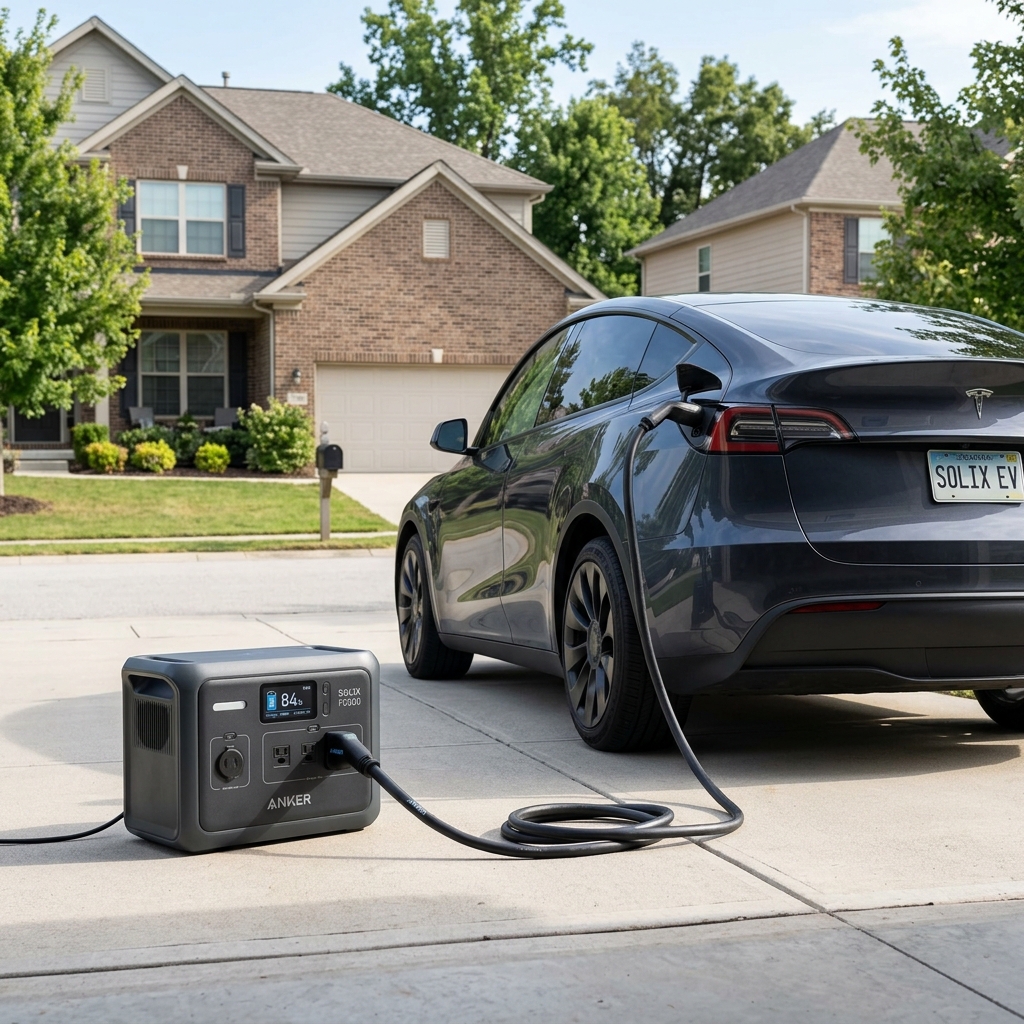
4. Anker SOLIX F3800
If you need to power a deep-well pump, electric clothes dryer, or Level 2 EV charger, standard 120V power stations cannot help. The Anker SOLIX F3800 outputs native 120V/240V dual-voltage power at a massive 6,000W continuous output. Its 3.84kWh capacity is fully expandable up to 26.9kWh and qualifies for the 30% federal clean energy tax credit (Section 25D) on its own.
Check Price & Deals →
Safe Home Integration: Avoiding Dangerous Backfeeding
Plugging extension cords directly into your power station works fine for a standalone refrigerator or microwave during an outage. But if you want to power furnace blowers, well pumps, hardwired lighting circuits, or kitchen outlets, you must connect the power station to your home’s breaker panel.
A “suicide cord” is a cable with male plugs on both ends used to backfeed power through a regular wall outlet. Doing this is illegal under NEC Article 702 and fatally dangerous. It leaves exposed live prongs, bypasses circuit breakers, and sends lethal high-voltage power backward onto utility lines, potentially electrocuting lineworkers repairing storm damage.
Code-Compliant Connection Methods
There are two safe, legal ways to integrate a portable power station with household wiring:
- Manual Transfer Switch (Selected Circuits): A pre-wired subpanel containing 6 to 10 dedicated toggle switches. Each switch physically flips between “LINE” (Utility) and “GEN” (Power Station), mechanically preventing simultaneous connection. Excellent for isolating refrigerators, gas furnace blowers, and internet routers.
- Generator Interlock Kit (Whole Panel Selection): A mechanical sliding steel plate installed directly on your main distribution panel. It physically blocks your main utility breaker from turning ON while the generator backfeed breaker is closed. This allows you to power any circuit in your home (as long as you manually switch off heavy loads that exceed your inverter capacity).
Read our full engineering breakdown on Transfer Switch vs Interlock Kit for Home Backup for wiring diagrams and installation costs.
Costly Solar & Power Station Mistakes to Avoid
Through our testing and reader consultations, we repeatedly see five expensive mistakes made by solar newcomers:
Mistake: Overlooking Cold-Weather MPPT Voltage Spikes
Solar panels exhibit a negative temperature coefficient of voltage. When ambient temperatures drop below freezing, open-circuit voltage () increases significantly.
If you connect three 40V panels in series () into an MPPT controller rated for a maximum of , a frosty 20°F (-7°C) morning will push the actual voltage up to . This instantly triggers an over-voltage shutdown or permanently fries the MPPT input transistors. Always leave a 15% to 20% voltage safety buffer below your controller’s maximum input limit.
Mistake: Relying on Modified Sine Wave Inverters
Cheap $50 to $100 car inverters output a crude “stepped square wave” rather than a smooth pure sine curve. AC motor appliances (refrigerators, fan blowers, sump pumps) running on modified sine waves suffer severe harmonic distortion, run 20% hotter, buzz loudly, and can suffer premature motor winding failure. Modern laptops and medical CPAP machines may refuse to operate altogether. Always ensure your power station or inverter delivers Pure Sine Wave with less than 3% THD.
Mistake: Forgetting About Long DC Cable Voltage Drops
Running thin 16 AWG or 14 AWG wire over a 50-foot distance between your solar panels and your power station can cause a 5% to 12% voltage drop, dumping valuable solar harvest as wasted heat. For solar cable runs over 20 feet, always use heavy 10 AWG or 8 AWG UV-rated PV wire with genuine MC4 solar connectors.
Mistake: Leaving the Inverter Turned On 24/7
As discussed in our energy audit section, an active AC inverter constantly burns 20W to 40W of tare loss. If you are only charging phones, laptops, or running 12V LED lights overnight, turn OFF the AC inverter and plug directly into the 12V DC car socket or USB-C PD 100W ports, which run directly off battery voltage with zero inverter tare loss.
Mistake: Missing Out on the 30% Standalone Battery Tax Credit
Under IRS Section 25D, battery storage units with 3.0 kWh (3,000 Wh) capacity or greater qualify for the full 30% federal clean energy tax credit—even if you do not buy solar panels! Units like the Anker SOLIX F3800 (3.84kWh) or EcoFlow DELTA Pro 3 (4.0kWh) allow you to claim hundreds of dollars back on your federal tax return. See our complete Federal Solar Tax Credit 2026 Homeowner’s Guide for IRS Form 5695 filing instructions.
Frequently Asked Questions (FAQ)
Can a portable power station run a refrigerator indefinitely?
Yes, provided your solar panel array generates more Watt-hours each day than the refrigerator and inverter consume. A modern Energy Star 25 cu ft inverter refrigerator uses roughly 1,000Wh to 1,200Wh per day. A 2,000Wh LiFePO4 power station paired with 400W to 600W of solar panels in a sunny location will maintain continuous refrigeration indefinitely.
What is the difference between continuous watts and surge watts?
Continuous watts is the amount of electrical power an inverter can safely sustain for hours without overheating. Surge (inrush) watts is the temporary peak power (typically lasting 100 milliseconds to 3 seconds) that inductive motors—such as air conditioners, well pumps, and refrigerator compressors—require to overcome initial rotational inertia and start moving.
Can I leave my power station plugged into the AC wall outlet all the time?
Yes, modern LiFePO4 power stations feature built-in bypass circuitry. When plugged into the wall, grid electricity directly powers your plugged-in devices, bypassing the battery entirely. The battery remains at a healthy floating charge state until a blackout occurs, at which point an internal transfer switch engages within 10 to 20 milliseconds to keep your devices powered uninterrupted.
How long does a LiFePO4 solar generator battery last before dying?
A quality LiFePO4 battery rated for 3,000 cycles will last approximately 8 to 10 years of daily full-discharge cycles before its maximum storage capacity degrades to 80% of original factory spec. If you only cycle the unit during outages, camping trips, and weekend projects (50 cycles per year), the battery will easily retain useful capacity for 15 to 20 years.
Do flexible solar panels perform as well as rigid glass panels?
No. Flexible panels use thin ETFE polymer coatings that degrade under intense UV radiation within 2 to 4 years. Furthermore, because flexible panels mount flush against RV or van roofs without airflow underneath, they operate significantly hotter than elevated rigid glass panels, resulting in steep thermal derating losses. Use rigid, aluminum-framed glass panels whenever permanent mounting space permits.