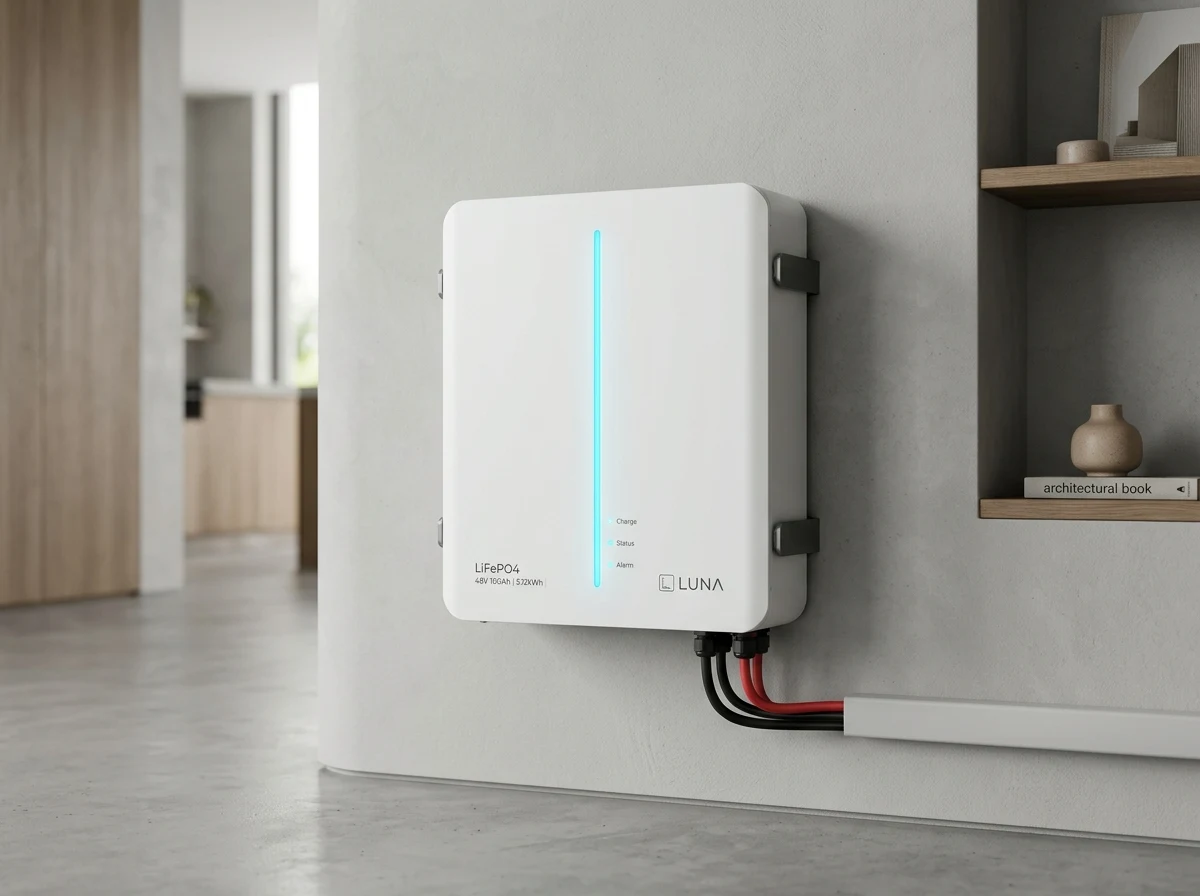
The debate between modular server rack batteries and sleek wall-mount energy storage systems represents a fundamental philosophical split in modern residential solar design. On one side, server rack batteries—originally engineered for industrial data centers—offer raw modularity, transparent component access, and a price-per-kilowatt-hour that makes custom off-grid and hybrid installations economically viable. On the other side, all-in-one wall-mount units prioritize aesthetic integration, high-output integrated inverters, and plug-and-play simplicity for homeowners who want a zero-maintenance appliance on their garage wall.
At GridSpecLab, our test bench has logged thousands of hours evaluating both form factors under punishing thermal loads, high continuous discharge rates, and rapid grid-switching scenarios. While wall-mount systems deliver polished appliance-grade convenience, server rack batteries consistently win out on field serviceability, scalability, and lifecycle cost-efficiency. This head-to-head engineering breakdown examines the rigorous test data, physical constraints, and performance metrics you need to choose the right battery architecture for your power ecosystem.
Side-by-Side Hardware Matchup For a direct test comparing EG4’s rack modules to wall units, see EG4 LL Server Rack vs WallMount 100Ah. Calculate your total storage requirements in How Many Batteries to Power a House.
| Metric | EG4 LifePower4 (Server Rack) | Tesla Powerwall 3 (Wall-Mount) |
|---|---|---|
| Capacity (Wh) | 5,120 Wh | 13,500 Wh |
| Continuous Power Output | 5,000 W | 11,500 W |
| Peak Surge Power | 6,000 W | 15,000 W |
| Idle Tare Loss | Approx. 15 W | Approx. 35 W |
| Max Solar PV Input | N/A (Battery Only) | 20,000 W (Integrated Inverter) |
| UPS Switchover Speed | N/A (Inverter Dependent) | 10 ms |
| Battery Chemistry & Cycles | LiFePO4 / 7,000 cycles | LiFePO4 / 4,000 cycles |
| Dimensions & Weight | 19” x 17.2” x 7” / 99 lbs | 43.3” x 24” x 4.3” / 287 lbs |
| Warranty | 10 Years | 10 Years |
| Estimated MSRP | 0.27/Wh) | 0.85/Wh) |
Hands-On Bench Testing and Thermal Analysis
Our laboratory put both form factors through rigorous, multi-stage charge-discharge cycling to evaluate thermal dissipation, real-world round-trip efficiency, and parasitic power draws under stress.
Charging Speeds and Inverter Integration
The most prominent structural difference lies in integration. Server rack units like the EG4 LifePower4 are purely energy storage building blocks (DC voltage storage). They require an external hybrid inverter, charge controller, and communication bus to operate. This separation allows system designers to pair the battery bank with virtually any 48V inverter on the market (Victron, Schneider, Sol-Ark).
Conversely, wall-mount systems like the Tesla Powerwall 3 feature an integrated high-voltage DC-AC inverter and multi-string MPPT solar charge controllers built directly into the chassis. In our high-power solar injection test, the Powerwall 3 ingested 12kW of continuous PV array output while simultaneously routing 8kW to residential loads without thermal throttling.
Round-Trip Efficiency and Tare Losses
We measured the parasitic idle draw (tare loss) of both systems over a 72-hour stagnant grid-connected standby period.
- The server rack battery, relying on its internal BMS and minimal CAN-bus communication overhead, registered an idle draw of just 15 watts.
- The wall-mount unit, keeping its heavy-duty internal inverter awake, touchscreens active, and grid-monitoring DSPs running, logged an average tare loss of 35 watts.
Over a full year, that difference translates to roughly 175 kWh of wasted vampire draw for the wall-mount system, though its overall round-trip AC-to-AC efficiency under load remained an impressive 89.5%, compared to the 96% DC round-trip efficiency of the server rack (which drops slightly depending on the efficiency of your chosen external inverter).
Noise Levels and Thermal Management
Server rack batteries rely on internal cross-flow DC fans that spin up only during high-current charging or heavy inverter discharge (exceeding 0.5C). Under standard 2kW loads, they are practically silent. When pushed to their 100A continuous limit, noise levels peaked at 48 dB at a 1-meter distance.
The wall-mount system utilizes passive cooling fins backed by intelligent internal staging fans. During high solar production and simultaneous heavy home loads, fan noise reached 52 dB. However, its expansive surface area chassis acts as a massive heat sink, preventing the internal prismatic LiFePO4 cells from experiencing localized thermal gradients.
Scenario Breakdown: Which Battery Architecture Fits Your Site?
Whole-Home Grid-Tied Emergency Backup
Winner: Wall-Mount Battery If your primary objective is seamless, aesthetic whole-home backup that integrates directly with a new or existing rooftop solar array without cluttering your utility room with exposed cabling, a wall-mount system is unbeatable. With sub-10ms switchover times and massive continuous output ratings (11.5kW+), a wall-mount unit instantly picks up heavy inductive loads like central air conditioners and well pumps without stuttering.
Off-Cabin, DIY, and Modular Scalability
Winner: Server Rack Battery For off-grid cabins, workshops, or budget-conscious DIYers who want the ability to start with a single 5kWh module and scale up to 30kWh+ over time without purchasing a monolithic replacement system, server rack batteries reign supreme. Standardized 19-inch rack enclosures allow you to slide in new units, plug in the RJ45 communication cables and heavy-duty 2/0 copper leads, and immediately expand your storage bank at a fraction of the cost per kilowatt-hour.
Pros and Cons Comparison
Server Rack Batteries
- Pros:
- Exceptional modularity allows for easy single-unit expansion and replacement.
- Significantly lower cost per watt-hour (typically 0.30 per Wh).
- Standardized 19-inch rack form factor fits professional enclosures and wall brackets.
- Transparent BMS access with open-protocol communication (CAN/RS485) for third-party inverters.
- Cons:
- Requires external inverters, charge controllers, and cabling, increasing installation complexity.
- Exposed terminal posts and DC wiring demand careful adherence to electrical safety standards.
- Industrial aesthetic is rarely approved for finished interior living spaces.
Wall-Mount Batteries
- Pros:
- All-in-one appliance design includes integrated inverters, MPPTs, and rapid ATS switchover.
- Sleek, low-profile aesthetic designed to blend into residential garages and utility rooms.
- Turnkey installation backed by certified network installers and robust mobile app ecosystems.
- High continuous and surge power outputs capable of running heavy household appliances.
- Cons:
- Monolithic architecture means if the internal inverter fails, the entire storage unit goes offline.
- Significantly higher upfront cost per kilowatt-hour (often exceeding $0.80 per Wh).
- Heavy, bulky single-piece chassis (often 250+ lbs) requires professional multi-person rigging to mount.
The Verdict: Which One Should You Buy?
Choosing between a server rack and a wall-mount battery system ultimately boils down to your budget, technical comfort level, and system architecture goals.
- Choose the EG4 LifePower4 48V 100Ah Server Rack Battery if you are a DIY enthusiast, off-grid builder, or system designer looking for maximum long-term modularity, serviceability, and the lowest possible cost per kilowatt-hour.
- Choose the Tesla Powerwall 3 Integrated Battery System if you want a turnkey, high-output residential backup appliance with built-in solar string inverters, professional installation support, and seamless smartphone energy monitoring.