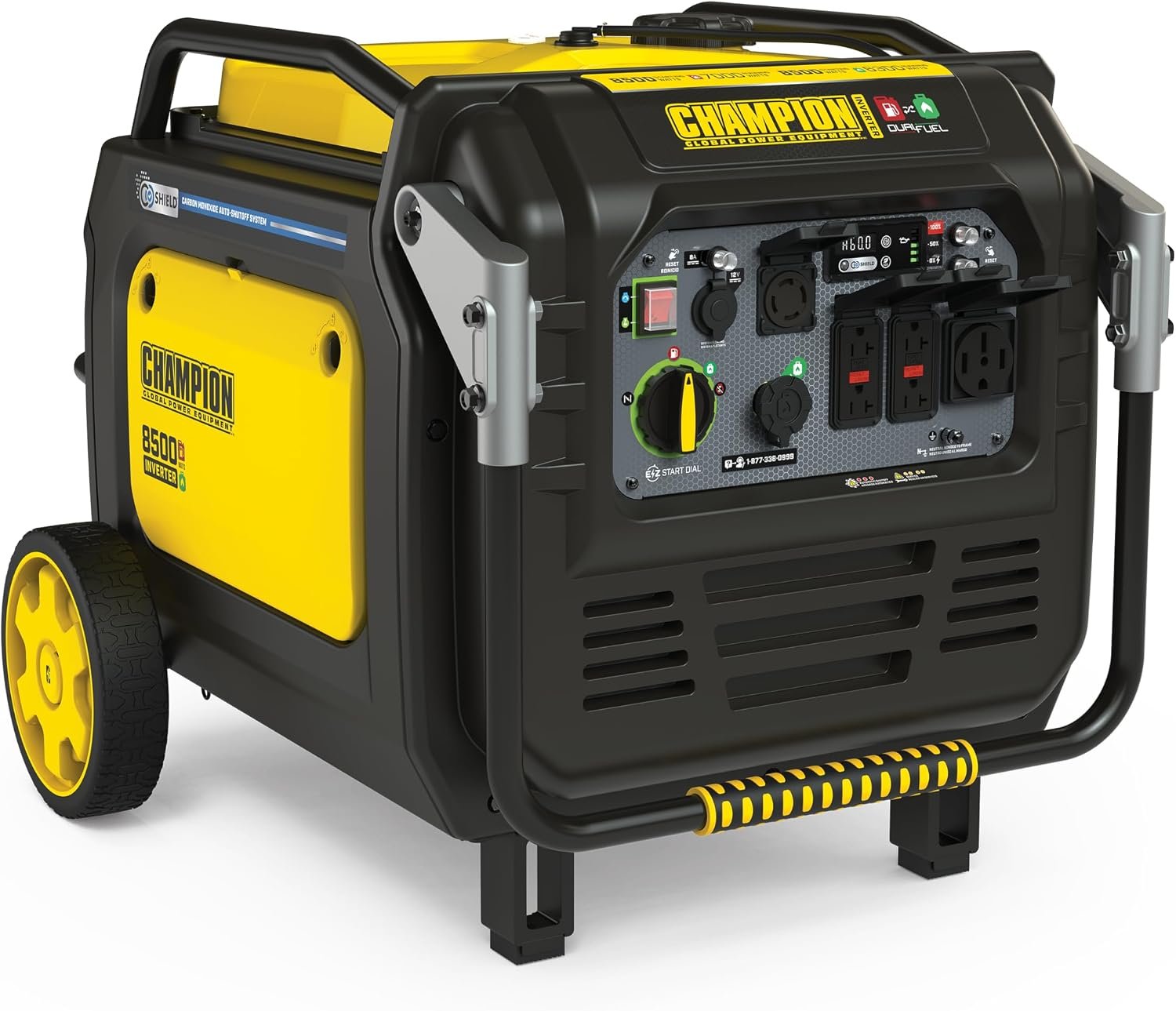
The debate between portable power stations and internal combustion gas generators has long divided off-grid enthusiasts, campers, and emergency preparedness planners. On one side, lithium-based solar generators offer silent, fume-free operation, delicate microinverter protection, and instant uninterruptible power supply (UPS) switchover. On the other side, fossil fuel generators deliver virtually endless chemical potential energy, shrugging off extended multi-week grid collapses as long as your fuel cans stay full.
At GridSpecLab, our bench engineers have subjected both architectures to rigorous multi-kilowatt load profiling, thermal chamber stress testing, and real-world grid-loss scenarios. But rather than forcing a zero-sum choice between chemical combustion and electrochemical storage, the modern engineering paradigm asks a more compelling question: Why not use both? Integrating a high-capacity lithium battery with an automated smart gas generator creates a hybrid microgrid that neutralizes the individual weaknesses of each technology while compounding their strengths.
Side-by-Side Hardware Matchup To explore top inverter generators engineered for solar battery charging, consult our guide to the Best Smart Dual-Fuel Generators for Solar Backup. Connect both safely using our Transfer Switch vs Interlock Kit Guide.
| Specification | EcoFlow Delta Pro 3 | Honda EU3000iIS Gas Generator |
|---|---|---|
| Capacity / Fuel | 4,096 Wh (LiFePO4) | 3.4 Gal Tank (Gasoline) |
| Continuous AC Output | 4,000 W | 2,800 W |
| Surge / Peak Output | 8,000 W | 3,000 W |
| Inverter Architecture | Pure Sine Wave (X-Boost to 4500W) | Inverter with Microprocessor Sine Wave |
| Solar / Charging Input | 2,600W Max MPPT (Solar/AC/Alt) | 12V DC Battery Charging Output Only |
| Idle Tare Loss | Approx. 18 W | N/A (Mechanical Engine) |
| Cycle Life to 80% | 4,000 Cycles | N/A (Engine Maintenance Intervals) |
| Weight & Dimensions | 115.0 lbs | 27 x 13 x 12 in | 130.7 lbs | 25 x 17 x 22 in |
| Warranty | 5 Years Standard | 3 Years Residential |
| MSRP Price Tier | High-Tier (2,500+) |
Bench Testing Analysis: Efficiency, Noise, and Output
Our testing facilities evaluated the operational profile of both units under identical laboratory conditions. When running a constant 1,500W resistive load simulating a home refrigerator, space heater, and router array, the EcoFlow Delta Pro 3 delivered pure sine power with a round-trip inverter efficiency of 90.4%. Its idle tare loss hovered at a meager 18 watts, meaning it could sit powered on in standby waiting for a grid failure for days without significant parasitic self-discharge.
Conversely, running the Honda EU3000iIS at a 1,500W load engaged its internal eco-throttle, ramping engine speed up smoothly while producing total harmonic distortion (THD) of under 2.5 percent. However, fossil fuel generators suffer from inherent thermodynamic inefficiencies at partial loads. While the Honda can output up to 2,800 watts continuously, running it below 30% capacity wastes fuel and causes carbon buildup over time.
Noise profiling yielded stark contrasts. At a distance of 3 meters, the EcoFlow power station registered 0 dB under static load and a gentle 45 dB when its internal cooling fans spun up under heavy solar recharge. The Honda generator registered a steady 57 dB at eco-throttle and 65 dB under maximum 2,800W load—acceptable for a campsite, but entirely unsuitable for overnight indoor backup or stealth urban environments.
The Hybrid Synergy: Why Combine Both Systems?
The true engineering breakthrough occurs when you stop viewing power stations and gas generators as competing products and start pairing them as complementary nodes.
- Fuel Economy and Micro-Cycling: Instead of running a noisy gas generator 24 hours a day during a blackout, you power your nighttime loads (refrigeration, CPAP machines, LED lighting, router) silently off the battery station. When the battery drops to 20% state-of-charge, you fire up the gas generator for a high-amperage, 2-hour turbo bulk charge.
- Maximum Charging Velocity: Modern lithium power stations accept massive input wattages. By utilizing dual charging (plugging a smart inverter generator into the AC input port while simultaneous photovoltaic panels feed the MPPT port), you can replenish a 4kWh battery from zero to full in under 90 minutes, minimizing fuel consumption.
- Surge Mitigation: High-wattage inductive loads—like central air conditioning compressors or well pumps—require massive startup surges. A medium gas generator might trip its overload circuit trying to boot a heavy compressor. However, passing generator power through a high-output power station utilizes the station’s 8,000W surge inverter capabilities to effortlessly bridge motor-starting transients.
Pros & Cons Breakdown
EcoFlow Delta Pro 3
- Pros:
- Zero carbon emissions, zero toxic exhaust, and safe for indoor living spaces.
- Instant 10ms UPS switchover protects sensitive computers and medical equipment.
- Massive solar MPPT input capacity allows completely off-grid recharging.
- Whisper-quiet operation with minimal standby power draw.
- Cons:
- Fixed energy ceiling; once the battery is depleted, you need grid power, solar, or a generator to recharge.
- High upfront financial investment compared to traditional fuel setups.
- Heavy chassis (115 lbs), though mitigated by rugged built-in wheels and a pull handle.
Honda EU3000iIS Gas Generator
- Pros:
- Virtually infinite runtime potential simply by storing extra cans of gasoline or propane.
- Robust, proven mechanical engineering designed for thousands of hours of operation.
- Excellent clean sine wave output safe for sensitive microprocessors.
- Lower initial acquisition cost than high-end lithium battery banks.
- Cons:
- Requires handling flammable, degrading liquid fuels and regular engine maintenance (oil changes, spark plugs, carb cleaning).
- Emits carbon monoxide and loud exhaust noise, precluding indoor use.
- Inefficient when running light overnight loads.
The Verdict: Which One Should You Buy?
Building a resilient emergency power ecosystem is no longer about choosing between silent lithium chemistry and raw fossil fuel potential. The most robust setups leverage both technologies in a synchronized symbiotic loop.
- Choose the EcoFlow Delta Pro 3 if you want silent indoor operation, automated UPS home backup, zero maintenance, and the flexibility to harvest free energy from rooftop solar panels.
- Choose the Honda EU3000iIS Gas Generator if you face multi-week grid collapses in heavily overcast regions where solar harvesting is unreliable and you require unlimited fuel-based runtime.