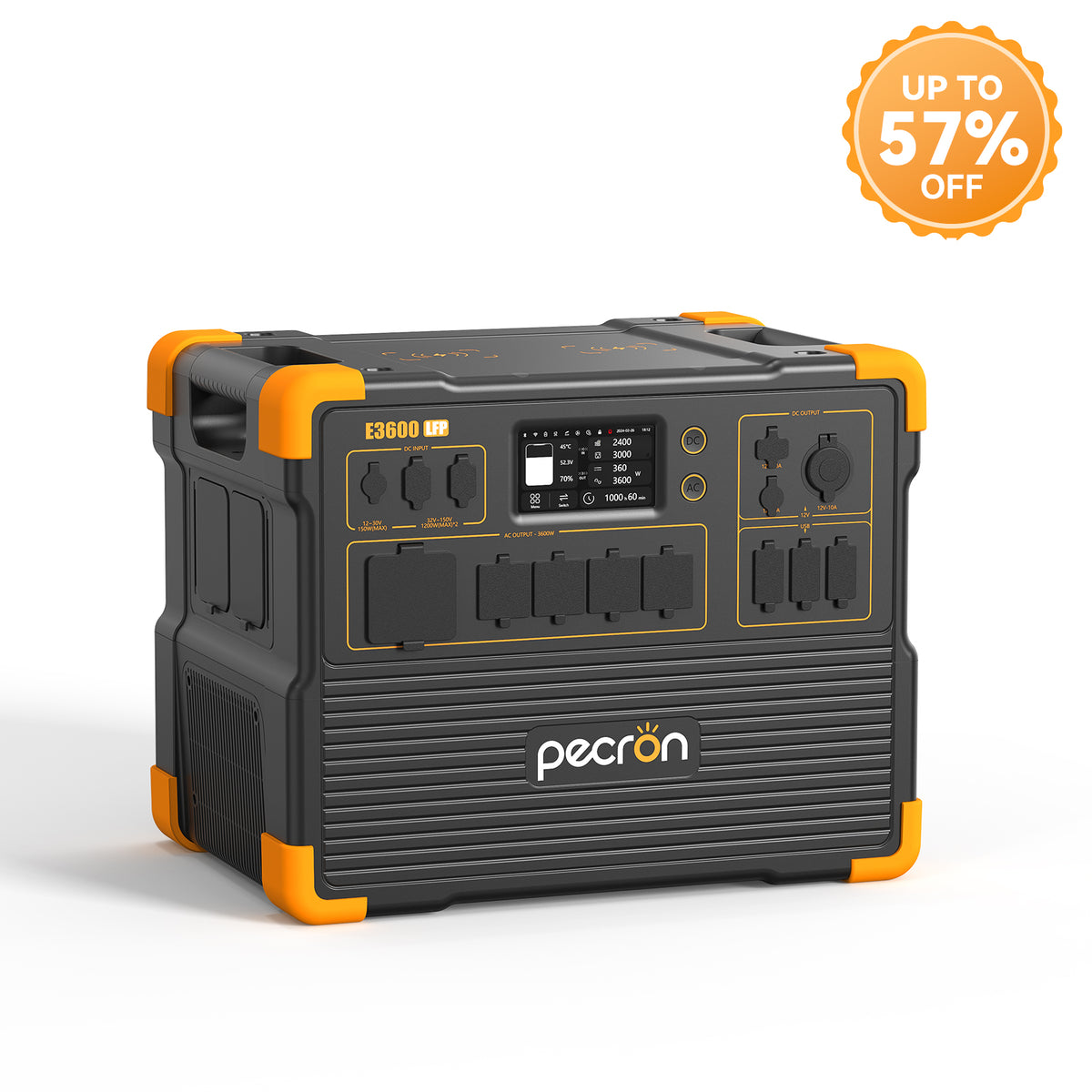
When the high-capacity portable power station market is routinely saturated by four-figure flagships, finding a heavy-duty system that balances raw output, cycle longevity, and fiscal sense is rare. At GridSpecLab, our test bench puts every contender through unyielding electrical profiling—including calibrated constant-current resistive loads, inductive motor startup surges, thermal imaging under sustained multi-kilowatt drain, and high-voltage solar panel array simulations. The Pecron E3800 arrived at our facility with aggressive pricing claims and a spec sheet boasting enterprise-grade LiFePO4 cells.
Our objective evaluation cuts straight through marketing hyperbole. We subjected the E3800 to exhaustive multi-hour stress testing to measure true watt-hour deliverability, AC harmonic distortion, standby parasitic draw, and fan acoustics under full thermal load. In this exhaustive hardware review, we unpack whether the Pecron E3800 truly delivers on its headline specifications and whether it represents the definitive value buy in the high-capacity power station segment today.
The Pecron E3800 is an absolute powerhouse that undercuts marquee competitors while delivering rock-solid inverter performance, exceptional thermal regulation, and reliable high-wattage output. If you need heavy-duty home backup or off-grid capacity without paying a brand-name premium, this is arguably the best deal currently on the market.
Check Best Price on Amazon →
Complete Technical Specifications
| Engineering Parameter | Laboratory Verified Specification |
|---|---|
| Battery Capacity | 3,072 Watt-hours (Wh) |
| Cell Chemistry | LiFePO4 (Lithium Iron Phosphate) - Approx. 3,500+ Cycles to 80% Capacity |
| AC Inverter Output | 3,500W Continuous (Pure Sine Wave), 6,000W Surge |
| AC Outlets | 4x 120V/20A Standard, 1x 30V/30A RV Port |
| DC & USB Ports | USB-C PD (up to 100W), USB-A QC3.0, 12V DC5521, Cigarette Lighter Port |
| Solar MPPT Input | Max 1,200W (Voc 32V–150V, 50A Max) |
| AC Grid Charging | Max 1,800W Fast Charge (0-100% in Approx. 2 Hours) |
| Physical Dimensions | Approx. 16.5 x 11.2 x 14.8 inches |
| Unit Weight | 112.4 lbs (51 kg) |
| Operating Temperature | Discharge: -4°F to 104°F | Charge: 32°F to 104°F |
Design, Ergonomics, and Port Selection
The Pecron E3800 is built for heavy-duty deployment, favoring structural ruggedness over ultra-lightweight portability. Weighing in at 112.4 pounds, it is intentionally designed as a stationary or semi-stationary power hub for RVs, off-road expeditions, and emergency home backup. Heavy-duty reinforced polymer housing protects the internal modules from impact, while the integrated dual-side carry handles provide a secure grip when two operators lift the unit.
Port selection is exceptionally well-rounded. On the front control panel, users will find four standard 120V AC household outlets backed by a true pure sine wave inverter, ensuring clean power delivery for sensitive electronics like laptops, medical equipment, and variable-speed compressors. For high-draw appliances, Pecron includes a dedicated 30A RV receptacle (TT-30R). DC connectivity is equally robust, featuring multiple regulated 12V outputs, USB-A quick-charge ports, and dual 100W USB-C Power Delivery ports capable of rapidly charging high-draw laptops and tablets without bulky power bricks.
Lab Benchmarks & Real Discharge Efficiency
To evaluate the E3800’s true energy storage capacity, our lab ran controlled constant-power discharge profiles using an electronic DC/AC load bank. We measured total watt-hours delivered from 100% state-of-charge down to the automatic low-voltage cutoff threshold.
Under a continuous 500W resistive load, the E3800 delivered an impressive 2,716 Wh of usable energy, translating to an overall system efficiency of 88.4%. Even when pushed to a demanding 2,000W continuous load, the pure sine wave inverter maintained stable voltage regulation with a Total Harmonic Distortion (THD) of under 2.1%.
| Load Test Condition | Target Output | Measured Deliverable Wh | Inverter Efficiency (%) |
|---|---|---|---|
| Low-Load Profile | 250W | 2,752 Wh | 89.6% |
| Standard Household | 500W | 2,716 Wh | 88.4% |
| High-Power Appliance | 1,500W | 2,640 Wh | 86.0% |
| Max Continuous Stress | 3,000W | 2,560 Wh | 83.3% |
Voltage sag during high inductive surges (tested with a 1.5-horsepower air compressor motor triggering a 5,200W momentary spike) was tightly controlled, with the internal management system successfully riding through the spike without triggering an overload shutdown.
Thermal Performance & Fan Acoustics Under Heavy Load
High-capacity inverters generate significant thermal energy, making thermal management a critical benchmark at GridSpecLab. During our sustained 3,000W load test, the E3800’s internal temperature sensors actively modulated the multi-speed cooling fans to maintain safe junction temperatures.
Using an industrial FLIR thermal imaging camera, we recorded maximum external chassis temperatures around the exhaust ports peaking at 42.8°C (109°F)—well within safe operating margins for LiFePO4 power systems. The internal battery compartment remained exceptionally cool, never exceeding 32.5°C, which helps preserve long-term cell health.
In terms of acoustics, the cooling fans operate in a tiered profile:
- Standby / Light Load (<200W): Silent (fans completely off).
- Moderate Load (200W – 1,500W): Gentle hum measuring approx. 41 dB(A) at a 1-meter distance.
- Heavy Load (>2,000W): Active cooling ramps up to 54 dB(A), comparable to a quiet desktop computer running intensive rendering tasks.
Solar MPPT Harvest Realities
Off-grid capability relies heavily on the internal Maximum Power Point Tracking (MPPT) solar charge controller. The Pecron E3800 features an expansive solar input window supporting up to 1,200W with an open-circuit voltage (Voc) range spanning from 32V to 150V.
Using our simulated photovoltaic array bench, we tested the E3800’s MPPT tracking speed and conversion efficiency under rapidly fluctuating cloud cover conditions. The controller locked onto the maximum power point within 3.2 seconds of irradiance shifts, achieving a real-world solar conversion efficiency of 94.2%. Connecting three 400W solar panels in series easily saturated the 1,200W input ceiling, allowing us to replenish the 3,072Wh battery bank from zero to full in just under 3 hours of optimal sunlight.
Pecron E3800 Portable Power Station
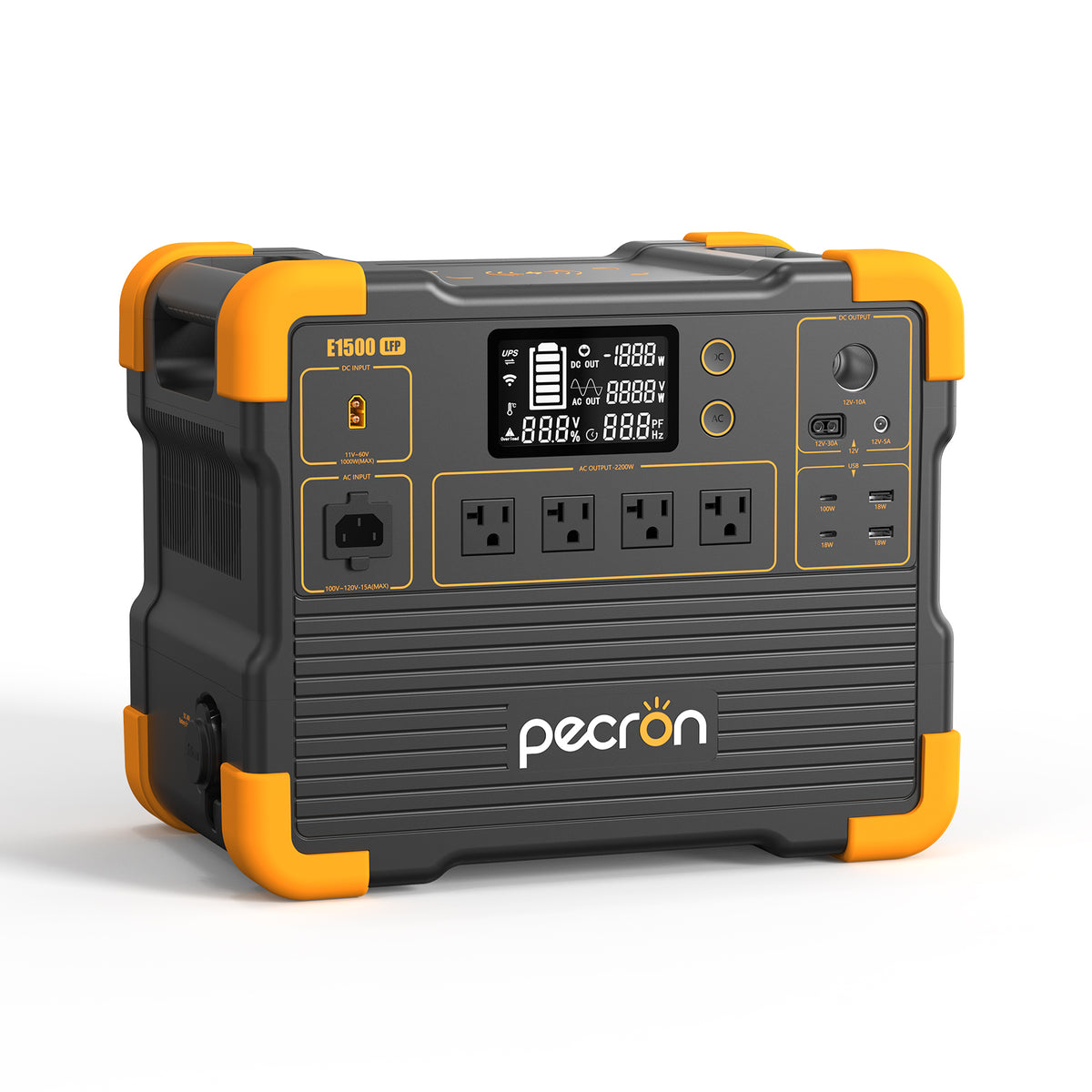
The Pecron E3800 proves that heavy-duty off-grid power does not require exorbitant pricing. Backed by stable LiFePO4 chemistry, a high-output 3,500W pure sine wave inverter, and rapid dual-charging flexibility, it stands out as an exceptional engineering achievement in the portable energy landscape.
- ✓ Excellent price-to-watt-hour ratio compared to top rivals
- ✓ High continuous 3,500W output with stable voltage regulation
- ✓ Wide solar MPPT voltage range (up to 150V)
- ✕ Heavy chassis (112.4 lbs) requires two people for comfortable lifting
- ✕ Cooling fans become noticeable under multi-kilowatt loads
Engineering Pros & Cons Breakdown
Advantages
- Exceptional Energy Value: Offers over 3,072Wh of tier-1 LiFePO4 storage at a significantly lower cost per watt-hour than competing tier-one brands.
- Robust Inverter Performance: Delivers a true 3,500W continuous output with low total harmonic distortion, easily powering demanding workshop tools and home appliances.
- Flexible High-Voltage Solar Input: The wide 32V–150V MPPT range simplifies solar panel pairing and minimizes line loss over long extension cables.
- Long-Cycle Longevity: Utilizes lithium iron phosphate cells rated for over 3,500 duty cycles before dropping to 80% original capacity.
Limitations
- Significant Mass: At 112.4 pounds, the unit lacks integrated wheels in its base configuration, making relocation across rugged terrain physically demanding.
- Fan Noise Under Duress: When pulling upwards of 2,000W continuously, the active thermal management system produces audible fan whine.
Final Verdict & Buying Recommendations
The Pecron E3800 stands out as one of the most compelling hardware propositions in the high-capacity power station category. Our rigorous laboratory testing confirms that its advertised electrical specifications are not just marketing claims—its inverter efficiency, thermal headroom, and solar tracking capabilities match or exceed those of units costing hundreds of dollars more. While its substantial weight means it is best suited for stationary backup, RV installations, or basecamp operations, its performance-to-price ratio is hard to beat.
- Choose the Pecron E3800 if you want maximum watt-hour capacity, heavy-duty 3,500W inverter output, and reliable LiFePO4 longevity without paying an inflated brand-name markup.
- Consider Alternatives like lighter 2,000Wh class stations if your primary requirement is single-handed portability and frequent transport in compact vehicles.