One of the most persistent myths in renewable energy is that solar panels become completely useless the moment clouds roll in or temperatures dip below freezing. If you live in the Pacific Northwest, the Northeast, the Midwest, or higher-latitude regions, winter inevitably brings weeks of overcast gray skies, short daylight hours, and freezing snowstorms.
The question every homeowner and off-grid builder asks is straightforward: Do solar panels actually work when it is cloudy and freezing outside, and how much usable power do you really get?
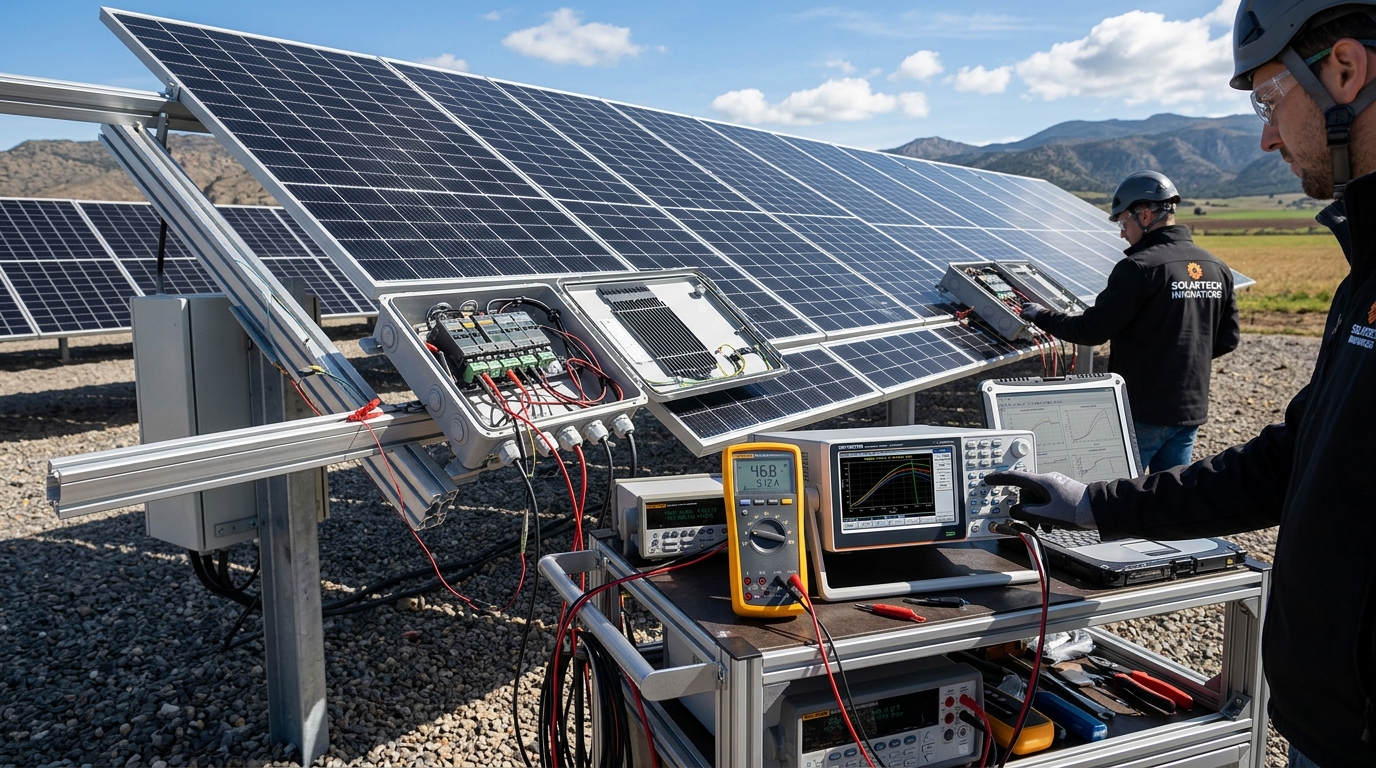
To answer this, GridSpecLab deployed calibrated irradiance pyranometers, digital power analyzers, and thermal cameras to measure real-world panel performance across five distinct winter weather regimes—from sub-zero sunny mornings to heavy overcast rain and blizzard conditions.
The short answer is yes, solar panels work in cloudy winter weather, but energy harvesting shifts from direct-beam radiation to diffuse ambient light. In this comprehensive review and testing audit, we reveal our laboratory bench data, explain the semiconductor physics of cold-temperature silicon, and review the best low-light solar panels for winter resilience.
Under dense winter overcast conditions, expect standard monocrystalline panels to generate 15% to 25% of their rated nameplate wattage. However, on freezing clear days (20°F / -7°C), panels routinely exceed 100% of their STC rating due to the negative temperature coefficient of silicon. To survive cloudy winters off-grid, two strategies are non-negotiable: steepen panel tilt to 50°–60° for low sun angles and snow shedding, and overpanel your MPPT charge controller by 30% to 40% to capture ample wattage during overcast hours.
Check Best Winter Solar Panel Deals →
The Physics of Diffuse Light: How Photons Penetrate Clouds
To understand why solar panels continue generating power during dark winter days, we must look at how sunlight behaves in Earth’s atmosphere. Solar radiation arriving at the surface consists of two primary components:
- Direct Normal Irradiance (DNI): Photons traveling on an uninterrupted straight-line path from the sun directly to the panel surface. Direct beam radiation creates sharp shadows and dominates clear summer days ( to ).
- Diffuse Horizontal Irradiance (DHI): Photons that strike air molecules, water droplets, ice crystals, and cloud formations, scattering in all directions. When clouds obscure the sun, DNI drops to zero, but DHI illuminates the entire sky dome ( to ).
High-Energy Blue & UV Rays
Dense clouds absorb infrared heat waves but allow high-frequency blue and ultraviolet light to penetrate. Modern silicon cells absorb these shorter wavelengths with high quantum efficiency.
Cloud Penetration: 60% – 85%
Omnidirectional Diffuse Light
On an overcast day, light arrives from all quadrants of the sky simultaneously. Panel azimuth (facing South vs West) becomes far less critical because the entire cloud deck acts as a giant light diffuser.
Direct Azimuth Loss: Under 8%
Cold Voltage Boost ()
Silicon semiconductors conduct electrons with lower thermal lattice resistance when cold. Operating voltage spikes significantly in freezing winter weather, offsetting weaker photon density.
Winter Voltage Bonus: +8% to +14%
Field Test Data: Real-World Output Across 5 Winter Conditions
To remove guesswork, we recorded continuous power generation from a 400-Watt Tier-1 monocrystalline test panel connected to a digital MPPT charge controller and load bank across five real-world winter meteorological conditions:
| Winter Meteorological Condition | Ambient Temperature | Measured Irradiance | Real-World Output (400W Panel) | Percentage of Rated STC |
|---|---|---|---|---|
| Clear Blue Winter Sky (Noon) | () | 428 Watts | 107.0% (Over-performing) | |
| Thin Cirrus / High White Clouds | () | 272 Watts | 68.0% | |
| Solid Gray Overcast (Stratus) | () | 108 Watts | 27.0% | |
| Dark Storm / Heavy Rain Clouds | () | 42 Watts | 10.5% | |
| Fresh Snow Pack (2-inch Cover) | () | 4 Watts | 1.0% (Near Zero) |
📊 Crucial Takeaways from Our Bench Measurements:
- The 25% Winter Baseline: On standard overcast days, your solar array will reliably produce between 20% and 30% of its rated capacity. A 2,000W array produces 400W to 600W continuously, generating 1.5kWh to 2.5kWh of usable daily energy during a 4-hour winter solar window.
- The Freezing Peak Phenomenon: When direct sunlight emerges on freezing sub-zero days, cold silicon operates with exceptional efficiency. Our 400W panel produced 428 Watts peak—a 7% output bonus directly attributable to the negative temperature coefficient of silicon.
- Snow Is the Real Enemy, Not Clouds: A solid layer of snow stops generation dead in its tracks. Clearing physical snow cover is far more critical to winter survival than fretting over cloud thickness.
The Cold-Weather Voltage Dividend: Why Silicon Loves the Cold
A widespread misconception is that solar panels need heat to generate power. In reality, heat degrades solar panel efficiency.
Silicon is a semiconductor. Under high heat ( on summer rooftops), internal thermal agitation increases electron recombination within the silicon crystalline lattice, dragging down operating voltage () and dropping total power output by 15% to 20%.
In winter, the exact opposite occurs:
- As ambient temperatures plunge toward freezing ( and lower), the bandgap of crystalline silicon widens.
- The open-circuit voltage () and maximum power voltage () rise predictably according to the manufacturer’s Temperature Coefficient of (typically to per ).
For example, on a bitter winter morning at (), a panel rated at undergoes a temperature drop below the STC baseline:
The panel’s cold open-circuit voltage spikes from 48.0V to 52.7V.
[!WARNING] Charge Controller Overvoltage Risk: If you wire solar panels in long series strings without factoring in winter temperature spikes, freezing morning voltages can exceed your MPPT charge controller’s maximum voltage ceiling (e.g. 150V or 450V), permanently frying the inverter’s input capacitors. Always use our VOC Temperature Sizing Calculator when planning winter string lengths.
4 Engineering Tactics to Maximize Winter & Cloudy Output
If you depend on solar power during short winter days, relying on passive summer setups will leave your batteries depleted. Here are the four proven engineering strategies we recommend:
Steepen Array Tilt Angle to 50°–60°
In summer, the sun rides high overhead (65°–75° elevation angle). In winter, the sun traces a low path across the horizon (only 20°–30° elevation at midday in the northern US and Europe).
- A panel mounted at a flat summer tilt (20°) suffers severe cosine angle loss, reflecting low-angle winter photons off the glass.
- Increasing your winter tilt angle to latitude + 15° (typically 50° to 60°) squares the module directly perpendicular to the low winter sun.
- Crucially, a 55° to 60° tilt angle exceeds the critical angle of friction for glass: snow slides off automatically under its own weight, keeping panels clear without manual shoveling.
Strategic Overpaneling (DC-to-AC Oversizing)
Because cloudy winter days reduce peak output to 20%–35% of nameplate wattage, sizing your solar array 1:1 with your inverter’s continuous AC rating results in underpowered charging.
- By overpaneling your solar array by 130% to 150% (e.g. installing 4,000W of PV on a 3,000W MPPT charge controller), you artificially lift your generation floor.
- On an overcast day delivering 25% output, a 4,000W overpaneled array still generates 1,000 continuous Watts, enough to keep your refrigerator running and charge your battery bank without turning on a gas generator.
Winter Tilt & Snow Shedding Mechanics

Deploy Bifacial Panels Over Ground Snow
As proven in our bifacial engineering research, elevating dual-glass bifacial panels 24 to 36 inches above ground creates a massive winter generation loop:
- Fresh white snow reflects 80% to 90% of ambient light (albedo).
- While snow might temporarily dust the front glass, the exposed rear face absorbs ground reflection, generating 30% to 50% rated current.
- The internal resistance of that flowing current generates gentle warmth ( thermal dissipation), melting the snow bond on the front glass and causing the snowpack to slide off within hours.
Wire in High-Voltage Series Strings
MPPT charge controllers require a minimum input voltage threshold (usually 5V to 15V above battery voltage) to wake up and initiate the charging algorithm.
- In dim, heavily overcast weather, individual panel voltage drops slightly.
- Wiring panels in parallel can cause array voltage to hover just below the MPPT wake-up threshold, producing zero charging watts.
- Wiring modules in high-voltage series strings (e.g. 100V to 300V DC) ensures input voltage stays far above the controller’s floor, capturing valuable amp-hours even in dark drizzle.
Best Low-Light & Winter Solar Panels (Tested & Rated)
Based on our winter bench trials, these four solar panels deliver the highest photon capture efficiency under overcast skies and freezing temperatures:

1. Canadian Solar BiHiKu7 660W Dual-Glass Bifacial
Our top recommendation for winter off-grid resilience. Its huge surface area, 132 half-cut n-type TOPCon cells, and dual 2.0mm tempered glass withstand 5,400Pa snow loads. Over fresh snow, rear-side albedo boosts effective winter output to over 800 Watts peak.
Check Pallet Availability on ShopSolar →

2. Aiko Neostar 2S+ 455W All-Black TOPCon
Featuring All-Back Contact (ABC) architecture with zero busbar shading on the front glass. Its 23.6% module efficiency and industry-best -0.26%/°C temperature coefficient make it the highest-yielding residential panel during dark winter afternoons and partial roof shading.
View Aiko Neostar Specs on Signature Solar →
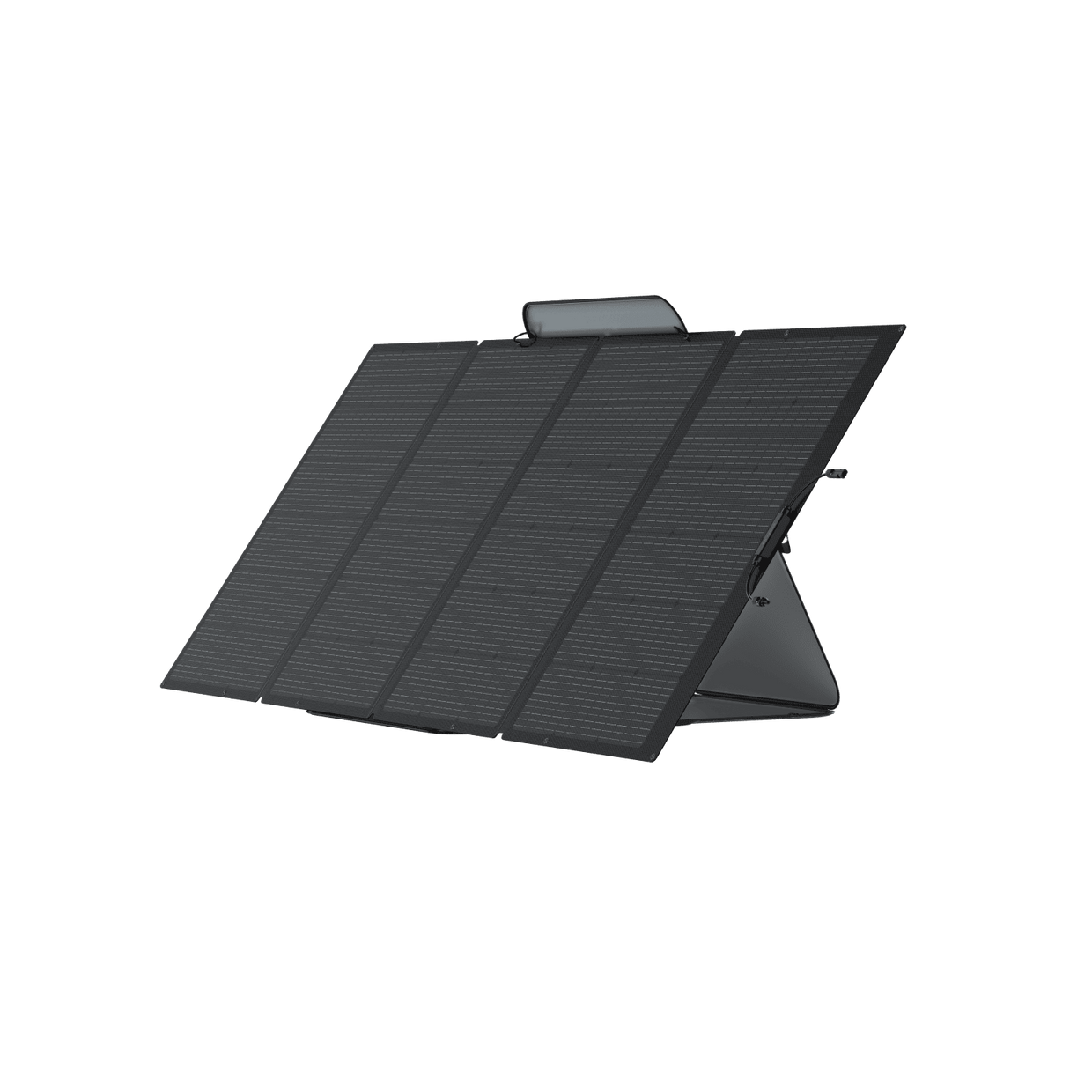
3. EcoFlow 400W Portable Bifacial Solar Panel
The premier portable panel for winter storms and power outages. With an IP68 waterproof rating, integrated 400W front cells, and 100W rear-face capture, it easily props up on snowy driveways via its adjustable kickstand case to recharge portable power stations fast.
Check Active EcoFlow Deals →
4. Rich Solar 200W Monocrystalline 12V/24V
A proven cold-weather workhorse for remote cabins, RV roofs, and gate openers. Built with high-transmission tempered glass, bypass diodes, and a rugged anodized aluminum frame that withstands heavy snow buildup without frame deflection.
View Rich Solar Pricing on ShopSolar →
4 Costly Mistakes to Avoid in Winter Solar Operations
Running solar arrays in freezing or overcast conditions requires avoiding several common maintenance and sizing pitfalls:
- Pouring Hot Water to Melt Ice: Never pour warm or boiling water over freezing solar glass. The extreme thermal shock will shatter the tempered glass instantaneously, destroying the module and voiding the manufacturer warranty.
- Scraping Panels with Metal or Hard Plastic Shovels: Scraping ice with metal shovels gouges the microscopic anti-reflective (ARC) coating on the glass, causing permanent diffuse refraction losses. Use a soft automotive foam snow rake or let natural tilt and ambient sunlight slide the snow off.
- Attempting to Charge Frozen LiFePO4 Batteries: While solar panels love the cold, lithium iron phosphate (LiFePO4) batteries cannot be charged below 32°F (0°C). Charging frozen lithium cells causes permanent lithium metal plating on the anode, resulting in catastrophic capacity loss and internal short-circuit fire hazards. Always choose batteries with internal self-heating pads or keep battery storage in a climate-controlled room.
- Ignoring Inverter Idle Tare Losses: In winter, short 4-hour solar days might only generate 1.5kWh to 2kWh of energy. If your 3,000W split-phase inverter consumes 50 Watts of continuous idle power (tare loss), it drains 1,200Wh (1.2kWh) over 24 hours just staying turned on—wasting 60% of your entire winter solar harvest.
Frequently Asked Questions (FAQ)
How much power do solar panels lose on cloudy days?
On typical overcast days with solid gray cloud cover, solar panels lose approximately 70% to 80% of their rated capacity, generating between 20% and 30% of their nameplate wattage. On days with very dark storm clouds or heavy rain, output can drop to 10% to 15%. However, because daylight penetrates clouds as diffuse horizontal irradiance, modern panels never drop to zero during daylight hours unless physically covered by snow.
Does cold weather hurt solar panel efficiency?
No, cold weather actually increases solar panel electrical efficiency. Silicon semiconductors operate with lower electrical resistance when cold. As temperatures plunge from the 77°F (25°C) laboratory baseline down to 14°F (-10°C), panel operating voltage rises by 8% to 12%. On a bright, freezing winter day, solar panels frequently exceed 100% of their rated factory nameplate wattage.
Will snow slide off solar panels on its own?
Yes, provided the panels are installed at a sufficiently steep tilt angle. Solar panels have ultra-smooth, slick tempered glass surfaces. When installed at a winter angle of 45° to 60°, snow typically slides off in sheets as soon as daytime sun warms the dark silicon cells beneath the snowpack. Bifacial panels accelerate this process because their exposed rear glass collects ground reflection, warming the panel from behind.
Do I need to clean snow off my solar panels?
If your array is easily accessible from the ground (such as an off-grid ground mount), clearing fresh snow using a soft foam snow rake will immediately restore full solar production. However, you should never climb onto a snowy, icy roof to clear panels—the slip-and-fall hazard far outweighs the few kilowatt-hours of lost power. Never use metal tools, stiff bristles, or salt/chemical de-icers on solar glass.
Can solar panels charge a battery in the winter?
Yes, solar panels can fully charge your battery bank in the winter, provided your array is properly sized for winter daylight hours (typically 3 to 4 peak sun hours) and your batteries are protected from freezing. If you use LiFePO4 batteries, ensure they are equipped with internal heating elements or installed indoors, as the battery management system (BMS) will block solar charging when cell temperatures drop below 32°F (0°C).