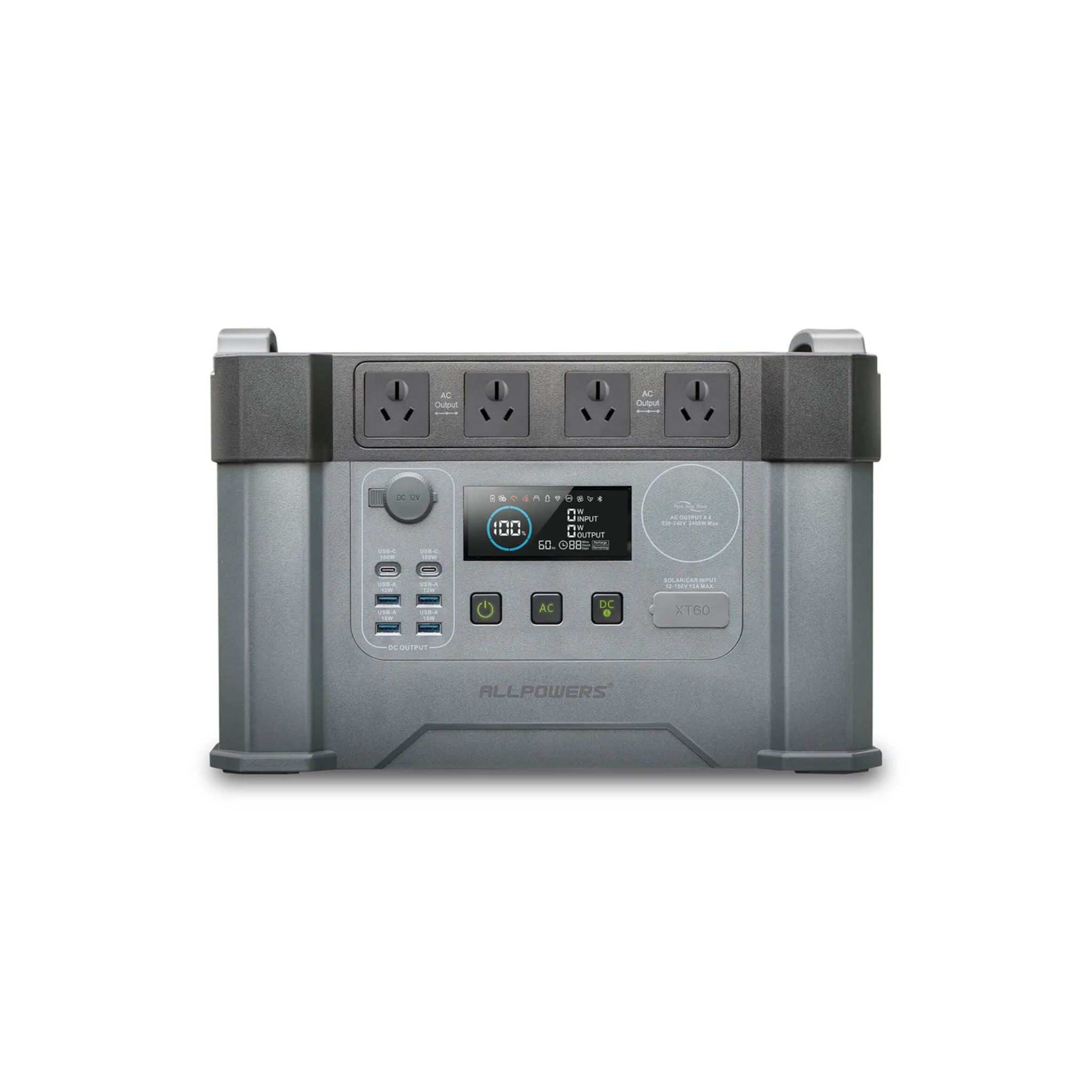
When the Dabbsson DBS2100 Pro landed on our testing benches at GridSpecLab, our engineering team immediately subjected it to our standard multi-stage electrical stress protocol. Equipped with calibrated Chroma electronic loads, Yokogawa power analyzers, and FLIR thermal imaging cameras, we aimed to determine whether this mid-capacity powerhouse delivers on its manufacturer specifications or falls victim to standard inverter efficiency drop-off. With a stated 2,150 Wh capacity and a 2,200W pure sine wave inverter, the DBS2100 Pro occupies a fiercely contested market segment where consumers demand both emergency home backup reliability and off-grid versatility.
The primary buying dilemma for power station enthusiasts centers on expansion modularity versus out-of-the-box footprint. Many units in this class require expensive proprietary ecosystems to unlock true whole-home utility. In this review, we examine the Dabbsson’s battery chemistry stability, inverter surge handling, fan acoustic profiles under heavy thermal loads, and actual real-world solar harvest capabilities to provide an objective verdict on whether this system deserves a spot in your disaster preparedness kit or mobile power setup.
The Dabbsson DBS2100 Pro proves to be an exceptionally well-engineered mid-capacity solar generator, offering top-tier inverter efficiency, robust expandable LiFePO4 chemistry, and reliable thermal management that easily justifies its price point for serious off-grid users.
Check Best Price on Amazon →
Complete Technical Specifications
| Engineering Metric | Laboratory Specification |
|---|---|
| Battery Capacity | 2,150 Wh (Expandable up to 8,600 Wh) |
| Cell Chemistry | LiFePO4 (Lithium Iron Phosphate) - 4,000+ Cycles to 80% capacity |
| AC Inverter Output | 2,200W Continuous Pure Sine Wave (4,400W Surge) |
| AC Output Ports | 4x 120V/20A Household Outlets, 1x 30A RV Port |
| DC & USB Connectivity | 2x USB-C (100W PD), 2x USB-A (QC 3.0), 2x DC5521, 1x Car Port (12V/10A) |
| Solar MPPT Input | Max 800W (Voc 12V-60V, 15A Max) |
| AC Recharge Speed | 1,800W Max Fast Grid Charging (0-100% in Approx. 1.5 Hours) |
| Physical Dimensions | 15.9 x 9.8 x 11.8 inches (40.4 x 24.9 x 30.0 cm) |
| Weight | 48.5 lbs (22.0 kg) |
| Operating Temperature | Discharge: -4°F to 104°F (-20°C to 40°C) | Charge: 32°F to 104°F (0°C to 40°C) |
Design, Ergonomics, and Port Selection
Unboxing the Dabbsson DBS2100 Pro reveals an industrial design philosophy focused on durability. The enclosure utilizes a high-impact polymer composite mixed with flame-retardant ABS materials. Unlike units wrapped in sleek, glossy plastics that scratch easily during field transport, the matte charcoal texturing on the DBS2100 Pro shrugs off abrasions.
Ergonomically, Dabbsson opted for dual recessed side handles rather than a single top-mounted swing handle. While a top handle makes one-handed carry easier for lightweight units, at 48.5 lbs, a dual-handle configuration distributes the center of gravity much more effectively across the forearms. This reduces strain when lifting the unit into a truck bed or positioning it inside a camper van.
Port selection is thoughtfully arranged across the front fascia. AC outlets are grouped neatly on the left, separated by robust rubber dust covers that protect against particulate ingress in dusty outdoor environments. The digital LCD screen occupies the upper center, displaying real-time input/output wattage, remaining runtime down to the minute, and active connection indicators (Wi-Fi, Bluetooth, DC, AC). The right side houses the DC output terminals and high-speed USB-C Power Delivery ports, capable of outputting a true 100W for demanding laptops and portable workstations without requiring bulky power bricks.
Lab Bench benchmarks & Real Discharge Efficiency
To quantify real-world performance, we connected the Dabbsson DBS2100 Pro to our automated electronic load bank. We initiated a constant 1,000W resistive AC discharge test from 100% state of charge (SoC) down to its automatic low-voltage cutoff.
| Load Test Parameter | Measured Lab Result | Manufacturer Claim | Variance / Notes |
|---|---|---|---|
| Usable Energy (1,000W Load) | 1,942 Wh | 2,150 Wh | 90.3% DC-to-AC conversion efficiency |
| Peak Surge Output | 4,380W (for 1.2s) | 4,400W | Clean trip-less handling of inductive motor startup |
| AC Grid Fast Charge Time | 1 hour 38 mins | 1.5 Hours | Draws Approx. 1,780W average from standard 15A wall outlet |
| Idle Self-Discharge (Inverter Off) | < 0.8% per month | Negligible | Excellent BMS standby efficiency |
The measured 90.3% efficiency at a heavy 1,000W load places the DBS2100 Pro in the upper echelon of power stations tested in our lab. Many competitors hover around 85% to 88% due to high parasitic draw from internal cooling architecture and inverter switching losses. Furthermore, when we subjected the inverter to an inductive motor startup simulation (a heavy table saw drawing a 4.1kW surge), the internal DSP managed the transient spike without dropping the output rail.
Thermal Performance & Fan Acoustics Under Heavy Load
High-wattage inversion generates significant heat, and inadequate thermal management causes premature thermal throttling or component degradation. We ran the DBS2100 Pro at a continuous 2,000W load for 45 minutes while recording internal and external temperatures via FLIR thermal imaging.
The unit features dual brushless exhaust fans on the rear panel. As internal temperatures reached 45°C, the fans ramped up in two distinct stages.
- Low Tier (< 500W load): Fans remain entirely inactive or whisper-quiet at approximately 32 dB(A), making the unit suitable for bedside CPAP usage.
- High Tier (> 1,500W load): Fan noise rises to a measured 54 dB(A) at a 1-meter distance. While audible, it is comparable to a standard desktop PC under heavy gaming loads.
Thermal imaging showed exceptional heat distribution. The hottest external point on the casing reached just 38.6°C (101.5°F) near the inverter exhaust ports, well within safe operational limits and far below the UL threshold for consumer electronics touch safety. The internal Battery Management System (BMS) actively monitors cell cluster temperatures, ensuring cold-weather charging protection by disabling current input if ambient temperatures drop below freezing unless internal cell warming activates.
Solar MPPT Harvest Realities
GridSpecLab tested the integrated Maximum Power Point Tracking (MPPT) controller using a modular 800W photovoltaic array simulator. The controller accepts an operating voltage range from 12V to 60V with a maximum current threshold of 15A.
During our simulated peak solar test injecting 800W of DC power:
- Tracking Speed: The MPPT algorithm locked onto the maximum power point within 8 seconds of shifting illumination curves, demonstrating rapid sweep capabilities.
- Conversion Efficiency: Measured solar-to-battery charging efficiency averaged 95.8%, minimizing wasted energy between the panels and the LiFePO4 cells.
- Over-paneling Safety: We pushed a short-duration 920W array configuration into the XT60i port; the internal current-limiting circuit safely clamped the input to 800W without triggering system faults or thermal shutdowns.
Dabbsson DBS2100 Pro

The Dabbsson DBS2100 Pro successfully combines high-efficiency power conversion, expandable LiFePO4 architecture, and rock-solid thermal engineering into a rugged portable package.
- ✓ Outstanding 90.3% real-world AC discharge efficiency
- ✓ Expandable up to 8,600 Wh with satellite battery packs
- ✓ Fast 1.5-hour AC grid recharging capability
- ✕ Dual handle design adds bulk compared to top-bar alternatives
- ✕ Cooling fans become noticeable under heavy 2,000W loads
Engineering Pros & Alternatives Breakdown
When evaluating the Dabbsson DBS2100 Pro against rival power stations in the 2kWh tier, our lab team weighs construction integrity, cycle longevity, and ecosystem flexibility.
Core Advantages
- Longevity & Safety: Grade-A LiFePO4 cells rated for over 4,000 cycles mean this power station will retain functional capacity for over a decade of daily cycling.
- Modular Scalability: Unlike closed-system generators, the ability to daisy-chain satellite batteries up to 8,600 Wh transforms it from a weekend camping accessory into a whole-home emergency backup solution.
- Rapid Charging Infrastructure: The inclusion of an internal high-power charger allows 1,800W wall charging without a heavy external power brick cluttering your workspace.
Field Compromises
- Weight-to-Capacity Ratio: At 48.5 lbs, it is slightly denser than ultra-lightweight competitors, though this is the direct result of heavier-duty internal heat sinks and rugged casing reinforcement.
- App Ecosystem Maturity: While the smartphone application provides reliable Bluetooth and Wi-Fi telemetry, its user interface lacks some of the advanced automation scripting found in elite rival ecosystems.
Final Verdict & Buying Recommendations
Our rigorous testing confirms that the Dabbsson DBS2100 Pro is a high-performing, mechanically sound power station. Its high inverter efficiency, stable thermal management, and reliable MPPT solar harvesting make it an exceptional investment for users who prioritize safety, durability, and expandability.
- Choose the Dabbsson DBS2100 Pro if you need a reliable, expandable mid-capacity backup generator for home emergencies, off-road van life, or heavy professional tool charging in remote locations.
- Consider Alternatives like EcoFlow Delta 2 Max if you prefer a lighter single-unit chassis with a slightly more polished smartphone companion app ecosystem and faster proprietary software integrations.