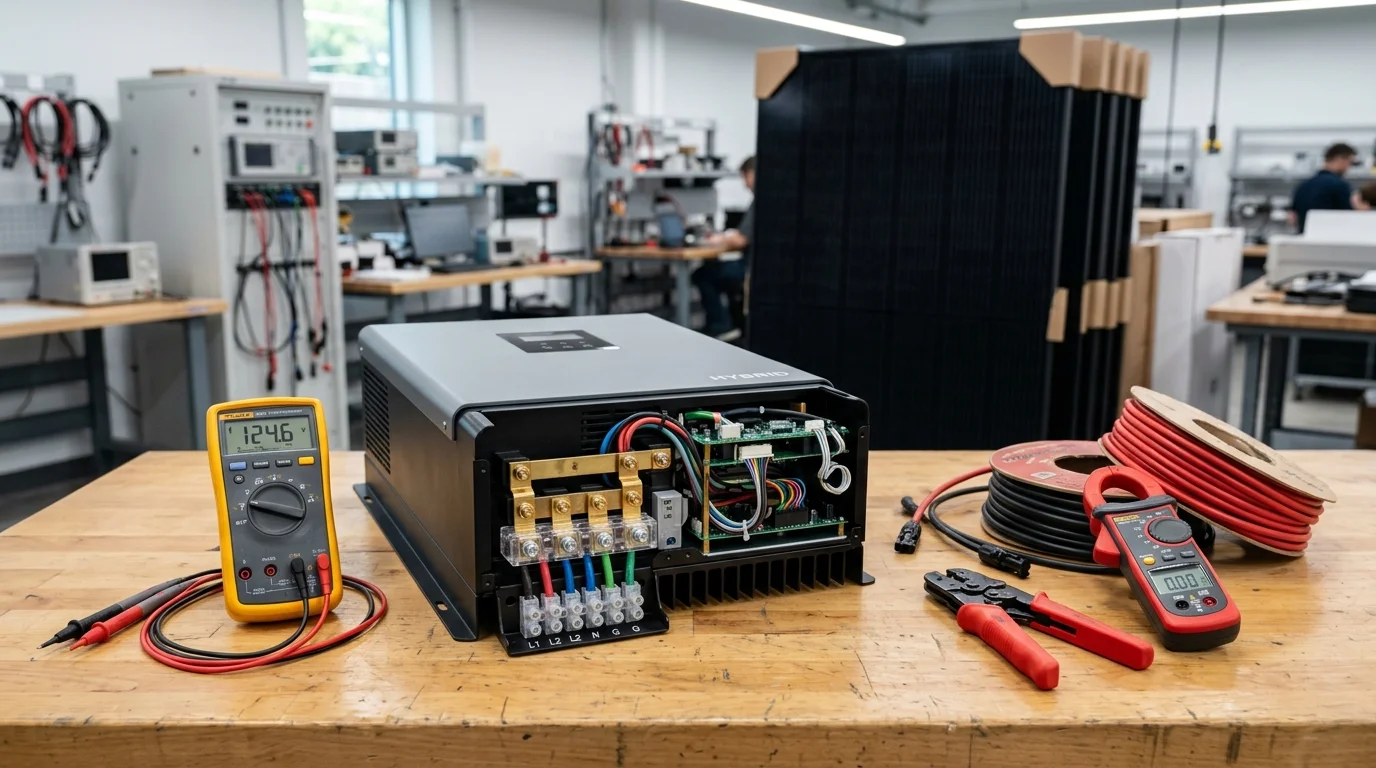
The residential and off-grid solar equipment supply chain has undergone a structural revolution over the past five years. Historically, purchasing utility-scale monocrystalline solar panels, commercial-grade hybrid inverters, and high-capacity 48V lithium energy storage required working through restrictive electrical wholesale distributors or paying astronomical markups to full-service solar installation contractors.
Today, DIYers, off-grid homesteaders, and independent licensed electricians can purchase tier-1 renewable energy equipment directly online. With a few clicks, palletized bifacial solar arrays, multi-kilowatt split-phase inverters, and high-density LiFePO4 battery banks can be dispatched from regional fulfillment centers directly to residential driveways.
However, purchasing heavy electrical infrastructure online introduces significant engineering, regulatory, and logistical risks. A single uncertified component can fail local municipal permitting inspections, counterfeit wire and connectors can cause catastrophic thermal runaway fires, and improperly received freight shipments can leave buyers holding thousands of dollars in shattered glass.
In this comprehensive 2026 technical guide, GridSpecLab details the engineering protocols required to source solar equipment online safely, legally, and cost-effectively.
Purchasing solar equipment online directly from authorized direct distributors (such as Signature Solar, ShopSolar, and AltE Store) or verified manufacturer outlets provides the optimal balance of wholesale pricing, genuine UL certification compliance, and manufacturer warranty pass-through. Avoid gray-market overseas import portals for main inverters or lithium battery banks, where the lack of UL 1741-SB and UL 9540 listings will result in failed utility interconnection permits and voided homeowner insurance policies.
Explore Verified Solar Equipment on Amazon →
Online Solar Sourcing Channel Comparison
The matrix below compares the primary online procurement channels across markup, freight handling, regulatory compliance, and warranty support:
| Model Name | Markup vs Wholesale | Shipping Method | Warranty | Best For |
|---|---|---|---|---|
| Authorized Direct Distributors | 10% - 20% | Insured LTL Pallet Freight | Direct Factory RMA | Complete DIY Off-Grid & Permitted Systems |
| Manufacturer Official Stores | 15% - 25% | Direct Courier / Freight | 5 to 10-Year Direct | Portable Power Stations & Plug-and-Play Kits |
| Major Online Marketplaces | 15% - 30% | Fast Ground Shipping | A-to-z + Manufacturer | Balance-of-System Hardware, Tools & Small Arrays |
| Wholesale PV Clearinghouses | 5% - 15% | Palletized Freight / Terminal | Limited Factory | Pallet-Quantity Solar Panels for Ground Mounts |
| Gray-Market Import Platforms | 0% - 10% | Sea Freight (4-8 Weeks) | Minimal Domestic | Raw DIY Battery Cells for Advanced Hobbyists |
Technical Engineering Risks in Online Solar Procurement For deep audits of prominent direct-to-consumer distributors, read our Signature Solar Review & Buying Guide and our undercover Signature Solar Mystery Shop Review. You can also evaluate complete pre-bundled DIY packages in our ShopSolar Kits Review.
When you bypass a professional solar engineering contractor, the responsibility for validating electrical compatibility and regulatory compliance falls directly on you.
1. Counterfeit & Sub-Standard Balance-of-System (BoS) Components
The most dangerous failure points in DIY solar installations are rarely the solar panels or primary inverter; they are the balance-of-system connectors, fuses, and cables.
- Non-Genuine “MC4-Compatible” Connectors: Authentic MC4 connectors manufactured by Stäubli feature cross-linked polyethylene insulation and silver-plated copper contacts engineered for 30-year outdoor UV exposure. Inexpensive marketplace clones frequently utilize nickel-plated brass or inferior plastics. Mixing male and female connectors from different manufacturers introduces micro-gaps, leading to contact resistance spikes () and high-voltage DC arcs that cause rooftop fires.
- Copper-Clad Aluminum (CCA) vs Pure Copper Wire: High-amperage battery leads (e.g., pulling 250A from a 48V battery bank) must utilize pure fine-strand OFC copper wire. Shady online sellers frequently market “Copper-Clad Aluminum” (CCA) wire under ambiguous terms like “True Spec Car Audio Cable.” Aluminum has 61% higher electrical resistance than copper, leading to extreme voltage drop, dangerous thermal overheating, and insulation melting.
Pure Copper Wire (OFC):
[High Conductivity / Low Resistance / Low Heat / NEC Compliant] ──► SAFE

Copper-Clad Aluminum (CCA):
[High Resistance / Severe Voltage Drop / Thermal Hazard / Code Violation] ──► FIRE RISK- Inadequate DC Circuit Breakers & Fuses: AC circuit breakers cannot extinguish DC electrical arcs. When an AC breaker trips, the voltage crosses zero 120 times per second (), naturally extinguishing the arc. DC current maintains constant voltage, meaning an AC breaker or cheap automotive fuse installed on a 48V lithium bank will weld its internal contacts shut during a dead short, creating a catastrophic fire. Always verify that DC breakers carry explicit DC voltage ratings (e.g., or higher) and use Class-T fuses with at least 20,000A Ampere Interrupting Capacity (AIC).
Detailed Channel Breakdowns
1. Authorized Direct Distributors (e.g., Signature Solar, ShopSolar)
The premier option for comprehensive home backup and large off-grid solar systems.
-
Key Advantages:
- Guaranteed Component Compatibility: Distributors pre-test inverters, batteries, and charge controllers to ensure closed-loop CAN/RS485 communication protocols match seamlessly.
- Engineered Wiring Schematics: Most provide customized single-line diagrams showing exact breaker ratings, conduit sizes, and torque requirements for your specific bill of materials.
- Domestic RMA & Warranty Processing: If an inverter control board fails or a battery BMS malfunctions, replacement components ship directly from domestic warehouses (e.g., Texas or Utah) rather than requiring overseas container shipping.
- Permit-Ready Documentation: Provide full engineering specification cut-sheets and UL listing certificates required by municipal building inspectors.
-
Things to Keep in Mind:
- Freight Lead Times: While parcel accessories ship via FedEx/UPS, palletized equipment requires 5 to 10 business days for freight routing and local dispatch.
- Restocking Fees: Returning heavy equipment due to incorrect ordering or buyer’s remorse can incur 15% to 20% restocking fees plus return freight costs.
2. Manufacturer Official Outlets (e.g., EcoFlow, Anker SOLIX Direct)
Ideal for all-in-one portable power stations, expandable home batteries, and plug-and-play balcony solar kits.
-
Key Advantages:
- Direct Factory Customer Support: Firmware bugs, app configuration issues, and hardware warranty claims are handled directly by the engineering entity that designed the unit.
- Seamless Return Policies: Major manufacturers often provide 30-day no-hassle return windows with prepaid return shipping labels for standard parcel-sized units.
- Access to Certified Refurbished Stock: Official eBay and web outlets offer certified refurbished units with full original warranties at 30% to 45% below MSRP.
-
Things to Keep in Mind:
- Proprietary Hardware Ecosystems: Expansion batteries and solar cables are often keyed specifically to their brand, preventing easy mixing with generic third-party gear.
- Higher Price-Per-Watt for Stationary Storage: Portable consolidated units cost $500 to $800 per kWh compared to $200 to $300 per kWh for stationary rack-mount systems.
3. Wholesale PV Clearinghouses (e.g., SanTan Solar, A1 SolarSource)
The most economical sourcing avenue for purchasing high-wattage solar panels in pallet quantities.
-
Key Advantages:
- Lowest Cost-Per-Watt on Solar Panels: Commercial 400W to 550W bifacial solar panels frequently sell for $0.25 to $0.38 per Watt when purchased by the pallet (typically 30 to 36 panels).
- Tier-1 Commercial Brands: Sells brand-new surplus panels from globally respected manufacturers (JA Solar, Longi, Canadian Solar, Trina Solar).
- Freight Terminal Pickup Options: Allows buyers with pickup trucks or utility trailers to collect pallets directly from local freight terminals, saving $150 to $250 in residential liftgate delivery surcharges.
-
Things to Keep in Mind:
- Pallet Minimums: Purchasing less than a full pallet often incurs high repackaging fees or is simply not offered.
- Limited Customer Technical Support: Clearinghouses are high-volume commodity distributors; do not expect personalized electrical engineering advice.
The Flash-Test Report: How to Verify Solar Panel Health
When high-volume solar panels are manufactured, every individual module undergoes a calibrated laboratory xenon flash test under Standard Test Conditions (STC: irradiance, cell temperature, AM 1.5 spectrum).
The flash tester records exact electrical performance metrics:
- Maximum Power ()
- Open-Circuit Voltage ()
- Short-Circuit Current ()
- Voltage at Maximum Power ()
- Current at Maximum Power ()
- Fill Factor ()
[Factory Flash Tester] ──► [Barcoded Serial Number Label on Panel Frame]
                                      │
                                      ▼
             [Batch Flash Test Data Sheet (Excel/PDF Manifest)]
When purchasing high-volume solar panels online, reputable distributors can supply the Batch Flash-Test Report matching the serial numbers printed on your panel frames. If individual panels show more than a 3% variance in , stringing them in series will cause module mismatch losses, where the lowest-performing panel constrains the current of the entire string:
Logistics Mastery: LTL Pallet Delivery & The Bill of Lading (BOL)
Shipping 1,500 pounds of glass solar panels and hazmat lithium batteries across the country requires specialized Less-Than-Truckload (LTL) freight handling. Understanding freight liability is the single most important skill when buying solar gear online.
The Legal Reality of the Bill of Lading (BOL)
When an LTL freight driver arrives at your property with a liftgate truck, they will present a Bill of Lading (BOL) or electronic delivery receipt for your signature.
CRITICAL LEGAL NOTICE: Signing the Bill of Lading without noting exceptions constitutes legal acceptance that the shipment was delivered complete, undamaged, and in perfect condition. Once signed “clean,” freight carriers will summarily deny subsequent damage claims.
The 4-Step Curbside Delivery Inspection Protocol
- Count the Pallets & Cartons: Verify that the number of physical pallets matches the quantity listed on the delivery receipt manifest.
- Inspect the Exterior Packaging Before Offloading: Look for torn stretch wrap, broken wooden pallet runners, dented cardboard, or broken strapping. Check whether the external “ShockWatch” or “TiltWatch” impact indicators have turned red.
- Photograph Everything: Before touching the shipment, photograph all four sides of each pallet while it is still on the truck liftgate, with the driver and truck visible in the background.
- Sign With Clear Exceptions If Needed:
- If there is minor packaging damage, write: “Packaging crushed/torn. Subject to internal inspection for concealed damage.”
- If solar panels are visibly shattered or battery cases are cracked, reject the damaged items specifically: “Refused 1 pallet due to severe fork-truck puncture and shattered solar glass.”
Permitting & Electrical Code: Will It Pass Inspection?
If you are installing a grid-tied solar system on a permitted residential home, your local municipal building department and electric utility will inspect the equipment before granting Permission to Operate (PTO).
Essential North American Certifications Checklist
- Hybrid Inverters: Must be certified to UL 1741-SB (Third Edition) and comply with IEEE 1547-2018 grid interconnection safety rules. In California, inverters must meet California Rule 21 Smart Inverter requirements.
- Energy Storage Batteries: Must hold UL 1973 (safety of stationary battery packs) and the complete inverter + battery combination must be listed under UL 9540 (Standard for Energy Storage Systems and Equipment).
- Thermal Runaway Fire Safety: Battery modules must have passed UL 9540A large-scale fire testing, allowing inspectors to verify that a thermal event in one cell cannot propagate across the entire enclosure.
- Rooftop Rapid Shutdown: Rooftop solar installations must comply with NEC 690.12 rapid shutdown rules, requiring module-level power electronics (MLPE, such as Tigo or APSystems) to de-energize array conductors to below 30V within 30 seconds of an emergency stop trigger.
Purchasing unlisted gray-market inverters or uncertified DIY battery kits online will result in immediate permit rejection, failure of electrical final inspection, and potential cancellation of homeowner hazard insurance.
Frequently Asked Questions (FAQ)
Is it cheaper to buy solar equipment online or hire a solar installer?
Purchasing solar equipment online directly from distributors saves between 45% and 60% compared to a full-service turnkey solar installer. A complete 10kW solar system with 14kWh of lithium battery backup costs approximately $14,000 to $17,000 in direct online hardware. The identical system from a residential solar contractor typically costs between $35,000 and $48,000 installed.
Can I install solar equipment I bought online myself, or do I need an electrician?
Most mechanically proficient homeowners can handle mounting solar panel racking, securing panels, and hanging the inverter. However, connecting the inverter to your home’s main AC service panel or installing a 200A whole-home transfer switch involves working with lethal voltages. We strongly recommend hiring a licensed electrician for the final AC tie-in to ensure compliance with the National Electrical Code (NEC).
What should I do if my solar panels arrive broken?
Do not panic, but do not sign the delivery receipt clean. Note the damage in writing on the driver’s Bill of Lading (BOL), take high-resolution photos of the broken modules and pallet strapping, and contact the online distributor within 24 to 48 hours. Authorized distributors carry freight transit insurance and will dispatch replacement panels promptly.
How do I calculate how many solar panels can ship on a single pallet?
Standard commercial residential solar panels (400W to 450W) are packaged vertically or stacked flat in heavy cardboard crates containing 30 to 36 panels per pallet. A full pallet weighs approximately 1,600 to 1,900 pounds and occupies a footprint of roughly 70 inches long by 45 inches wide and 48 inches high.
Can I mix and match different brands of inverters and batteries bought online?
Yes, but only if they support compatible communication protocols. Closed-loop systems require the battery BMS to communicate digitally with the inverter via CAN bus or RS485. If you mix an inverter and battery from different brands that do not share communication firmware, you must operate them in “open-loop” (lead-acid voltage mode), which reduces SOC accuracy and requires manual configuration of charge and float voltages.
Final Technical Verdict
Buying solar equipment online is the single most effective way to eliminate predatory contractor markups and achieve true energy independence at fair wholesale pricing.
To ensure success, source your primary hybrid inverters and stationary battery banks from authorized direct distributors who guarantee full UL certifications, provide pre-tested wiring schematics, and back their hardware with domestic warranty fulfillment. Sourcing balance-of-system hardware, pure copper cabling, and Tier-1 solar panels with disciplined freight inspection protocols guarantees a safe, durable, code-compliant renewable energy plant.