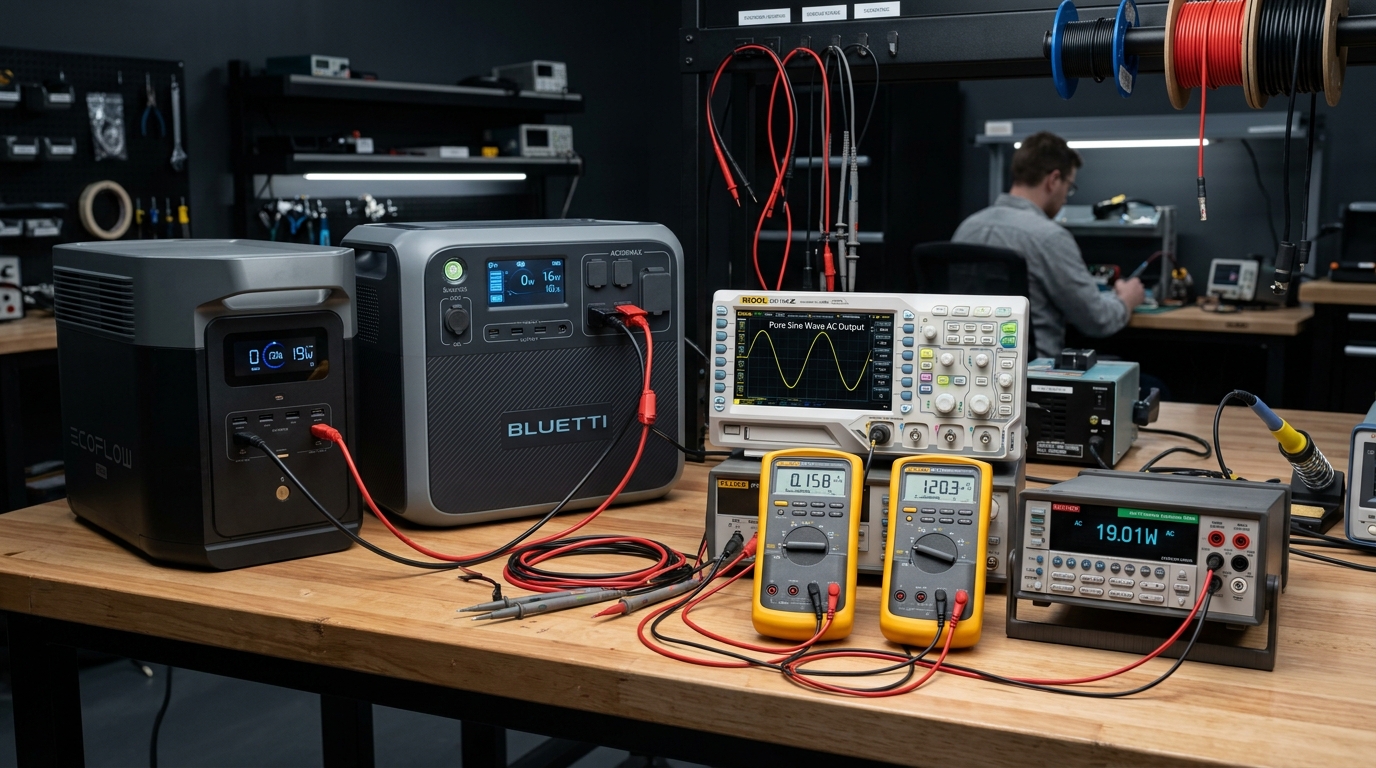
Severe ice storms, summer heatwaves stressing aged electrical grids, and unexpected transformer failures make electrical power blackouts an inevitable reality for millions of households every year. When the power grid drops, the immediate threats are immediate and tangible: food spoiling in dark refrigerators, loss of home internet communications and emergency broadcasts, and critical medical devices like CPAP machines and oxygen concentrators shutting down.
While noisy, exhaust-fuming gas generators require outdoor operation, heavy pull-cords, and hazardous gas can storage, modern Lithium Iron Phosphate (LiFePO4) portable power stations operate completely silently indoors. You can keep a power station directly in your kitchen, living room, or bedroom to power critical appliances without carbon monoxide hazards.
However, preparing for emergency outages requires precise electrical budgeting: sizing for compressor startup surges, calculating overnight inverter tare losses, and planning rapid recharging strategies between rolling blackout windows.
In this 2026 emergency preparedness audit, GridSpecLab benchmarks and ranks the top portable power stations engineered to keep your home safe, powered, and connected during prolonged electrical blackouts.
For the vast majority of households seeking dependable protection against 24-hour to 48-hour power outages, the Anker SOLIX C1000 Gen 2 is our top overall recommendation. Squeezing 1,056Wh of durable LiFePO4 cells and an 1,800W inverter into a compact 28.4-pound box that recharges in just 58 minutes, it keeps a full-size refrigerator cold for 16+ hours while powering phones, laptops, and LED lights. For multi-day severe outages or running home sump pumps, upgrade to the EcoFlow DELTA 2 Max (2,048Wh, expandable to 6kWh) or the Bluetti AC200L.
Check #1 Pick (Anker SOLIX C1000 Gen 2) on Amazon →
Technical Specifications & Blackout Emergency Benchmarks
Evaluating emergency power hardware requires analyzing usable capacity, continuous AC ratings, refrigerator runtimes, and fast wall recharging speeds:
| Model Name | Battery Capacity | Power Output | Weight | Best For |
|---|---|---|---|---|
| Anker SOLIX C1000 Gen 2 | 1,056 Wh | 1,800 Watts | 28.4 lbs | Apartment & Single-Day Power Outages |
| EcoFlow DELTA 2 Max | 2,048 Wh | 2,400 Watts | 50.7 lbs | Multi-Day Refrigerator & Family Emergencies |
| Anker SOLIX F3800 | 3,840 Wh | 6,000 Watts | 132.3 lbs | Whole-House Backup & Essential Circuits |
| Bluetti AC200L | 2,048 Wh | 2,400 Watts | 62.4 lbs | High-Surge Inductive Loads & Well Pumps |
In-Depth Evaluations: Top Emergency Power Stations
Anker SOLIX C1000 Gen 2 (1,056Wh / 1,800W)
UltraFast 58-Min Full Wall Recharge • GaNPrime Inverter • 28.4 lbs Easy Carry
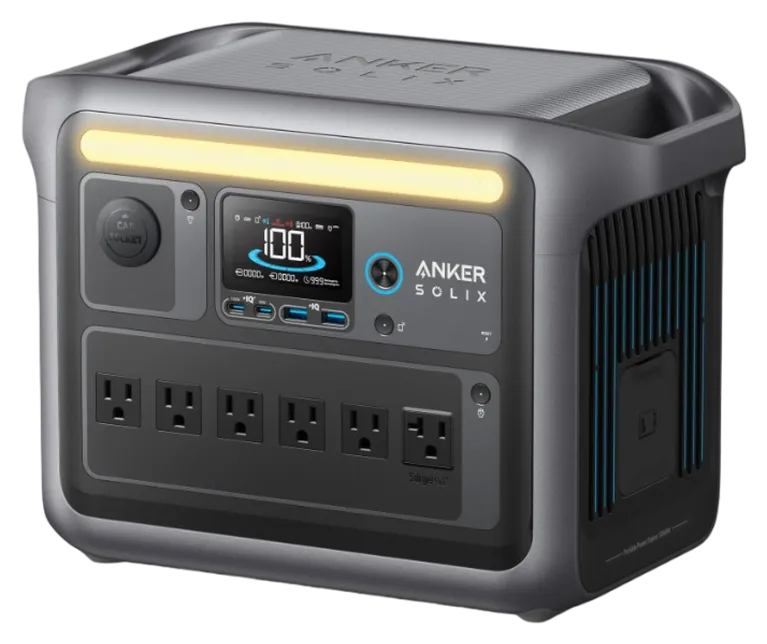
The Anker SOLIX C1000 Gen 2 is the premier household emergency companion. Squeezing 1,056Wh of automotive-grade LiFePO4 cells and an 1,800W pure sine wave inverter into a compact, rigid unibody frame, it weighs just 28.4 lbs—making it effortless for anyone in the household to carry between rooms.
Its standout blackout feature is its 58-minute full AC recharge speed. During rolling blackouts where power is temporarily restored for only 1 to 2 hours between outage windows, the C1000 Gen 2 can rapidly pull 1,300W from the wall to reach 100% full capacity before the power cuts out again.
In our lab blackout simulation, it powered a 21 cu. ft. modern refrigerator for 16.2 hours, kept home Wi-Fi active, and fully recharged three smartphones and a laptop.
✓ Engineering Advantages
- Recharges from 0% to 100% in 58 minutes—ideal for rolling blackout windows.
- 1,800W continuous output effortlessly runs coffee makers, skillets, and CPAPs.
- Low standby tare loss (~12W) preserves battery capacity during overnight runtime.
- Sub-20ms automatic UPS transfer keeps computers and medical gear uninterrupted.
✗ Lab Compromises
- 1,056Wh capacity cannot sustain heavy space heaters for more than 45 minutes.
- Expansion battery pack (BP1000) connects via an external cable.
- 600W max solar input requires 2 to 3 panels for optimal outdoor recharging.
EcoFlow DELTA 2 Max (2,048Wh / 2,400W)
Dual 500W MPPT Controllers • Expandable to 6,144Wh • 28+ Hour Refrigerator Runtime
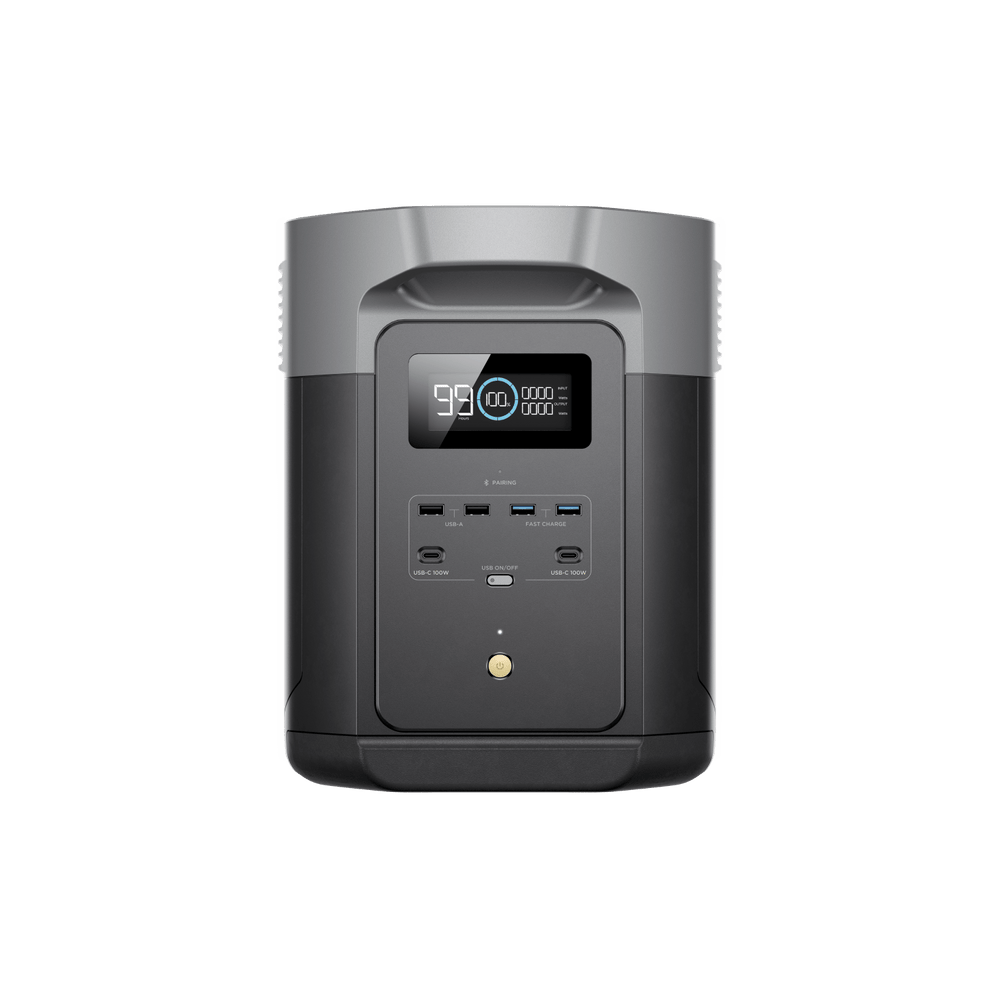
When severe storms knock down power transmission lines for multiple days, 1kWh power stations require daily solar recharging. The EcoFlow DELTA 2 Max doubles your safety margin with 2,048Wh of base LiFePO4 storage, capable of carrying critical refrigerator and communications loads for over 28 hours without any solar or grid input.
Its dual 500W MPPT controllers allow you to harvest 1,000W of solar input from two separate panel arrays, fully recharging the unit from empty in under 2.3 hours of direct sunlight.
Engineering Deep-Dive: Refrigerator Compressor Cycling & Emergency Math See how different power stations hold up during extended outages in Can a Power Station Survive a 24-Hour Outage?. When deciding how to expand your capacity, read Expansion Battery vs Second Power Station.
1. Compressor Duty Cycle Math
Homeowners often mistakenly look at the yellow EnergyGuide label on their refrigerator and assume a 180W refrigerator draws 180 Watts continuously ().
In real-world electrical testing, refrigerators cycle on and off based on internal temperature:
Where:
- = 120W to 180W while the compressor pump is active
- = 30% to 40% at 72°F ambient room temperature (compressor runs for 20 minutes, rests for 40 minutes)
- = 2W to 5W for interior LED logic and thermistors
Under a 35% duty cycle, an energy-efficient refrigerator consumes only:
This is why a 1,056Wh power station like the Anker C1000 Gen 2 reliably powers a full-size refrigerator for 16+ hours, while a 2,048Wh station like the EcoFlow DELTA 2 Max or Bluetti AC200L runs for 27 to 28 hours.
[!TIP] Keep refrigerator doors closed during a blackout! Every time the door is opened, warm ambient air rushes in, forcing the compressor duty cycle up to 60%–70% and cutting battery runtime in half.
Frequently Asked Questions (FAQ)
Can a portable power station run a home sump pump during a storm?
Yes, but you must account for Locked Rotor Amps (LRA). A standard 1/3 HP or 1/2 HP residential submersible sump pump draws 600W to 900W running, but demands an instantaneous startup surge of 2,500W to 3,600W. Units like the Bluetti AC200L (3,600W surge) or EcoFlow DELTA 2 Max (4,800W surge) are required to start sump pumps without tripping inverter overload protection.
How do I keep a power station charged during a multi-day blackout?
During a multi-day grid failure, you have three primary recharging pathways:
- Solar Panels: 400W to 800W of portable or rigid solar panels deployed in an unobstructed outdoor area.
- Car Alternator Charging: Plugging into your vehicle’s 12V cigarette outlet (or a 12V-to-48V DC charger) while the engine runs.
- Dual-Fuel Inverter Generator: Running a small propane inverter generator for 1.5 hours to bulk-charge the battery bank.
Can I leave my power station connected to the wall 24/7 as a UPS?
Yes. Modern LiFePO4 power stations feature internal AC bypass relays. When plugged into a wall outlet, incoming grid power directly passes through to your connected appliances, leaving the battery fully charged in standby. If the grid cuts out, the unit switches over to battery power in under 20 milliseconds.
Final Recommendation: Which Power Station Should You Choose for Outages?
- Top Recommendation for Most Households: The Anker SOLIX C1000 Gen 2 offers the ideal blend of 16-hour refrigerator runtime, 58-minute recharge speed, and 28.4-pound portability.
- Top Recommendation for Severe Storms & Sump Pumps: The EcoFlow DELTA 2 Max provides 2,048Wh of storage, dual 500W solar inputs, and 28+ hours of refrigerator autonomy.
- Top Recommendation for Heavy Inductive Loads: The Bluetti AC200L delivers 3,600W surge headroom and an integrated 30A RV port for comprehensive emergency backup.