“Get solar panels installed for $0 down and immediately lower your monthly electric bill!”
If you have researched solar energy or answered your front door to a solar sales representative, you have undoubtedly encountered this pitch. In most cases, the salesman is not selling you solar panels—they are selling you a Solar Power Purchase Agreement (PPA).
A Solar PPA is a third-party financing model where a solar development corporation (such as Sunrun, Sunnova, or Tesla) designs, permits, installs, owns, and maintains a solar energy system on your roof at no upfront cost to you. In exchange, you sign a legally binding 20-to-25-year contract agreeing to purchase every single kilowatt-hour (kWh) of electricity the panels generate at an agreed-upon per-unit rate.
While $0 upfront expense sounds attractive to homeowners intimidated by the $20,000 to $40,000 price tag of a direct solar installation, PPAs come with serious financial trade-offs: compounding price escalators, forfeiture of federal tax credits, and notorious title transfer complications when selling your home.
In this first-principles financial and engineering guide, we break down how solar PPAs work, examine the compounding mathematics of annual escalators, compare PPAs against direct ownership, and explain how to maximize your long-term clean energy return on investment.
A Solar PPA is only recommended for retirees or low-income homeowners who have zero federal tax liability (and cannot claim the 30% solar tax credit) and plan to remain in their home for 25 years. For everyone else, direct ownership—via cash, a low-interest home equity loan, or pre-engineered solar kits—yields 3x to 4x greater lifetime savings, eliminates 2.9% annual price hikes, protects home resale value, and puts the 30% federal tax credit directly into your pocket.
Explore Direct Ownership Solar Packages →
Pay-Per-kWh Generated
- Zero Down Upfront: Third party owns equipment.
- Rate per kWh: Starts at 15¢ to 18¢/kWh.
- Annual Escalator: Typically +2.9% per year.
- Tax Credits: Pocketed by solar developer.
Fixed Monthly Rent
- Zero Down Upfront: Third party owns hardware.
- Fixed Monthly Payment: 120 to 200 dollars/mo.
- Sunlight Risk: Pay full rent even in cloudy winters.
- Tax Credits: Retained by leasing company.
Cash, Loan, or DIY Kit
- You Own 100%: Asset increases home equity.
- 30% Tax Credit: Direct IRS cash deduction.
- Zero Electric Cost: Free power once system is paid off.
- Clean Title: Zero liens or buyer friction.
How a Solar PPA Works: The Legal & Electrical Mechanics
Under a Solar Power Purchase Agreement, your rooftop essentially becomes leased real estate for an independent utility company.
- System Design & Installation: The PPA developer designs the solar system, secures municipal building permits, and mounts the panels on your roof. You pay $0 for hardware, labor, or interconnection.
- Maintenance & Monitoring: Because the PPA company owns the asset, they are legally responsible for all system repairs, inverter replacements, and 25-year production monitoring. If an inverter fails, they absorb the replacement cost.
- The Billing Structure: You will receive two electric bills every month:
- Bill 1 (The PPA Company): Charges you for every kilowatt-hour generated by the rooftop solar panels at your agreed PPA contract rate (e.g. 800 kWh × $0.16 = $128.00).
- Bill 2 (Your Municipal Utility): Charges you for any grid electricity your home pulls at night, during cloudy days, plus standard non-bypassable meter connection fees ($12 to $25/month).
PPA vs Solar Lease: The Critical Distinction
Homeowners frequently conflate solar leases with PPAs. While both represent Third-Party Ownership (TPO), their billing mechanisms are fundamentally different:
- In a Solar Lease, you pay a fixed monthly rent (e.g., $150/month) to rent the physical hardware on your roof. If a severe winter storm covers your panels in snow for 3 weeks and the system produces zero electricity, you still owe the full $150 lease payment.
- In a Solar PPA, you pay only for the energy produced. If snow prevents production, your PPA bill is $0. However, in peak sunny summer months, your PPA bill will be significantly higher because production is maximized.
The Mathematics of the PPA Escalator Trap
The single biggest financial danger of a residential Solar PPA is the contractual price escalator clause.
To convince homeowners to sign, PPA companies set the initial year-1 rate slightly below current utility rates (e.g., offering $0.16/kWh when the local utility charges $0.22/kWh). However, buried in the fine print is an annual price escalator—typically 2.9% or 3.9% compounded annually—intended to track utility inflation.
The formula for your PPA rate in year is:
Where:
- is your starting electricity rate ($0.16/kWh).
- is the annual price escalator (0.029 for 2.9%).
- is the elapsed contract year.
The 25-Year Rate Escalation Reality
See how a “modest” 2.9% annual escalator compounds over the life of a 25-year contract on a 10kW system producing 14,000 kWh annually:
| Contract Year | Effective PPA Rate per kWh | Annual PPA Cost (14,000 kWh) | Cumulative Spent to Date |
|---|---|---|---|
| Year 1 | $0.160 / kWh | $2,240 | $2,240 |
| Year 5 | $0.179 / kWh | $2,512 | $11,880 |
| Year 10 | $0.207 / kWh | $2,900 | $25,560 |
| Year 15 | $0.239 / kWh | $3,348 | $41,360 |
| Year 20 | $0.276 / kWh | $3,865 | $59,620 |
| Year 25 | $0.328 / kWh | $4,592 | $81,040 |
Over 25 years, the homeowner pays over $81,000 in electricity payments for a 10kW system that could have been purchased outright for $20,000 to $25,000 (or under $15,000 after claiming the 30% federal tax credit)!
[!WARNING] The Utility Inversion Risk: If your local utility implements flat rate structures, community solar programs, or rates inflate slower than 2.9%, your PPA electricity rate will eventually become more expensive than the grid. You remain legally locked into purchasing that overpriced solar energy for decades.
The Home Resale Nightmare: UCC-1 Fixture Liens
The most common reason real estate transactions collapse in solar-heavy markets is the presence of an active Solar PPA.
When a third-party developer installs a PPA system on your roof, they file a UCC-1 Financing Statement (Fixture Filing) with your county recorder’s office. This filing legally notifies lenders that the solar panels do not belong to you or the house—they belong to the PPA corporation.
When you put your home on the market, you face three difficult scenarios:
Buyer Assumes Contract
The homebuyer must complete a formal credit check with the PPA company and agree to assume the remaining 15–20 years of payments. Savvy buyers frequently refuse, demanding an equivalent price reduction on the house.
Seller Buys Out System
If the buyer refuses the PPA, the seller must buy out the contract out of their home equity proceeds. PPA companies calculate buyout prices at inflated “fair market value,” often costing the seller between 15,000 and 30,000 dollars in cash at closing.
System Removal
PPA contracts rarely permit early termination without paying the full remaining value of the contract. Even if permitted, the homeowner must pay thousands in de-installation and roof penetration patching fees.
When Does a Solar PPA Actually Make Sense?
While direct ownership is mathematically superior for the majority of homeowners, a Solar PPA does offer valid utility in a narrow set of circumstances:
- Retirees & Homeowners with Zero Federal Tax Liability: The 30% Federal Clean Energy Tax Credit is a non-refundable tax credit. If you are living on social security or tax-exempt pensions and have zero federal tax liability, you cannot claim the 30% tax credit. A PPA company can claim commercial corporate tax credits (Section 48) and pass modest savings on to you.
- Fixed-Income Homeowners Unable to Secure Financing: If you cannot qualify for a low-interest solar loan, home equity line of credit (HELOC), or lack cash savings, a PPA provides immediate utility bill reductions with zero upfront capital.
- Extreme Aversion to Maintenance: If you never want to troubleshoot an inverter, monitor string voltages, or pay for roof work, the PPA company bears full operational risk for 25 years.
Equipment Recommendations: The Best Hardware for Direct Ownership
If you want to avoid 25-year contracts, escalating electric rates, and property liens, direct ownership is the gold standard. Here are the top systems and pre-engineered packages for residential clean energy independence:
1. Sol-Ark 15K Commercial & Residential Hybrid Inverter (The Direct Ownership Titan)

Sol-Ark 15K Whole-Home Hybrid Inverter
Instead of paying a third party for electricity every month, the Sol-Ark 15K puts you in complete control. Delivering 15,000W of continuous power, 200A whole-home pass-through, and compatibility with open-architecture 48V batteries, it allows you to eliminate 100% of your power bill with zero 25-year contract encumbrances.
Check Best Price on Sol-Ark 15K →
2. EG4 18kPV All-in-One Multi-String Inverter (Best Value Direct Ownership)
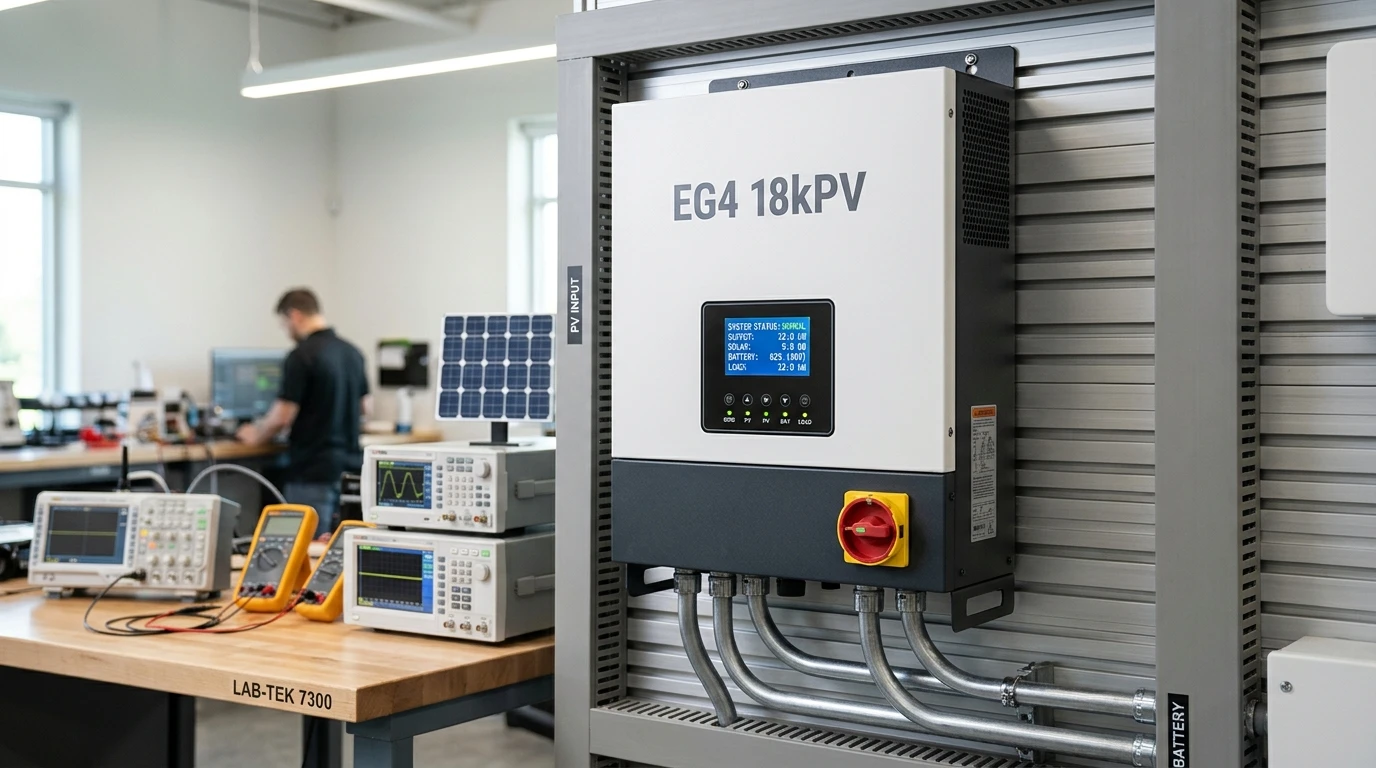
EG4 18kPV Multi-String Inverter
At nearly $2,500 less than competing hybrid inverters, the EG4 18kPV makes direct residential solar ownership accessible without predatory 25-year PPA contracts. It features 12,000W continuous output, an 18,000W solar array intake capacity, and an integrated 200A whole-home transfer switch.
Check Best Price on EG4 18kPV →
3. ShopSolar Whole-Home Direct-Ownership Solar Kit (Best Pre-Packaged Alternative)
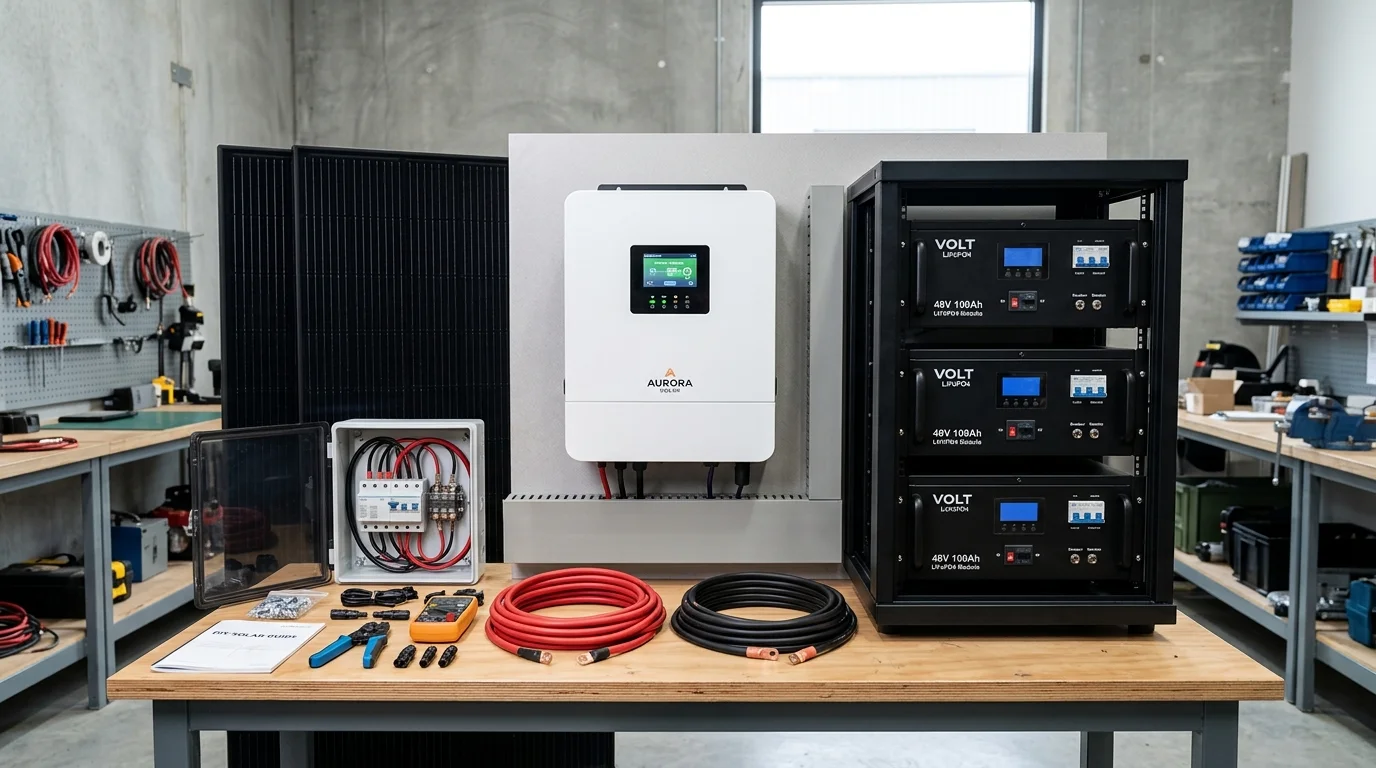
ShopSolar Whole-Home Direct-Ownership Solar Kit
The best antidote to predatory door-to-door solar PPAs. ShopSolar provides complete, pre-engineered solar packages featuring Tier-1 bifacial panels, a Sol-Ark or Growatt hybrid inverter, rack-mount LiFePO4 batteries, and pre-stamped engineering plans. You own the system outright, pocket the 30% tax credit, and hire an electrician for the final AC interconnect.
Explore ShopSolar Complete Packages →
4. Anker SOLIX F3800 Home Energy System (Best Modular Plug-and-Play Alternative)

Anker SOLIX F3800 (3,840Wh / 6,000W)
If you want lower electric bills and blackout security without roof penetrations or complex contractor agreements, the Anker SOLIX F3800 plugs straight into a manual transfer switch or generator inlet box. Pair it with portable or ground-mount solar panels to cut expensive peak Time-of-Use electricity charges.
Check Best Price on Anker SOLIX →
Critical Traps to Avoid When Reviewing a Solar PPA Contract
If you are currently evaluating a Solar PPA quote, check the fine print for these four common traps:
✕ The Compounding Escalator Clause
Never sign a PPA with an annual escalator higher than 0.0% (fixed rate). A 2.9% or 3.9% annual escalator guarantees that your solar rate will double over the contract term, frequently outpacing your municipal utility’s actual historical rate increases.
✕ Believing the “Free Solar” Marketing Myth
Sales reps frequently pitch PPAs as “government programs” or “free solar panels.” The panels are not free. You are entering into an enforceable 25-year commercial power contract with total payment obligations exceeding 90,000.
✕ Ignoring Roof Age and Removal Fees
If your asphalt shingle roof is more than 10 years old, do not sign a 25-year PPA. When your roof needs replacement in 8 years, the PPA company will charge you 6,000 in “de-tack and re-install” labor fees to temporarily remove the panels.
✕ Forgetting Battery Backup Is Excluded
Most standard low-cost PPAs install grid-tied solar panels only. When a storm knocks out the municipal electrical grid, your home will go pitch black—your PPA solar system cannot operate during an outage due to anti-islanding safety protocols.
Frequently Asked Questions (FAQ)
What happens at the end of a 25-year solar PPA contract?
When your 20-to-25-year PPA term expires, you typically have three options under contract terms:
- Request that the PPA company remove the solar system from your roof at their expense.
- Purchase the used solar hardware at its then-current fair market value (typically negligible after 25 years).
- Extend the PPA agreement on a year-to-year or 5-year renewal basis.
Can I claim the 30% federal clean energy tax credit with a PPA?
No. Under IRS tax code Section 25D, only the legal owner of the solar energy equipment can claim the 30% Residential Clean Energy Credit. Because the PPA corporation owns the equipment, they claim the commercial tax credit (Section 48) and MACRS accelerated depreciation deductions.
Does a solar PPA increase my home’s property value?
No. Multiple studies by the National Renewable Energy Laboratory (NREL) and the Lawrence Berkeley National Laboratory show that while directly owned solar systems increase property value by an average of $4 per Watt, third-party PPA and leased systems add zero value and frequently deter prospective homebuyers due to the required contract transfer.
Can I pay off or buy out a solar PPA early?
Most PPA contracts permit early buyouts only after a mandatory minimum period (typically year 5 or year 6 to protect the PPA company’s IRS tax credit recapture rules). However, the buyout price is determined by an independent appraiser based on “fair market value” and future discounted cash flows, often resulting in an exorbitant buyout cost.
