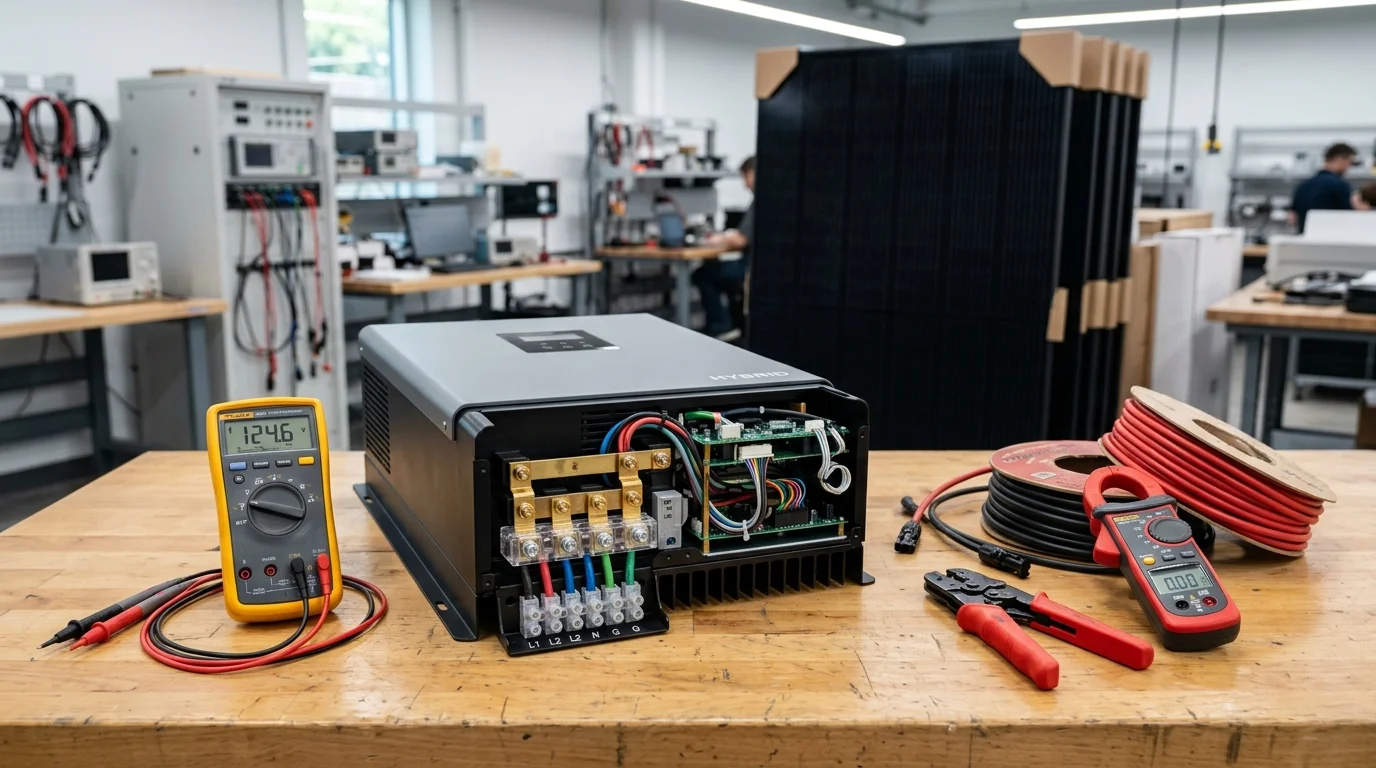
When homeowners, agricultural operations, commercial businesses, or municipal utilities decide to build a multi-kilowatt or megawatt-scale solar array, they rarely manage dozens of individual subcontractors, structural engineers, electricians, and equipment wholesalers themselves.
Instead, they contract a Solar EPC.
EPC stands for Engineering, Procurement, and Construction. It is the gold standard project delivery mechanism across the global infrastructure and renewable energy industries. Under a turnkey EPC contract, a single firm assumes total operational, technical, legal, and financial responsibility for bringing a solar project from an empty field or bare rooftop into a fully operational, grid-connected power plant.
Whether you are an estate homeowner planning a 20kW ground mount, a commercial warehouse owner offsetting six-figure utility bills, or a property developer evaluating clean energy investments, understanding how a Solar EPC operates is critical. It allows you to negotiate contracts effectively, ensure Tier-1 equipment procurement, and evaluate whether hiring a turnkey EPC or self-managing an engineered kit package delivers the best return on investment.
In this comprehensive first-principles guide, we break down the three phases of the EPC delivery model, examine engineering workflows, compare turnkey costs versus self-contracted builds, and recommend the industry’s benchmark hardware.
A Solar EPC provides single-source accountability. They handle geotechnical soil surveys, PE-stamped electrical single-line diagrams (SLDs), Tier-1 hardware procurement at wholesale volume discounts, physical construction, and utility Permission to Operate (PTO). Turnkey residential and commercial EPC pricing averages 3.50 per Watt. For large residential projects, homeowners can save 35,000 by purchasing pre-engineered kits with stamped plans and hiring a licensed electrician directly.
Explore Pre-Engineered Whole-Home Solar Kits →
Design, Modeling & Permitting
- PVSyst irradiance & 3D shade simulation
- Geotechnical soil tests & roof dead load checks
- PE-stamped Electrical Single-Line Diagrams
- Local AHJ permitting & utility interconnection
Sourcing & Supply Logistics
- Direct manufacturer Tier-1 PV panel supply
- Commercial hybrid/string inverter sourcing
- UL 9540A certified LiFePO4 battery banks
- Freight delivery, crane staging & warehousing
Civil, Electrical & Commissioning
- Earthwork, trenching & foundation mounting
- Structural racking assembly & panel wiring
- Main service panel tie-in & transformer setup
- Megger testing, AHJ sign-off & utility PTO
The Engineering Phase: Feasibility, Electrical SLDs & Permitting
A solar project is only as reliable as its underlying engineering. In a professional EPC framework, the engineering phase accounts for approximately 5% to 8% of total project costs but dictates 100% of the system’s 25-year safety, efficiency, and legal compliance.
Solar Modeling and Irradiance Simulation
Engineers use advanced modeling software (such as PVSyst, HelioScope, or Aurora Solar) to simulate meteorological conditions using decades of National Solar Radiation Database (NSRDB) data:
- Shading & Horizon Analysis: LiDAR drone scans identify nearby trees, adjacent rooflines, and geographic terrain that cast shadows across the array.
- Albedo Reflection Factor: For ground mounts using bifacial solar panels, engineers calculate ground surface reflectivity (grass at 0.20 albedo vs light crushed gravel at 0.40 albedo) to forecast 10% to 25% rear-side energy gains.
- Temperature Coefficient Modeling: Solar cells lose efficiency as ambient temperatures rise (typically -0.30%/°C to -0.35%/°C). Engineers calculate thermal derating during peak summer months.
Structural and Civil Engineering
Before a single bolt is turned, certified structural engineers must evaluate the mechanical foundation:
- Rooftop Structural Load Checks: Verify that roof rafters and trusses can support the dead load of panels and racking (typically 2.8 to 4.5 lbs/sq ft) plus local building code requirements for design wind speed (e.g. 120–140 mph) and ground snow load (e.g. 30–60 lbs/sq ft).
- Geotechnical Soil Borings (Ground Mounts): For ground arrays, soil samples are tested for compressive strength, frost heave depth, and chemical corrosiveness to determine whether foundations require driven steel H-piles, helical earth anchors, or concrete ballasts.
Electrical Single-Line Diagrams (SLDs) & Code Compliance
Licensed Professional Engineers (PEs) produce formal electrical blueprints complying with the National Electrical Code (NEC):
- String Voltage & Temperature Sizing (NEC 690.7): Solar panel Open-Circuit Voltage () increases in freezing temperatures. Engineers calculate the lowest recorded historical temperature to ensure maximum string voltage never exceeds the inverter’s maximum DC input limit (typically 600V for residential or 1,000V–1,500V for commercial).
- Conductor Sizing & Voltage Drop (NEC 310): Wire gauges are engineered so that cumulative DC and AC voltage drop () stays under 2% across long conduit runs, preventing resistive heat losses.
- Rapid Shutdown & Arc-Fault Protection (NEC 690.11 / 690.12): Requires module-level rapid shutdown (MLPE) devices that drop array voltage below 30V within 30 seconds of an emergency disconnect.
The Procurement Phase: Supply Chain Economics & Equipment Sourcing
The procurement department of an EPC firm operates as a high-volume purchasing organization. Because solar hardware represents 40% to 50% of the total installation budget, procurement efficiency directly determines project profitability and long-term reliability.
Sourcing Tier-1 BloombergNEF Solar Modules
Professional EPCs strictly source Tier-1 modules (such as Canadian Solar, Jinko, LONGi, REC, or Qcells). Tier-1 status is not a measure of quality alone—it is a financial classification by Bloomberg New Energy Finance indicating that banks and commercial lenders will finance projects built with those modules because the manufacturers have the financial balance sheet to honor their 25-year power output warranties.
Inverter and Battery Energy Storage Sourcing
Procurement teams select inverter architectures based on system topology:
- String / Hybrid Inverters: Systems like the Sol-Ark 15K or EG4 18kPV integrate solar MPPT charge controllers, battery chargers, and automatic transfer switches into a unified NEMA 4X enclosure, dramatically lowering Balance of System (BOS) wiring labor.
- Microinverters: Systems like Enphase IQ8 attach individual inverters to every module, ideal for complex, multi-angled residential roofs with heavy partial shading.
- Battery Energy Storage Systems (BESS): Lithium Iron Phosphate (LiFePO4) storage banks certified under UL 9540 (system-level safety) and UL 9540A (large-scale fire thermal runaway testing) are procured to meet strict residential garage and commercial fire code clearances.
The Construction Phase: Civil Execution, Commissioning & PTO
Construction is where blueprints become physical electrical infrastructure. A professional EPC coordinates civil crews, structural ironworkers, and master electricians:
Civil Site Work & Foundation Racking
Crews trench conduit lines below frost depth (NEC 300.5), drive foundation posts or ground screws, attach aluminum racking rails, and torque structural fasteners to exact manufacturer foot-pound specifications.
PV Module Mounting & Homerun Wiring
Panels are clamped onto racking, module grounds are bonded via WEEB clips, and series strings are connected with weatherproof MC4 connectors before routing high-voltage DC homeruns through EMT or schedule 40 PVC conduit.
Inverter, AC Interconnect & Transfer Switch
Master electricians mount hybrid inverters, install external AC/DC disconnect switches within sight of the utility meter, wire battery storage banks, and tie into the main service panel via supply-side tap or 200A service disconnect.
Testing, Commissioning & Utility PTO
Electricians perform Megger insulation resistance testing, verify open-circuit voltages (), pass local building authority electrical inspection, and submit final documentation to the utility for official Permission to Operate (PTO).
Turnkey EPC vs Self-Managed Delivery: Cost and Control Comparison
For estate homeowners and small business operators, one major financial decision stands out: Should you hire a full-service turnkey EPC, or should you self-manage the project using pre-engineered kits?
| Project Delivery Model | Average Cost per Watt Installed | Typical 15kW System Total Cost | Homeowner Effort & Responsibility | Best Fit For |
|---|---|---|---|---|
| Full Turnkey Solar EPC | $2.80 – $3.50 / Watt | $42,000 – $52,500 | Hands-off: EPC handles 100% of permitting, sourcing, labor, inspections, and PTO. | Commercial businesses, busy professionals, zero-headache preference. |
| Self-Managed Subcontracting | $1.80 – $2.40 / Watt | $27,000 – $36,000 | Moderate: You buy hardware at wholesale; hire independent licensed electricians and roofers. | Homeowners with basic construction project management experience. |
| Pre-Engineered Complete DIY Kit | $1.10 – $1.60 / Watt | $16,500 – $24,000 | Hands-on: Assemble racking/panels yourself; hire electrician for final AC panel tie-in. | DIY builders, off-grid cabins, rural properties, maximum cost savings. |
What Your Money Pays For:
- Hardware (Panels, Inverters, Racking):18,000</span></li> <li class="flex justify-between py-1 border-b border-slate-900"><span>Direct Mechanical & Electrical Labor:</span><span class="font-mono text-white">14,000
- Engineering, PE Stamps & Permits:3,500</span></li> <li class="flex justify-between py-1 border-b border-slate-900"><span>EPC Company Overhead & Sales Commission:</span><span class="font-mono text-rose-400">8,500
- EPC Net Profit Margin:$4,000
What Your Money Pays For:
- Wholesale Kit (Tier-1 Panels + Sol-Ark/EG4):16,000</span></li> <li class="flex justify-between py-1 border-b border-slate-900"><span>Pre-Engineered Stamped Plans & Permit:</span><span class="font-mono text-emerald-400">1,000
- Licensed Electrician AC Tie-In Labor:2,000
- Sales Commissions & Corporate Markup:$0 (Saved!)
Equipment Recommendations: The Best Hardware for EPC-Grade Installations
Whether you are reviewing equipment specifications submitted by an EPC contractor or building your own pre-engineered installation, insist on commercial-grade components with proven utility interconnection track records:
1. Sol-Ark 15K Commercial & Residential Hybrid Inverter (The Industry-Standard Turnkey Hub)

Sol-Ark 15K All-In-One Hybrid Inverter
The Sol-Ark 15K is the preferred inverter for commercial and premium residential EPCs across North America. Delivering 15,000W continuous output, 24,000W surge tolerance, integrated 200A grid pass-through, and compatibility with open-architecture 48V battery systems, it eliminates separate transformer and transfer switch hardware.
Check Best Price on Sol-Ark 15K →
2. EG4 18kPV Multi-String Hybrid Inverter (Best Commercial-Grade Value)
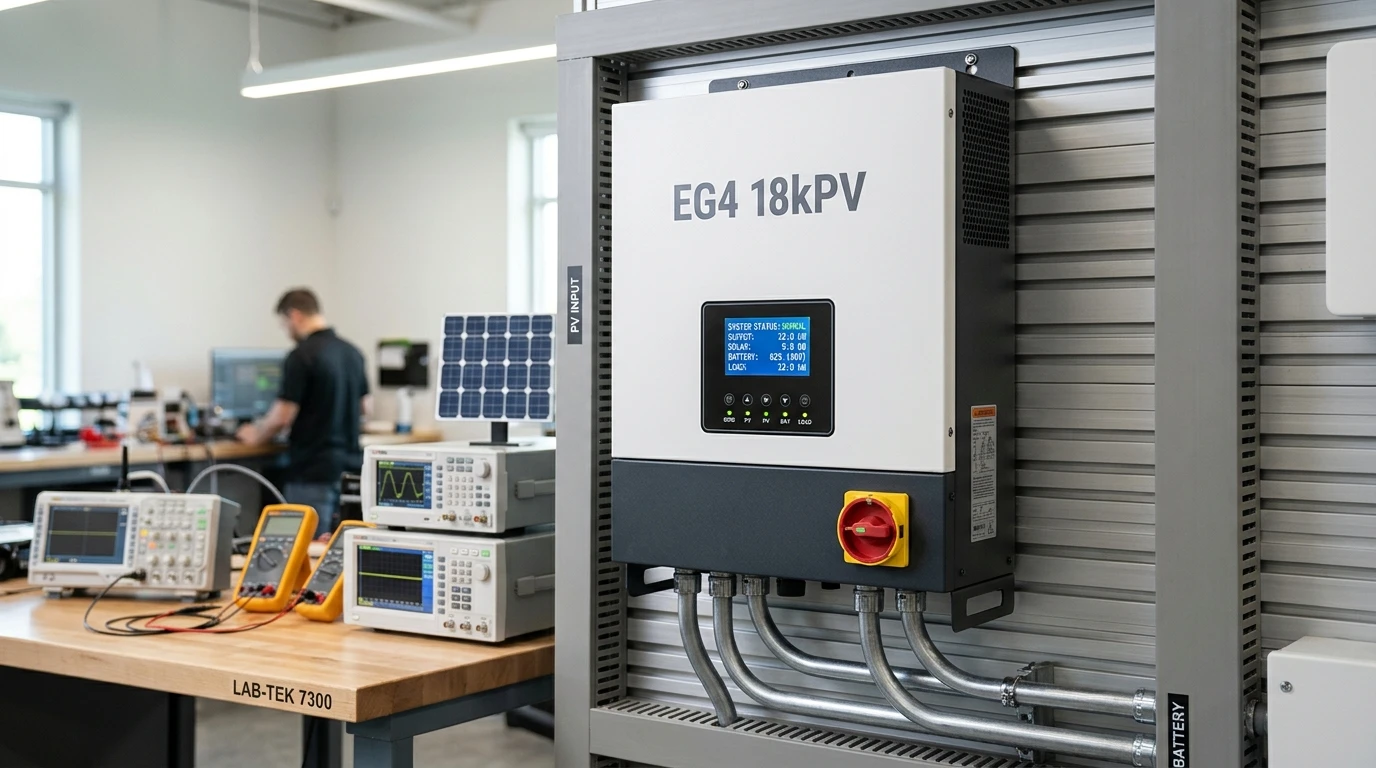
EG4 18kPV All-in-One Multi-String Inverter
For budget-conscious commercial installations and large residential systems, the EG4 18kPV delivers 12,000W of continuous power and handles up to 18,000W of solar panels across three independent MPPT controllers. Its rugged NEMA 4X outdoor casing allows exterior wall mounting, freeing up garage interior wall space.
Check Best Price on EG4 18kPV →
3. ShopSolar Whole-Home Engineered Solar Kit (Best Complete EPC Alternative Package)
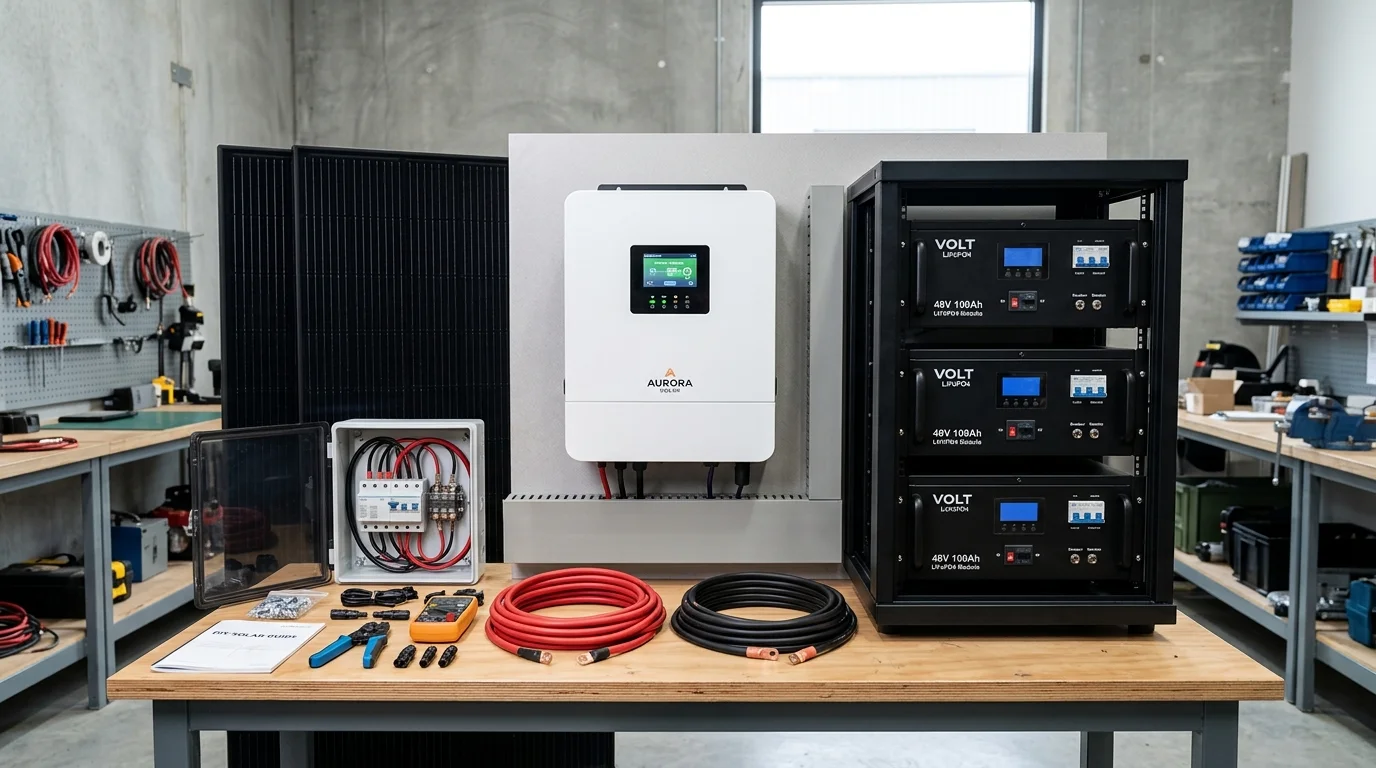
ShopSolar Whole-Home Engineered Solar Kit
ShopSolar solves the biggest hurdle of DIY and self-managed solar: permitting and engineering. Each complete package includes Tier-1 bifacial panels, a Sol-Ark or Growatt hybrid inverter, rack-mount LiFePO4 batteries, and pre-engineered, PE-stamped electrical single-line diagrams customized to your local building department’s permitting requirements.
Explore ShopSolar Complete Packages →
4. IntegraRack IR-50 Ground Mount System (EPC-Grade Structural Foundation)
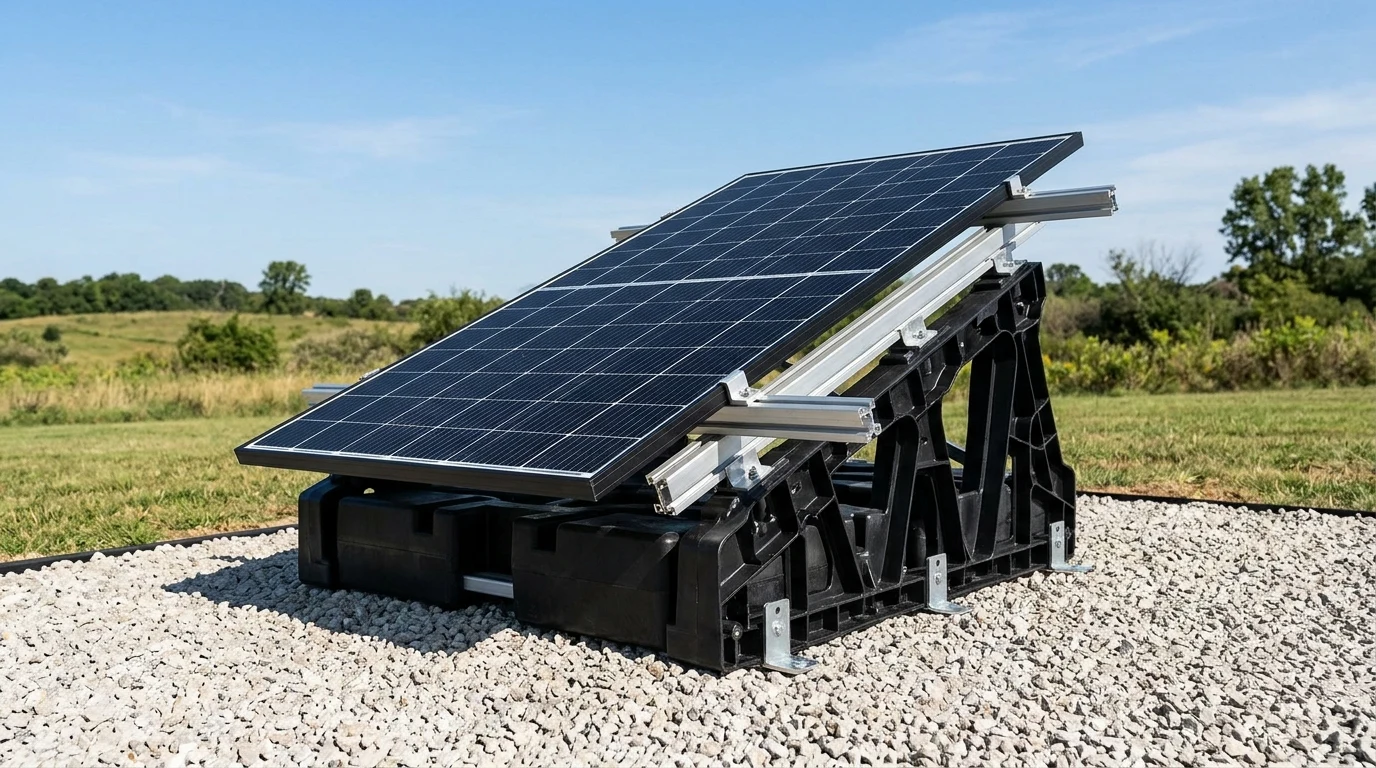
IntegraRack IR-50 Ground Mount System
Ground-mount civil work is often the most expensive component of an EPC quote. The IntegraRack IR-50 completely eliminates the need for expensive concrete truck pours, post-hole augering, and geotechnical drill rigs. Using patented earth anchors driven directly into undisturbed native soil, it provides structural engineering certification for 150 mph wind ratings.
Check Best Price on IntegraRack →
Critical Pitfalls to Avoid When Hiring or Managing a Solar EPC
Avoid these four costly mistakes when reviewing an EPC agreement or self-managing an engineered build:
✕ Signing Without a Performance Guarantee
Never sign a commercial EPC contract based solely on nameplate DC panel wattage. Insist on a contractual Annual kWh Production Guarantee backed by a weather-normalized PVSyst simulation. If the system under-produces due to poor string design or inverter clipping, the EPC must pay liquidated damages.
✕ Neglecting Geotechnical Surveys on Ground Mounts
Assuming your soil is soft dirt before ordering standard driven posts is a catastrophic mistake. If ground crews hit subsurface bedrock or granite boulders 2 feet down, drilling costs can add 20,000 in unexpected change orders. Conduct soil test pits before finalizing racking procurement.
✕ Submitting Unstamped Plans to the Building Department
Local building departments (AHJs) will immediately reject solar permit applications that lack a valid Professional Engineer (PE) structural and electrical wet stamp. Always verify that your engineered kit provider or EPC includes jurisdiction-specific PE stamps in your contract price.
✕ Assuming PTO Approval is Automatic
Energizing your solar array before receiving formal written Permission to Operate (PTO) from your local electric utility is illegal and can result in utility fines or smart meter locking. Keep final EPC milestone payments contingent upon formal PTO issuance.
Frequently Asked Questions (FAQ)
What is the difference between a solar developer and a solar EPC?
A solar developer originates the project: they secure land leases, negotiate power purchase agreements (PPAs), conduct environmental impact studies, and arrange project financing. Once the project is financially viable, the developer hires a Solar EPC contractor to execute the physical engineering design, buy the hardware, and build the facility.
How long does an EPC solar project take from contract signing to PTO?
For a typical 10kW to 25kW residential or small commercial project, the engineering and permitting phase requires 4 to 8 weeks, physical construction requires only 2 to 4 days, and final utility inspection and PTO approval takes 2 to 6 weeks. Total project turnaround typically spans 2 to 4 months.
Can I act as my own general contractor to build a solar system?
Yes! In most US jurisdictions, owner-builders are legally permitted to pull building and electrical permits for work on their own primary residence. By purchasing a pre-engineered kit (complete with PE-stamped single-line diagrams) and subcontracting a licensed master electrician for the main panel tie-in, homeowners frequently save 40% to 50% compared to full-turnkey EPC quotes.
What does “Balance of System” (BOS) mean in an EPC quote?
Balance of System encompasses all mechanical and electrical hardware required to build a functioning solar plant other than the solar panels themselves. This includes structural racking, roof flashings, combiners, DC disconnect switches, rapid shutdown devices, copper wiring, grounding conductors, conduit, and circuit breakers.