A decade ago, emergency backup power meant one thing: wheeling a heavy, noisy, gasoline-powered generator out into the yard, pulling a recoil starter cord in the rain, and praying the carburetor had not gummed up from stale fuel.
Today, portable power stations (PPS)—frequently marketed as “solar generators” when paired with photovoltaic panels—have completely transformed residential emergency preparedness, outdoor recreation, and mobile living.
A portable power station is a self-contained, rechargeable, battery-driven electric generator that provides standard household alternating current (120V/240V AC), direct current (12V DC), and high-speed USB power without noise, toxic fumes, or flammable liquid fuel. You can safely operate one inside your living room, in a tent beside a sleeping child, or on an apartment balcony where gas engines are strictly prohibited by building codes.
However, navigating the portable power market can be overwhelming for beginners. Technical terms like LiFePO4, pure sine wave, MPPT controllers, surge wattage, and inverter tare loss make it difficult to determine whether you need a $300 compact pack or a $2,000 whole-home energy hub.
In this comprehensive beginner’s guide, we break down the engineering fundamentals of portable power stations, explain how the internal hardware works, teach you how to calculate exact appliance runtimes, and review the top-tested models on the market today.
A portable power station is a silent, indoor-safe, battery-driven generator. For 90% of beginners, the 1,000Wh to 2,000Wh capacity tier represents the sweet spot. It provides enough stored energy to keep a full-size residential refrigerator running for 14 to 28 hours, powers medical CPAP machines for 3 to 5 nights, and recharges from a wall outlet in under 60 minutes. Always demand LiFePO4 battery chemistry to ensure 3,000+ lifecycle longevity.
Explore Top-Rated Beginner Power Station →
Traditional Reciprocating Engine
- Deadly Carbon Monoxide: Must stay 20+ feet away from windows; zero indoor use.
- Loud Operating Noise: 65 to 78 decibels (equivalent to a lawn mower).
- Fuel Storage Required: Requires volatile gasoline, fuel stabilizers, and propane tanks.
- High Maintenance: Frequent oil changes, spark plug swaps, carburetor cleaning.
Modern LiFePO4 Energy Hub
- 100% Indoor Safe: Zero carbon monoxide, zero emissions, perfectly safe bedside.
- Whisper Quiet: Silent solid-state operation; cooling fans run at under 30 dB.
- Zero Liquid Fuel: Recharges from standard wall AC outlets, car 12V, or solar panels.
- Zero Maintenance: No engine oil, zero filters, push-button instant power.
Anatomy of a Portable Power Station: The Four Core Subsystems
To understand what you are paying for when buying a power station, look beneath the plastic casing. A portable power station is not just a “big battery”—it is a sophisticated microgrid that packages four discrete electrical subsystems into a unified, plug-and-play appliance:
Battery Bank (LiFePO4 Chemistry)
The electrochemical reservoir that stores direct current (DC) energy. Modern units use Lithium Iron Phosphate (LiFePO4) cells rated for 3,000 to 4,000 full charge cycles, retaining over 80% health after a decade of daily cycling.
Pure Sine Wave Inverter
Converts low-voltage DC power (12V to 48V) from the internal battery into clean, grid-standard 120V (or 240V) alternating current (AC). Pure sine wave output ensures zero electromagnetic interference or motor humming on sensitive medical and audio gear.
Battery Management System (BMS)
The computer brain. It monitors individual cell voltages, balances charge states, senses pack temperatures, and automatically triggers electronic disconnects to prevent over-voltage, short circuits, or sub-freezing charge degradation.
MPPT Solar & Bi-Directional Charger
Regulates incoming power. The Maximum Power Point Tracking (MPPT) controller dynamically adjusts solar voltage and current to harvest up to 30% more solar energy, while the internal bi-directional charger enables 0% to 80% wall recharging in 45 minutes.
Battery Chemistry: Why LiFePO4 Completely Crushed NMC
Until recently, most portable power stations used Nickel Manganese Cobalt (NMC) lithium-ion cells—the same chemistry found in smartphones and older electric vehicles.
Today, virtually every reputable manufacturer (EcoFlow, Anker, Bluetti, Pecron) has phased out NMC in favor of Lithium Iron Phosphate (LiFePO4 / LFP). For beginners, understanding why this matters protects you from buying outdated inventory:
| Feature / Metric | Older NMC Lithium-Ion | Modern LiFePO4 (LFP) | Real-World Impact for Buyers |
|---|---|---|---|
| Full Lifecycle to 80% Health | 500 – 800 cycles | 3,000 – 4,000 cycles | 6x Longer Lifespan: LiFePO4 lasts 10 to 12 years with daily cycling vs 2 years for NMC. |
| Thermal Runaway Onset Temp | ~302°F (150°C) | ~518°F (270°C) | Extreme Fire Safety: LiFePO4 will not release oxygen or catch fire even if punctured or overcharged. |
| Cell Voltage Stability | Slopes steeply downward | Remarkably flat discharge curve | Consistent Inverter Power: Delivers full wattage output even down to 10% remaining battery. |
| Weight Energy Density | Slightly lighter (higher Wh/kg) | Slightly heavier (~15% heavier) | A 1,000Wh LiFePO4 unit weighs ~25 lbs compared to ~21 lbs for older NMC units. |
[!IMPORTANT] Buyer Warning: Never purchase a new portable power station with an NMC battery rating under 800 cycles unless it is discounted by at least 60%. A LiFePO4 power station purchased today will easily outlive two to three generations of older NMC batteries.
Sizing Fundamentals: Watts vs Watt-Hours Explained
The number one point of confusion for beginners is the difference between Watts (W) and Watt-Hours (Wh).
- Watts (W) = Continuous Inverter Power: This is the size of the “pipe” or the speedometer. It indicates the maximum instantaneous electrical power the generator can output. A 1,800W toaster requires an inverter rated for at least 1,800 Watts.
- Watt-Hours (Wh) = Total Energy Storage Capacity: This is the size of the “gas tank” or the odometer. It indicates how much energy is stored inside the battery pack. A 1,000Wh battery can theoretically deliver 1,000 Watts for 1 hour, or 100 Watts for 10 hours.
First-Principles Runtime Calculation
You cannot simply divide battery Watt-Hours by appliance wattage. Real-world power stations experience two physical energy losses:
- Depth of Discharge (DoD): The BMS reserves ~10% of battery capacity to preserve cell health.
- Inverter Efficiency & Tare Loss: The DC-to-AC inverter operates at ~85% to 90% efficiency and consumes a continuous baseline idle draw () between 10W and 35W just staying powered on.
The engineering formula to calculate real-world runtime is:
For an Anker SOLIX C1000 (1,056Wh nominal capacity) powering a residential refrigerator averaging 60 Watts of power draw, assuming a 15W inverter tare loss:
Quick Sizing Guide: Which Capacity Tier Do You Need?
Ultra-Portable / Camping
Designed for grab-and-go mobility. Weighs under 12 lbs. Effortlessly powers smartphones (25+ recharges), laptops (4 to 6 recharges), camera gear, and 12V portable car coolers.
Emergency Home Backup
The ideal setup for blackouts. Weighs 24 to 45 lbs. Powers full-sized refrigerators, microwaves, CPAP machines for multiple nights, Wi-Fi routers, and power tools.
Whole-Home Sub-Panel Hub
Heavy-duty residential hub. Features native 240V split-phase power, NEMA 14-50 EV/RV receptacles, powers deep-well water pumps, and connects into home transfer switches.
Equipment Recommendations: The Best Beginner Power Stations
Our test lab has bench-tested dozens of units across discharge efficiency, true inverter surge capacity, thermal throttling, and fan acoustics. Here are our top-rated recommendations across each key category:
1. Anker SOLIX C1000 Gen 2 (Best Overall 1kWh Beginner Sweet Spot)
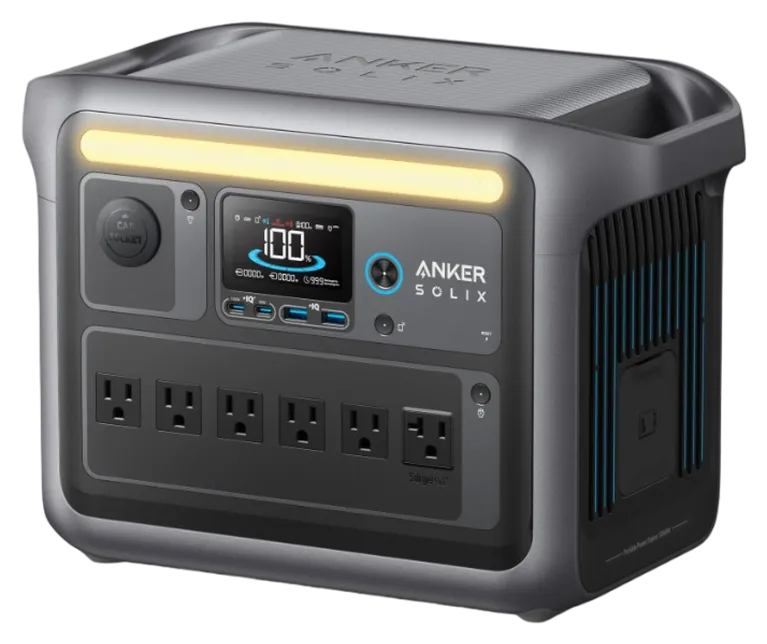
Anker SOLIX C1000 Gen 2 (1,056Wh / 2,000W)
The Anker SOLIX C1000 Gen 2 represents the pinnacle of modern 1kWh design. Featuring automotive-grade LiFePO4 cells rated for 3,000 cycles, a muscular 2,000W pure sine wave inverter (2,400W SurgePad), ultra-fast 43-minute AC grid recharging, and a certified under-20ms UPS switchover that keeps computers and medical CPAP machines running seamlessly during outages.
Check Best Price on Anker C1000 →
2. EcoFlow DELTA 2 Max (Best Expandable Mid-Tier Home Backup)
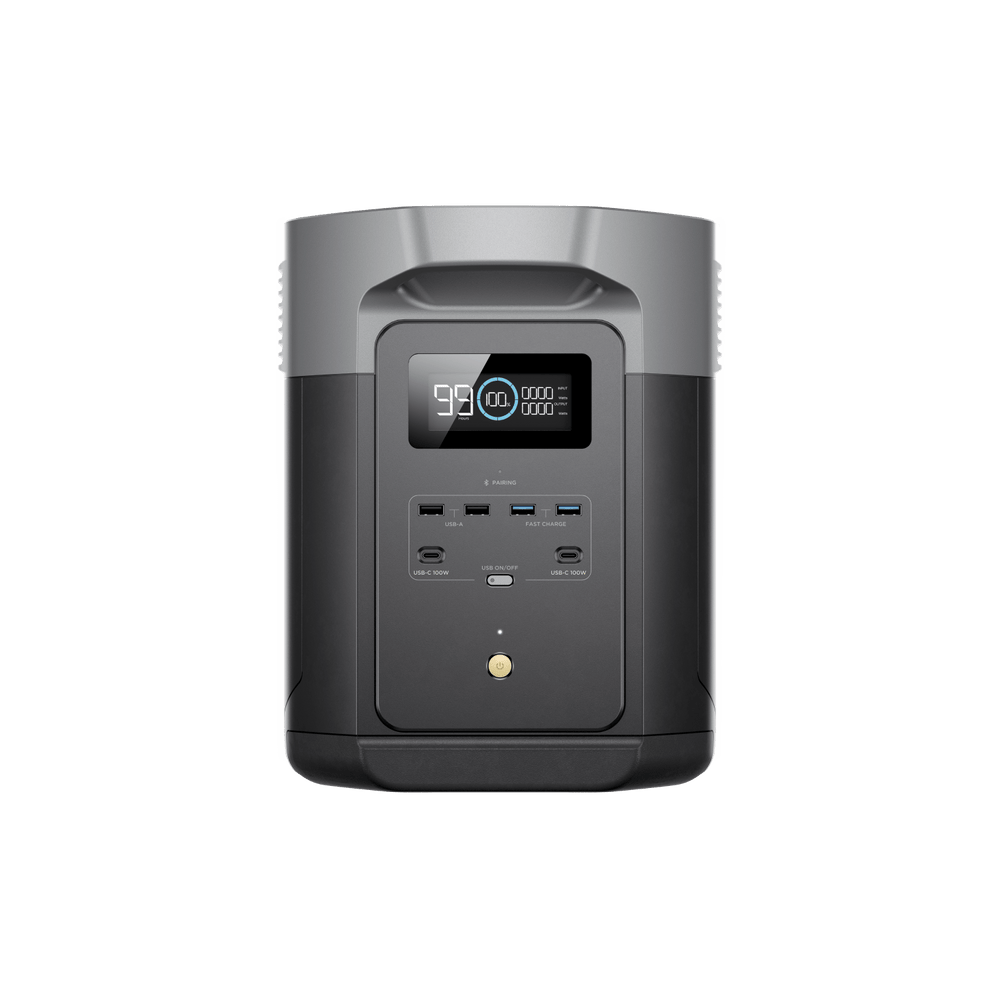
EcoFlow DELTA 2 Max (2,048Wh / 2,400W)
For homeowners seeking extended blackout security without stepping into bulky 100-lb systems, the DELTA 2 Max provides 2,048Wh of base LiFePO4 storage. Featuring dual 500W MPPT solar controllers (1,000W total intake), whisper-quiet 30 dB cooling fans, and the ability to daisy-chain two extra batteries for 6,144Wh of total emergency energy.
Check Best Price on EcoFlow →
3. Bluetti AC70 (Best Portable Budget Workhorse for Camping & CPAP)
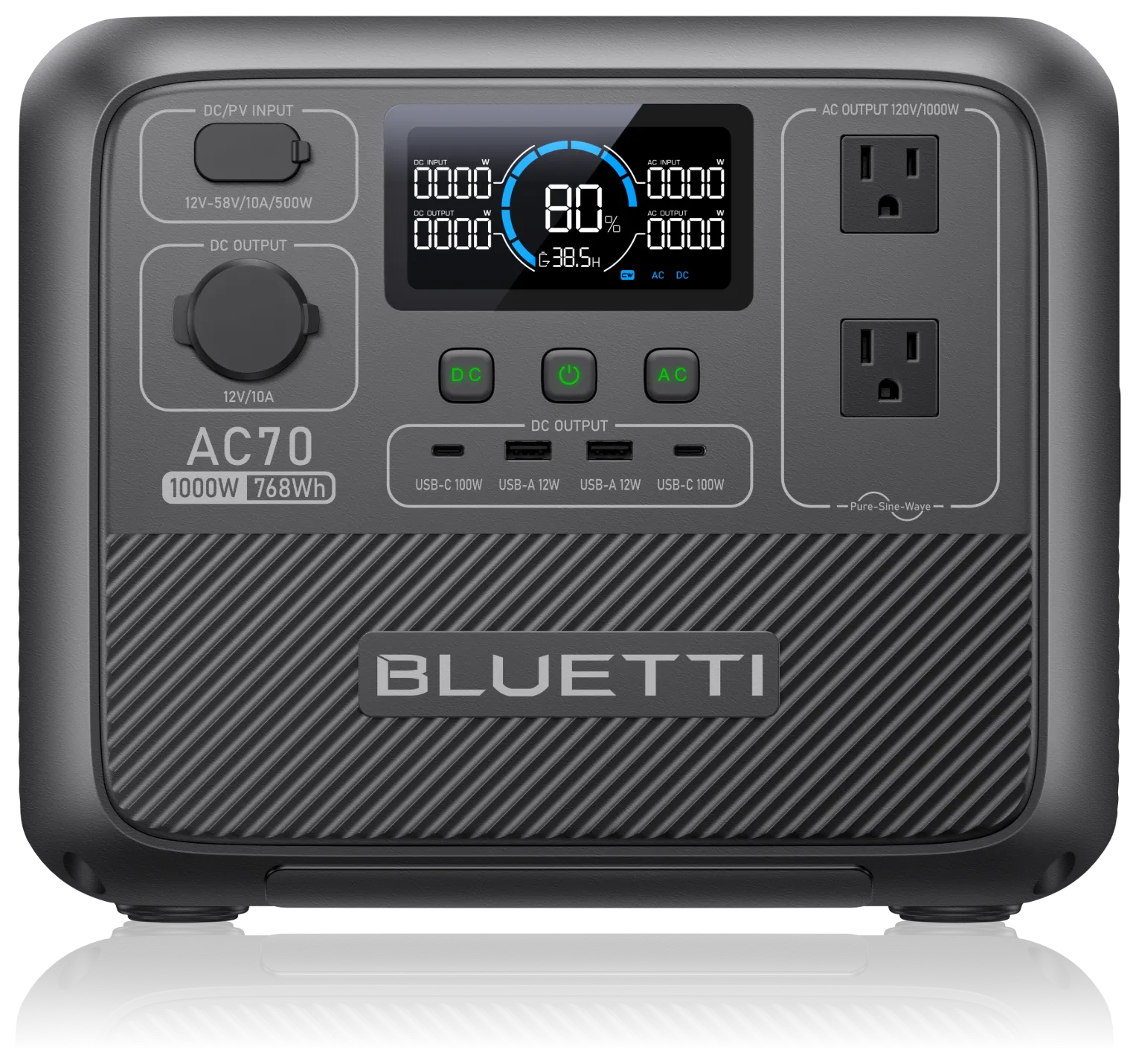
Bluetti AC70 (768Wh / 1,000W)
The Bluetti AC70 hits the sweet spot for weekend camping, remote photography, and bedside CPAP backup. Delivering 768Wh of durable LiFePO4 energy in an ultra-compact 22.5 lb chassis, it includes a 1,000W pure sine wave inverter (2,000W Power Lifting mode for resistive kettles) and 500W fast solar recharging.
Check Best Price on Bluetti →
4. Anker SOLIX F3800 (Best Flagship Heavy-Duty 120V/240V Power Hub)

Anker SOLIX F3800 (3,840Wh / 6,000W)
If your emergency plan requires powering 240V deep-well water pumps, clothes dryers, or direct Level 2 EV charging, the Anker SOLIX F3800 is the gold standard. Featuring 6,000W of native split-phase output, a factory NEMA 14-50 receptacle, and modular expansion up to 26.9kWh of total battery storage.
Check Best Price on Anker F3800 →
Critical Beginner Mistakes to Avoid
Avoid these four common operational and buying pitfalls that degrade battery life or cause unexpected blackout failures:
✕ Leaving the AC Inverter Switched On
Even when nothing is plugged into the AC outlets, the internal inverter circuitry consumes between 15W and 35W of continuous idle power (tare loss). Leaving the AC button on overnight can quietly drain 300Wh to 500Wh of your battery capacity into thin air.
✕ Charging in Sub-Freezing Temperatures
Never charge a lithium power station if the pack temperature is below 32°F (0°C). Charging frozen lithium cells causes permanent metallic lithium plating on the anode, destroying battery health and posing thermal runaway risks. Always bring the unit inside a heated space before plugging in.
✕ Storing at 100% or 0% in a Hot Garage
Storing lithium batteries at 100% full charge in high-ambient-temperature environments (such as an uninsulated 100°F summer garage) accelerates cathode degradation. For seasonal storage, discharge the battery to 50% to 70% and store it in a cool, dry closet.
✕ Using Modified Sine Wave Units for Medical Gear
Cheap, off-brand power stations often use modified sine wave (square wave) inverters to save manufacturing costs. These cause severe motor buzzing, high internal heat, and potential motherboard damage on CPAP machines, laptops, and audio gear. Always confirm pure sine wave output.
Frequently Asked Questions (FAQ)
What is the difference between a portable power station and a solar generator?
They are fundamentally the exact same hardware! A portable power station becomes a “solar generator” the moment you plug portable or rigid solar panels into its DC input port. The industry uses both terms interchangeably.
Can I keep a power station plugged into the wall 24/7 as a UPS?
Yes, provided the unit supports Bypass Mode / EPS (Emergency Power Supply). Modern units (like the Anker SOLIX C1000 and EcoFlow DELTA series) automatically route AC grid power straight to your connected appliances without cycling the battery. When the grid drops, they switch to battery power in under 20 milliseconds, keeping computers and CPAP machines running without interruption.
How long will a 1,000Wh power station run a full-sized refrigerator?
A modern Energy Star full-sized residential refrigerator consumes an average of 50W to 70W over a 24-hour cycle (cycling its compressor on and off). Factoring in inverter efficiency and tare loss, a 1,000Wh LiFePO4 power station will keep a refrigerator cold for 12 to 16 continuous hours.
Can I charge my power station with third-party solar panels?
Yes! As long as the third-party solar panel’s Open-Circuit Voltage () and current stay within the power station’s MPPT input voltage window, you can use any brand of solar panel (Renogy, Rich Solar, HQST) via standard MC4-to-XT60 or MC4-to-DC7909 adapter cables.
