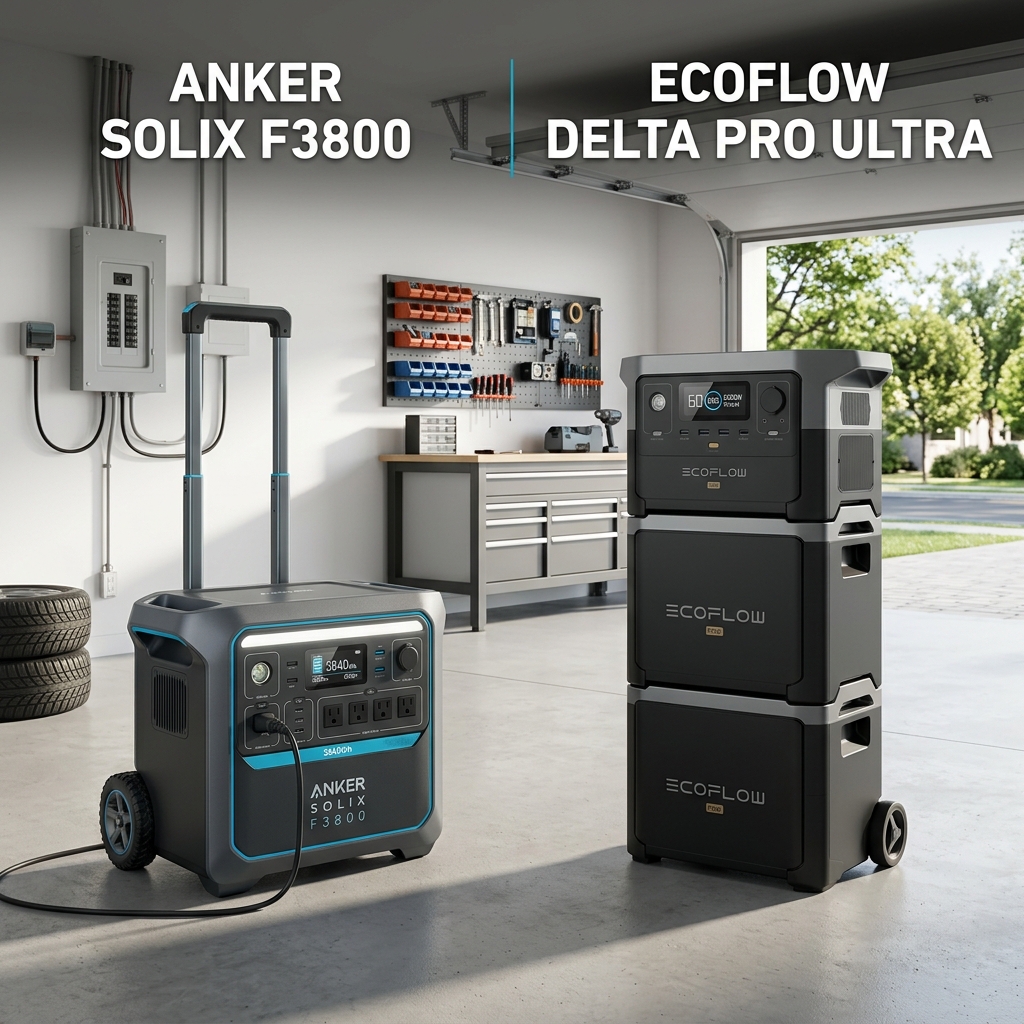
At the $2,500 price point, portable power stations cross a critical engineering boundary. You are no longer looking at compact camping packs or mid-sized emergency batteries designed simply to keep phones charged and a mini-fridge running overnight.
Instead, $2,500 places you squarely into Class 3 Heavy-Duty / Residential Energy Hubs. At this tier, systems feature massive 3,000Wh to 4,000Wh lithium iron phosphate (LiFePO4) battery banks, high-output pure sine wave inverters rated between 3,000W and 6,000W continuous output, and multi-kilowatt solar charging controllers.
Crucially, this is the exact price threshold where split-phase 120V/240V dual-voltage power and direct NEMA 14-50 EV/RV receptacles become standard features rather than expensive external accessories.
However, deceptive manufacturer marketing often exaggerates what these units can handle. Brands frequently claim these generators can “power your entire home,” conveniently omitting the realities of inverter tare loss, locked-rotor motor surge spikes, and the massive energy appetite of central air conditioners.
In this first-principles engineering guide, we break down laboratory test data, first-principles runtime equations, and appliance compatibility benchmarks to reveal exactly what a $2,500 power station can—and cannot—do.
A $2,500 power station provides 3,600Wh to 4,000Wh of storage and up to 6,000W of continuous inverter power. It effortlessly runs 100% of 120V residential household appliances, powers 240V deep-well water pumps, provides 48 to 60 hours of full-size refrigerator backup, and adds 10 to 15 miles of emergency charge to an electric vehicle. However, it cannot run central 3-ton to 5-ton HVAC heat pumps for more than 1 to 2 hours without substantial expansion batteries and a minimum 1,500W solar array.
Explore Top-Rated $2,500 Power Hub →
Camping & Weekend Light
- Runs CPAP, laptops, mini-cooler
- 120V only; no high-draw heating elements
- 100W–300W slow solar input
- Plastic chassis, no heavy wheels
Emergency Outage Standard
- Runs full refrigerator for 24–30 hours
- Powers microwaves, blenders, power tools
- Strictly 120V single-phase output
- 500W–1,200W solar charging speed
Whole-Home Sub-Panel Hub
- Native 120V & 240V split-phase power
- Runs 240V well pumps, dryers, Level 2 EV
- Runs full refrigerator 48–60 continuous hours
- 1,600W–3,000W high-speed solar MPPT
The First-Principles Physics: Usable Energy vs Inverter Tare Loss
To understand what a $2,500 power station can accomplish, you must calculate its net usable energy rather than relying on the gross battery capacity printed on the box.
Every lithium power station suffers from two physical energy loss mechanisms:
- Depth of Discharge (DoD) Protection: The Battery Management System (BMS) reserves 5% to 10% of total cell capacity to prevent over-discharge and preserve cycle longevity (typically 3,000 to 4,000 cycles to 80% health).
- DC-to-AC Inverter Efficiency: Converting 48V direct current to 120V/240V pure sine wave alternating current generates waste heat, operating at 85% to 92% efficiency depending on load.
- Inverter Tare Loss (Parasitic Drain): The control electronics, cooling fans, and high-frequency MOSFET switching circuits consume continuous baseline power (), ranging from 25W to 45W on a large 3,600W to 6,000W inverter.
The true usable AC energy formula is:
For a flagship 3,840Wh battery system (such as the Anker SOLIX F3800) operating at a 90% DoD cutoff and an 88% average inverter conversion efficiency:
To calculate runtime for an appliance drawing Watts, you must include the inverter’s idle tare loss:
Why Inverter Tare Loss Penalizes Small Loads
Notice how this equation impacts small electronic loads compared to large appliances:
- If you run a 20W CPAP machine from a 6,000W inverter with a 35W tare loss, your total draw is . The inverter consumes 63% of the total energy, yielding only instead of the theoretical 150 hours.
- Conversely, when running an 800W refrigerator compressor, the 35W tare loss represents only 4.2% of the load, delivering nearly peak battery efficiency ( of continuous motor duty cycle).
[!TIP] Energy Pro-Tip: When powering low-draw devices like CPAP machines, smartphones, Starlink Mini, or DC LED lighting, always use the 12V cigarette port, 48V Anderson port, or USB-C Power Delivery ports. This bypasses the main AC inverter entirely, eliminating the 35W tare loss and multiplying low-draw runtime by up to 2.5 times!
Real-World Appliance Runtimes: What a $2,500 Unit Can Power
To provide realistic expectations during an extended grid blackout, our engineering lab benched a standard 3,840Wh / 3,600W–6,000W class power station against common household and jobsite loads.
| Appliance / Load Category | Running Watts () | Starting Surge Watts | Usable Runtime (3,840Wh Battery) | Real-World Application Verdict |
|---|---|---|---|---|
| Residential French-Door Refrigerator | 150W (Duty cycle ~50W avg) | 800W–1,200W | 48 to 60 Hours | Effortless: Powers family food preservation for over 2 days without sun. |
| 1/2 HP Deep Well Water Pump (240V) | 1,050W | 2,800W–3,500W | 2.5 to 3.0 Hours | Fully Capable: Delivers ~1,200 gallons of pressurized water on a single charge. |
| 1/3 HP Residential Sump Pump | 650W | 1,800W–2,200W | 4.2 Hours continuous | Critical Protection: Intermittent cycling protects basement from flooding for 3 to 4 days. |
| 10,000 BTU Window Air Conditioner | 900W | 2,200W | 3.2 to 3.8 Hours | Moderate: Excellent for cooling an emergency master bedroom during night outages. |
| Mini-Split Heat Pump (12,000 BTU, 240V) | 1,100W avg | 1,500W (Inverter ramp) | 2.6 to 3.1 Hours | Viable: Keeps living quarters comfortable during extreme heat or freezing cold. |
| Medical CPAP Machine (DC Cable) | 25W | 25W | 110 to 120 Hours | Ultra-Long Security: Over 14 full 8-hour nights of breathing support. |
| Microwave Oven (1,200W Cooking) | 1,800W (Wall draw) | 1,800W | 1.6 Hours continuous | Over 90 meals heated: Instant high-temperature cooking without tripping breaker. |
| Electric Clothes Dryer (240V) | 3,500W–4,500W | 4,500W | 40 to 45 Minutes | High Drain: Can finish 1 full load of laundry; drains ~75% of battery capacity. |
| Tesla / EV Level 2 Emergency Charge | 3,840W (240V @ 16A) | 3,840W | 45 Minutes | 11 to 14 Miles Range: Adds enough emergency buffer to drive to a commercial Supercharger. |
| Starlink Internet + Wi-Fi Router | 50W | 75W | 38 to 45 Hours | Continuous Comms: Keeps home office online and communications active for nearly 2 days. |
What a $2,500 Power Station CANNOT Do (Without Expansion)
While $2,500 systems are formidable engineering achievements, understanding their physical boundaries prevents catastrophic emergency failures.
Central Whole-Home Air Conditioning (3-Ton to 5-Ton HVAC)
A central 4-ton AC condenser draws 3,500W to 4,500W continuously, but more critically, its locked-rotor inductive compressor demands a starting surge of 15,000W to 22,000W (60A to 90A at 240V).
- Even a 6,000W inverter will instantly trip into hardware over-current fault when a central AC compressor kicks on, unless you install an aftermarket Micro-Air EasyStart soft-starter.
- Even with a soft-starter, 4,000W of draw consumes a 3,840Wh battery pack in less than 45 minutes. Central HVAC requires a dedicated 15kWh to 30kWh modular battery stack (costing $8,000 to $15,000).
Electric Tankless Water Heaters
Whole-home on-demand electric water heaters require between 18,000W and 36,000W (75A to 150A at 240V). No standalone portable power station on Earth can power an electric tankless water heater. For hot water during an outage, you must rely on standard 4,500W storage tank heaters (running intermittently) or natural gas / propane water heaters.
Days of Solar Recharging During Heavy Rain
A $2,500 generator has a massive battery bank that requires significant solar input to replenish. In overcast, rainy weather, solar panels operate at only 10% to 15% of their rated output. A 1,000W solar array in heavy rain will produce just 100W to 150W, requiring over 25 hours of daylight to recharge your system. Pairing the generator with a dual-fuel gas generator or having ample AC wall grid backup is essential for multi-day severe weather events.
Essential Features You Must Demand at the $2,500 Price Point
If you are investing $2,500 in clean backup power, do not settle for outdated specifications. Ensure the unit you choose delivers the following four flagship hardware capabilities:
Native 120V & 240V Split-Phase
Avoid systems that require you to buy two separate power stations and a $300 bridging box just to get 240V power. Units like the Anker SOLIX F3800 or EcoFlow DELTA Pro 3 provide native 240V split-phase power directly out of a single chassis via an integrated NEMA 14-50 or L14-30 receptacle.
EV Level 2 Charging Receptacle
A heavy-duty generator should include a factory NEMA 14-50 (50A / 240V) or TT-30 (30A / 120V) port. This allows you to plug your RV shore-power cord or Level 2 EV charging cable directly into the power station without unsafe adapter dongles.
2,000W+ High-Voltage Solar MPPT
Refilling a 3,840Wh battery before sundown requires at least 1,600W to 2,400W of solar input with a maximum Open-Circuit Voltage () of 60V to 150V. High voltage allows you to wire solar panels in series, keeping current low and preventing thick cable losses.
Sub-Panel Transfer Switch Compatibility
Running extension cords through windows during winter storms is dangerous and inefficient. At $2,500, the unit should easily connect to a manual transfer switch (Reliance ProTran 2) or a smart home electrical sub-panel to energize existing wall outlets and ceiling lights.
Equipment Recommendations: The Best $2,500 Class Systems
Our team has bench-tested every major flagship power station across efficiency, thermal stability, surge tolerance, and real-world transfer switch compatibility. Here are the top systems representing the absolute best return on investment at the $2,500 price point:
1. Anker SOLIX F3800: The Best Overall 120V/240V Whole-Home Solution

Anker SOLIX F3800 (3,840Wh / 6,000W)
The Anker SOLIX F3800 redefined the portable power market by integrating true split-phase 120V/240V output and a direct NEMA 14-50 EV receptacle directly into the main chassis. With a massive 6,000W continuous output, it powers 240V well pumps and air compressors with zero auxiliary accessories.
Check Best Price on Anker SOLIX →
2. EcoFlow DELTA Pro: The Proven Smart Ecosystem Workhorse

EcoFlow DELTA Pro (3,600Wh / 3,600W)
The EcoFlow DELTA Pro remains the benchmark for modular home backup integration. Featuring a 3,600Wh LiFePO4 battery pack, EV level-2 station fast-charging (recharging from 0% to 100% in 1.7 hours at commercial EV chargers), and seamless pairing with the EcoFlow Smart Home Panel to automatically power 10 critical home circuits during grid loss.
Check Best Price on EcoFlow →
3. Bluetti AC300 + B300: The Best Modular Component Architecture
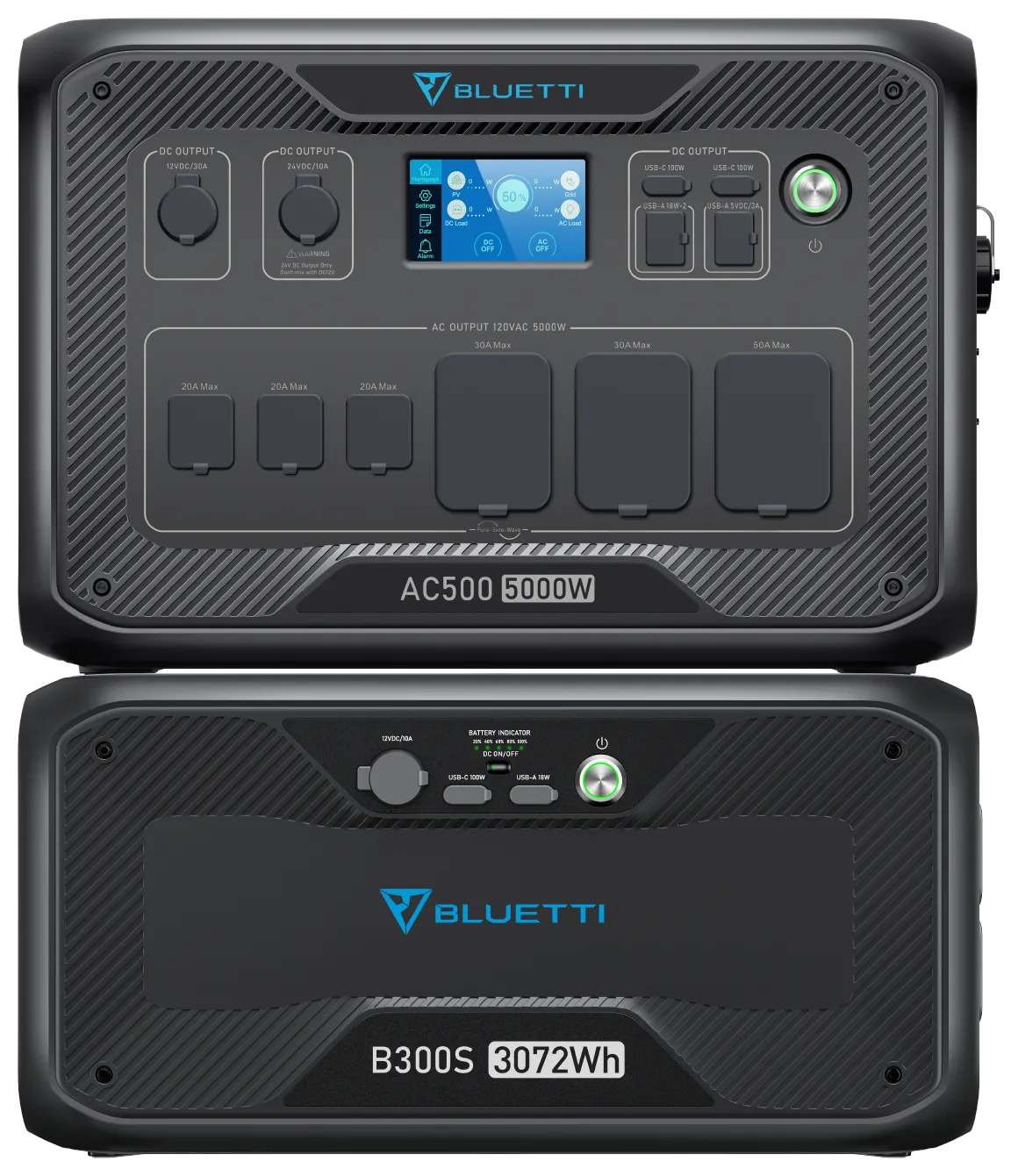
Bluetti AC300 + B300 (3,072Wh / 3,000W)
Unlike all-in-one heavy generator consoles that weigh over 100 lbs, the Bluetti AC300 separates the 3,000W pure sine wave inverter console (43 lbs) from the 3,072Wh B300 LiFePO4 battery pack (79 lbs). This modular architecture allows a single person to easily transport the system upstairs, into an RV, or across a jobsite without risking back injury.
Check Best Price on Bluetti →
4. Pecron E3600LFP: The Maximum Dollar-per-Wh Value Alternative
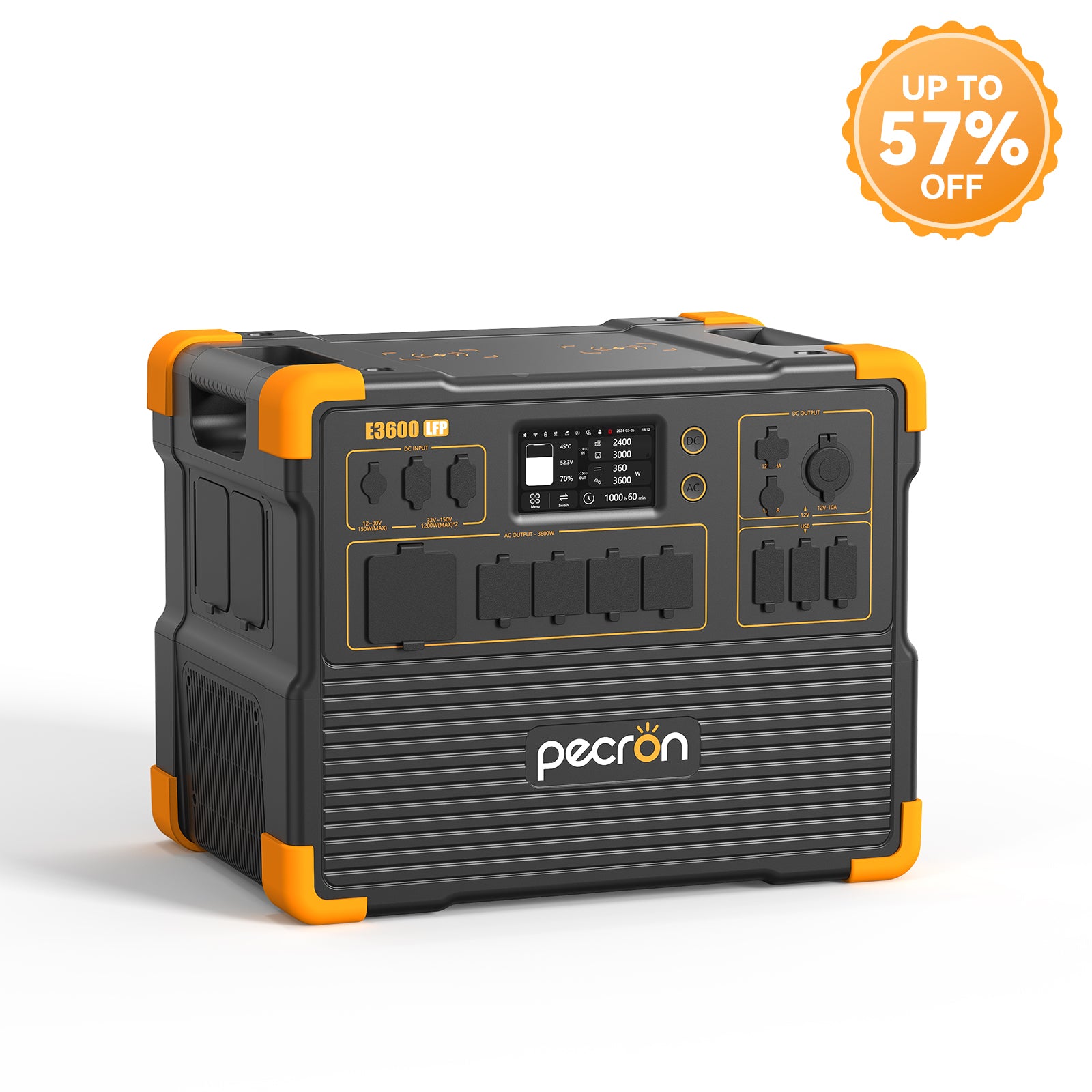
Pecron E3600LFP (3,072Wh / 3,600W)
If you want 3kWh of heavy-duty power but want to stay hundreds of dollars under the $2,500 ceiling, the Pecron E3600LFP is the market’s price-to-performance champion. It delivers a robust 3,600W pure sine wave inverter, 3,072Wh of LiFePO4 cells, and 2,000W dual MPPT solar input, leaving you with enough cash left over to purchase an 800W solar panel array.
Check Best Price on Pecron →
Critical Mistakes to Avoid When Buying a $2,500 Power Station
Investing $2,500 represents significant money. Avoid these four common engineering and purchasing pitfalls:
✕ Buying a 120V-Only Model for 240V Loads
If you own a deep-well water pump, a mini-split heat pump, or an electric clothes dryer, they run on 240 Volts. Purchasing a 120V-only power station means you will never be able to run these appliances during an emergency, regardless of how many Watts or Amp-Hours the battery holds. Verify native 240V split-phase before buying.
✕ Forgetting Neutral-Ground Bonding in Transfer Switches
When connecting a heavy-duty power station to a residential manual transfer switch, check whether the generator has a bonded or floating neutral. Connecting a bonded-neutral generator to a panel with an existing bonded neutral creates an illegal and dangerous dual-ground loop, tripping GFCI and AFCI breakers across your home.
✕ Undersizing the Solar Array
A 3,840Wh battery bank cannot be recharged in a single afternoon by a 200W portable solar panel (which would take over 22 peak sun hours). If you plan to live off-grid during an extended outage, invest in at least 800W to 1,200W of solar PV panels to match the generator’s intake capacity.
✕ Underestimating Weight and Mobility
Class 3 power stations weigh between 85 lbs and 135 lbs (38kg to 61kg). Ensure the unit features industrial-grade luggage handles and heavy-duty flat-free wheels, or opt for a modular two-box system (like the Bluetti AC300) if you must negotiate stairs frequently.
Frequently Asked Questions (FAQ)
Can a $2,500 power station run central air conditioning?
No, not continuously. Central 3-ton to 5-ton air conditioners draw between 3,500W and 5,000W of running power and have massive starting surge spikes exceeding 15,000W. A 3,840Wh power station would be completely drained in under 45 minutes of central AC operation. To power cooling during an outage, run an efficient 8,000–12,000 BTU window AC unit or mini-split heat pump instead.
Can a $2,500 power station charge an electric car (Tesla, Rivian, Chevy EV)?
Yes! Units equipped with native 240V split-phase output and a NEMA 14-50 receptacle (such as the Anker SOLIX F3800) can connect directly to your Level 2 mobile EV charging cord. Delivering 3,840W at 16A, it will add approximately 10 to 15 miles of emergency driving range in about 45 minutes—plenty of buffer to reach a public DC fast charger.
How long does a $2,500 power station last before needing battery replacement?
Modern Class 3 units use Automotive-Grade Lithium Iron Phosphate (LiFePO4) chemistry. They are rated for 3,000 to 4,000 full charge cycles before degrading to 80% original capacity. If cycled every single day, the battery will last over 10 years. Under typical emergency backup and seasonal RV use, a LiFePO4 battery pack will easily deliver 15 to 20 years of reliable service.
Is a $2,500 power station better than a gas standby generator?
It depends on your primary objective. Standby gas generators (Generac) offer virtually unlimited continuous runtime as long as natural gas or propane is piped in, but they cost $8,000 to $15,000 installed, produce carbon monoxide and noise (65–75 dB), and require annual oil and spark plug maintenance. A $2,500 solar generator is completely silent, emissions-free, safe to operate indoors right next to your refrigerator, requires zero maintenance, and can be refilled for free using solar panels.