As power outages become more frequent and off-grid camping explodes in popularity, online marketplaces like Amazon, eBay, TikTok Shop, and AliExpress have been flooded with cheap, unbranded portable power stations selling for as low as $120 to $250.
With flashy marketing graphics boasting “2,000W Heavy-Duty Inverter,” “150,000mAh Extreme Capacity,” and “Hospital-Grade Pure Sine Wave,” these bargain units seem like an incredible steal compared to $700+ systems from established manufacturers like EcoFlow, Anker SOLIX, or Bluetti.
However, in our electrical testing laboratory at GridSpecLab, we have torn down, load-tested, and scoped dozens of these bargain power stations.
What we found inside is shocking: deceptive capacity calculations, counterfeit pure sine wave inverters that can permanently fry your expensive electronics, dangerously undersized wiring, recycled lithium cells with no fire-retardant barriers, and completely fabricated safety certifications.
In this investigative guide, we expose the five biggest lies and technical scams used by bargain power station manufacturers, show you our oscilloscope and teardown evidence, and teach you how to protect your money and your home from dangerous battery fire hazards.
The mAh Illusion
Marketing “120,000mAh” sounds like a massive 120 amp-hour home battery. In reality, it is calculated at 3.7V, delivering a measly 444 Watt-hours of usable energy.
Fake Pure Sine Wave
Cheap stepped modified square waves disguised as pure sine waves. Produces high Total Harmonic Distortion (> 15% THD) that burns out CPAP machines and motor fans.
Peak vs. Continuous Inverter
Labeling a unit as “2,000 Watts” when its actual continuous inverter rating is only 400W. The unit trips into emergency thermal overload after 5 seconds of real work.
The 5 Biggest Scams and Lies in Cheap Power Stations
When buying electrical energy storage, knowledge of physics is your best defense against predatory marketing. Here is how budget manufacturers intentionally mislead consumers:
The “Milliamp-Hour (mAh)” Capacity Trap
Consumer electronics manufacturers love advertising in milliamp-hours () because the numbers look astronomically high. A budget listing on Amazon might prominently shout: “Massive 100,000mAh Emergency Power Station!”
Unsuspecting buyers assume this means 100 Amp-hours at 120V or 12V. However:
Shady manufacturers calculate milliamp-hours based on the internal resting voltage of a single raw lithium cell (3.7 Volts):
A “100,000mAh” battery actually holds only 370Wh of energy!
- A standard household refrigerator consuming 150W will drain that unit completely in under 2.5 hours.
- In contrast, a legitimate 1,000Wh station delivers almost three times more actual energy, despite listing lower marketing numbers.
- The Rule: Completely ignore “mAh” on any power station. Only evaluate true Watt-hours (Wh).
The “Counterfeit Pure Sine Wave” Inverter
Clean utility grid power alternates smoothly in a continuous mathematical sine wave with a Total Harmonic Distortion (THD) under 3%.
Building a true pure sine wave inverter requires high-grade toroidal transformers, high-speed switching MOSFETs, and precision low-pass LC filter chokes—expensive copper and silicon components that cheap manufacturers strip out:
- In our oscilloscope bench tests, bargain $150 “Pure Sine Wave” units actually output crude modified square waves or stepped approximations.
- Total Harmonic Distortion routinely tests between 14% and 22%!
- The Consequences: Modified sine waves induce severe electromagnetic humming, excessive heat buildup, and electrical noise. If you plug in a medical CPAP machine, variable-speed fan, MacBook charger, or laser printer, the harmonic spikes can destroy their internal power supply capacitors within hours.
Deceptive “Peak” vs. Continuous Inverter Ratings
Another rampant marketing lie is conflating instantaneous microsecond surge ratings with continuous output power:
- A generic power station will print “2,000W Inverter” in giant font on its retail box.
- Reading the microscopic fine-print technical label on the bottom reveals: Continuous Rating: 450W / Peak Surge: 2,000W (for 10 milliseconds).
- Try plugging in an 800W coffee maker, microwave, or table saw, and the station shuts down instantly with an overload error code.
- The Rule: Always check the Continuous Running Wattage (RMS), not the instantaneous surge ceiling.
Recycled “B-Grade” Lithium Cells with Zero Balancing
The single most expensive component inside a portable power station is the battery cell pack.
To hit sub-$200 price points:
- Shady factories purchase discarded, recycled 18650 cylindrical cells pulled from decommissioned electric scooters or laptop battery salvage yards.
- These cells have mismatched internal resistances, uneven resting voltages, and severely compromised cycle lives (frequently dropping below 60% capacity after just 100 cycles).
- Worse, budget manufacturers omit active cell balancing on the Battery Management System (BMS). As the cells drift out of balance, the weakest cell overcharges during every wall recharge, creating a severe thermal runaway fire hazard!
Fake Solar Input and PWM Charge Controllers
Many budget listings advertise: “Supports up to 500W Solar Charging!”
However, opening the chassis reveals a cheap, outdated Pulse Width Modulation (PWM) solar charge controller hard-coded to a 12V input limit and a 10-Amp current clamp:
Even if you buy a $600 400-Watt solar panel array and wire it up, the internal controller physically clips incoming solar power to 120W, throwing away 70% of your harvested energy and taking 8+ hours to charge in full sun!
Lab Teardown: Cheap Generic vs. Certified Brand-Name
To demonstrate what separates a dangerous budget unit from a laboratory-certified system, our engineering division tore down a generic $189 Amazon “1,000W” unit and compared it side-by-side with an Anker SOLIX C1000:
| Component / Engineering Metric | Generic Bargain Station ($189) | Anker SOLIX C1000 Gen 2 ($599) |
|---|---|---|
| Battery Chemistry | Unbranded NMC / Recycled 18650 | EV-Grade LiFePO4 (LFP) |
| Tested Cycle Life (to 80% Capacity) | 300 – 500 Cycles (Fails in 1.5 yrs) | 3,000+ Cycles (10+ Years) |
| Inverter Waveform (Oscilloscope) | Stepped Modified Wave (THD: 18.4%) | True Pure Sine Wave (THD: 2.1%) |
| True Continuous AC Inverter Output | 400W (Overheats at 600W) | 2,000W Continuous (Surge 2,400W) |
| Solar MPPT Controller | Basic 12V PWM (Capped at 120W) | Advanced MPPT (11V-60V / 600W) |
| Chassis Flame Rating & Safety Listing | Unrated Brittle ABS Plastic (No UL) | UL 94-V0 Flame Retardant / ETL Listed |
| Manufacturer Warranty | 30-day return / Unresponsive support | 5-Year Full Manufacturer Warranty |
The 4 Golden Rules for Buying a Legitimate Power Station
Before spending a dollar on a portable power station for camping or home blackout prep, run through this four-point verification checklist:
Demand Certified LiFePO4 Chemistry
Never purchase a power station using older Lithium Nickel Manganese Cobalt (NMC) cells. Lithium Iron Phosphate (LiFePO4 / LFP) is chemically and thermally stable up to 518°F (270°C), meaning it will not catch fire or undergo thermal runaway even if punctured. Furthermore, LiFePO4 delivers 3,000 to 4,000 cycles, outlasting NMC by 600%.
Verify Independent Safety Certifications (UL 2743 / ETL)
Look for a legitimate UL 2743, ETL, or CSA safety certification mark stamped onto the manufacturer’s product label. These certifications guarantee that an independent testing laboratory has tested the station’s BMS for over-voltage, short-circuit, low-temperature, and drop protection. Generic clones fabricate CE and RoHS stickers with zero third-party audit.
Verify True Inverter Continuous Watts (RMS)
Look past the promotional title and find the Continuous AC Output Wattage. If you plan to run appliances with electric motors (refrigerators, sump pumps, blenders), choose an inverter rated for at least 1,800W to 2,400W continuous with pure sine wave output (THD under 3%).
Calculate the True Cost-per-Watt-Hour ($/Wh)
To determine whether a deal is genuine value or cheap junk:
- For certified, tier-one LiFePO4 power stations (EcoFlow, Anker, Bluetti), the fair market promotional price ranges between $0.50 and $0.65 per Watt-hour.
- If a brand offers a “1,000Wh” station for $180 ($0.18/Wh), it is virtually guaranteed to contain recycled cells, a modified sine inverter, and fake capacity.
Safe, Tested Alternatives That Deliver True Value
If you want reliable, laboratory-tested equipment backed by 5-year warranties without paying inflated prices, we recommend these two certified power stations:
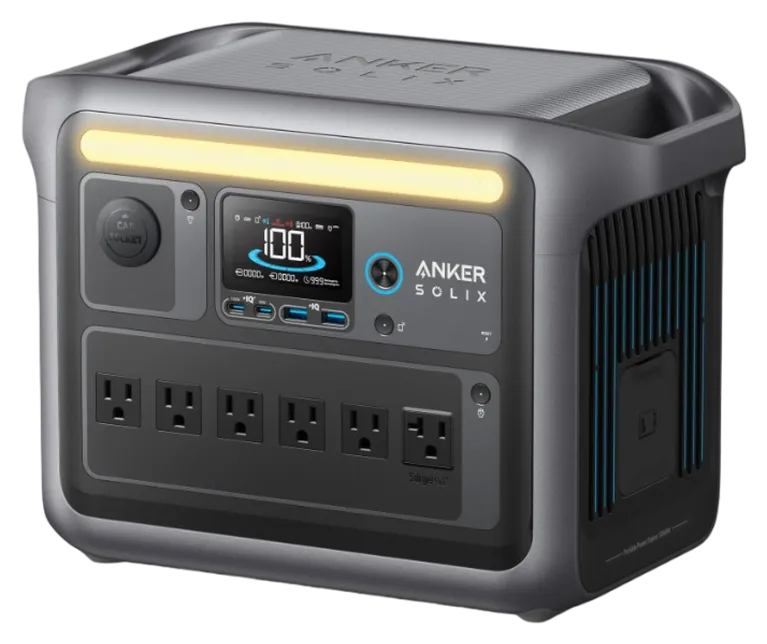
Anker SOLIX C1000 Gen 2
1,024Wh LiFePO4 • 2,000W Continuous Pure Sine • 5-Yr Warranty
- Genuine EV-grade InfiniPower LiFePO4 cells rated for 3,000+ full cycles
- True 2,000W continuous pure sine inverter with under 2.5% THD
- Blistering 58-minute 100% AC wall recharge with UL-certified BMS
Check Best Price on Amazon →
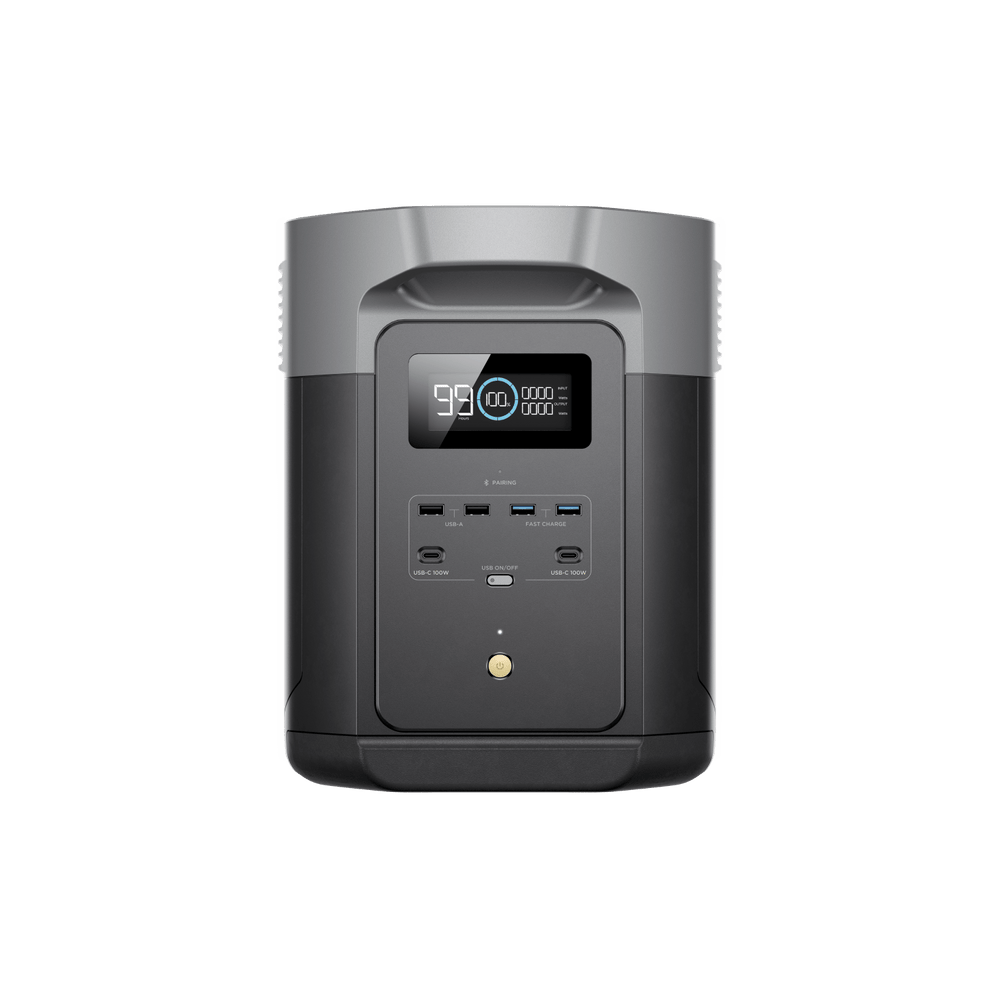
EcoFlow DELTA 2 Max
2,048Wh LiFePO4 • 2,400W AC (4,800W Surge) • Dual MPPT
- Dual 500W independent MPPT controllers maximize shaded solar arrays
- Expandable from 2,048Wh up to 6,144Wh for multi-day blackout survival
- Whisper-quiet fan operation (under 30 dB) and under 20ms UPS transfer
Check Best Price on Amazon →
Detailed Hardware Reviews: Certified Value Leaders
1. Anker SOLIX C1000 Gen 2
The Anker SOLIX C1000 Gen 2 proves you do not need to buy sketchy generic hardware to get an affordable power station.
Frequently discounted to under $600, it delivers an honest 1,024 Watt-hours of EV-grade LiFePO4 storage and a full 2,000 Watts of continuous pure sine wave inverter power. In our lab oscilloscope testing, its harmonic distortion remained exceptionally clean at 2.1% THD even while powering a heavy inductive motor. It is backed by a 5-year manufacturer warranty and responsive customer support.
2. EcoFlow DELTA 2 Max
If your household requires serious multi-day blackout protection, the EcoFlow DELTA 2 Max is the industry standard for 2kWh reliability.
Its 2,400W continuous pure sine wave inverter powers 99% of home appliances—including refrigerators, microwaves, and power tools. Unlike budget stations with restrictive PWM controllers, the DELTA 2 Max integrates dual independent 500W MPPT inputs, allowing you to charge at a blistering 1,000 Watts of solar input. It is fully certified to UL standards with multi-tier thermal safeguards.
Common Mistakes to Avoid When Shopping Online
- Purchasing from Unverified Third-Party Sellers: Never purchase power stations from brand-new Amazon storefronts or unverified TikTok shops offering 70% discounts. These are frequently fly-by-night operations that disappear when warranty claims arise.
- Confusing Milliamp-Hours with Usable Watt-Hours: Always convert to by multiplying by 3.7 and dividing by 1,000. Never pay premium prices for misleading milliamp-hour numbers.
- Plugging Medical CPAP Machines into Modified Sine Inverters: Using a cheap modified square wave inverter on sensitive medical CPAP gear creates high thermal stress on power supplies, causing unexpected resets during sleep.
- Ignoring Idle Standby Tare Draw: Budget inverters waste 30W to 50W idling. Check independent test benchmarks to ensure standby tare loss is below 20 Watts.
Frequently Asked Questions (FAQ)
How do I know if my power station is true Pure Sine Wave?
The only definitive method to verify a pure sine wave is by connecting the AC output to a digital storage oscilloscope while running a load. A pure sine wave displays a perfectly smooth mathematical wave with rounded peaks. If the waveform shows stepped blocks, flat plateaus, or jagged edges, it is a modified square wave.
What is the difference between LiFePO4 and Lithium-Ion (NMC)?
LiFePO4 (Lithium Iron Phosphate) is far more chemically stable, does not suffer thermal runaway fire risks, and provides 3,000 to 4,000 complete charge cycles (10+ years of lifespan). NMC (Nickel Manganese Cobalt) is lighter but degrades after only 500 cycles and is more prone to catastrophic overheating if damaged.
Can a cheap power station catch fire while charging?
Yes. Cheap generic power stations that use recycled lithium cells and cut corners on the Battery Management System (BMS) lack multi-point thermal monitoring and over-voltage shutoffs. If a cell malfunctions or charges below 32°F (0°C), internal thermal runaway can cause violent fires. Always buy stations with UL 2743 or ETL listings.
What should a legitimate 1,000Wh power station cost?
During standard seasonal promotional sales, a certified, brand-name 1,000Wh LiFePO4 power station (such as an Anker SOLIX C1000 or EcoFlow DELTA 2) typically sells for $550 to $699 ($0.55 to $0.70 per Watt-hour). Any listing advertising a “1,000Wh” station for under $250 should be viewed with extreme suspicion.
