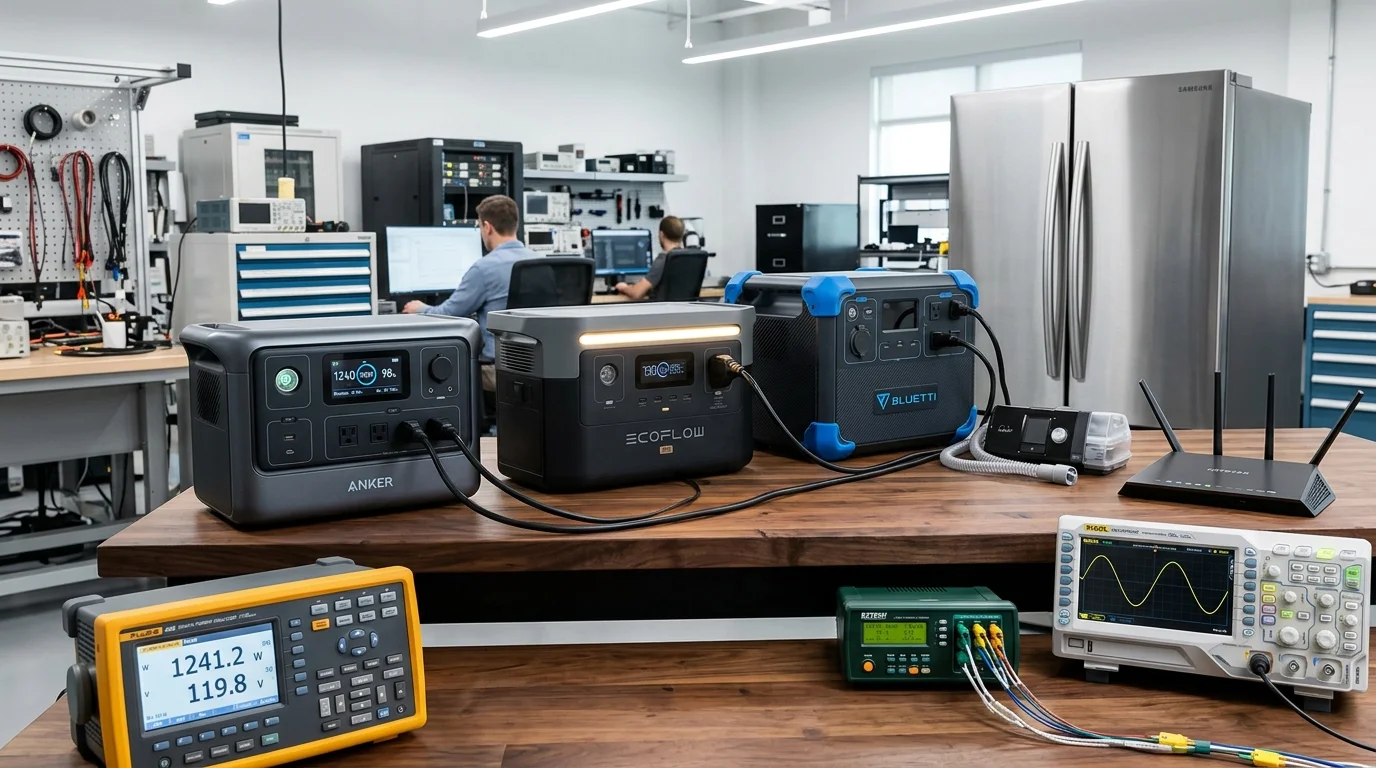
When extreme winter storms, hurricane wind gusts, or overloaded regional utility grids knock out municipal power, modern society grinds to an immediate halt.
Within minutes, your home’s central heating blowers die, refrigerated food begins warming, water well pumps depressurize, and medical CPAP machines shut down.
For decades, standard emergency preparedness orthodoxy mandated keeping a 5,000-watt gasoline generator chained to the back patio. However, seasoned emergency preppers know the serious vulnerabilities of traditional gas units during prolonged civil emergencies:
- Fuel Expiration & Scarcity: Gasoline degrades within 3 to 6 months, and gas station pumps shut down across entire counties during widespread grid blackouts.
- Lethal Carbon Monoxide: Operating gas generators near windows or inside garages kills dozens of families every year.
- Acoustic Signature: A roaring 72-decibel gas engine signals to everyone within three blocks that your home has power and supplies.
In 2026, Lithium Iron Phosphate (LiFePO4) portable power stations have become the gold standard of residential blackout prep. They deliver instant, silent, fume-free electricity inside your living room, recharge silently from the sun, and can sit in standby readiness for months.
In this comprehensive prepper’s guide, we detail how to prepare your household for a 72-hour blackout using a portable power station. We cover battery maintenance, critical load budgeting, sump pump defense, transfer switch wiring, and top-tier emergency hardware.
1,000Wh Capacity
Keeps smartphones, flashlights, radios, and medical CPAP machines powered for 3 days. Does not support full-size refrigerators or cooking appliances.
2,000Wh – 4,000Wh
Powers a full-size home refrigerator (duty-cycled), Starlink, LED room lights, and medical devices for 72+ hours when paired with 400W of solar panels.
4,000Wh – 12,000Wh
Integrated into a 30A/50A manual transfer switch. Powers 240V deep-well water pumps, natural gas furnace blowers, and mini-splits without moving extension cords.
Long-Term Battery Maintenance: The Prepper’s Storage Protocol
The most tragic failure in emergency preparedness occurs when a family rushes to grab their power station during a hurricane, only to discover the battery has self-discharged to 0% and refuses to turn on.
Modern Lithium Iron Phosphate (LiFePO4) chemistry is remarkably resilient, but longevity requires following strict electrochemical storage guidelines:
The 50% to 60% Off-Season Storage Sweet Spot
Never store a power station permanently at 100% State of Charge (SoC) during calm off-season months. Keeping lithium cells pinned at peak voltage accelerates electrolyte degradation and cathode micro-cracking:
- Discharge or charge your station to 50% to 60% SoC for long-term standby storage.
- Modern Battery Management Systems (BMS) draw a tiny micro-amp quiescent current (roughly 1% to 2% self-discharge per month).
- The Pre-Storm Protocol: When a severe winter storm or hurricane enters your local 48-hour forecast, plug the unit into an AC wall outlet and top it up to 100% capacity.
Temperature Management: The Sub-Zero Charging Hazard
- Discharge Temperature: Quality LiFePO4 cells can discharge power safely in temperatures as low as -4°F (-20°C).
- Charging Temperature: Never charge a lithium battery below 32°F (0°C)! Sending charging current into frozen lithium cells causes permanent metallic lithium plating, permanently destroying capacity and causing internal short-circuits.
- Store your emergency station in a climate-controlled interior closet or heated basement rather than an uninsulated, freezing garage.
Defending Critical Infrastructure: Sump Pumps and Well Pumps
During catastrophic storm blackouts, the single greatest property threat is basement flooding caused by failed sump pumps.
A standard 1/3 HP or 1/2 HP submersible sump pump presents a severe challenge for portable power stations due to inductive motor inrush surge:
| Pump Size / Motor HP | Running Power | Locked-Rotor Startup Surge | Required Inverter Rating |
|---|---|---|---|
| 1/3 HP Sump Pump (120V) | 550W – 700W | 1,800W – 2,200W | Minimum 1,500W Continuous / 3,000W Surge |
| 1/2 HP Sump Pump (120V) | 800W – 1,050W | 2,600W – 3,200W | Minimum 2,400W Continuous / 4,800W Surge |
| 3/4 HP Deep-Well Pump (240V) | 1,200W – 1,500W | 4,000W – 5,500W | 240V Split-Phase Inverter (e.g. DELTA Pro 3) |
Prepper Tip: Standard 1,000W power stations will trip on overcurrent protection the instant a 1/2 HP sump pump kicks on. For basement flood protection, always specify a station with at least 2,400W continuous output and 4,800W peak surge capability (such as the EcoFlow DELTA 2 Max or Bluetti AC200L).
Whole-Home Integration: The Transfer Switch Advantage
During a chaotic winter storm, fumbling through pitch-black hallways to run yellow extension cords through cracked doors creates safety hazards, trips breakers, and introduces freezing cold drafts into your home.
The ultimate prepper upgrade is wiring your power station into a manual transfer switch:
- A pre-wired 6-circuit transfer switch (like the Reliance Controls Pro/Tran 2) installs directly next to your main breaker panel.
- You hardwire essential emergency circuits directly into the switch:
- Circuit 1: Refrigerator & Kitchen Outlets
- Circuit 2: Natural Gas Furnace Blower Motor (Heat)
- Circuit 3: Basement Sump Pump
- Circuit 4: Living Room & Master Bedroom Lighting
- Circuit 5: Home Internet / Starlink Router
- Circuit 6: Bathroom GFCI Outlet
- When the power grid collapses, you simply plug a single heavy-duty 10 AWG generator cord from your power station’s 30A outlet into your exterior power inlet box, flip the toggles to “Gen/Inverter”, and your home functions normally without a single loose extension cord!
Dual Replenishment: Solar Harvesting and Inverter Generators
In an extended civil emergency, relying on battery capacity alone is finite. To achieve true indefinite survival, you must implement a dual replenishment strategy:
Primary Source: High-Wattage Portable Solar Arrays
- A 400-Watt portable or ground-mounted rigid solar array produces between 1,400Wh and 1,800Wh of clean energy on a clear sunny day.
- Because storm blackouts often bring heavy clouds, size your solar panels to generate sufficient power even at 25% efficiency (overcast sky harvesting).
Backup Source: Compact Dual-Fuel Inverter Generator
- If a blizzard drops heavy snow for four consecutive days, solar panels are useless.
- Keep a compact, ultra-quiet 2,000W dual-fuel inverter generator running on clean propane (LPG). Propane stores indefinitely in 20-lb barbecue tanks without gumming up carburetors.
- Run the generator for 90 minutes to fast-charge your power station from 10% to 90% via its high-speed AC wall input, then shut the generator off. You enjoy 22 hours of silent battery power while burning only a fraction of a gallon of fuel!
Top Recommended Blackout Hardware
Based on hundreds of hours of laboratory stress tests and real-world outage deployments, here are our top two recommended power stations for emergency preppers:
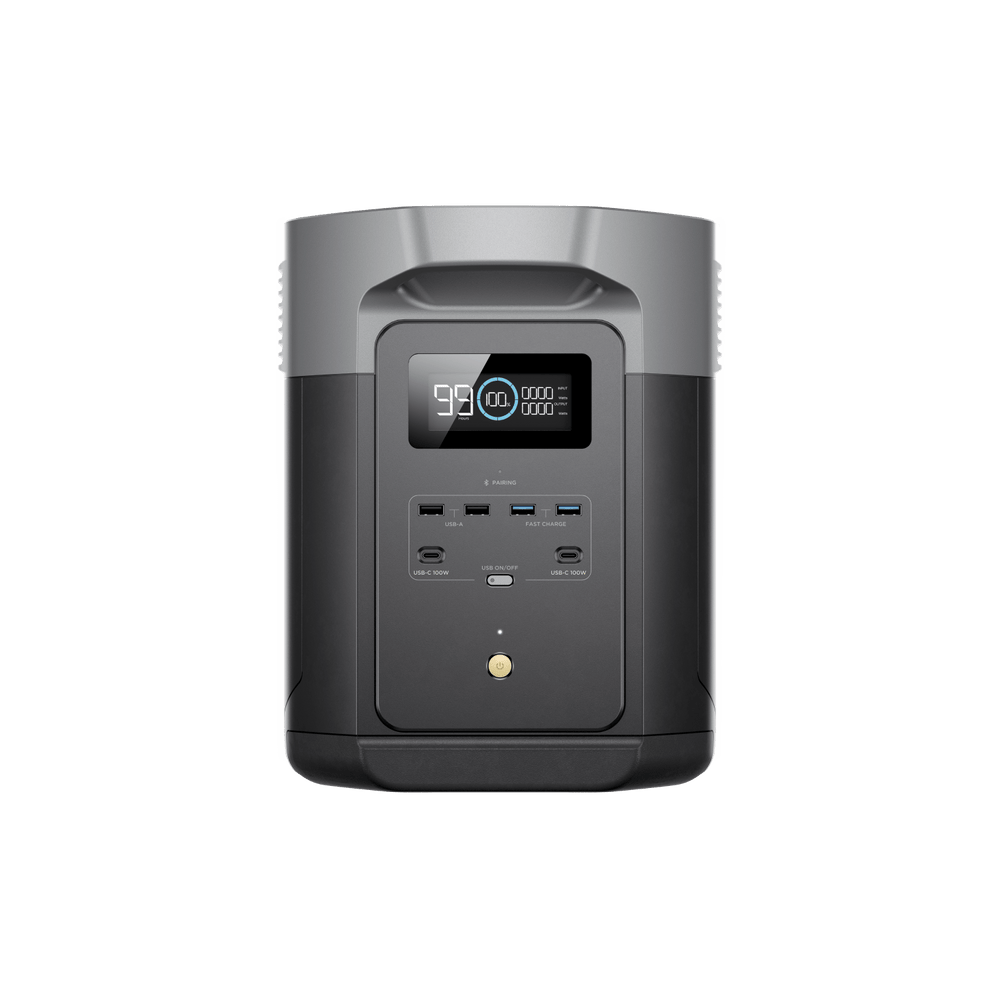
EcoFlow DELTA 2 Max
2,048Wh LiFePO4 • 2,400W AC • Dual 500W MPPT
- Massive 4,800W surge handles 1/2 HP basement sump pumps effortlessly
- Dual independent 500W MPPT inputs maximize solar harvesting in partial shade
- Whisper-quiet under 30 dB operation allows bedside deployment for CPAP users
Check Best Price on Amazon →

EcoFlow DELTA Pro 3
4,096Wh to 48kWh • Native 120V/240V Split-Phase
- Native 120V/240V split-phase runs 240V well pumps without extra bridge boxes
- Plugs directly into standard 30A home manual transfer switches via NEMA L14-30
- Scalable modular battery ecosystem supports multi-week off-grid autonomy
Check Best Price on Amazon →
Detailed Hardware Reviews: Prepper Field Selections
1. EcoFlow DELTA 2 Max (Best Overall Family Blackout Hub)
For standard single-family homes and apartments, the EcoFlow DELTA 2 Max provides the absolute best combination of size, power, and durability.
With 2,400 Watts of continuous pure sine wave power and a 4,800 Watt surge ceiling, it powers refrigerators, gas furnace blowers, microwave ovens, and full-size medical CPAPs with complete stability. Its dual independent MPPT solar charge controllers allow preppers to split solar arrays between east-facing and west-facing windows or yards, capturing sunlight from sunrise to sunset.
2. EcoFlow DELTA Pro 3 (Best 240V Whole-House Station)
If your rural homestead or suburban home relies on a 240V deep-well water pump or heavy central heating, the EcoFlow DELTA Pro 3 is the premier choice.
Unlike older systems that require purchasing two separate consoles and a complex parallel synchronization cable, the DELTA Pro 3 delivers native 120V/240V split-phase power from a single rolling console. Equipped with a standard NEMA L14-30 30-amp outlet, it integrates seamlessly into home transfer switches, powering critical household circuits for days without single-phase balancing headaches.
Critical Prepping Mistakes to Avoid
- Relying Exclusively on Rooftop Solar in Snow: Heavy winter snowstorms coat solar panels in inches of ice, reducing solar harvest to zero for days. Always maintain a backup dual-fuel inverter generator or extra expansion battery packs.
- Leaving Inverter Standby Switches ON: The internal inverter on a power station burns 15W to 35W idling. Over 24 hours, this wastes up to 840Wh of precious emergency power. Turn the AC master switch OFF whenever you are not actively running appliances!
- Failing to Test Transfer Cables Before the Storm: Never wait until the power grid fails to test your generator cords, solar extension wires, and transfer switch circuits. Run a simulated 2-hour blackout test in daylight.
- Storing Lithium Batteries in Freezing Garages: While batteries can safely discharge in sub-zero cold, charging a frozen battery destroys lithium cells permanently. Always keep your emergency units indoors at room temperature.
Frequently Asked Questions (FAQ)
How many days of power does a 2,000Wh station provide during a blackout?
With proper energy discipline, a 2,048Wh power station easily sustains a family for 2 to 3 days. By duty-cycling your refrigerator (running 45 minutes on, 90 minutes off) and charging mobile devices through DC USB-C ports, daily energy consumption drops to approximately 650Wh to 800Wh per day.
Can a portable power station run a natural gas home furnace?
Yes! A modern natural gas or propane home furnace uses gas for heat, but requires 300W to 600W of electricity to power its internal draft inducer and air distribution blower motor. When connected through a manual transfer switch, a 2,000Wh power station will cycle your home furnace for 12 to 18 hours.
Is it safe to operate a power station inside a bedroom?
Yes, 100%. Portable power stations produce zero emissions, zero exhaust fumes, and zero carbon monoxide. Furthermore, top-tier units operate at whisper-quiet sound levels (under 30 dB), making them completely safe for indoor bedroom deployment.
How often should I cycle my power station to keep the battery healthy?
For LiFePO4 power stations stored at 50% to 60% SoC, we recommend performing a maintenance cycle once every 6 months. Plug the unit into an AC wall outlet to charge it to 100%, discharge it down to 20% using a household appliance (like a space heater or coffee maker), and recharge it back to 50% for ongoing storage.