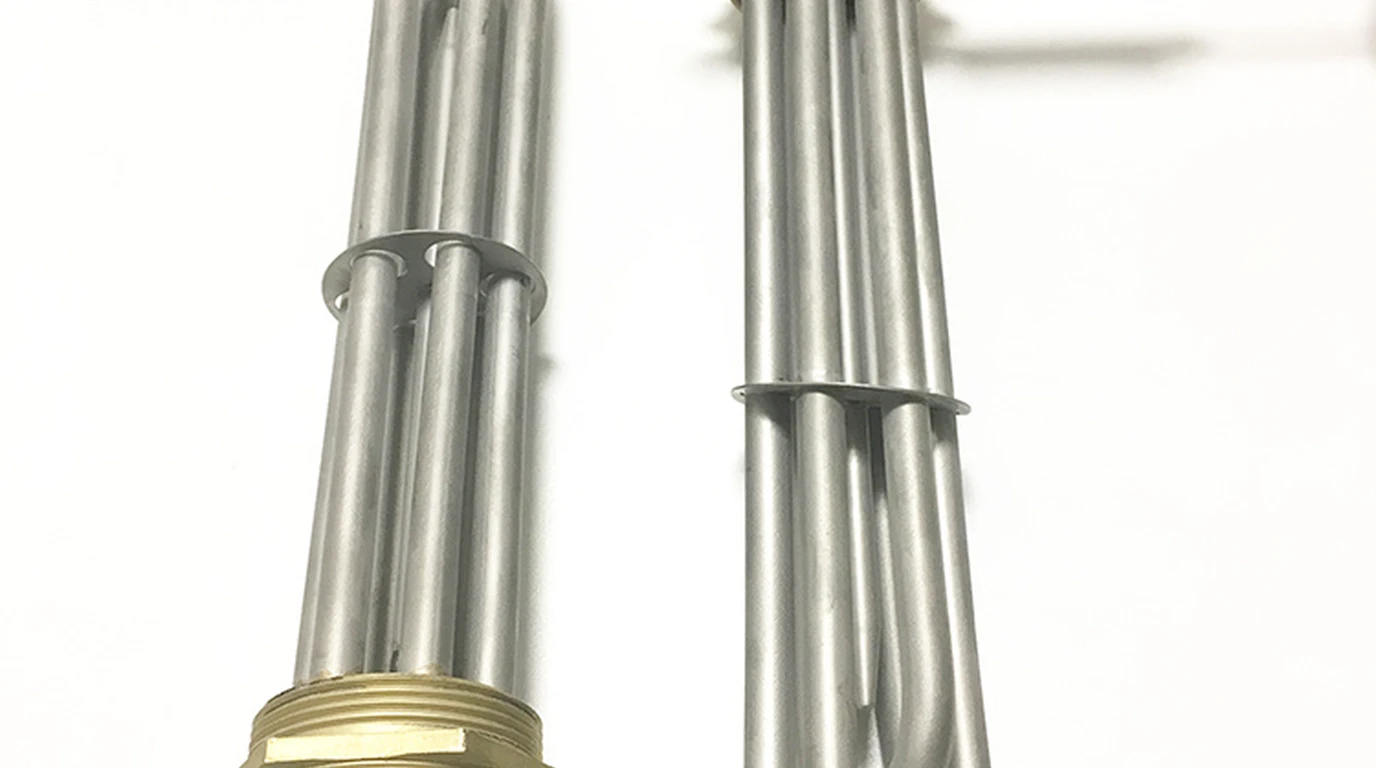
Water heating remains one of the most accessible ways for off-grid homesteaders, ranchers, and DIY solar builders to divert surplus photovoltaic energy. Instead of throttling charge controllers when batteries reach full absorption, builders routinely dump excess solar power into 48V DC immersion heating elements installed inside domestic hot water tanks, livestock stock tanks, and rainwater cisterns.
However, the rapid influx of uncertified, direct-imported electrical hardware on major e-commerce platforms has introduced severe safety hazards into the renewable energy sector.
In recent regulatory enforcement actions, the U.S. Consumer Product Safety Commission (CPSC) issued sweeping nationwide recalls for thousands of immersion water heaters—most notably units branded under the Lakkzoom moniker alongside dozens of identical generic bucket heaters. These consumer appliances were implicated in catastrophic structure fires, melted containment vessels, and severe electrical shock incidents.
For off-grid engineers, homesteaders, and livestock caretakers, understanding the forensic mechanisms behind these failures is not merely an academic exercise. Submerging high-power electrical heating elements into conductive water vessels creates an unforgiving environment where a single manufacturing shortcut or missing equipment ground can prove fatal.
This technical advisory provides an exhaustive teardown of the Lakkzoom and generic immersion heater failures, explains the physics of dielectric breakdown, and outlines the mandatory engineering standards for selecting, wiring, and protecting low-voltage DC immersion elements.
Urgent Safety Advisory: The Immersion Heater Hazard
The CPSC safety recalls targeted portable immersion heaters commonly advertised as “1500W Submersible Bucket Heaters” for camping, farm livestock troughs, and construction job sites.
+-----------------------------------------------------------------------------------+
|                        ANATOMY OF A RECALLED IMMERSION HEATER                     |
+-----------------------------------------------------------------------------------+
|                                                                                   |
|  [ 3-Prong NEMA Plug ] ---> (Ground Pin Fake / Not Connected Internally)          |
|            |                                                                      |
|            v                                                                      |
|  [ Undersized 18 AWG Cord ] ---> (Copper-Clad Aluminum Melts Under 12.5A Load)     |
|            |                                                                      |
|            v                                                                      |
|  [ Molded Plastic Handle ] ---> (Zero Thermal Cutoff Fuse; Ignites on Dry-Fire)    |
|            |                                                                      |
|            v                                                                      |
|  [ 304 Stainless Tube ] ------> (Thin-Wall Sheath Punctures; 120V Electrifies Tank)|
|                                                                                   |
+-----------------------------------------------------------------------------------+
These devices were marketed to heat 5-gallon buckets, small stock tanks, and baptismal pools within minutes. However, routine field testing and incident investigations revealed three primary failure categories:
- Direct Electrical Shock and Electrocution: Water inside the bucket or trough becomes fully energized at 120V AC due to cracked heating element sheathing and absent equipment grounding.
- Flash Fires and Thermal Runaway: When removed from water while plugged in, or when water levels drop below the heating loop, the elements exceed 1,400°F (760°C) in under 45 seconds, igniting plastic buckets, wooden decks, and barn stalls.
- Melted Cord Sets and Electrical Arcing: Resistance across undersized internal crimps and substandard wiring causes the plastic handle and supply cord to liquefy, creating dead short circuits.
Forensic Engineering Teardown: Why Budget Immersion Heaters Fail
To uncover why these devices fail so catastrophically under load, electrical engineers at GridSpecLab tore down multiple recalled and generic immersion heaters down to their base components.
Substandard Conductors and Resistive Heating ()
A 1,500-watt appliance operating on a standard 120V AC circuit draws a steady-state current of 12.5 Amperes:
Under the National Electrical Code (NEC), continuous or prolonged loads exceeding 10 Amperes require a minimum of 16 AWG or 14 AWG pure copper conductors.
Our teardown revealed that recalled units consistently employed 18 AWG Copper-Clad Aluminum (CCA) wiring:
- Aluminum possesses approximately 61% of the electrical conductivity of copper, resulting in substantially higher internal resistance per foot.
- At 12.5 Amperes, power dissipation () within the thin supply cord causes the conductor temperature to exceed 160°F (71°C) along its entire length.
- The PVC jacket softens, emits acrid plasticizers, and breaks down near the handle strain relief, exposing bare energized conductors.
The Complete Absence of Thermal Cutoff Fuses
In certified appliances (governed by UL 499 or UL 1081 standards), heating elements must incorporate an internal, non-resettable Thermal Cutoff (TCO) fuse or a bi-metallic high-limit thermostat.
If the heating element is accidentally energized in open air—a condition known as dry-firing—the TCO senses temperatures exceeding 220°F (104°C) and permanently severs electrical continuity.
In the recalled budget heaters, zero thermal protection devices were present. The nichrome resistance wire was crimped directly to the power leads inside a flammable thermoplastic handle. In our open-air bench test, an un-submerged element reached cherry-red incandescence (1,380°F) in just 38 seconds, completely incinerating its plastic guard and dripping flaming polypropylene droplets onto the workbench.
The Deadly Absence of Internal Equipment Ground Bonding
By far the most dangerous flaw identified in generic immersion heaters is the counterfeit ground path.
       +-------------------------------------------------------------+
       |             THE DEADLY GROUND FAULT PATHWAY                 |
       +-------------------------------------------------------------+

          120V AC Line In o-----+
                                |
                               v
                     [ Heating Element ] (Cracked Sheath Under Water)
                               |
                               v
                     [ ENERGIZED WATER ] 120V AC Hot Potential
                               |
                               v
          [ Unsuspecting Person or Animal Touches Water ]
                               |
                               v
               (Shock Current Flows Through Body)
                               |
                               v
                     [ Earth Ground / Soil ]
On legitimate 3-prong electrical equipment, the round grounding pin must be bonded with zero electrical resistance directly to the outer metallic sheath of the immersion tube. If water breaches the element, current immediately shunts through the equipment ground conductor back to the panel, instantly tripping the upstream circuit breaker or GFCI.
In the Lakkzoom and generic marketplace units examined:
- The power cord featured a standard 3-prong NEMA 5-15P plug, creating the false impression of an equipment ground.
- Inside the handle, the green ground wire was either completely clipped off, left floating in mid-air, or weakly glued to a decorative stainless plate without bare-metal electrical contact.
- When the thin stainless element sheath developed microscopic stress cracks under thermal cycling, water infiltrated the compacted magnesium oxide (MgO) insulating powder.
- The water inside the container became an energized 120V AC conductor. Because there was no return path to ground through the cord, circuit breakers did not trip. Any person or animal touching the water completed the circuit to earth ground, absorbing a lethal electrical shock.
Engineering Specifications for Safe Low-Voltage DC Immersion Elements
For off-grid solar builders constructing dump load systems or converting domestic water tanks to run off battery banks, avoiding these hazards requires abandoning portable bucket heaters entirely.
Instead, builders must install permanent, screw-plug industrial immersion heating elements specifically engineered for water tank deployment.
+-----------------------------------------------------------------------------------+
|                        SAFE DC IMMERSION ELEMENT SPECIFICATIONS                   |
+-----------------------------------------------------------------------------------+
|  Mechanical & Electrical Parameter  | Standard Requirement for Off-Grid Tanks     |
+-------------------------------------+---------------------------------------------+
|  Mounting Thread Standard           | 1.0" or 1.25" Male NPT / NPSM Threaded Base |
|  Flange Material                    | Machined Brass or Solid 304/316 Stainless   |
|  Sheath Metallurgy                  | Incoloy 800/840 or Passivated 316L Stainless|
|  Watt Density Rating                | Ultra-Low Watt Density (< 50 W / sq inch)   |
|  Grounding Terminal                 | Dedicated Welded Copper/Brass Ground Stud   |
|  Safety Certifications              | UL 499, CSA C22.2, or CE Compliant Component|
+-------------------------------------+---------------------------------------------+
Metallurgy: Incoloy vs Stainless Steel
Submersible heating elements endure continuous thermal expansion, mineral scaling (calcium and magnesium carbonate), and chemical oxidation:
- Standard Copper Sheaths: Acceptable only in clean, municipal drinking water. In acidic well water or untreated stock tanks, copper corrodes rapidly.
- 304 Stainless Steel: Excellent baseline corrosion resistance; suitable for agricultural troughs and rainwater storage.
- Incoloy 800 / 840 (Super-Alloy): The premier engineering standard. Incoloy is a nickel-iron-chromium alloy that resists pitting, chloride stress-corrosion cracking, and high-temperature oxidation. It survives intermittent low-water conditions far better than stainless steel.
Sizing DC Elements with Ohm’s Law
Unlike AC utility grids where voltage is fixed at 120V or 240V, low-voltage off-grid systems operate across dynamic battery voltages: 12V, 24V, or 48V nominal.
The power output of an immersion resistor is strictly governed by Ohm’s Law:
Resistance (Ohms)
  3.0 +-----------------------------------------------------------------------+
  2.5 |                                                         * (48V: 2.62 Ω)
  2.0 |                                                                       |
  1.5 |                                                                       |
  1.0 |                                                                       |
  0.5 |                                   * (24V: 0.65 Ω)                     |
  0.0 +-------* (12V: 0.16 Ω)-------------------------------------------------+
             12V                         24V                         48V
                                 Nominal Battery Voltage
(Resistance Required for 1,000W Output)| Nominal Voltage | Actual Pack Voltage | Target Dump Power | Operating Current | Mandatory Element Resistance |
|---|---|---|---|---|
| 12V DC | 13.6 V | 300 Watts | 22.1 A | 0.62 Ohms |
| 24V DC | 27.2 V | 600 Watts | 22.1 A | 1.23 Ohms |
| 48V DC | 54.4 V | 1,000 Watts | 18.4 A | 2.96 Ohms |
| 48V DC | 54.4 V | 1,500 Watts | 27.6 A | 1.97 Ohms |
(Note: Never connect a 120V AC or 240V AC element directly to a 48V battery bank. Because power drops with the square of the voltage, a 240V 4,500W element connected to 48V produces only ).
Tank Geometry and the Prevention of Dry-Fire Flash Fires
Even an industrial-grade Incoloy heating element will rapidly fail if energized without liquid surrounding the sheath. Water conducts heat away from the sheath at a rate thousands of times faster than air.
When dry-fired in open air, the surface temperature of a standard watt-density element spikes to 1,200°F (650°C) within two minutes, causing the internal nichrome wire to oxidize and melt open.
       +-------------------------------------------------------------+
       |           PROPER TANK IMMERSION HEATER GEOMETRY             |
       +-------------------------------------------------------------+

         [ Tank Cold Inlet ]
                  |
                  v
         +-------------------------------------------------------+
         |                                                       |
         |   [ Hot Water Upper Stratification Zone ]             |
         |                                                       |
         |-------------------------------------------------------|
         |                                                       |
         |   [ Redundant High-Level Float Switch ]               |
         |                                                       |
         |-------------------------------------------------------|
         |                                                       |
         |   [ Mandatory Low-Water Cutoff Float Switch ]         |
         |                                                       |
         |-------------------------------------------------------|
         |                                                       |
         |   ====================== [ Incoloy Screw-Plug Element]|
         |   (Mounted in Bottom 1/3 of Tank Below Low-Water Line)|
         |                                                       |
         |   [ Cold Water Sump & Sediment Drain ]                |
         +-------------------------------------------------------+
Installation Rules for Off-Grid Tanks
- Mount in the Bottom Third: Always thread the immersion element into a lower spud or tank bung located within the lowest 30% of the water column. This guarantees the element remains fully submerged even when the tank is partially depleted.
- Horizontal Orientation: Screw-plug elements must be installed horizontally. Vertical installation creates localized air pockets around the upper bend of the heating loop, causing rapid element burnout.
- Hardwired Low-Water Float Switch: Wire a normally-open (NO) heavy-duty stainless steel float switch in series with the heater control relay. If tank water levels drop below the element level, the float switch drops, immediately disconnecting control power before a dry-fire can occur.
Electrical Protection Architecture: DC Breakers and Ground Fault Interrupters
Operating high-current DC water heating circuits requires specialized electrical switchgear. Alternating current naturally passes through zero volts sixty times per second, extinguishing electrical arcs automatically. Direct current maintains constant voltage and current, creating intense, sustained plasma arcs that will incinerate standard AC switches and circuit breakers.
+-----------------------------------------------------------------------------------+
|                        SAFE DC WATER HEATER SCHEMATIC                             |
+-----------------------------------------------------------------------------------+
|                                                                                   |
|  [ 48V LiFePO4 Battery ]                                                          |
|            |                                                                      |
|            +---[ Heavy-Duty Class T Fuse (e.g. 200A) ]                            |
|            |                                                                      |
|            v                                                                      |
|  [ Polarized DC Breaker (30A Din-Rail) ]                                          |
|            |                                                                      |
|            v                                                                      |
|  [ Heavy-Duty DC Contactor / SSR with Arc Suppression ]                           |
|            |                                                                      |
|            +---[ Thermostatic High-Limit Snap Switch (170°F ECO) ]                |
|            +---[ Low-Water Float Switch Interlock ]                               |
|            |                                                                      |
|            v                                                                      |
|  [ Incoloy Screw-Plug Element ] ===(Welded Ground Stud)===> [ Main Earth Ground ] |
|                                                                                   |
+-----------------------------------------------------------------------------------+
Mandatory Protection Components
- Polarized DC Circuit Breakers: Install a dedicated DIN-rail DC circuit breaker (such as a MidNite Solar MNEPV series or Carling Technologies breaker) sized at 125% of the element’s continuous amperage. These breakers contain permanent magnetic blowouts that physically deflect and extinguish DC plasma arcs.
- Equipment Grounding Conductor: Run a dedicated green insulated grounding wire (sized to match the circuit conductors, minimum 10 AWG) from the element’s ground stud directly to the main system grounding busbar. The metal water tank shell must also be bonded to the same ground reference.
- Emergency Cut-Off (ECO) Thermostat: Never connect an immersion element without a mechanical high-limit safety thermostat. If the primary electronic temperature controller or solid-state relay (SSR) fails in the closed position, the mechanical ECO will snap open at 170°F (77°C), preventing the water tank from boiling into a dangerous steam bomb.
Systematic Checklist for Safe Off-Grid Water Heating
Before energizing any water heating installation on an off-grid homestead, verify every item on this pre-commissioning checklist:
+-----------------------------------------------------------------------------------+
|                     COMMISSIONING SAFETY AUDIT CHECKLIST                          |
+-----------------------------------------------------------------------------------+
|  [ ] 1. No Portable Heaters: Zero uncertified bucket or drop-in heaters in service |
|  [ ] 2. Certified Component: Screw-plug element possesses UL, CSA, or CE markings  |
|  [ ] 3. Sheath Integrity: Incoloy or 316L stainless steel (no bare copper in well) |
|  [ ] 4. Ground Continuity: Ground stud to tank shell measures < 0.1 Ohm resistance|
|  [ ] 5. DC-Rated Switchgear: Circuit breaker and contactor are fully DC-rated      |
|  [ ] 6. Submersion Interlock: Low-water float switch physically prevents firing    |
|  [ ] 7. High-Limit ECO: Mechanical high-temperature cutoff switch installed        |
|  [ ] 8. Pressure Relief Valve: ASME-rated Temperature & Pressure (T&P) valve set  |
|         to 150 PSI / 210°F installed on closed domestic tanks                      |
+-----------------------------------------------------------------------------------+
By adhering to these rigorous industrial standards, off-grid builders safely harness surplus solar energy for water heating without exposing their homes, families, or livestock to the catastrophic hazards of uncertified immersion equipment.