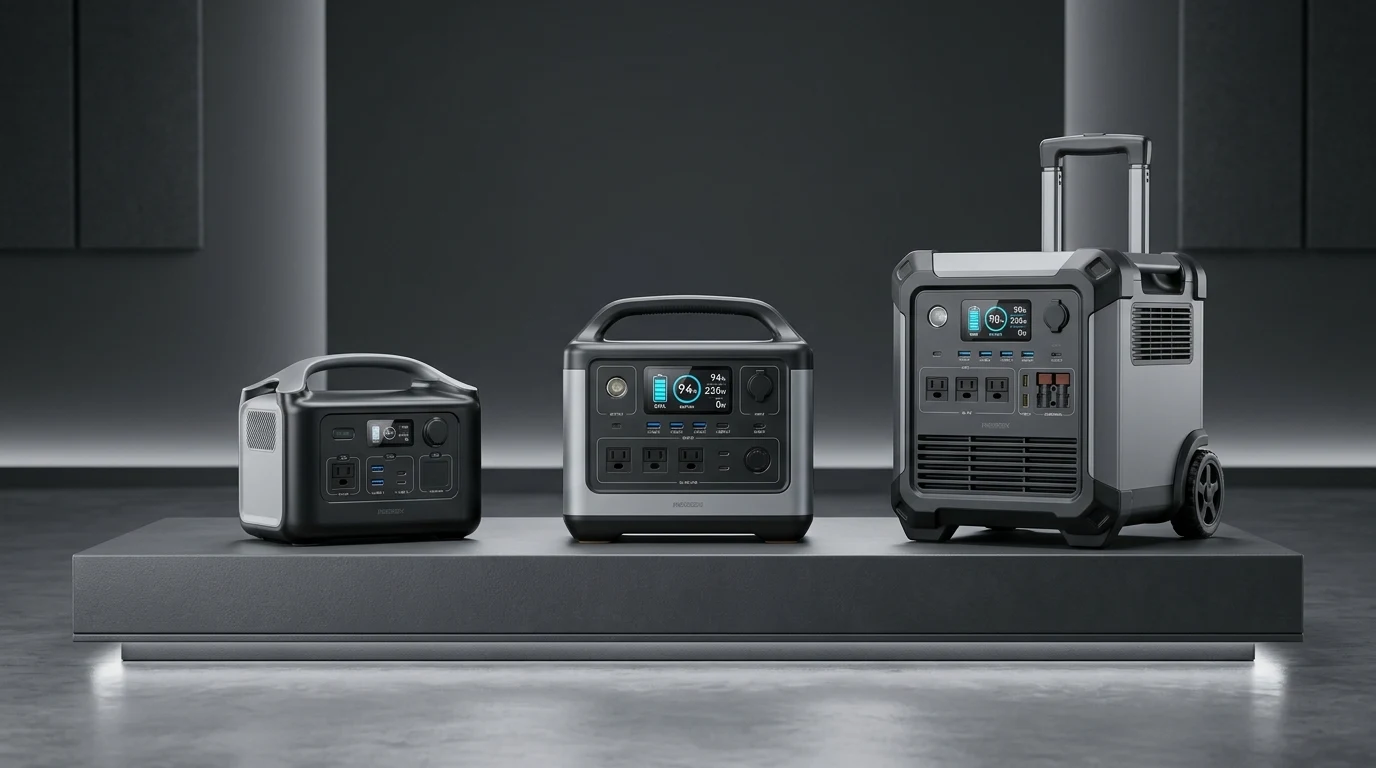
Portable power stations (frequently marketed as “solar generators”) have evolved from niche camping gadgets into indispensable home energy assets. Whether you are preparing for hurricane-induced power outages, seeking off-grid independence in a camper van, or keeping medical CPAP machines humming through the night, a battery station provides clean, silent, emissions-free electricity at the push of a button.
However, navigating the power station market in 2026 can be daunting. With dozens of brands advertising acronyms like MPPT, LiFePO4, LRA, UPS, and BMS—alongside wildly varying price tags from $200 to $3,500—many first-time buyers either waste money on an oversized unit they cannot lift or buy an undersized model that faults the moment their refrigerator compressor kicks on.
At GridSpecLab, we have bench-tested dozens of power stations across every major manufacturer—including EcoFlow, Anker SOLIX, Bluetti, Jackery, and Pecron.
In this comprehensive guide, we cut through marketing hyperbole to provide a first-principles buying roadmap. We explain how to decode technical specifications, size your electrical loads accurately, avoid costly pitfalls, and select the ideal portable power station for your specific needs.
Ultralight & Mobile
Laptops, camera gear, camping LED lights, single-night CPAP without humidifier. Weighs under 12 lbs.
The Sweet Spot (Best Value)
Runs residential fridges for 12–18 hrs, multi-night CPAP, power tools, blenders. Weighs 25–35 lbs.
Heavy-Duty Emergency
Microwaves, coffee makers, space heaters, sump pumps, 24–36 hr fridge backup. Weighs 45–65 lbs.
Whole-Home Split-Phase
Native 240V, connects to manual transfer switch to run well pumps and central subpanels. Rollable wheeled units.
Understanding the Core Specs: Watts vs. Watt-Hours
The single most common mistake beginners make is confusing Watts () with Watt-hours (). While they sound similar, they measure two completely different physical properties:
Watts (W)       = Flow rate of electricity (Speedometer)  ──► Determines WHAT appliances can turn on.
Watt-hours (Wh) = Total volume of energy (Fuel Tank)     ──► Determines HOW LONG those appliances run.
Inverter Continuous Running Watts ()
The AC inverter converts DC battery voltage into 120V household electricity. The inverter’s continuous watt rating dictates the maximum electrical load you can plug in at any single second:
- If your kitchen microwave requires 1,500 Watts, plugging it into a 600W power station will instantly trigger an overload warning and shut the unit down, regardless of how large the battery is.
- For versatile emergency backup, look for an inverter rated at minimum 1,800W to 2,400W continuous, which covers virtually every standard 15-Amp household wall outlet appliance.
Inverter Surge Watts (Peak / Inrush Power)
Appliances containing electric induction motors—such as refrigerators, deep freezers, sump pumps, and circular saws—demand a momentary burst of power called Locked Rotor Amps (LRA) when the motor shaft starts from a standstill.
This initial inrush spike lasts only 100 to 300 milliseconds, but can reach 3 to 6 times the appliance’s continuous running wattage:
- A refrigerator that runs at 150 Watts often demands 1,000W to 1,200W of momentary surge to start its compressor.
- A quality power station should feature a surge rating that is at least 1.5x to 2x its continuous rating (e.g., a 2,000W inverter capable of absorbing a 4,000W momentary spike).
Battery Capacity in Watt-Hours ()
Watt-hours represent the total stored chemical energy inside the battery pack. One Watt-hour equals one Watt of electrical power consumed continuously for one hour.
- A 1,024Wh battery can theoretically power a 100-Watt TV for roughly 10 hours ( before accounting for efficiency losses).
- When comparing prices, always calculate the Dollar-per-Watt-Hour ($/Wh) ratio (). In 2026, premium LiFePO4 power stations average between $0.50/Wh and $0.85/Wh.
The Four Capacity Tiers: Which Size Do You Actually Need?
To choose the right model, match your planned use cases to one of the four industry standard capacity tiers:
| Capacity Tier | Typical Battery Size | Inverter Output | Weight Range | Best Application |
|---|---|---|---|---|
| Compact / Ultralight | 250Wh – 512Wh | 300W – 600W | 7 – 14 lbs | Hiking, drone charging, bedside CPAP, mobile office. |
| Mid-Size All-Rounder | 1,000Wh – 1,500Wh | 1,500W – 2,000W | 24 – 33 lbs | Overnight fridge backup, camping, power tools, blenders. |
| Heavy-Duty Emergency | 2,000Wh – 2,500Wh | 2,400W – 3,000W | 48 – 65 lbs | Multi-day storm blackouts, microwaves, sump pumps, space heaters. |
| Whole-Home Split-Phase | 3,800Wh – 6,000Wh+ | 3,600W – 7,200W (240V) | 105 – 190 lbs | Transfer switch home subpanels, 240V well pumps, RV 50A hookup. |
Five Critical Engineering Features to Inspect Before Buying
Not all power stations are built to the same engineering standard. Before clicking “buy,” verify these five non-negotiable specifications:
Battery Chemistry: LiFePO4 vs. Legacy NMC
In the early days of portable power stations (2018–2021), most units used Nickel Manganese Cobalt (NMC) cells because they offered high energy density and lightweight packaging. However, NMC cells degrade rapidly:
- Ternary NMC Lifespan: ~500 to 800 cycles until capacity drops to 80%. If used frequently, the battery is degraded within 2 to 3 years.
- Lithium Iron Phosphate (LiFePO4) Lifespan: Rated for 3,000 to 5,000+ full discharge cycles. Even after 10 years of daily cycling, the battery retains over 80% of its original capacity. Furthermore, LiFePO4 is chemically inert and virtually immune to thermal runaway or fire.
[!IMPORTANT] Never buy an NMC-based power station in 2026 unless ultralight weight is your only priority (e.g., carrying it in a backpack). Always insist on LiFePO4 (LFP) chemistry for reliability and safety.
Pure Sine Wave vs. Modified Sine Wave
Cheap power stations cut manufacturing costs by utilizing “modified sine wave” (square wave) inverters. Modified sine wave electricity contains severe harmonic distortion that can permanently damage sensitive electronics:
- AC motors in refrigerators and fans run hot, buzz loudly, and consume up to 30% more power.
- Sensitive medical CPAP machines, variable-speed furnace blowers, and digital audio mixers will often shut off or produce erratic behavior.
- Every reputable unit recommended by GridSpecLab features a certified Pure Sine Wave inverter with Total Harmonic Distortion (THD) under 3%.
Solar MPPT Charge Controller Capabilities
If you plan to recharge your battery off-grid, check the unit’s Maximum Power Point Tracking (MPPT) solar input parameters:
- Voltage Window (): Look for a wide voltage window (e.g., 11V–60V for 1kWh units, or 30V–150V for 2kWh+ units). A wide voltage range allows you to connect inexpensive residential rigid solar panels in series rather than being restricted to proprietary portable folding panels.
- Maximum Solar Wattage: A 1,000Wh power station with only a 200W solar input takes 6 to 7 hours of direct summer sun to recharge. A unit with a 500W to 1,000W dual MPPT input can fully recharge from empty in under 2.5 hours.
Uninterruptible Power Supply (UPS) Transfer Speed
If you intend to keep your power station plugged into the wall 24/7 to safeguard a desktop PC, NAS server, or CPAP machine, inspect its transfer switch speed:
- True UPS functionality requires a transfer speed of under 20 milliseconds (below 20ms).
- High-end models from EcoFlow and Anker achieve under 10ms (EPS mode), meaning sensitive electronics will not reboot or flicker when grid power drops.
Inverter Standby Tare Loss & Low-Load Auto-Off
Every inverter consumes parasitic power simply sitting idle with its power switch turned on. In our testing facility, we have measured standby tare loss ranging from 12 Watts to over 45 Watts:
- If an inverter draws 35W of tare loss and you plug in a 15W CPAP machine overnight, the inverter actually pulls 50 Watts total—depleting a 500Wh battery in just 8 to 9 hours!
- Look for units that allow you to customize auto-sleep timers and disable unnecessary LCD backlights via their mobile companion app.
Sizing Formula: Calculate Your Exact Runtime Before Buying
To determine the exact battery size required for your home or expedition, use our verified engineering formula that accounts for inverter conversion efficiency () and internal tare loss ():
Worked Example: Running an Inverter Refrigerator
A modern full-size residential refrigerator typically consumes 150 Watts when its compressor is running, with an average duty cycle of 35% (running roughly 21 minutes per hour), resulting in an effective continuous draw of approximately 55 Watts:
For an Anker SOLIX C1000 Gen 2 (1,024Wh capacity, 15W tare loss):
With a 1,024Wh battery, you can safely preserve your food through an overnight 12-hour blackout. If you need 24+ hours of autonomy without solar recharging, step up to a 2,048Wh unit (like the EcoFlow DELTA 2 Max or Bluetti AC200L), which yields over 25 hours of continuous runtime.
Top Recommended Portable Power Stations for 2026
Based on extensive laboratory bench tests, thermal imaging, inverter harmonic analysis, and real-world durability audits, here are the top three portable power stations available today:
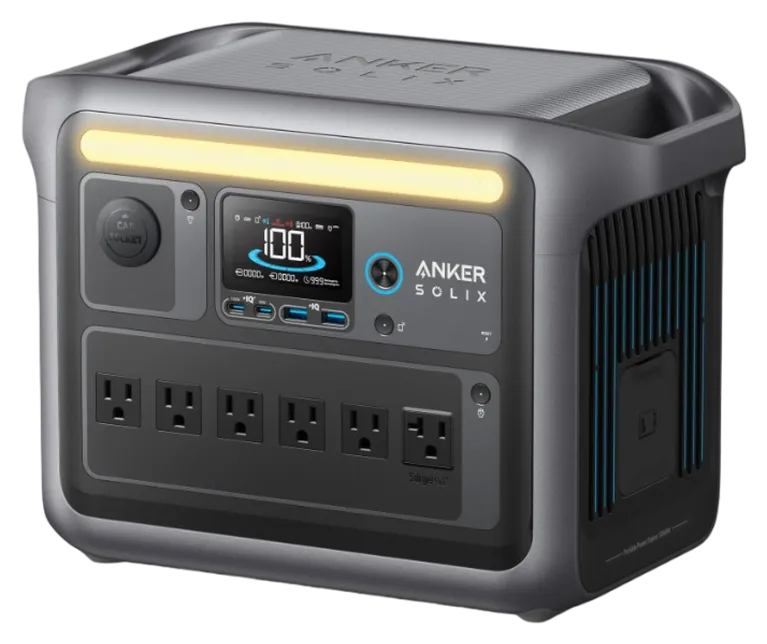
Anker SOLIX C1000 Gen 2
1,024Wh LiFePO4 • 2,000W AC • 600W Solar
- InfiniPower industrial architecture rated for 10-year lifespan
- Rapid 58-minute AC wall recharge from 0% to 100%
- Sub-20ms UPS transfer with whisper-quiet operation under load
Check Best Price on Amazon →
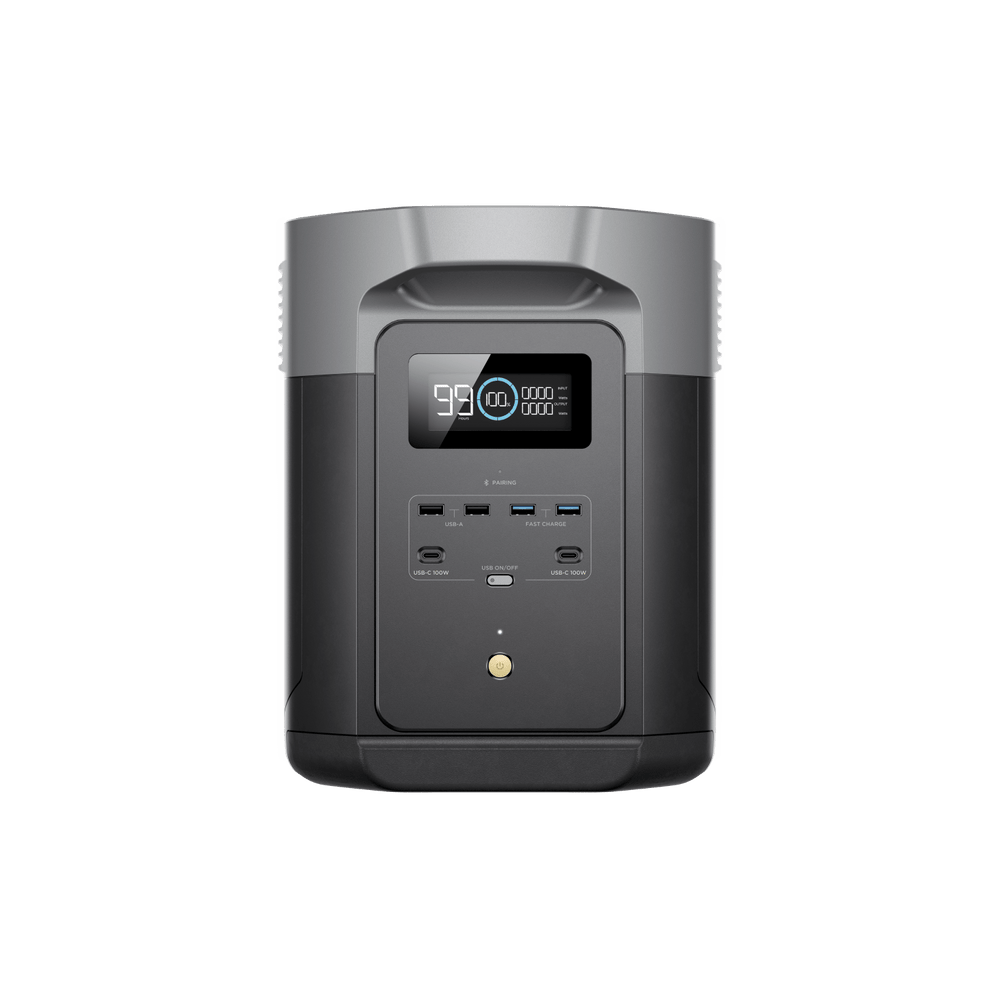
EcoFlow DELTA 2 Max
2,048Wh LiFePO4 • 2,400W AC (4,800W Surge) • Dual MPPT
- Dual independent 500W MPPT inputs (1,000W total solar)
- Expandable up to 6,144Wh with plug-and-play extra batteries
- Industry-leading mobile app with custom charge limiters
Check Best Price on Amazon →
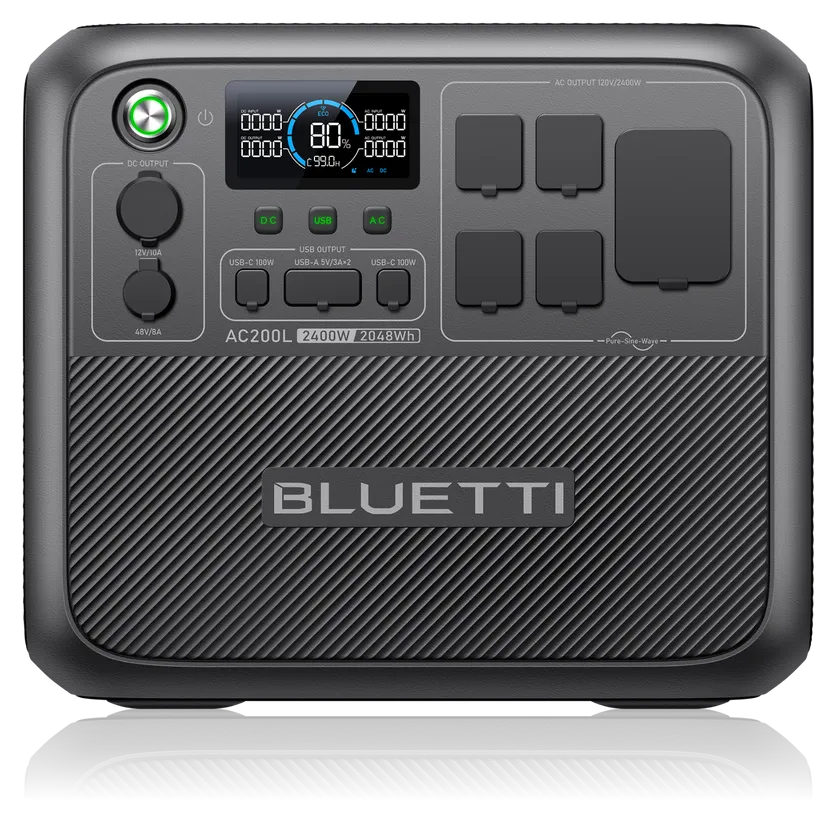
Bluetti AC200L
2,048Wh LiFePO4 • 2,400W AC • 1,200W Solar (145V Voc)
- Massive 145V open-circuit voltage accepts residential panels
- Built-in 48V NEMA TT-30 RV plug for campers and travel trailers
- Ultra-robust industrial chassis with 5-year full factory warranty
Check Best Price on Amazon →
1. Anker SOLIX C1000 Gen 2 (Best Overall 1kWh Value)
If you are buying your first portable power station for camping, emergency home readiness, or desktop UPS duties, the Anker SOLIX C1000 Gen 2 is our benchmark recommendation. At just 24 lbs, it packs a robust 2,000W pure sine wave inverter and 1,024Wh of automotive-grade LiFePO4 cells. In our noise chamber, its fans remained under 30 dB during moderate 500W loads, making it an ideal companion for bedroom CPAP backup.
2. EcoFlow DELTA 2 Max (Best Expandable 2kWh Workhorse)
For households preparing for severe storms or multi-day blackouts, the EcoFlow DELTA 2 Max provides superior power headroom. Its 2,400W inverter effortlessly powers microwave ovens, coffee makers, and refrigerators concurrently. What sets it apart is its modularity: you can daisy-chain two extra smart batteries to expand storage up to 6,144Wh without buying a second inverter. Furthermore, its dual 500W MPPT inputs allow you to face one solar string east and another south for maximum all-day harvest.
3. Bluetti AC200L (Best High-Speed Solar Charging Pick)
The Bluetti AC200L is an off-grid builder’s dream. Unlike competitors that cap solar input at 60V, the AC200L features an industrial 145V / 1,200W MPPT charge controller. This means you can purchase inexpensive 400W rigid residential solar panels from a local supplier, wire three of them in series, and charge the entire 2,048Wh station in under two hours of sunlight. It also features a dedicated 30-Amp TT-30 outlet that plugs directly into travel trailers.
Six Costly Buying Mistakes to Avoid
- Buying an NMC Battery Station on Clearance: Retailers frequently discount older models built with ternary NMC cells. While saving $150 seems appealing, an NMC unit will degrade to 80% health in under 800 cycles, whereas a LiFePO4 model lasts over 3,500 cycles.
- Ignoring Locked Rotor Amps (LRA) on Refrigerators: If you plan to power an older compressor-based refrigerator or sump pump, a 600W or 800W inverter will trip into overload protection during motor startup. Always choose a unit with at least 1,500W to 1,800W continuous output.
- Leaving Inverter AC Buttons Switched On 24/7: Even with nothing plugged in, leaving the AC inverter active burns between 15W and 45W of standby tare loss continuously. Over 24 hours, tare loss alone can drain 30% to 50% of your battery!
- Purchasing Inflexible Proprietary Solar Panels: Avoid brands that use non-standard barrel plugs or proprietary solar connectors. Stick to power stations with standard XT60 or Anderson inputs that easily adapt to industry-standard MC4 solar connectors.
- Storing the Unit at 100% or 0% in an Unconditioned Garage: Lithium batteries undergo accelerated calendar degradation if stored fully charged in high summer heat (>95°F), or risk permanent bricking from self-discharge if stored at 0%. Store your unit between 50% and 60% State of Charge in a climate-controlled room.
- Forgetting Vehicle Alternator Charging Limitations: Most 12V cigarette lighter car sockets deliver only 96W to 120W (8A to 10A). Recharging a 2,000Wh battery from a car socket takes over 20 hours of continuous driving! If vehicle recharging is important, look into 500W–800W dedicated alternator chargers (like the EcoFlow Alternator Charger).
Frequently Asked Questions (FAQ)
What is the difference between a portable power station and a gas generator?
A portable power station stores energy in a lithium battery. It runs silently, produces zero toxic exhaust fumes, requires zero gasoline or oil changes, and is completely safe to operate indoors or inside a bedroom. A gas generator burns fossil fuel to generate electricity mechanically. While gas generators provide unlimited runtime as long as you have fuel, they produce deadly carbon monoxide, make substantial mechanical noise (65 dB to 85 dB), and cannot be used indoors.
How many solar panels do I need to recharge my power station?
A reliable rule of thumb is to match panel wattage to approximately 30% to 50% of your battery’s total Watt-hour capacity. For a 1,000Wh power station, a 300W to 400W solar array will fully recharge the battery in 3 to 4 hours of good sunlight. For a 2,000Wh station, an 800W to 1,000W array provides rapid 2.5-hour recovery.
Can a portable power station run a full-size home refrigerator?
Yes. Virtually any modern power station with an inverter rated at 1,200 Watts or higher and at least 1,000Wh of capacity can power a standard 20 to 25 cubic-foot residential refrigerator. A typical refrigerator cycles its compressor on and off, averaging 40W to 60W of continuous consumption, yielding 12 to 18 hours of runtime on a 1,000Wh battery and 24 to 36 hours on a 2,000Wh battery.
Can I leave my power station plugged into the AC wall outlet continuously?
Yes, provided the unit supports pass-through charging with an automatic EPS / UPS bypass. In modern power stations from Anker, EcoFlow, and Bluetti, AC power from the wall bypasses the battery entirely to power your connected appliances directly. The battery only engages within milliseconds if utility grid power drops.