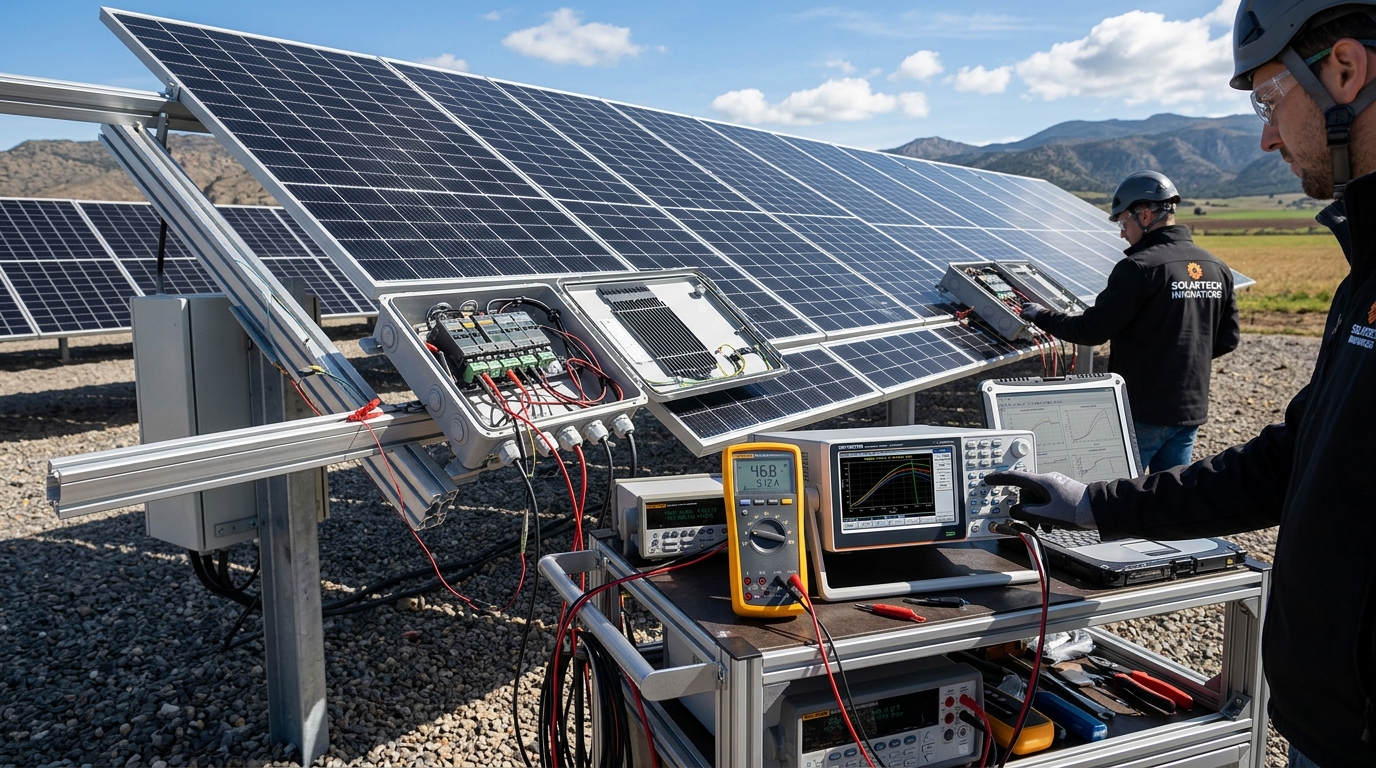
Every single second, the sun bathes planet Earth in more clean, radiant energy than humanity consumes in an entire year. Yet for most people, the mechanism of turning silent, motionless sunlight into high-voltage electricity capable of running a 240V air conditioner or charging an electric vehicle feels like pure alchemy.
The truth is far more fascinating: photovoltaic power is solid-state quantum physics at work. There are no gears, no turbines, no burning fuel, and zero moving parts.
When a stream of light particles (photons) strikes a precisely engineered slice of doped silicon, it excites electrons into motion. By channeling these energized electrons through microscopic metallic conductors, a solar panel creates an instantaneous, continuous flow of clean Direct Current (DC) electricity.
Whether you are looking to install a grid-tied residential rooftop array, design an off-grid solar homestead, or carry a folding solar panel on an RV expedition, understanding how solar panels work allows you to size systems properly, avoid predatory sales pitches, and maximize your energy harvest.
In this comprehensive guide, we dissect the microscopic architecture of a photovoltaic silicon cell, trace the electrical flow from photon to household wall outlet, and review the top solar hardware on the market today.
A solar panel is an array of semiconductor silicon diodes wired in series. When sunlight strikes the silicon wafer, photons knock electrons free, creating an internal voltage across the p-n junction. A standard residential panel consists of 108 to 144 half-cut cells producing 400W to 455W of DC power. To power household appliances, that DC power must pass through an MPPT charge controller and an inverter to create clean 120V/240V AC electricity.
Calculate Solar Payback Period →
The Photovoltaic Effect: How Light Becomes Electrical Current
The fundamental principle governing all solar technology is the Photovoltaic Effect, first observed in 1839 by French physicist Edmond Becquerel and mathematically explained in 1905 by Albert Einstein (who earned the 1921 Nobel Prize in Physics for his work on the photoelectric effect).
Sunlight is not a continuous fluid; it is composed of countless discrete packets of electromagnetic energy called photons. The energy contained within each photon () is determined by its wavelength ():
Where:
- is Planck’s constant ()
- is the speed of light ()
- is the photon wavelength
When sunlight reaches Earth, photons in the visible and near-infrared spectrum strike the surface of a solar panel. If a photon possesses more energy than the bandgap energy of silicon ( at room temperature), its energy is absorbed by a valence electron bound to a silicon atom.
The photon transfers its energy to the electron, knocking it out of its atomic orbital. This creates two mobile entities inside the crystal:
- A free-floating negative charge: an excited electron ().
- The empty spot left behind: a positive “hole” ().
In an untreated block of pure silicon, that energized electron would simply collide with neighboring atoms, lose its energy as microscopic heat, and recombine with a hole within microseconds. To harness electricity, we must force the electron to travel through an external circuit before it can recombine.
This is accomplished by engineering a P-N Junction.
Anatomy of a Silicon Solar Cell: The P-N Junction
To create a permanent, built-in electrical force field that directs electrons, solar manufacturers intentionally introduce impurities into ultra-pure silicon crystal—a chemical process known as doping.
N-Type Emitter (Negative)
Silicon (4 valence electrons) is infused with Phosphorus (5 valence electrons). The extra unbonded electron floats freely through the lattice, creating a surplus of negative charge carriers.
Carrier Type: Excess Mobile Electrons
The Depletion Zone
Where N-type and P-type meet, electrons diffuse across the border, creating a permanent electrostatic barrier (~0.6V) that acts like a one-way electrical turnstile.
Electric Barrier: ~0.55V to 0.70V DC
P-Type Base (Positive)
Silicon is infused with Boron (3 valence electrons), leaving missing electrons or “holes”. These holes attract returning electrons after they have completed external electrical work.
Carrier Type: Mobile Positive Holes
How the Electron Completes the Circuit
- Absorption: A photon penetrates the front anti-reflective glass coating and hits an electron near the depletion zone.
- Separation: The internal electric field sweeps the excited electron upward into the N-type layer, while the positive hole is pushed downward into the P-type layer. The one-way field prevents the electron from migrating backward across the barrier.
- Collection: Microscopic silver grid lines (called fingers) printed on the front surface collect the stranded electrons. The fingers funnel electrons into wider horizontal metallic strips called busbars.
- Work (Power Delivery): The electrons exit the panel via the negative lead wire, flowing through your charge controller, charging your batteries, or driving your household appliances.
- Recombination: After powering your devices, the exhausted electrons return through the positive lead wire to the panel’s bottom contact plate, safely recombining with the positive holes in the P-type layer.
As long as light continues shining on the panel, this closed-loop cycle repeats billions of times per second.
From Cell to Panel: Why Voltage and Current Scale
A single silicon solar cell produces a fixed electrical voltage of approximately 0.55 to 0.65 Volts DC, regardless of its physical size.
A tiny cell and a giant commercial cell generate the exact same ~0.6V! What changes with surface area is amperage (current), because a larger surface area intercepts more photons per second.
Because 0.6 Volts is too low to charge a 12V, 24V, or 48V battery or drive an AC inverter, manufacturers wire dozens of individual cells together inside a sealed aluminum frame:
| Configuration | Cell Count | Typical Open-Circuit Voltage () | Optimum Working Voltage () | Typical Application |
|---|---|---|---|---|
| Small 12V Nominal Panel | 36 Cells in Series | RVs, boats, small 12V lead/lithium trickle charging | ||
| Standard 24V Residential Panel | 60 Cells / 120 Half-Cells | Residential roof mounts, grid-tied solar microinverters | ||
| Commercial / Utility Panel | 72 Cells / 144 Half-Cells | 48V off-grid hybrid inverters, ground mount arrays |
The Half-Cut Cell Revolution
If you look closely at modern solar panels manufactured today, you will notice that the cells are rectangular rather than square. Modern tier-1 modules use half-cut cell technology:
By using laser slicing to cut standard silicon wafers in half, the current () flowing through each cell is halved (). Because internal resistive heat loss scales with the square of the current (), halving the current cuts internal thermal resistance losses by 75%!
Furthermore, half-cut panels are split into two parallel upper and lower halves. If the lower half of the panel is covered by autumn leaves or snow, the upper half continues generating full power at 50% system capacity—a massive improvement over legacy panels where a single leaf could shut down the entire module.
The Complete Electrical Flow: From Rooftop to Refrigerator
A solar panel alone cannot run your home. The panel is merely the energy harvester in a multi-stage electrical powertrain:
Solar PV Array
Harvests raw photons and produces high-voltage DC electricity (typically 100V to 450V DC across series strings).
MPPT Controller
Tracks the maximum power point curve thousands of times per second, stepping down high PV voltage into battery charging voltage.
LiFePO4 Storage
Chemically stores surplus midday energy in lithium iron phosphate cells, buffering power for nighttime and cloudy weather.
Pure Sine Inverter
Switches DC power at 60Hz through high-speed MOSFET transistors, synthesizing smooth 120V/240V utility-grade AC power.
Comparing Modern Solar Cell Chemistries
Not all silicon solar panels perform identically. The solar industry has undergone a technological leap over the last three years, migrating away from older P-type technology toward high-performance N-type architectures:
| Solar Cell Architecture | Commercial Efficiency Range | Temperature Coefficient | Bifaciality Potential | Real-World Advantage |
|---|---|---|---|---|
| N-Type TOPCon | 22.0% – 23.5% | -0.30% / °C | Up to 85% | Current Industry Sweet Spot: Zero LID, excellent low-light diffuse sensitivity, affordable pricing. |
| Heterojunction (HJT) | 22.5% – 24.2% | -0.26% / °C | Up to 95% | Maximum Hot-Weather Output: Crystalline silicon coated in amorphous silicon; ideal for scorching deserts. |
| All-Back Contact (ABC / IBC) | 23.0% – 24.5% | -0.28% / °C | 0% – 50% | Ultimate Aesthetic: Zero grid wires on front face; pure glossy piano black for high-end homes. |
| Legacy P-Type PERC | 19.5% – 21.0% | -0.38% / °C | Up to 70% | Budget Standard (Phasing Out): Higher degradation, suffers from light-induced boron-oxygen defects. |
| Flexible Thin-Film (CIGS) | 14.0% – 17.0% | -0.32% / °C | None | Curved Applications: Extremely lightweight and flexible for teardrop camper roofs, but lower lifespan. |
Top Recommended Solar Panels & Kits for Free Energy
Whether you want a complete turnkey home backup system or modular panels for a custom build, these four hardware options represent the highest-rated components evaluated in our testing facility:
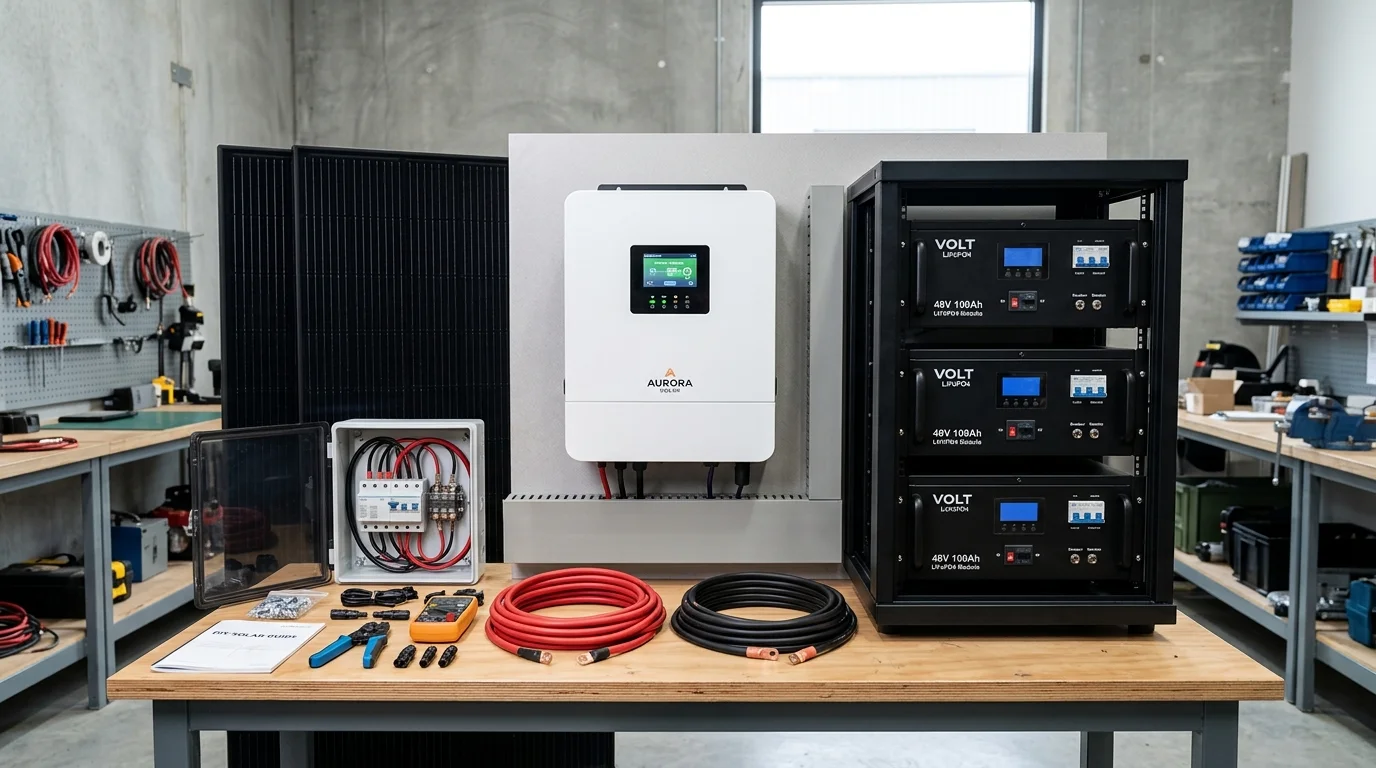
1. ShopSolar Complete 48V Turnkey Solar Kit
Eliminates the complexity of piecing together separate parts. Includes pre-matched Tier-1 bifacial panels, an all-in-one hybrid inverter with integrated dual MPPT controllers, pre-wired circuit breakers, and expandable 48V server rack lithium batteries.
Explore Complete Solar Kits on ShopSolar →

2. Aiko Neostar 2S+ 455W All-Black TOPCon
The pinnacle of residential silicon efficiency. Utilizing All-Back Contact (ABC) architecture with zero metal traces on the front glass, it delivers an astounding 23.6% conversion efficiency, squeezing maximum wattage out of constrained roof areas.
View Aiko Neostar on Signature Solar →

3. Canadian Solar BiHiKu7 660W Dual-Glass Bifacial
Engineered specifically for ground arrays, pergolas, and homesteads. The massive dual-glass construction produces up to 825W of effective power when paired with snow or gravel albedo, drastically lowering balance-of-system racking costs.
Check Pallet Pricing on ShopSolar →
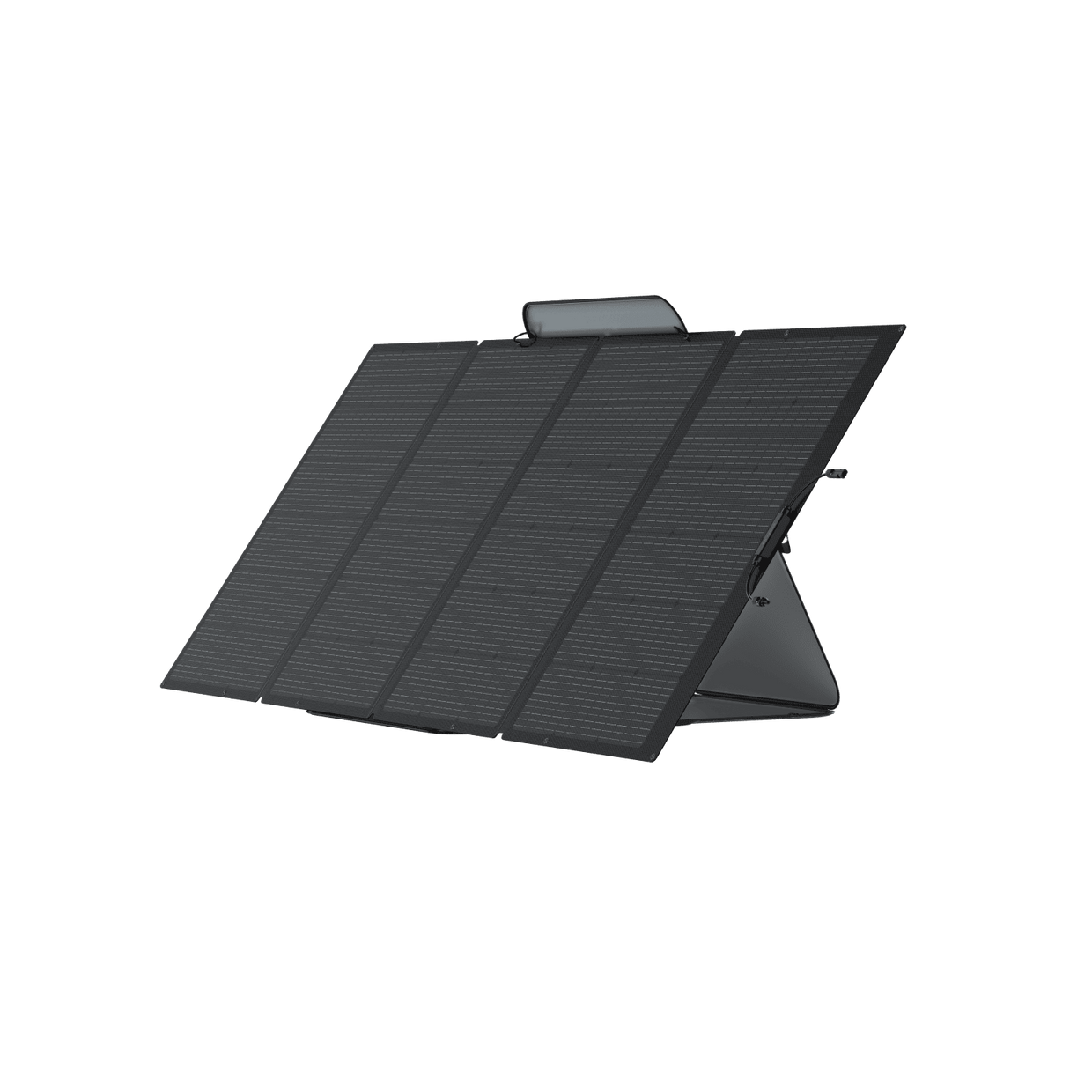
4. EcoFlow 400W Portable Solar Panel
Ideal for emergency power outages, camping, and overlanding. Folds into a rugged protective shoulder bag that doubles as a self-supporting kickstand. Plug-and-play compatible with all major portable power stations (EcoFlow, Anker SOLIX, Bluetti, Jackery).
Check Active EcoFlow Deals →
4 Common Solar Mistakes to Avoid
Installing a photovoltaic setup is straightforward once you respect basic electrical rules. Avoid these four common installation mistakes:
- Expecting 100% Nameplate Output All Day: A 400W solar panel is rated under Standard Test Conditions (STC: irradiance, cell temp, air mass 1.5). In reality, morning sun angles, atmospheric dust, and midday cell heat () cause panels to typically generate 75% to 85% of nameplate rating during average clear weather. Plan your daily kilowatt-hour needs using real-world NOCT (Nominal Operating Cell Temperature) metrics.
- Connecting Panels Directly to Batteries Without an MPPT Controller: Never connect raw solar leads directly to a battery bank. An unregulated solar panel producing 20V to 45V DC will severely overcharge, boil, and permanently destroy a 12V or 24V battery, creating an immediate fire hazard. An MPPT charge controller is mandatory to regulate voltage and taper charge current safely.
- Mismatched Series vs. Parallel String Wiring: In a series string, total string current is limited by the weakest panel. If you mix an old 6-Amp panel in series with a new 13-Amp panel, the entire string is throttled down to 6 Amps, throwing away half your investment. Only combine panels with identical electrical specifications.
- Using Cheap Copper-Clad Aluminum (CCA) Wire: Continuous DC solar currents generate intense resistive heating. Using cheap automotive CCA wire leads to accelerated oxidation, terminal lug melting, and severe voltage drop. Always specify pure-copper, UV-resistant cross-linked polyethylene PV Wire (UL 4703) sized using our Solar Wire Size Calculator.
Frequently Asked Questions (FAQ)
Do solar panels work on cloudy or rainy days?
Yes. Solar panels do not require direct beam sunlight; they generate electricity from diffuse ambient light scattering through clouds. On gray overcast days, output typically drops to 15% to 25% of rated capacity. However, as long as daylight is visible, your panels are generating electricity. Only complete physical blockages, such as heavy snow cover, reduce generation to zero.
How long do solar panels last?
Modern monocrystalline solar panels are among the longest-lasting electrical appliances ever engineered. Most tier-1 manufacturers provide a 25 to 30-year linear power warranty. At year 25, high-quality panels are guaranteed to still produce over 85% of their original day-one factory power. Because they contain no moving parts, panels routinely continue functioning for 35 to 40 years with minimal maintenance.
Can solar panels power appliances directly without a battery?
Generally, no. Solar panels produce variable DC electricity that fluctuates continuously with passing clouds and changing sun angles. Household appliances require steady, uninterrupted 120V or 240V AC power. Without a battery bank or grid connection to buffer these fluctuations, an appliance would shut down or burn out its internal electronics whenever a cloud passes overhead.
What is the difference between monocrystalline and polycrystalline panels?
Monocrystalline panels are sliced from a single, continuous, ultra-pure cylindrical silicon crystal, giving them an even black appearance and superior efficiency (21% to 24%). Polycrystalline panels are melted from multiple fragmented silicon shards, resulting in a speckled blue color, lower efficiency (15% to 17%), and faster heat degradation. Polycrystalline has been almost entirely replaced by monocrystalline in modern installations.
Is solar power really “free electricity”?
Yes, after your initial equipment payback period. The fuel source—photons emitted by the sun—is 100% free, inexhaustible, and impossible for utility companies to meter or tax. Once the capital expenditure of the panels, inverter, and batteries is recouped (typically 5 to 8 years for grid-tied and 3 to 5 years for off-grid cabins compared to running gas generators), every kilowatt-hour generated for the remaining 20+ years of panel life is pure free energy.