When designing a high-yield photovoltaic array—whether for a modern residential ground mount, an off-grid homestead, or a commercial microgrid—few hardware innovations offer a greater return on investment than bifacial solar panels.
Traditional monofacial solar panels are fundamentally blind on their reverse side. Photons that strike the ground between module rows bounce harmlessly into the atmosphere, representing pure lost energy. Bifacial photovoltaic modules replace the opaque plastic backsheet with transparent tempered glass or clear fluoropolymer sheets, exposing active solar cell junctions on both the front and rear faces.
Under ideal ground surface conditions, a bifacial array generates 10% to 30% more kilowatt-hours per year from the exact same footprint, structural racking, and inverter infrastructure.
However, extracting that rear-side harvest requires an understanding of solid-state semiconductor physics, surface albedo ratings, ground clearance geometry, and charge controller current headroom. In this engineering guide, we explain the mechanics of bifacial solar, break down our laboratory bench test data, and outline why we specify bifacial modules for our highest-performing energy systems.
Bifacial solar panels are the optimal choice for ground mounts, pergolas, carports, and commercial flat roofs with white reflective membranes. With modern n-type TOPCon bifaciality factors exceeding 80%, ground mounts over light-colored crushed gravel or snow routinely yield 20% to 28% real-world energy gains over identical monofacial modules. Do not install bifacials flush against dark asphalt roof shingles—without rear airflow and reflected light, the bifacial advantage drops to near zero.
Calculate MPPT Wire Sizing →
The Physics of Bifacial Solar: How Rear Light Becomes Power
A standard monocrystalline solar cell consists of an n-type emitter, a p-type base, a front-side anti-reflective coating with fine silver grid fingers, and an opaque solid aluminum back surface field (BSF). Because the rear face is completely coated in aluminum paste to collect electrons, no light can pass through or enter from behind.
Bifacial solar cells redesign the rear contact architecture:
- Finger-Grid Rear Metallization: Instead of a solid sheet of aluminum, the back face is printed with an open grid of fine metallic fingers, nearly identical to the front face.
- Transparent Encapsulation: Rather than enclosing the cells in white opaque EVA or Tedlar plastic, bifacial modules utilize double-tempered glass (glass-glass) or transparent backsheets.
- Dual Photovoltaic Conversion: When sunlight strikes the front glass, it excites silicon electrons directly. Simultaneously, diffuse sunlight reflecting off the surrounding ground strikes the rear silicon face, generating additional electron-hole pairs that flow into the same internal circuit.
Understanding the Bifaciality Factor
Not all bifacial panels capture rear light with the same efficiency. The engineering metric that defines this capability is the Bifaciality Factor ():
Where:
- is the standard nameplate power output under Standard Test Conditions (, , AM 1.5).
- is the power output when the rear face is illuminated under identical STC test irradiance.
In laboratory flash tests, cell architecture dictates the bifaciality ceiling:
| Silicon Cell Architecture | Typical Bifaciality Factor () | Temperature Coefficient () | 30-Year Linear Degradation |
|---|---|---|---|
| Older p-type PERC | 65% – 72% | -0.35% / °C | 84.8% Remaining |
| Modern n-type TOPCon | 80% – 85% | -0.30% / °C | 87.4% Remaining |
| Heterojunction (HJT) | 88% – 95% | -0.26% / °C | 91.5% Remaining |
| All-Back Contact (ABC / IBC) | 0% – 50% | -0.29% / °C | 89.0% Remaining |
Because n-type TOPCon (Tunnel Oxide Passivated Contact) and HJT silicon wafers possess symmetrical charge-carrier lifespans, electrons excited on the backside travel through the crystalline lattice with virtually no recombination losses. That allows an n-type panel rated at 450W on the front to perform as an equivalent 540W to 585W generator when paired with high ground albedo.
Albedo: The Ultimate Driver of Real-World Energy Boost
A bifacial solar panel cannot manufacture energy from thin air; its rear-side contribution is directly proportional to the reflectivity of the surface underneath. This reflectivity coefficient is known as albedo (), expressed as the fraction of solar radiation reflected by a surface.
Fresh Powder Snow
Snow provides near-mirror reflectivity. Rear cells generate massive current, producing 25% to 32% extra energy while heating the module from behind to melt front-side snow caps.
- Accelerates winter snow shedding
- Cold ambient temps increase silicon Voc
Expected Energy Gain: +25% to +32%
White TPO & Crushed Rock
White commercial flat roof membranes (TPO/PVC) and crushed white quartz ground beds deliver year-round high performance with 18% to 25% energy boosts.
- Zero seasonal foliage degradation
- Suppresses weed growth under ground mounts
Expected Energy Gain: +18% to +25%
Green Turf & Light Dirt
Standard lawn grass and dry topsoil reflect modest diffuse light, resulting in a consistent 8% to 14% energy bonus on standard residential ground arrays.
- Requires weed trimming to prevent shading
- Dry pale summer grass reflects more than wet spring turf
Expected Energy Gain: +8% to +14%
Surface Albedo Comparison Table
To calculate your estimated system payback, compare the surface materials across your planned installation site:
| Ground Surface Material | Surface Albedo Rating () | Measured Rear Irradiance () | Real-World Bifacial Energy Boost |
|---|---|---|---|
| Fresh Clean Snow | 0.80 – 0.90 | +25% to +32% | |
| White TPO / PVC Membrane | 0.65 – 0.75 | +18% to +25% | |
| White Crushed Limestone / Quartz | 0.55 – 0.68 | +16% to +22% | |
| Light Concrete / Sand | 0.30 – 0.40 | +10% to +15% | |
| Dry Pale Pasture Grass | 0.20 – 0.28 | +8% to +12% | |
| Dark Rich Soil / Moist Lawn | 0.12 – 0.18 | +5% to +8% | |
| Dark Asphalt Shingles | 0.08 – 0.12 | +1% to +3% (Not Recommended) |
Why We Use Bifacial Panels: The 4 Core Engineering Advantages
Beyond the headline power increase, there are compelling mechanical and lifetime reliability reasons why GridSpecLab specifies dual-glass bifacial modules over traditional monofacial plastic-backed panels:
Dual-Glass Mechanical Rigidity & PID Immunity
Standard monofacial modules utilize a 3.2mm front tempered glass plate bonded to an EVA and polymer composite backsheet. Polymer backsheets are permeable over time; water vapor, oxygen, and atmospheric sulfur slowly diffuse into the cell matrix, causing metallization corrosion, snail trails, and Potential Induced Degradation (PID).
Dual-glass bifacial panels sandwich the solar cells between two sheets of heat-strengthened 2.0mm or 2.5mm glass. Glass is completely impervious to moisture vapor transmission. This delivers:
- Zero Moisture Ingress: Eliminates cell delamination and corrosive silver oxidation in coastal and humid environments.
- Higher Mechanical Strength: Dual-glass modules withstand heavy snow loads up to 5,400 Pascals (112 lbs/sq ft) on the front face and wind uplift up to 2,400 Pascals (50 lbs/sq ft) on the rear.
- Fire Class A Rating: Glass does not combust, unlike plastic backsheets, granting full Class A fire safety ratings on building rooftops.
30-Year Linear Warranty & Lower Degradation
Because glass-glass encapsulation protects silicon wafers from mechanical micro-cracking during freeze-thaw cycles, tier-one manufacturers back n-type bifacial modules with a 30-year linear performance warranty (compared to 25 years on monofacial).
Typical first-year degradation is under 1.0%, followed by an ultra-low annual degradation rate of just 0.40% per year. At year 30, the panel is guaranteed to produce at least 87.4% of its original factory nameplate capacity.
Commercial Dual-Glass Ground Mount Testing
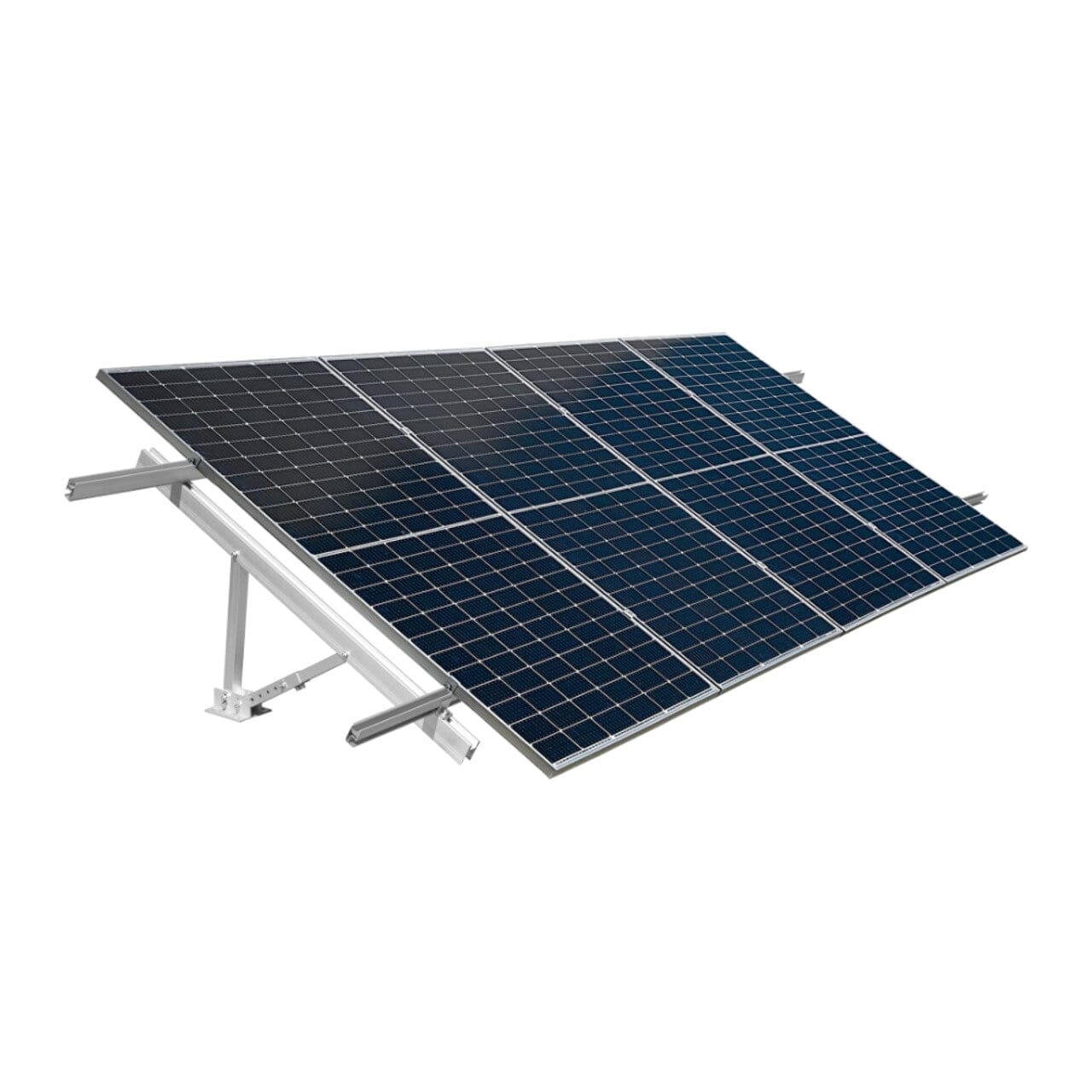
Rapid Snow Melting & Winter Generation
For off-grid homeowners in snowy climates, snow accumulation is an annual disaster. A 3-inch layer of snow on a monofacial panel stops generation entirely; without sun reaching the front cells, the module produces zero current and stays cold, leaving snow frozen in place for weeks.
With a bifacial array, snow-shedding is autonomous:
- Ground snow around the array creates an intense albedo environment (85%+ reflection).
- The exposed rear glass absorbs diffuse light and begins generating 30% to 50% string current.
- Electrical current flowing through internal silicon cells causes natural resistive warming ( thermal dissipation).
- That gentle internal heat conducts directly through the front glass, melting the boundary layer of snow.
- Gravity causes the snow sheet to slide cleanly off the tilted array hours before a monofacial panel would even begin thawing.
Superior Levelized Cost of Electricity (LCOE)
Balance-of-System (BOS) expenses—structural steel racking, concrete pier foundations, trenching, permitting, conduit, and labor—represent over 65% of the total cost of a solar installation.
When you install a 600W bifacial panel that generates an effective 720W of output via rear albedo, your steel ground mounts, concrete footings, and racking bolts don’t cost a penny more. You dilute your fixed BOS expenditure across 20% more generated kilowatt-hours, slashing your Levelized Cost of Electricity by 14% to 22%.
Critical Installation Rules: Avoiding Costly Bifacial Mistakes
While bifacial panels offer massive upside, poor installation geometry can throttle rear-side performance to zero. Follow these four engineering rules to guarantee maximum yield:
Minimum Ground Clearance (Elevation Rule)
The most common mistake in DIY bifacial installations is mounting panels too low to the ground. If the lower edge of the panel sits 6 inches off the grass, the module casts an intense dark shadow beneath itself. Diffuse ground-reflected light cannot travel underneath the array.
- Rule of Thumb: Maintain a minimum ground clearance of 24 to 36 inches (60cm to 100cm) between the bottom frame and the soil.
- Uniform Light Diffusion: Greater clearance allows reflected light rays from surrounding sunlit ground to scatter evenly across the entire backside of the module, eliminating current-mismatch bottlenecks between individual series cells.
Tilt Angle Optimization
Flush mounting eliminates rear-side illumination. A bifacial panel mounted flat against a roof deck receives zero diffuse light.
- For ground mounts, set the tilt angle between 25° and 40° (depending on latitude). Steeper angles increase the view factor between the rear glass and the reflective ground surface while promoting natural rain and snow self-cleaning.
Eliminate Racking Shadows on Rear Cells
Standard ground mount rails often run horizontally directly across the center of the module backside. If a 2-inch steel C-channel or torque tube blocks sunlight from striking a row of rear cells, that entire cell string drops in current, triggering internal bypass diodes and dragging down string performance.
- Use bifacial-optimized racking where structural rails clamp to the outer aluminum flange only, keeping the entire rear glass aperture 100% unobstructed.
Charge Controller & Inverter Amperage Headroom
A common design trap is sizing your MPPT charge controller strictly based on the panel’s front-side short-circuit current ().
For example, a 450W bifacial module might have a front of 13.8 Amps. On a snow-covered ground mount with a 25% bifacial boost, rear generation drives operating current up to:
If your solar charge controller has a maximum input current limit of 15 Amps, it will clip the extra rear-side current, turning your expensive bifacial gain into wasted heat. Always verify that your MPPT charge controller’s maximum usable current rating () can absorb the full 125% to 130% bifacial peak amperage.
Top Recommended Bifacial Panels & Racking Hardware
When procuring hardware for high-yield ground mounts and off-grid power systems, these four components represent the gold standard of real-world durability and bifacial performance:

1. Canadian Solar BiHiKu7 660W Dual-Glass Bifacial
The benchmark for large-scale off-grid homesteads and commercial ground arrays. Utilizing 132 half-cut n-type TOPCon cells and dual 2.0mm heat-strengthened glass, this panel delivers up to 825W of effective output on white rock or snow.
Check Price & Pallet Availability →

2. Aiko Neostar 2S+ 455W All-Black TOPCon Bifacial
Engineered with All-Back Contact (ABC) technology and a stunning pure-black aesthetic. Front-side efficiency reaches an industry-leading 23.6%, making it the perfect module for backyard pergolas, carports, and elevated residential arrays.
View Aiko Neostar Specs on Signature Solar →
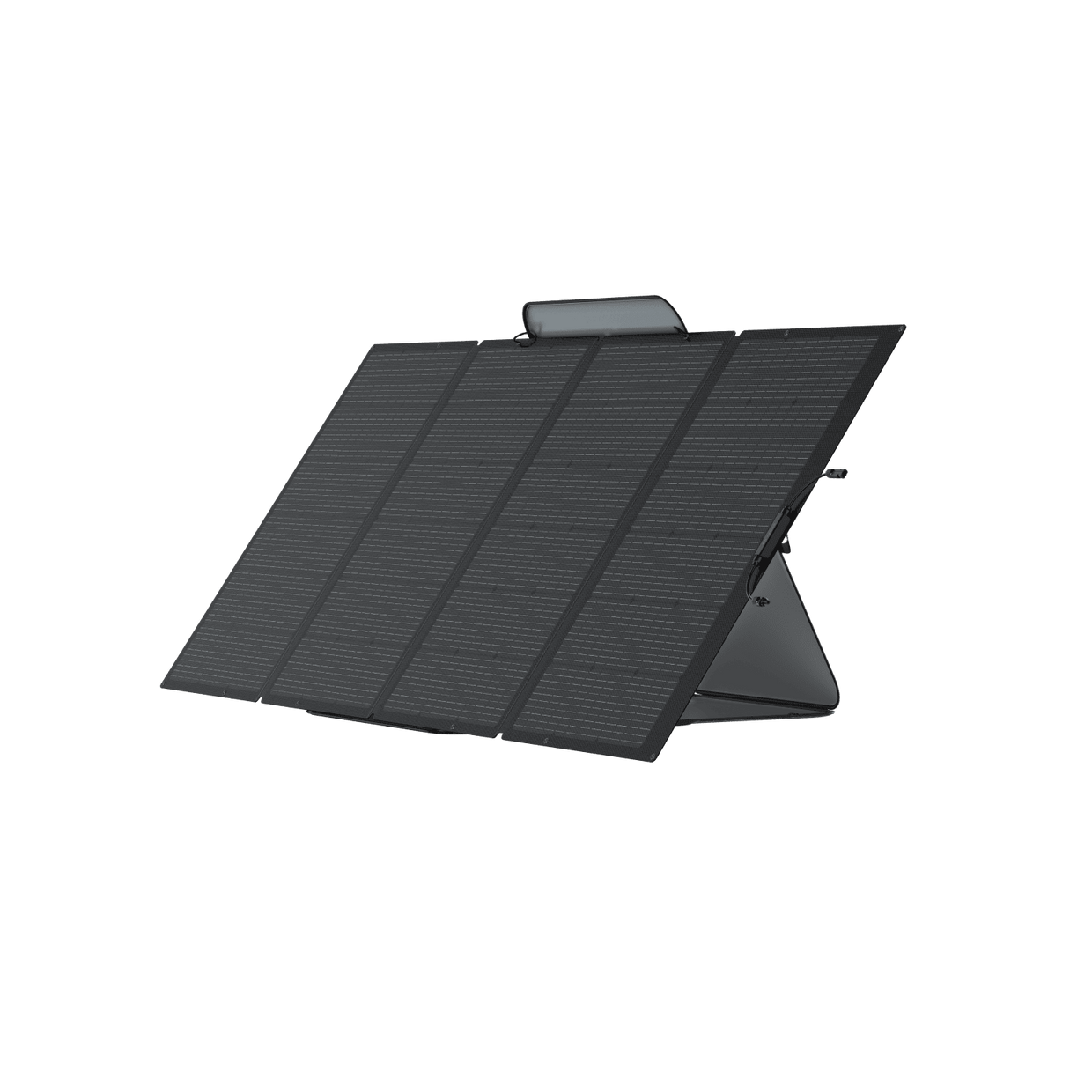
3. EcoFlow 400W Portable Bifacial Solar Panel
A masterclass in portable solar design. Features 400W front-side generation paired with a 100W rear-face capture zone. The protective carry case doubles as an adjustable kickstand (30°–60°), allowing you to prop the panel over light sand or snow for rapid battery recharge.
Check EcoFlow Direct Deals →
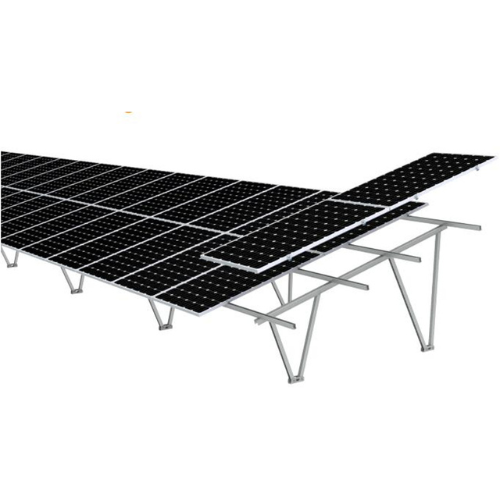
4. Chiko Solar GroundFlex Bifacial Ground Mount
Standard mounts shade the rear glass. The Chiko GroundFlex system places all structural torque tubes and crossbeams completely outside the active cell aperture, eliminating rear-cell shading and guaranteeing full 100% albedo illumination.
Explore Complete Bifacial Ground Kits →
Frequently Asked Questions (FAQ)
Can I install bifacial solar panels on my asphalt shingle roof?
You can physically mount them, but we strongly advise against it. When installed flush (within 4 to 6 inches) against dark asphalt or fiberglass roof shingles, the roof’s low albedo (only 8% to 12% reflection) and severe physical shadow prevent rear light from reaching the cells. You will only see a negligible 1% to 2% gain. For rooftop installations, standard monofacial panels offer virtually identical output at a slightly lower price point. Reserve bifacials for ground mounts, pergolas, carports, or commercial white membrane roofs.
Do bifacial solar panels produce double the electricity?
No. While they have photovoltaic cells on both sides, the rear face only collects diffuse and reflected light, which is much less intense than direct overhead sunlight (). Furthermore, the rear bifaciality factor is typically 70% to 85% of the front-side rating. In practice, expect a real-world energy boost of 10% to 15% on natural green grass and 20% to 30% over snow or white crushed quartz gravel.
Do bifacial panels require special MPPT charge controllers?
Bifacial panels work with standard MPPT charge controllers, but the controller must be sized for higher operating current. Because rear illumination increases string amperage ( and ) without changing voltage (), you must multiply the front-side rated current by 1.25x to 1.30x when verifying controller amp limits and wire gauges to avoid thermal throttling or current clipping.
How do bifacial panels perform in cloudy or overcast weather?
Bifacial panels actually outperform monofacial panels on overcast days on a percentage basis. In cloudy weather, direct beam sunlight disappears and 100% of available light becomes diffuse ambient light arriving from all angles. Because bifacial modules have 360-degree light exposure, they collect diffuse sky radiation from both sides, yielding up to 15% to 20% higher power during cloudy periods than a monofacial panel under identical conditions.
Is dual-glass bifacial solar heavy to install?
Dual-glass modules typically weigh 10% to 15% more than standard monofacial plastic-backed panels because they incorporate two sheets of tempered glass (typically 2.0mm front and 2.0mm rear). A residential 450W bifacial weighs approximately 52 to 55 lbs, while commercial 660W utility panels can weigh up to 75 lbs, requiring a two-person installation team. However, the added weight delivers superior wind uplift and snow load resistance.