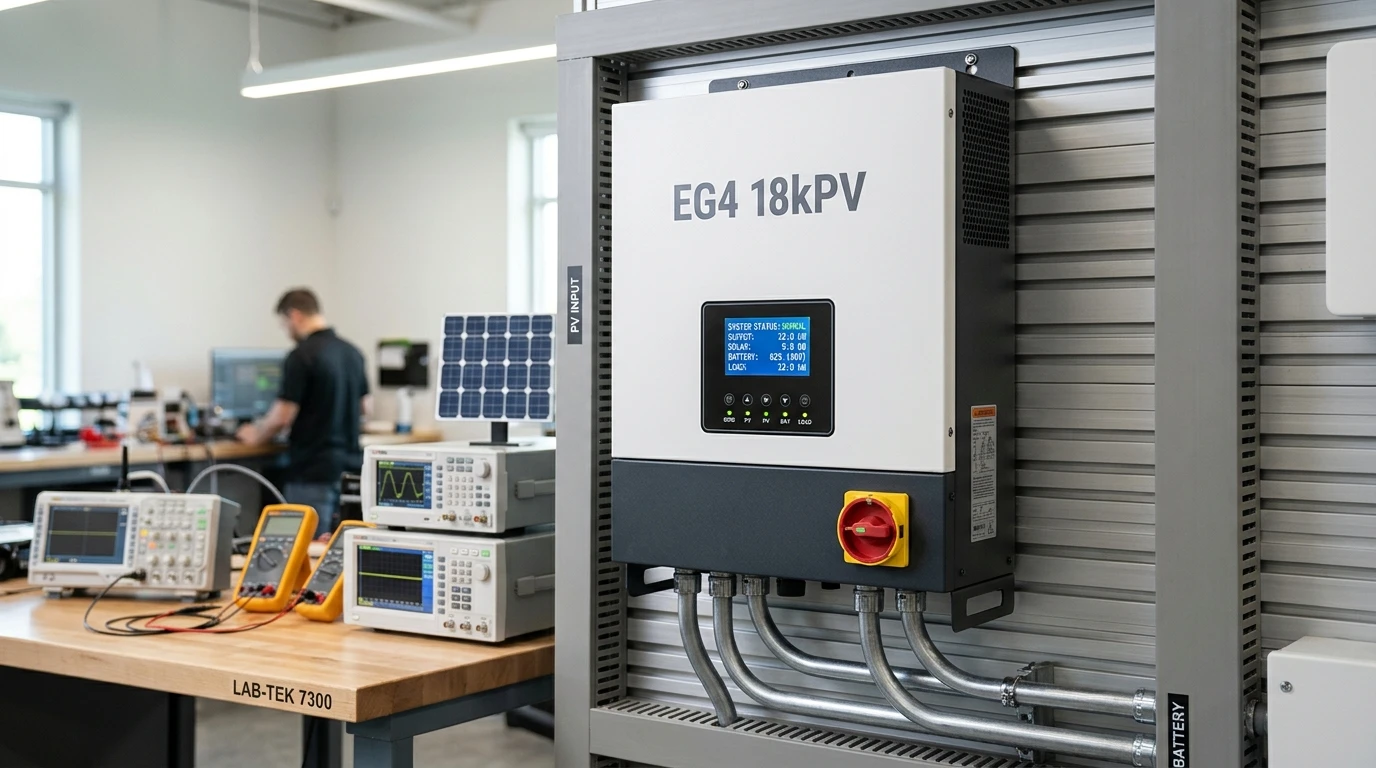
Read our comprehensive hands-on evaluation in the EG4 FlexBOSS 21 Review. See how the 18kPV holds up over years of real field use in our EG4 18kPV Inverter Review.
Within EG4 Electronics’ lineup, the EG4 18kPV established itself as the gold standard for DIY-friendly, all-in-one residential hybrid solar power. By integrating a 12kW split-phase pure sine wave inverter, 3 MPPT charge controllers, and 200A grid bypass into a single outdoor-rated unit, it eliminated the need for complex multi-box installations.
With the release of the EG4 FlexBOSS 21, EG4 expanded its architecture to serve high-consumption, all-electric modern households. The FlexBOSS 21 boosts continuous off-grid output to 15,000 watts, pushes solar DC array handling to 21,000 watts, and delivers upgraded surge capacity to easily start multiple inductive loads simultaneously.
If you are deciding between these two high-performance inverters, here is our full engineering breakdown of output limits, solar throughput, electrical efficiency, and system sizing.
Quick Spec Comparison
The table below highlights the crucial differences between the next-generation FlexBOSS 21 and the proven 18kPV:
| Specification | EG4 FlexBOSS 21 | EG4 18kPV | Key Advantage |
|---|---|---|---|
| Continuous AC Output | 15,000W (62.5A @ 240V) | 12,000W (50A @ 240V) | FlexBOSS delivers +3kW extra power |
| Peak Motor Surge | 21,000W (10 sec) | 16,000W (10 sec) | FlexBOSS handles dual AC compressor starts |
| Max Solar PV Input | 21,000W (21kW Array) | 18,000W (18kW Array) | FlexBOSS supports +3kW more panels |
| Grid Pass-Through | 200A Native Bypass | 200A Native Bypass | Both power entire 200A panel inline |
| Standby Tare Loss | 52W Idle Draw | 48W Idle Draw | 18kPV draws slightly less idle power |
| Typical Price Range | 5,800 | 5,100 | 18kPV saves approx. 700 upfront |
Continuous Load Handling and Split-Phase Amperage
Continuous electrical capacity dictates how many major 240V appliances your home can run concurrently during a winter freeze or summer heatwave:
- EG4 18kPV: Provides 12,000W continuous output, which equals 50 Amps at 240V (or 100 Amps total at 120V across both split-phase legs). This is ample power for a 3-ton to 4-ton heat pump, refrigerator, well pump, and lighting. However, if the electric oven and clothes dryer are turned on at the same time the heat pump kicks on, the inverter reaches peak capacity.
- EG4 FlexBOSS 21: Boosts continuous output to 15,000W continuous, delivering 62.5 Amps at 240V (or 125 Amps at 120V). That additional 3,000W buffer makes a significant practical difference, allowing you to run a Level 2 EV charger at 24A or run an electric water heater alongside central air conditioning without load-shedding anxiety.
Solar DC Overpaneling and Cloud Penetration
Both inverters feature 3 independent MPPT trackers with dual string terminals per MPPT (6 strings total), but their power ceilings differ:
- EG4 18kPV: Max DC solar input is capped at 18,000W.
- EG4 FlexBOSS 21: Max DC solar input extends up to 21,000W.
Why does 21kW of solar matter when the inverter continuous output is 15kW? Because of simultaneous charging and powering. On a sunny afternoon, the FlexBOSS 21 can deliver a full 15,000W directly into your household electrical circuits while simultaneously routing 6,000W of excess solar directly into your 48V battery bank. In winter conditions or overcast skies where panels produce only 25% of their rated output, an overpaneled 21kW array still delivers 5.25kW of real power, whereas an 18kW array produces only 4.5kW.
Surge Tolerances for Inductive Equipment
Heavy motor loads—such as submersible well pumps, workshop air compressors, and older HVAC units—require 3x to 5x their running wattage for a split second to initiate rotation:
- EG4 18kPV: 16,000W (10-second) surge. More than sufficient for modern inverter-driven appliances, but dual compressor starts can trigger temporary overload warnings.
- EG4 FlexBOSS 21: 21,000W (10-second) surge. This higher dynamic headroom easily absorbs simultaneous motor inrush without causing voltage sag or flickering lights.
Pros and Cons Breakdown
EG4 FlexBOSS 21 Advantages
- ✓ 15kW Continuous Output: 62.5A at 240V powers multiple heavy appliances simultaneously.
- ✓ 21kW Solar PV Ceiling: Accommodates larger solar arrays for faster off-grid battery recovery.
- ✓ 21kW Surge Headroom: Absorbs heavy motor inrush from well pumps and HVAC compressors.
- ✓ Modern Architecture: Upgraded thermal heatsinks and faster onboard telemetry logic.
Trade-offs
- • Slightly higher upfront investment (around $600 premium).
- • Minor increase in idle tare consumption (52W vs 48W).
EG4 18kPV Advantages
- ✓ Proven Track Record: Thousands of verified residential installations operating across North America.
- ✓ Outstanding Cost-to-Performance: 12kW split-phase power for around $4,800 is unmatched in the market.
- ✓ Lower Tare Loss: Low 48W standby draw keeps battery discharge minimal overnight.
- ✓ Identical 200A Bypass: Powers whole homes inline with zero critical subpanels required.
Trade-offs
- • 12kW output can be stretched thin if running simultaneous electric heat, EV charging, and cooking.
- • Max PV input capped at 18kW.
The Verdict: Which One Should You Choose?
Both machines represent outstanding value in the whole-home energy storage sector:
-
Choose the EG4 FlexBOSS 21 if your household is fully electrified—meaning you have two central air conditioning zones, a 240V well pump, an electric vehicle charger, or an electric water heater. The extra 3,000W of continuous power and 5,000W of additional surge tolerance provide peace of mind that your home will run effortlessly during extended winter or summer blackouts.
-
Choose the EG4 18kPV if you have gas or propane heating, a single central AC unit (3 to 4 tons), and standard residential loads. The 18kPV saves approximately $600 on equipment while delivering bulletproof 12kW split-phase reliability.