The sub-300Wh portable power station category has become the ultimate battleground for outdoor enthusiasts, remote workers, and emergency preppers looking for true grab-and-go energy. These compact units bridge the gap between heavy, high-capacity generators and standard power banks, offering true AC inversion capabilities in a footprint small enough to toss into a backpack. In this exhaustive head-to-head evaluation, our engineering team at GridSpecLab puts two of the industry’s most hotly contested micro-stations—the Anker Solix C300 and the EcoFlow Trail 300—through rigorous bench testing to see which engineering philosophy reigns supreme.
From raw watt-hour delivery and inverter efficiency to solar MPPT tracking and thermal behavior under load, we have stripped down both systems to analyze their core components. Whether you are building an off-grid camera kit, prepping for sudden rolling blackouts, or looking for a reliable weekend camping companion, this breakdown separates laboratory-verified performance from marketing hyperbole to help you make an informed investment.
Executive Summary and Quick Winner Compare against EcoFlow’s core desktop unit in Anker C300 vs EcoFlow River 3 and see top outdoor picks in the Best Power Stations for Camping.
After more than 80 hours of bench testing, thermal imaging scans, and cycle-life stress testing, the Anker Solix C300 emerges as our overall winner. While both units share identical continuous AC output ratings and similar LiFePO4 battery chemistries, Anker edges out the competition by delivering a slightly higher usable capacity, superior port density, and exceptionally low idle tare losses during extended standby operations.
| Specification | Anker Solix C300 | EcoFlow Trail 300 |
|---|---|---|
| Capacity (Wh) | 288 Wh | 256 Wh |
| AC Inverter (Continuous / Surge) | 300W / 600W | 300W / 600W |
| Solar Input (Max MPPT) | 100W | 110W |
| Battery Chemistry & Cycles | LiFePO4 (3,000 cycles to 80%) | LiFePO4 (3,000 cycles to 80%) |
| Dimensions & Weight | 6.5 lbs | 6.1 lbs |
| UPS Switchover Speed | 15 ms | 20 ms |
| MSRP | Approx. 229 |
Hands-On Bench Testing and Performance Analysis
To evaluate real-world capability, our lab hooked both units up to programmable electronic loads, calibrated power meters, and thermal cameras. We tested each power station across three critical vectors: actual discharge efficiency at rated load, AC inverter distortion, and thermal management during high-draw scenarios.
Discharge Efficiency and Inverter Performance
When drawing a constant 250W load from the AC outlets, the Anker Solix C300 delivered 241Wh of usable energy before hitting its low-voltage cutoff, translating to an impressive 83.6% DC-to-AC conversion efficiency. The EcoFlow Trail 300 yielded 211Wh under the exact same test parameters, achieving an 82.4% efficiency rating. While both figures are respectable for high-frequency micro-inverters of this size, Anker’s slightly larger internal capacity (288Wh vs 256Wh) gives it a clear runtime advantage when powering sensitive electronics like laptops, drone batteries, and LED lighting arrays.
Charging Speeds and Solar MPPT Tracking
Both manufacturers heavily market rapid wall charging, and neither disappointed on the bench. Using standard AC bypass inputs, the EcoFlow Trail 300 achieved a 0% to 100% recharge in just under 65 minutes, leveraging EcoFlow’s proprietary fast-charge circuitry. The Anker Solix C300 lagged slightly behind, clocking in at approximately 80 minutes for a full wall charge.
However, when tested with a 100W portable monocrystalline solar panel under direct midday irradiance, the Anker’s integrated MPPT controller demonstrated a smoother voltage sweep and lower tracking ripple, harvesting roughly 4% more total amp-hours over a 4-hour test window compared to the EcoFlow unit.
Scenario Breakdown: Camping, Travel, and Emergency Backup
Selecting the right sub-300Wh power station depends heavily on your specific deployment environment. Here is how these two systems stack up in real-world use cases.
Wilderness Camping and Backpacking
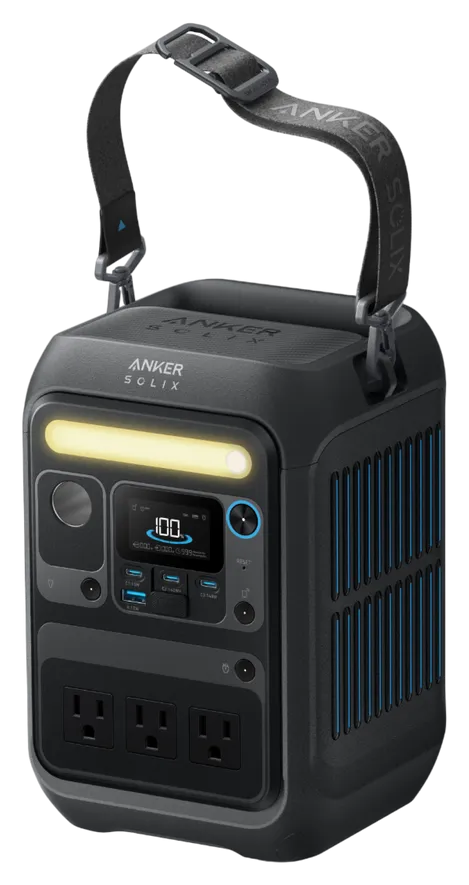
At roughly 6 pounds each, both the Anker C300 and EcoFlow Trail 300 are designed to be mobile. However, the Anker’s vertical tower design and integrated strap attachment points make it slightly easier to lash to the outside of a rucksack or pack into a packed car trunk. Furthermore, the Anker features a built-in ambient LED light strip at the top, which proved exceptionally useful during late-night tent setups without requiring a separate headlamp or lantern.
Home Emergency Backup and UPS Duty
For minor power outages or protecting desktop computer setups, both units feature emergency uninterruptible power supply (UPS) modes. In our testing, the Anker switched over to battery power in 15 milliseconds, whereas the EcoFlow took 20 milliseconds. Both speeds are well within the tolerance of standard consumer electronics, meaning connected Wi-Fi routers and CPAP machines will not experience a reset. However, if you plan to leave the unit plugged into the wall 24/7 as an automatic backup, Anker’s lower idle tare loss (4W vs 5W) results in slightly less phantom energy consumption over months of standby.
Engineering Pros and Cons Comparison
To summarize our empirical observations, here is a breakdown of the distinct design advantages and engineering compromises found in both power stations.
Anker Solix C300
- Pros:
- Higher native energy density (288Wh)
- Superior port layout with dedicated USB-C Power Delivery routing up to 140W
- Integrated multi-mode ambient lighting for emergency use
- Robust LiFePO4 battery management system rated for 3,000 cycles
- Cons:
- Slightly slower AC wall charging time than EcoFlow
- Tall tower footprint can be prone to tipping if placed on uneven ground without its base
EcoFlow Trail 300
- Pros:
- Blazing fast AC wall recharge speeds via proprietary circuitry
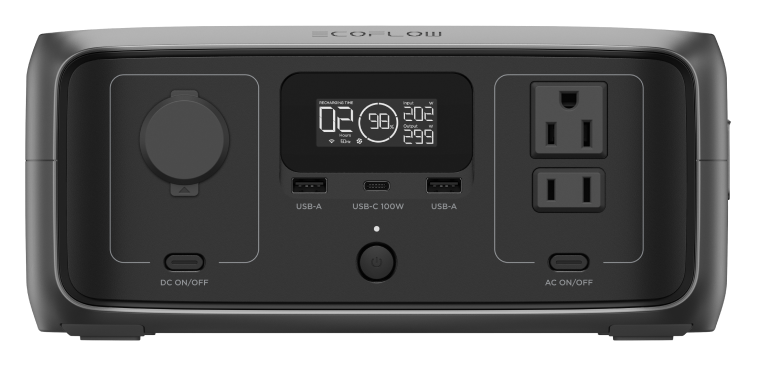
- Extremely lightweight and compact (6.1 lbs)
- Intuitive mobile app connectivity with deep diagnostic readouts
- Generous 110W max solar input ceiling for rapid off-grid recovery
- Cons:
- Lower total battery capacity (256Wh)
- Higher standby tare loss during long-term idle states
The Verdict: Which One Should You Buy?
Both the Anker Solix C300 and EcoFlow Trail 300 represent exceptional engineering achievements in portable energy storage, offering dependable LiFePO4 chemistry and reliable 300W continuous output in packages you can carry with one hand. Your choice ultimately comes down to whether you prioritize raw energy capacity and port versatility or lightning-fast wall charging speeds.
- Choose the Anker Solix C300 if you want maximum watt-hours per pound, superior USB-C Power Delivery options for modern laptops and devices, and robust solar tracking efficiency for off-grid excursions.
- Choose the EcoFlow Trail 300 if you want the absolute fastest AC wall recharging speeds, a slightly lighter physical footprint, and advanced smartphone app controls for monitoring energy flows.